

I come into a business, assess what's there, and build what it needs -- a critical fix, a missing process, or a new workflow, using appropriate AI tools.
Bangalore, India
Joined February 2019
- Tweets5.4K
- Following984
- Followers314
- Likes22.7K





Pinned Tweet
𝗔𝗳𝘁𝗲𝗿 𝟮 𝗱𝗲𝗰𝗮𝗱𝗲𝘀 𝗶𝗻 𝗲𝗻𝘁𝗲𝗿𝗽𝗿𝗶𝘀𝗲 𝗶𝗻𝗳𝗿𝗮𝘀𝘁𝗿𝘂𝗰𝘁𝘂𝗿𝗲, 𝗜 𝗵𝗮𝘃𝗲 𝗮 𝗻𝗲𝘄 𝗔𝘃𝗮𝘁𝗮𝗿
..
..
A client asked me to take a look at their CRM.
What I found first were multiple live bugs in production — the worst one let an engineer submit a blank service form and silently wipe equipment firmware records, no recovery, just gone.
𝗜𝗻𝗱𝗲𝗽𝗲𝗻𝗱𝗲𝗻𝘁 𝗲𝗻𝗴𝗮𝗴𝗲𝗺𝗲𝗻𝘁𝘀, 𝗺𝗶𝗻𝗶𝗺𝗮𝗹 𝗯𝗿𝗶𝗲𝗳𝗶𝗻𝗴, 𝗴𝗼 𝗳𝗶𝗴𝘂𝗿𝗲 𝗼𝘂𝘁 𝘄𝗵𝗮𝘁'𝘀 𝗮𝗰𝘁𝘂𝗮𝗹𝗹𝘆 𝘄𝗿𝗼𝗻𝗴 𝗮𝗻𝗱 𝗳𝗶𝘅 𝗶𝘁 𝘂𝘀𝗶𝗻𝗴 𝗔𝗜 𝘄𝗵𝗲𝗿𝗲 𝗻𝗲𝗰𝗲𝘀𝘀𝗮𝗿𝘆 - this is the work I do now.
Currently doing this for ➡️ 𝘢 𝘳𝘦𝘨𝘪𝘰𝘯𝘢𝘭 𝘥𝘪𝘴𝘵𝘳𝘪𝘣𝘶𝘵𝘰𝘳 𝘰𝘧 𝘱𝘳𝘦𝘤𝘪𝘴𝘪𝘰𝘯 𝘴𝘤𝘪𝘦𝘯𝘵𝘪𝘧𝘪𝘤 𝘪𝘯𝘴𝘵𝘳𝘶𝘮𝘦𝘯𝘵𝘴 𝘢𝘤𝘳𝘰𝘴𝘴 𝘵𝘩𝘦 𝘎𝘶𝘭𝘧 𝘤𝘰𝘶𝘯𝘵𝘳𝘪𝘦𝘴.
-- Fixed the bugs first, each one with a proper root cause writeup and regression tests behind it.
-- Then moved into reporting that didn't exist at all — contract renewal pipelines, warranty expiry alerts, a multi-currency order summary that needed real custom development because the platform's limitations.
-- Along the way, where it made sense, I turned the fix or the report build into a methodology record — not just a one-off deliverable, but something the client's own team can reuse the next time the same class of problem comes up.
-- My favorite part is the service visit side. Every visit generates something useful — what got fixed, what the customer said, a sale waiting to happen. Almost none of it made it into the system; the form asked one question and stopped. I'm rebuilding it into a monthly report a service manager can actually use.
Writing up this engagement (and future ones) at my website - youplusai.com/current-engage…
𝗜𝗳 𝘆𝗼𝘂 𝗿𝘂𝗻 𝗮 𝗯𝘂𝘀𝗶𝗻𝗲𝘀𝘀 𝗮𝗻𝗱 𝗵𝗮𝘃𝗲 𝗮 𝗵𝘂𝗻𝗰𝗵 𝘆𝗼𝘂𝗿 𝘀𝘆𝘀𝘁𝗲𝗺𝘀 𝗮𝗿𝗲 𝗾𝘂𝗶𝗲𝘁𝗹𝘆 𝗯𝗿𝗼𝗸𝗲𝗻 𝘀𝗼𝗺𝗲𝘄𝗵𝗲𝗿𝗲, 𝗼𝗿 𝘀𝗶𝘁𝘁𝗶𝗻𝗴 𝗼𝗻 𝗶𝗻𝘁𝗲𝗹𝗹𝗶𝗴𝗲𝗻𝗰𝗲 𝗻𝗼𝗯𝗼𝗱𝘆'𝘀 𝘂𝘀𝗶𝗻𝗴, 𝗵𝗮𝗽𝗽𝘆 𝘁𝗼 𝘁𝗮𝗹𝗸.

Beside Gmail and Calendar, what do you use Instinct for?
It doesn't do any of 👇🏾
-- Add a reminder on Apple reminders app
-- Add a note to Apple notes
-- Pay a contact via Google Pay provided the sum is under ₹1000/-
-- Create a shopping cart in Swiggy or Blinkit.
?
What am amazing experiment 👏-- f agents today are able to do this, we are indeed going towards interesting times!

I asked AI agents to defuse a bomb by collaborating over an ultra-low bandwidth, unreliable network. One agent could see the display and cut wires, the other could look up which wire to cut. Packets could be corrupted, dropped, reordered, or delayed. Outcomes:
1/ my hypothesis was that agents will never be able to diffuse a bomb, except by random chance. Each had a part of the information necessary to succeed in the game, and I gave them no opportunity to agree on a protocol before the game starts. All they could see each turn is binary blobs sent by their partner, with likely corrupted, reordered, or missing/delayed chunks
2/ in very difficult network conditions (8-bit packets, four max packets per turn) 6.1 Sol agents were able to establish a shared protocol and defuse the bomb 40% of the time! In more relaxed conditions (32-bit packets or higher, 2-4 max packets per turn) they defused the bomb 100% of the time (!!) across many games
3/ "relaxed" bandwidth conditions were still very difficult-- 5% probability a given bit is corrupted in transit, 10% packet drop rate, 20% dup rate, 20% reorder/delay rate. On any given turn there were usually many anomalies (corruptions, reorders, etc.)
4/ agents established a protocol by picking a Schelling point for a given network configuration. They considered multiple possibilities but deliberately picked the simplest they thought their partner could successfully interpret. There was no protocol negotiation phase; they'd start sending useful information right away and if necessary adjust the protocol mid-game
5/ agents picked different protocols depending on the network configuration. For example, in 8-bit packet games they split each packet in half, with the upper half indicating display position, and the lower half indicating the hex value in that position. In 32-bit packet games agents would directly send the binary display value (since in my games it fit in 32 bits). With higher bandwidth (e.g. 128 bits) agents switched to yet another strategy and sent ASCII messages
6/ some examples of ASCII messages in 128-bit games are `HEX? REPLY ASCII`, `REPEAT DISPLAY`, `1WIRE=NN`, `OK?`, `YES!`, and so on
7/ I set up games to require two phases to win. Once the agents cut the correct wire the display on the bomb changed code, and they had to communicate again, then cut another wire. In many of these games agents explicitly encoded the stage so that their partner wouldn't get confused by delayed packets. For example in 8-bit games they'd set the higher order bit to 0 for first stage, and 1 for second stage. In higher bandwidth games they'd use labels (e.g. `WIRE1=...`, `WIRE2=...`)
8/ in every game error correction was done through repetition and counting. Agents would resend the same packets multiple times, look at the values of each bit, and whenever there was a discrepancy pick the value that appeared in the most packets
9/ agents never used checksum, parity bits, packet sequence numbers, or any error correction algorithm other than repetition and counting. They did consider these options in many games, but explicitly rejected them because they thought it would complicate the protocol too much and would be too difficult for their partner to interpret
10/ I ran the experiments systematically only with 6.1 Sol to save on token costs, but I did run some spot checks with occasional Opus 5.5, Astra, Fable, and mixed games. I didn't notice any major differences between models. In mixed games the win rate seemed roughly the same as 6.1 Sol self-play. (This is however based on little data, I'd need to run a lot more games to understand this better)
11/ a while back there were discussions about future agents communicating by burning CPU cycles and measuring ambient temperature, revving up the fans and listening to fan sounds, and so on. After running this experiment, it wouldn't surprise me at all if publicly available models could do this sort of communication even today. In some of the games agents only had access to very noisy channels of maybe 5-10bps-- already very constrained! I don't think switching to 5-10 bits per minute (or per hour) would make much difference
12/ again, I am very surprised by this outcome. AIs performed much, much better than I thought they would, and after 64-bit bandwidth threshold they saturated the benchmark. I would certainly call this superhuman performance; I imagine very few humans could do better, and certainly those of us who could, would be two orders of magnitude slower
Some memorable agent quotes:
- I think we should index the nibble and send the higher nibble first, especially since B is likely quite intelligent.
- There’s definitely suspicious noise coming from 23, which could indicate adversarial corruption.
- When I translate it, it seems to relate to ASCII characters forming "W i R E" and "WiRE 04!"-- which is pretty cool.
Full writeup: spakhm.com/projects/bitfuse.…


Ranga Sampath | Build AI Services for Businesses retweeted

#Amul at its Best as Always !
Happy #Janamashthmi ✨️

Ranga Sampath | Build AI Services for Businesses retweeted

Adding to the discourse happening re: Bangalore hospitals, saw someone rightly point out that the information flow is completely manual and I cannot agree more. While hospitals claim they’re fully digital, so much of paperwork is literally ferrying sheets of paper like a+
A service engineer left one field blank on a form. Submitted anyway.
..
..
No error. No warning. Nothing in red ‼️. The form behaved exactly like it always had.
Underneath: the firmware and software version records for that equipment got erased. So did every linked sub-component. Not flagged. Not queued.
Gone — with nothing on screen to say so.
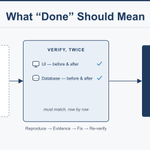
🔍 That was one of four defects I found in a client's CRM before building anything new on top of it. All four had the same shape: they passed as normal at the exact moment they happened. None of them threw an error.
Proving each one was actually fixed — not just "looks fine now" — and doing it reliably is what is detailed in youplusai.com/definition-of-…
#AIServices #DataIntegrity #CRM

Nobody was watching. No client, no deadline, nobody checking my work.
I moved my own podcast's website off a Webflow subdomain to a domain I'd owned but never used. An AI-written script had a bug that would've broken the live site. I caught it in review before running it. Then the category pages came up empty after migration, and I tracked down the actual cause instead of guessing.
💡 The diligence that matters is the diligence nobody's checking for.
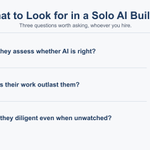
That's one of three things I'd want to know about any solo AI builder before trusting them with something that matters.
The other two:
-- Do they check whether the AI is actually right, or just trust it because it sounds confident? I've run structured evaluations on my own agent's answers to find out, and confidence and correctness don't always move together.
-- Does the work outlast the engagement: not just a fix, but the root cause, the evidence behind it, and something your team can still run after they're gone.
None of those are questions the AI can answer for itself.
Read up the full blog @ youplusai.com/solo-ai-builde…
#AIConsulting #SmallBusiness #Hiring

🛡️ My AI agent found the firewall rule it believed was causing a network fault.
..
..
It wanted to delete it.
It stopped instead, showed me what it wanted to do and why, and waited for me to approve or kill it.
✅ A few seconds later, I approved it. If it had been wrong, I'd have caught it before anything broke.
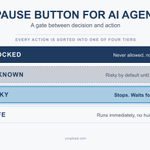
💡 An AI doesn't have a reliable sense of its own uncertainty. So the gate can't ask it to "be careful." It has to sort every action into one of four tiers before anything runs: blocked, unknown, risky, safe. None of it depends on how confident the model sounds.
⚠️ I built this after seeing what happens without one: a CRM where one click turned an unapproved quote into a live order. No questions asked.
🔍 The four tiers, the actual code, and where this gate stopped an agent mid-investigation: youplusai.com/ai-safety-gate…
#AIAgents #AISafety

Insane what you can do with the right tools at your disposal!

Lost my phone at the office and spent 30 minutes turning the place over. Find My was disabled by MDM.
Out of ideas, I asked Claude how I could find it. It suggested tracking the Bluetooth signal strength, then wrote me a meter in about a minute.
I walked around watching the number climb. Found it.
Apparently you can just make the tool you need now.
Code: github.com/ben-z/findphone
Uber's journey -> From blowing through the entire year's AI budget in just 4 months to making judicious use of AI in the Enterprise at scale.
Perhaps there are many lessons to follow from this one.

As our CFO @_balaji_km mentioned at earnings today, we’re seeing some very interesting trends on AI costs. I think it’s another signal that we’re coming to the end of the so-called ‘tokenmaxxing’ era.
Here’s what’s been happening behind the scenes.
Since the beginning of the year we’ve more than quadrupled the number of people using frontier AI tools. That’s thousands of engineers using them every single day. During that same period, our cost per token has declined.
You might expect costs to rise as adoption accelerates. We've seen the opposite. Not because we've restricted access, but because we've treated efficiency as an engineering problem rather than a budget problem. A few examples:
• Caching and reuse: We use optimizations to improve our prompt cache hit rate that reduce our input token spend.
• Better defaults and tooling: We tuned default model settings, context sizes and developer workflows so teams get the same results with fewer tokens and lower-cost inference.
• Visibility drives efficiency: We gave engineers real-time visibility into their AI usage and costs per hour.
• Experimenting with open-weight models: we continuously evaluate new models and deploy the best option for each use case.
This is the future of applied AI at enterprise scale. The next phase, whatever we call it, will not be characterized by who spends the most tokens, but about how people use them as efficiently as possible.
Credit to all the engineers at @Uber who are helping to build this future. 🚀
𝗠𝗶𝗴𝗿𝗮𝘁𝗶𝗻𝗴 𝗮 𝘄𝗲𝗯𝘀𝗶𝘁𝗲 𝘄𝗶𝘁𝗵 𝗮𝗻 𝗔𝗜 𝗮𝘀𝘀𝗶𝘀𝘁
..
..
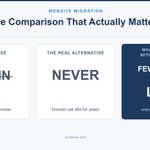
I moved a podcast site off Webflow this week. Thirty-three episodes, 6 categories, a domain that had sat idle for many years.
Claude wrote a PHP script to bulk-fix 33 broken audio embeds across every episode page. Before I ran it against the live server, I asked for a review pass.
It found a quoting bug in its own script. The kind that would've thrown a syntax error the moment I hit run.
💡 The interesting split WASN"T 𝘼𝙄 𝙙𝙞𝙙 𝙩𝙝𝙚 𝙝𝙖𝙧𝙙 𝙥𝙖𝙧𝙩, 𝙄 𝙙𝙞𝙙 𝙩𝙝𝙚 𝙚𝙖𝙨𝙮 𝙥𝙖𝙧𝙩.
It was: Claude did the parts that were mechanical but error-prone — the kind of typo in a database script that silently breaks a website. I did the parts that needed judgment and eyes on the actual content — which of 33 illustrations belonged to which episode, whether a rebuilt page actually held together once it was live.
The barrier that used to stop a project like this was knowledge — learn WordPress internals, learn the WXR format, learn enough PHP to fix a script safely on a production database. AI solved that.
𝗪𝗵𝗮𝘁'𝘀 𝗹𝗲𝗳𝘁 𝗻𝗼𝘄 𝗶𝘀 𝗮𝘁𝘁𝗲𝗻𝘁𝗶𝗼𝗻 — someone sitting there, deciding which image goes with which story, checking that the import actually did what it claimed to.
If you are looking to migrate a website and would like to know how Claude can help, read my experience @ 𝗠𝗶𝗴𝗿𝗮𝘁𝗶𝗻𝗴 𝗮 𝘄𝗲𝗯𝘀𝗶𝘁𝗲 𝘄𝗶𝘁𝗵 𝗮𝗻 𝗔𝗜 𝗮𝘀𝘀𝗶𝘀𝘁
..
..
I moved a podcast site off Webflow this week. Thirty-three episodes, 6 categories, a domain that had sat idle for many years.
Claude wrote a PHP script to bulk-fix 33 broken audio embeds across every episode page. Before I ran it against the live server, I asked for a review pass.
It found a quoting bug in its own script. The kind that would've thrown a syntax error the moment I hit run.
💡 The interesting split WASN"T 𝘼𝙄 𝙙𝙞𝙙 𝙩𝙝𝙚 𝙝𝙖𝙧𝙙 𝙥𝙖𝙧𝙩, 𝙄 𝙙𝙞𝙙 𝙩𝙝𝙚 𝙚𝙖𝙨𝙮 𝙥𝙖𝙧𝙩.
It was: Claude did the parts that were mechanical but error-prone — the kind of typo in a database script that silently breaks a website. I did the parts that needed judgment and eyes on the actual content — which of 33 illustrations belonged to which episode, whether a rebuilt page actually held together once it was live.
The barrier that used to stop a project like this was knowledge — learn WordPress internals, learn the WXR format, learn enough PHP to fix a script safely on a production database. AI solved that.
𝗪𝗵𝗮𝘁'𝘀 𝗹𝗲𝗳𝘁 𝗻𝗼𝘄 𝗶𝘀 𝗮𝘁𝘁𝗲𝗻𝘁𝗶𝗼𝗻 — someone sitting there, deciding which image goes with which story, checking that the import actually did what it claimed to.
If you are looking to migrate a website and would like to know how Claude can help, read my experience @ 𝙝𝙩𝙩𝙥𝙨://𝙮𝙤𝙪𝙥𝙡𝙪𝙨𝙖𝙞.𝙘𝙤𝙢/𝙢𝙞𝙜𝙧𝙖𝙩𝙞𝙣𝙜-𝙖-𝙬𝙚𝙗𝙨𝙞𝙩𝙚-𝙬𝙞𝙩𝙝-𝙖𝙞/

𝗜𝘀 𝗡𝗲𝘁𝘄𝗼𝗿𝗸 𝗔𝗜 𝗷𝘂𝘀𝘁 𝗔𝘂𝘁𝗼𝗺𝗮𝘁𝗶𝗼𝗻++?
..
..
Does this step have exactly one correct answer given the same input — or does it need to weigh one finding against another before it can be right?
That single question decided whether AI or Automation ran every tool in the Network Ghost agent that I built.
Network Ghost Agent has eight tools: NSG evaluation, route selection, packet-capture forensics, throughput measurement, firewall rule analysis, and the orchestrator that ties them together.
🔍 𝟱/𝟴 𝗿𝘂𝗻 𝘄𝗶𝘁𝗵 𝘇𝗲𝗿𝗼 𝗔𝗜 𝗮𝗻𝘆𝘄𝗵𝗲𝗿𝗲 𝗶𝗻 𝘁𝗵𝗲𝗶𝗿 𝗲𝘅𝗲𝗰𝘂𝘁𝗶𝗼𝗻 𝗽𝗮𝘁𝗵.
The other 3 tools don't hand the whole job to AI either. They split it — automation does everything computable, and AI does only the piece that requires weighing what's already been found against what just came back: correlating multiple outputs from tools, tracing a firewall chain jump to what it actually resolves to, deciding whether an investigation has gathered enough evidence to stop.
𝗪𝗵𝗮𝘁 𝗔𝗜 𝗱𝗼𝗲𝘀 𝗶𝗻 𝘁𝗵𝗲 𝗚𝗵𝗼𝘀𝘁 𝗔𝗴𝗲𝗻𝘁 𝗶𝘀 𝗻𝗮𝗿𝗿𝗼𝘄 𝗶𝗻 𝘀𝘂𝗿𝗳𝗮𝗰𝗲 𝗮𝗿𝗲𝗮 𝗯𝘂𝘁 𝘁𝗼𝘁𝗮𝗹 𝗶𝗻 𝗶𝗺𝗽𝗼𝗿𝘁𝗮𝗻𝗰𝗲 ▶️ it's a sequence of judgment calls under partial information, made one after another, shepherding towards the desired outcome.
Link to the full write up @ 𝗵𝘁𝘁𝗽𝘀://𝘆𝗼𝘂𝗽𝗹𝘂𝘀𝗮𝗶.𝗰𝗼𝗺/𝗻𝗲𝘁𝘄𝗼𝗿𝗸-𝗮𝗶-𝘃𝘀-𝗮𝘁𝘂𝘁𝗼𝗺𝗮𝘁𝗶𝗼𝗻/
𝘞𝘩𝘦𝘳𝘦 𝘥𝘪𝘥 𝘺𝘰𝘶 𝘥𝘳𝘢𝘸 𝘵𝘩𝘢𝘵 𝘭𝘪𝘯𝘦 𝘣𝘦𝘵𝘸𝘦𝘦𝘯 𝘈𝘐 𝘢𝘯𝘥 𝘈𝘶𝘵𝘰𝘮𝘢𝘵𝘪𝘰𝘯 𝘪𝘯 𝘸𝘩𝘢𝘵 𝘺𝘰𝘶 𝘣𝘶𝘪𝘭𝘵? 𝘞𝘩𝘢𝘵 𝘵𝘰𝘭𝘥 𝘺𝘰𝘶 𝘺𝘰𝘶'𝘥 𝘥𝘳𝘢𝘸𝘯 𝘪𝘵 𝘪𝘯 𝘵𝘩𝘦 𝘸𝘳𝘰𝘯𝘨 𝘱𝘭𝘢𝘤𝘦 𝘵𝘩𝘦 𝘧𝘪𝘳𝘴𝘵 𝘵𝘪𝘮𝘦?

Ranga Sampath | Build AI Services for Businesses retweeted

We hired a new VP of Engineering who is obsessed with agile methodology.
He called a meeting on his first day and said we need to transition to 2-week development sprints.
He wanted daily stand-ups, retrospective boards, and continuous deployment pipelines.
He wanted us to actually write new code.
I realized immediately that he was an existential threat to my lifestyle.
I let him finish his impassioned speech about workflow velocity.
Then I stood up, walked to the whiteboard, and drew a single horizontal line.
I told him agile sprints are a localized solution for a localized mindset.
I said our infrastructure operates on a Zenith Release Cycle.
He asked what a Zenith Release Cycle was.
I told him it's a holistic, macro-stabilization framework where we observe the system in a state of prolonged stasis.
By not touching the code for 18 months, we allow the legacy dependencies to organically settle.
I told him that deploying bi-weekly updates creates micro-abrasions in our database architecture.
I used the phrase chronological data scarring.
The CEO was in the room and audibly gasped.
He told the new VP that we can't risk chronological data scarring just to satisfy a trendy tech buzzword.
The VP looked at me like I'd just invented a new color.
He was completely paralyzed by the sheer density of my fabricated jargon.
He quietly agreed to adopt the Zenith Release Cycle.
We're officially scheduled to deploy our next update in the third quarter of 2027.
I spent the rest of the afternoon buying things I don't need on Amazon.
Agile is a disease invented by people who want to be punished for their salary.
I refuse to participate in my own suffering.


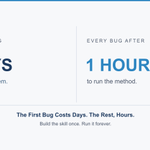
When the second bug came in, I invoked the skill.
What happened next : a movie started running on a script I'd already written.
---
I was no longer the investigator improvising through an unfamiliar system.
I was one of the actors, following a choreographed sequence.
The skill read the bug description. Investigated. Paused and asked for my review of the findings.
I approved.
Midway through, it surfaced a related defect. Stopped. Asked: fix this now or create a follow-on ticket?
I made the call.
At every UI navigation step: exact instructions.
Which menu. Which record. Which field to check. What screenshot to take. Specific commands for this system's interfaces.
---
🎬 All wrapped up <1 hour of active work.
The kind of hour that would have scattered across an entire week if I'd been re-deriving the investigation from scratch.
The next two bugs ran the same way: same pauses, same gates, same request for my judgment at exactly the moments that mattered.
---
💡 When the methodology stops being something you carry and becomes something the system executes.
You're no longer rebuilding context. You're applying judgment on top of a consistent process.
---
The skill got built during the first investigation, not as a separate exercise after, but as the methodology became clear while solving the problem.
Every bug since ran faster. Not because they were simpler. Because the path was already encoded. Repeatable. Persistent.
---
This is what a practitioner feels when a skill actually works the way it's supposed to.
Read up ➡️youplusai.com/build-the-skil…
#AIBuilders #SkillBuilding

A very interesting analysis of what it means to have Claude as a coworker in your team who understands your team context, not just yours.

The new Claude Tag feature seems extremely useful, but at the same time, a dangerous bargain for enterprises because of the pricing model and the risk of lock-in. The four big changes together mean that you interact with Claude as a coworker instead of a tool (the same Claude instance for everyone instead of each worker; soaks up tacit knowledge without your telling it; acts on its own; and does so asynchronously). All clearly very useful, but completely flips the interaction paradigm. anthropic.com/news/introduci…
Let’s talk about lock-in. As far as I can tell, Claude maintains its own memories in this new way of working; the human team members can’t see and edit them. (System administrators presumably can, but they have other things to do!) Tacit knowledge thus goes from a weakness of AI agents to a major strength — it seems inevitable that as teams and orgs start to use Claude this way, it will become the main queryable repository of all their tacit knowledge, creating dependence and stickiness. Effectively, Claude is a coworker that you can’t fire without *every* team losing workflows and know-how.
By the way, it also seems to introduce a new and pervasive security risk, since Claude can be integrated into private channels as well, and can be given access to repositories and tools even if the users in that channel don’t have access to them. Anthropic has introduced an interesting but complicated access control model to handle all this: claude.com/blog/agent-identi… But I’m not sure I trust people to understand and implement it correctly, nor the LLMs to be sufficiently robust against threats like prompt injection.
What about pricing? Claude is not like regular coworkers, because it bills for every token it produces. And it can do an unbounded amount of work, asynchronously and without being asked. In the current model, when AI is a tool, enterprises set per-user budgets, which creates accountability and keeps cost somewhat manageable. When everyone shares a Claude, it will be much harder to track and control spending. Of course you can set a token budget, but turning off Claude for the month for everybody when the budget is hit risks bringing work to a screeching halt.
When AI companies talk about the next stage of AI being a “drop-in replacement” for human workers, it should be understood not as a technical innovation but a business model innovation, enabling more value capture and rent extraction. AI companies are no longer competing for a share of enterprises’ IT budgets but rather a share of their entire labor spend, which is orders of magnitude bigger. Claude Tag is a big milestone in this evolution. This shift is very good for AI companies, but it is unclear if it is good for their customers.

A useful reminder that unguided use of AI in Healthcare diagnosis can leave the patient with a lot of anxiety and no clear next steps.

Had a visibly distraught and shaken lady in her 40’s who had been told she possibly had pancreatic cancer by a posh AI driven cancer screening package costing her over 20k!
Of course, she was referred to me, the endocrinologist, apparently the expert in all things pancreas!
Reason? Her glossy, colorful, booklet album of results showed a mildly elevated ca19-9
(With normal scans-again very posh looking)
First! Ca19-9 is a terrible cancer screening tool! (The AI should have got that right)
Second! Don’t bother doing a test if you have no clue what to do with the result! At least get the referrals right! (The AI should have got that right)
Finally! Cancer screening is serious business, requires evidence-based pathways, careful test selection and expert oversight. Clearly meagre oncologists were not consulted or their advice overruled by the I behind the AI!
Fancy interiors, glossy reports and “luxury healthcare experiences” clearly trumped clinical judgement!
Of course my oncologist then reassured her plenty ….verbally and with further scans to prove her worth (ruling out becomes her responsibility!)
₹20,000 spent creating anxiety….
Another ₹10,000 spent proving the ₹20,000 was a mistake!….
Moral of the story:
screening should start with your doctor! Not in the lab / fancy machine however exotic the interiors!
#screening #healthcare #health #oncology #doctors
Ranga Sampath | Build AI Services for Businesses retweeted

Had a visibly distraught and shaken lady in her 40’s who had been told she possibly had pancreatic cancer by a posh AI driven cancer screening package costing her over 20k!
Of course, she was referred to me, the endocrinologist, apparently the expert in all things pancreas!
Reason? Her glossy, colorful, booklet album of results showed a mildly elevated ca19-9
(With normal scans-again very posh looking)
First! Ca19-9 is a terrible cancer screening tool! (The AI should have got that right)
Second! Don’t bother doing a test if you have no clue what to do with the result! At least get the referrals right! (The AI should have got that right)
Finally! Cancer screening is serious business, requires evidence-based pathways, careful test selection and expert oversight. Clearly meagre oncologists were not consulted or their advice overruled by the I behind the AI!
Fancy interiors, glossy reports and “luxury healthcare experiences” clearly trumped clinical judgement!
Of course my oncologist then reassured her plenty ….verbally and with further scans to prove her worth (ruling out becomes her responsibility!)
₹20,000 spent creating anxiety….
Another ₹10,000 spent proving the ₹20,000 was a mistake!….
Moral of the story:
screening should start with your doctor! Not in the lab / fancy machine however exotic the interiors!
#screening #healthcare #health #oncology #doctors
A customer waited months for a fix that was a few days of work.
The back-merge broke something else. Engineers already on the next sprint got pulled back.
Nobody did anything wrong.
The process worked exactly as designed.
That was the problem.
---
The best work I did in infrastructure software happened when a small team embedded directly with a customer. No release train. You knew every week whether what you built worked.
The difference was ownership.
It never became a delivery model. The economics didn't allow it.
AI is beginning to change that calculation.
---
Not 10x faster. The evidence doesn't support that on complex codebases.
But enough compression that 1–2 engineers with an agent can own one customer's branch of the actual product codebase — and make it work.
The FDE model is becoming viable beyond a handful of accounts.
---
Read up on how the FDE model may apply to you when building infrastructure software @ youplusai.com/the-fde-model/
#ForwardDeployedEngineer #AIEngineering #InfrastructureSoftware
