

I build markets for things that don't have them yet. CMO @Movement_xyz.
Joined January 2017
- Tweets6K
- Following105
- Followers1.3K
- Likes5.7K







Akeel ۞ retweeted

For 80 years and 80 more.
40 for 80: Vallejo’s own E-40 traces his path from a young fan in the Bay Area to a proud member of the Faithful, sharing what the 49ers have meant to him as the team celebrates its 80th season.
@LEVIS
We can do better by including a community that already believes in the mission.
yfo.re/5t3690pp

Akeel ۞ retweeted

I don't want flying cars.
I want rivers and ocean I can swim in with friends.
I want food that isn't full of toxic chemicals and clean soil to grow it in.
I want raw nature and wilderness and places on the earth I can get lost without seeing another human.
I want air that isn't "geoengineered" and polluted.
Science is cool. Technological advancement is cool, but I don't think this makes us happier as humans.
Real human connection and clean, natural food lead to happiness. This I know. Flying cars? I'm not sure.
Maybe I am a troglodyte...

Back in the day Crypto Twitter worked because people cared.
They picked sides, backed projects, shared trends, argued loudly.
It wasn’t passive. Everyone had a stake, and conviction was visible.
The job market in this industry runs in the same cycle as everything else. when the last round of capital runs dry and tokens are down, teams cut down to senior and revenue-driving roles only. Hiring freezes are lagging indicators, not leading ones.


cofounder fallouts kill more early companies than bad markets do. solo founding beats a partnership you're not fully aligned on.
the market decides what "good traction" looks like at any given time, and that bar moves faster than most founders expect.
Akeel ۞ retweeted

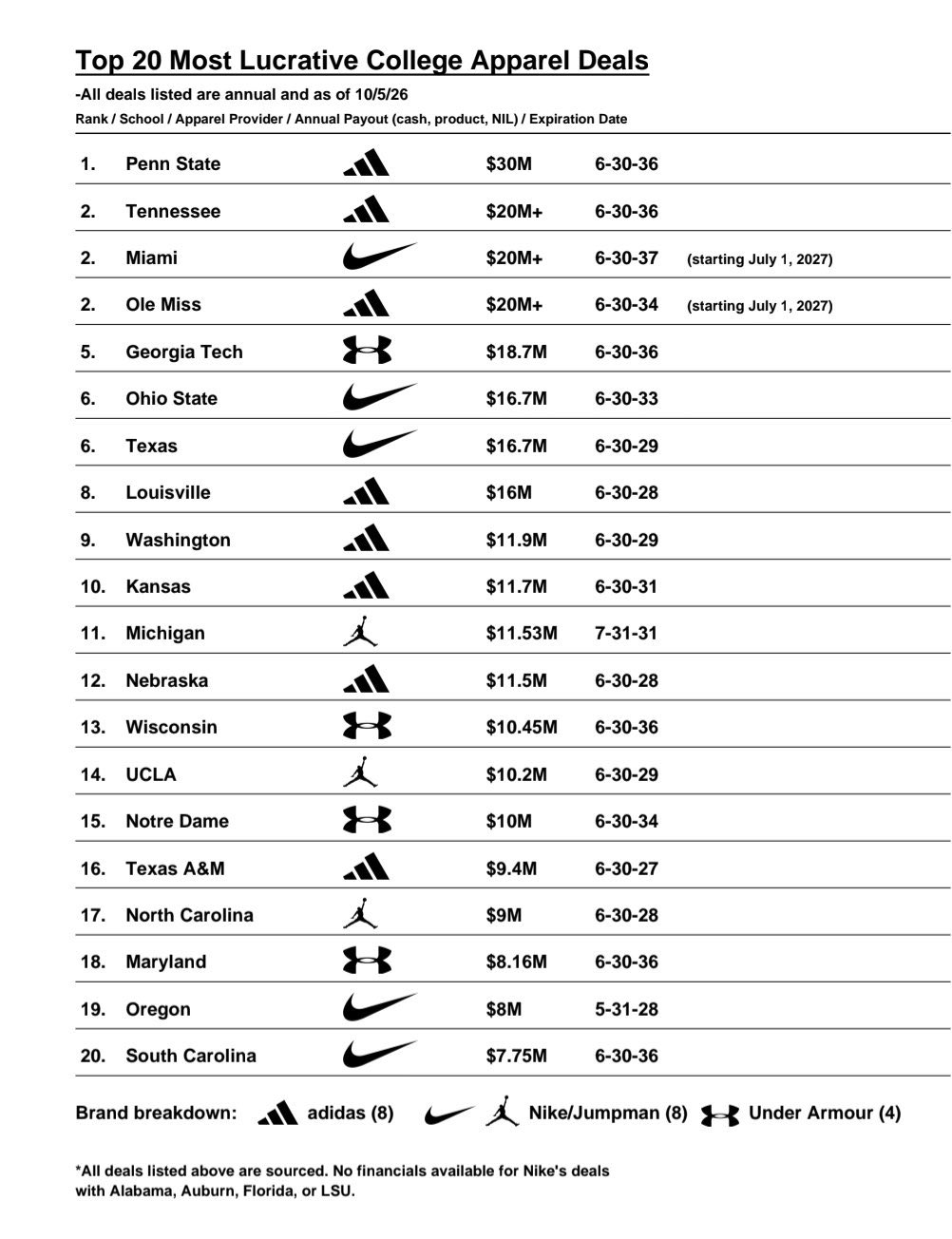
UPDATED Top 20 most lucrative college apparel deals
Adidas really coming for Nikes head 👀
building a great tool takes more than engineering discipline. the best builders think like the person who has to use the thing, not just the person who has to ship it.
Funny how putting something off feels harder than just doing it.
The stress piles up in your head.
Then you start, and it’s…fine.
Wild how often the lie wins over the progress.
there's a version of ambition that scares off investors and a version that attracts them. the difference is whether that version is backed by execution or just by confidence.


Akeel ۞ retweeted

this is brutal


Anthropic Subscriptions Offer 5x+ More Value Than OpenAI
Limit testing every AI subscription plan from Anthropic, OpenAI, Meta, SpaceXAI, MiniMax, Moonshot, Zdotai, Cursor, and Cognition
newsletter.semianalysis.com/…

DeFi yields look juicy for a structural reason. Leverage builds up quietly, and when it unwinds it tends to snap rather than unwind gracefully. A lot of that yield was never free money, it was compensation for volatility that people didn't realize they were underwriting.
geography matters for two things only: access to talent you can hire, and proximity to customers. everything else is optics.
Akeel ۞ retweeted

Third question on AI.
A question that also remains unasked is whether the AI boom can continue without leading to a massive increase in inequality.
A recent paper by Stijn Van Nieuwerburgh runs the numbers on how much revenue the AI industry needs to generate to recover its massive investment (summary and a link to the paper can be found here: brookings.edu/articles/finan…).
Van Nieuwerburgh’s arithmetic should make us more concerned. AI investments will average about 3.6% of GDP annually between 2025 and 2032. Van Nieuwerburgh calculates that, using a 10% rate of return, the industry would need to generate annual revenues of about $3.7 trillion by 2032 to recover these costs (growing from its current levels of about $200 billion or so). That is significantly more than 10% of current US national income, and will likely remain around 10% of national income by 2032, even if GDP growth rose from its current level.
A large fraction of this revenue will go to capital income. That means a massive increase in the share of capital in national income, which has already risen substantially over the last 25 years or so – now standing at an all-time high of about 47% (bls.gov/news.release/pdf/pro…).
Capital income is much more unequally distributed than labor income, so a massive increase in the capital share of national income will translate into a very sizable surge in inequality.
The rise in inequality may not stop with the capital share. My work with Pascual Restrepo documents that (automation-driven) increases in the capital share of national income are typically associated with rising labor income inequality as well (see, for example, economics.mit.edu/sites/defa…). The same may happen in the next several years, boosting inequality further.
What is missing from our current debate is any discussion of a fundamental dilemma these numbers pose: can the AI boom avoid both an economically costly crash and a huge increase in inequality?
If the industry reaches these revenues, inequality surges. If the industry does not become profitable, a crash, with substantial costs in terms of lost output and jobs, becomes likely.
My assessment would be that the industry is unlikely to reach levels of revenue Van Nieuwerburgh calculates. First, diffusion has been and will likely continue to be slow. Second, competition from open-weight models, which are getting better, will limit how much proprietary models can charge. Third, despite important advances, I still believe that AI models will not be able to automate entire occupations anytime soon, thus limiting their value to businesses as cost-saving devices.
Whether this leads to a crash or not is more complicated and will depend on whether various AI companies are bailed out and what kind of support they receive.
Nevertheless, even if revenues fall short of these gargantuan amounts and we avoid a dramatic surge in inequality, I expect that the diffusion of AI will push up inequality between capital and labor and within labor.
If inequality does surge, a further question becomes central: can our democracy survive such astronomical levels of inequality?
