
Computational Structural Biologist - WhiteLab Genomics
Paris
Joined February 2021
- Tweets121
- Following313
- Followers86
- Likes251

Pinned Tweet
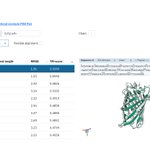
🎉 I am thrilled to present our latest work on “ATLAS”, a database of all-atoms molecular dynamics simulations, now published in @NAR_Open (doi.org/10.1093/nar/gkad1084).
🌐 Explore it at: dsimb.inserm.fr/ATLAS 🌐

Yann Vander Meersche retweeted

Binder design has come of age thanks to generative models—but how can we access the wider array of dynamic, multistate protein functions, so elegantly employed by nature?
@mihirbafna14 and I are excited to share SwitchCraft, a framework for designing such functions. (1/7)
Yann Vander Meersche retweeted

Today we're announcing ESMFold2, an open scientific engine to power prediction, design, and discovery across protein biology.
The new model delivers state of the art performance on protein interactions, especially antibodies, a critical modality for therapeutics.
We have designed and validated miniprotein binders and single chain antibodies across five therapeutic targets that are important in cancer and immunology. We are seeing very high success rates, and affinities at levels consistent with therapeutic activity.
We’re also releasing an atlas of 6.8 billion proteins, and 1.1 billion predicted structures.
ESMFold2 is built on a state of the art language model that has been trained on billions of protein sequences.
A world model of protein biology emerges through language modeling.
We’ve used the techniques of mechanistic interpretability developed to understand large language models to understand the concepts ESM uses to represent proteins.
The model’s representation space has a compositional organization of features across scales, levels of complexity, and abstraction, that reflects and mirrors the understanding of protein biology developed through a century of empirical science.
This understanding emerges without prior knowledge, just from language modeling of protein sequences.
Language models are becoming a powerful substrate to understand and program biology.
The design of protein interactions is one of the most fundamental problems in biophysics, and has critical implications for the discovery of new medicines. A simple gradient based search with the model was able to discover high-affinity protein binders.
I'm excited by the potential this has to accelerate basic science and the understanding of proteins. And especially for the new avenues it opens up for therapeutic design and medicine.
Yann Vander Meersche retweeted

Proteina family keeps growing! Now binders with heavy experimental validation 🧬🧑🔬

📢 We’re launching Proteina-Complexa — and after the Jensen keynote mention, we definitely had to post this thread now ;)
Atomistic binder design with generative pretraining + test-time compute, plus large-scale wet-lab validation.
Project page: research.nvidia.com/labs/gen…
🧵 1/n
Yann Vander Meersche retweeted

HD-Prot: A Protein Language Model for Joint Sequence-Structure Modeling with Continuous Structure Tokens
1. HD-Prot proposes a novel hybrid diffusion framework that integrates continuous structure tokens into protein language models (pLMs), effectively bridging the gap between discrete sequence and continuous structure modalities. This approach avoids the information loss associated with traditional quantization methods, enabling more accurate and detailed protein structure modeling.
2. The model leverages a non-quantized autoencoder as the structure tokenizer, achieving high-fidelity reconstruction of protein structures with minimal loss of fine-grained details. This sets it apart from previous methods that rely on discrete tokens, which often omit crucial structural information.
3. HD-Prot employs a unified absorbing diffusion process to capture inter-token dependencies across modalities, allowing seamless joint modeling of protein sequences and structures. It estimates token distributions using categorical prediction for sequences and continuous diffusion for structures.
4. Extensive experiments demonstrate HD-Prot's competitive performance in various tasks, including unconditional sequence-structure co-generation, motif-scaffolding, protein structure prediction, and inverse folding. Notably, it achieves these results with significantly lower computational resources compared to state-of-the-art models.
5. The study highlights the potential of using continuous tokens for protein structure representation within pLMs, offering a promising alternative direction for multimodal protein modeling. It also provides valuable insights into practical implementation, such as robust modality expansion and efficient low-cost training.
📜Paper: arxiv.org/abs/2512.15133v1
#ProteinModeling #AIinBiology #MultimodalLMs #ComputationalBiology

Yann Vander Meersche retweeted

Flexibility or uncertainty? A critical assessment of AlphaFold 2 pLDDT dlvr.it/TPfmV7
Yann Vander Meersche retweeted
Structure Flexibility or Uncertainty? A Critical Assessment of AlphaFold 2 pLDDT
1. A comprehensive study by Vander Meersche et al. evaluates the relationship between AlphaFold 2 and 3's pLDDT scores and protein flexibility metrics derived from molecular dynamics (MD) simulations and NMR ensembles. The research reveals that while pLDDT correlates reasonably well with MD and NMR flexibility, it struggles to capture flexibility in proteins crystallized with interacting partners.
2. The study highlights that pLDDT values from AlphaFold 2 and ESMFold show a moderate to strong correlation with MD-derived flexibility metrics, particularly RMSF, suggesting potential for assessing protein flexibility. However, pLDDT poorly reflects flexibility in regions stabilized by ligands or other molecules, indicating limitations in capturing dynamic behavior influenced by interactions.
3. Comparisons with experimental B-factors demonstrate that pLDDT provides a better indication of protein flexibility than B-factors in the absence of interactions. This finding suggests that pLDDT could be a more relevant metric for evaluating flexibility in certain contexts, although it still falls short when considering partner-induced dynamics.
4. The research also explores the impact of co-crystallized contacts on flexibility metrics, showing that MD simulations better capture the increased flexibility of regions when these contacts are removed, while pLDDT distributions remain largely unaffected. This highlights the importance of considering interaction environments when interpreting pLDDT values.
5. AlphaFold 3's pLDDT values exhibit similar trends to AlphaFold 2, with no significant improvements in correlating with flexibility metrics from NMR ensembles. This indicates that despite updates, the core limitations of pLDDT in capturing dynamic flexibility remain, especially for proteins with interacting partners.
📜Paper: cell.com/structure/abstract/…
#AlphaFold #ProteinFlexibility #MolecularDynamics #NMR #StructuralBiology #Bioinformatics

Yann Vander Meersche retweeted

RFdiffusion3 Now Open Source, Designs DNA Binders and Advanced Enzymes - GEN article
genengnews.com/topics/artifi…

Yann Vander Meersche retweeted

Fast prediction of protein flexibility biorxiv.org/content/10.64898… #biorxiv_bioinfo
Yann Vander Meersche retweeted
Inferring Local Protein Structural Similarity from Sequence Alone
1. A groundbreaking study by researchers at UC San Diego demonstrates that protein language models (pLMs) can detect local structural similarities in proteins using only sequence data. This approach bypasses the need for 3D structural models, making it a scalable and efficient alternative for structural annotation and evolutionary analysis.
2. The study introduces a novel framework that leverages sliding window embeddings and cosine similarity to identify structurally aligned regions. By applying a sigmoid-based transformation, the method enhances alignment signals, enabling the detection of local similarities even in proteins with low sequence identity.
3. Among various pLMs tested, ProtT5 and ProstT5 emerged as the most effective models for capturing fine-grained structural information. ProstT5, which incorporates structural information during training, achieved higher precision and F1-scores, outperforming other models in identifying locally aligned regions.
4. The method was validated on the MALISAM benchmark, a dataset of structurally analogous proteins with no common ancestry. The approach successfully identified high-scoring local regions with TM-scores above 0.5 in many cases, despite low global structural similarity.
5. Comparative experiments showed that the proposed method outperformed baseline approaches based on residue alignment and predicted 3Di sequences, highlighting the superior ability of pLM embeddings to encode local structural information.
📜Paper: biorxiv.org/content/10.1101/…
#ProteinStructure #Bioinformatics #MachineLearning #ComputationalBiology

Yann Vander Meersche retweeted
Rewriting Protein Alphabets with Language Models
1. A groundbreaking study introduces TEA (The Embedded Alphabet), a novel 20-letter alphabet derived from protein language models, enabling highly efficient large-scale protein homology searches. This method achieves sensitivity comparable to structure-based approaches without requiring structural information, bridging the gap between deep learning representations and traditional sequence bioinformatics tools.
2. The core innovation lies in using contrastive learning to convert high-dimensional protein language model embeddings into a discrete alphabet. This allows for rapid sequence comparisons using optimized tools like MMseqs2, while retaining the ability to detect remote homologs with structural similarity, offering a powerful alternative to existing methods.
3. TEA demonstrates remarkable performance in benchmarks, achieving high sensitivity in detecting homologs within the SCOPe40 database and multi-domain proteins from the AlphaFold Database. It outperforms traditional sequence alignment methods and matches the accuracy of structure-based searches, all while maintaining low computational costs.
4. An intriguing aspect is the use of entropy as a confidence metric, providing a measure of prediction reliability. This allows researchers to filter results based on confidence levels, enhancing the accuracy of functional annotations and structural predictions, especially in challenging cases like disordered regions or poorly modeled structures.
5. The study highlights TEA’s potential to improve functional annotation by connecting structural singletons in the AlphaFold Database to cluster representatives. This approach identifies over 14 million new connections with high accuracy, suggesting TEA could revolutionize clustering efforts and reveal novel functional relationships.
6. Looking ahead, TEA offers a versatile framework for creating specialized alphabets tailored to specific biological goals, such as function prediction or interface description. This could extend its applications to RNA sequences and other areas, further integrating deep learning into bioinformatics workflows.
7. The TEA model and training scripts are available on GitHub, along with converted TEA sequences for popular databases like AFDB Clusters and UniRef50, making it accessible for researchers to integrate into their workflows.
📜Paper: biorxiv.org/content/10.1101/…
#ProteinLanguageModels #Bioinformatics #ContrastiveLearning #HomologySearch #StructuralBiology #ComputationalBiology

Yann Vander Meersche retweeted

As with metagenomic seqs, one issue is that they used the standard genetic code to translate the contigs. With common clustering protocols the dset could perhaps be improved, or even by considering filters like ProTrek-scores or pLDDT_Predictor github.com/jw-chae/pLDDT_Pre…

Yann Vander Meersche retweeted
Targeting peptide–MHC complexes with designed T cell receptors and antibodies
🚀 New preprint from David Baker!🚀
1. Researchers have developed a novel deep learning framework named ADAPT to design T cell receptors (TCRs) and antibodies that specifically bind to peptide–MHC (pMHC) complexes. This approach leverages structure-based design principles to create highly specific binders for a diverse panel of pMHC targets, including cancer-associated epitopes and viral peptides.
2. The ADAPT pipeline combines fine-tuned Alphafold2 conformational sampling with ProteinMPNN sequence design. It introduces diversity through multiple TCR/antibody templates and random CDR3 sequences, enabling the generation of robust and specific binders. Cryo-EM structures confirm atomic-level accuracy at the recognition interface.
3. A key innovation is the ability to design TCRs and antibodies with high specificity for pMHC targets, overcoming challenges posed by the composite nature of the pMHC interface. This method shows promise for applications in cancer immunotherapy, autoimmune disease treatment, and infectious disease management.
4. The study demonstrates the potential of computationally designed TCRs and antibodies to activate T cells specifically in the presence of target peptides. Despite challenges in achieving perfect specificity, the results provide valuable insights into TCR–pMHC interactions and their implications for immunotherapy.
5. The ADAPT framework is designed to be accessible and scalable, with open-source scripts available for running the pipeline. This work highlights the potential of combining deep learning and protein design to create novel therapeutic agents targeting complex biological interfaces.
📜Paper: biorxiv.org/content/10.1101/…
💻Code: github.com/phbradley/ADAPT
#biotech #immunotherapy #proteinengineering #TCR #antibodydesign #deeplearning

Yann Vander Meersche retweeted
PepTriX: A Framework for Explainable Peptide Analysis through Protein Language Models
1. PepTriX introduces a novel approach to peptide classification by integrating one-dimensional sequence embeddings and three-dimensional structural features. This integration is achieved via a graph attention network enhanced with contrastive training and cross-modal co-attention, offering both predictive robustness and interpretability.
2. Traditional peptide classification methods often rely on handcrafted features and struggle with scalability or capturing complex sequence-function relationships. PepTriX leverages ESM-2 and ESMFold to encode evolutionary and structural information directly from raw sequences, overcoming these limitations.
3. A key innovation of PepTriX is its use of contrastive learning to align sequence and structure modalities. This ensures that the model learns the biophysical rules connecting the peptide’s blueprint (1D sequence) to its functional form (3D structure), enhancing generalizability and biochemical plausibility.
4. The framework employs a lightweight graph attention network (GAT) to analyze 3D structures. Unlike traditional GCNs, the GAT focuses on biochemically significant interactions rather than treating all neighbors equally, enabling the model to identify critical structural motifs.
5. PepTriX provides interpretability through cross-modal co-attention, generating attention maps that link sequence features to structural determinants of peptide function. This allows domain experts to validate predictions and gain insights into the structural and biophysical drivers behind them.
6. Evaluated across diverse peptide classification tasks, PepTriX demonstrates high performance, achieving F1-scores comparable or superior to existing methods. The framework is adaptable to various datasets and biological domains, making it a versatile tool for peptide research.
7. Limitations include a focus on two-class labels and the need for domain expertise to interpret attention maps. Future work aims to extend the framework to multi-label and regression settings, as well as to provide calibrated uncertainty estimates.
📜Paper: arxiv.org/abs/2511.10244v1
#ComputationalBiology #PeptideClassification #ProteinLanguageModels #Interpretability #AIinBiology

Yann Vander Meersche retweeted

Today we’re thrilled to announce JAM-2 — the first AI model capable of generating drug-quality antibodies straight from the computer, with industry-leading success rates.
> Drug-like affinities: Picomolar to single-digit nanomolar antibody binders for half of 26 targets while testing <45 designs each.
> Unlocking hard targets: Up to 11% success rate for direct on-cell GPCR binders; top antibody hits in the single-digit nanomolar range.
> Unprecedented epitope breadth: JAM-2 routinely designed antibodies that hit 30–70% of user-defined epitopes, now enabling intentional design of biology — not chance discovery.
> Drug-like developability: Over 50% of antibody designs passed core industry developability criteria with zero optimization.
> Massive leverage: A four-person team prosecuted 16 targets in parallel in < 1 month.
JAM-2 is the first de novo antibody design capability ready for front-line use in drug discovery, matching or surpassing traditional discovery approaches.
We’re already deploying JAM-2 with multiple large pharma partners and seeing excellent results.
If you’re interested in partnering on molecule development or accessing JAM-2, contact bd@nabla.bio.
Read more in our whitepaper (link below)
Yann Vander Meersche retweeted
Peptide2Mol: A Diffusion Model for Generating Small Molecules as Peptide Mimics for Targeted Protein Binding
1. Peptide2Mol introduces a novel approach to generate small molecules that mimic peptide binders, leveraging an E(3)-equivariant graph neural network diffusion model. This innovation bridges the gap between peptides and small molecules in drug design, addressing limitations of traditional methods that often neglect peptide-protein interactions.
2. The model is trained on diverse datasets, including small-molecule conformation ensembles, protein-ligand complexes, and protein-peptide interactions. This comprehensive training enables Peptide2Mol to generate molecules that not only mimic peptide binding interactions but also maintain favorable drug-like properties.
3. Peptide2Mol achieves state-of-the-art performance in non-autoregressive generative tasks, producing molecules with high similarity to original peptide binders. The model also allows for partial diffusion processes to optimize molecules and design peptidomimetics, enhancing its practicality in drug discovery.
4. The study demonstrates that Peptide2Mol-generated molecules exhibit competitive chemical validity and plausibility, with improved performance on benchmarks such as PoseBusters when refined with a partially masked autoregressive step. This highlights the model's potential for generating structurally sound and dockable molecules.
5. Peptide2Mol's ability to identify preferred chemical groups for replacing amino acids provides valuable insights into residue-specific mimicry. This feature is crucial for transforming peptide binders into small molecules while preserving key binding interactions.
6. The authors suggest future directions, including coupling Peptide2Mol with physics-based simulations to assess stability and binding mechanisms beyond docking scores. This could further validate the model's applicability in drug design.
📜Paper: arxiv.org/abs/2511.04984v1
#Peptide2Mol #DrugDiscovery #AI #DiffusionModel #ProteinBinding #PeptideMimics

Yann Vander Meersche retweeted

Protein language models just got an upgrade. Meet Profluent-E1: a free, flexible, frontier protein sequence encoder.
E1 is built with retrieval augmentation to learn from multiple sequences. Models trained over 4T tokens with only 150M-600M params, E1 is SOTA for zero-shot functional and unsupervised structural tasks. It raises the bar for protein representation learning and is freely available today.
Yann Vander Meersche retweeted
GeoPep: A geometry-aware masked language model for protein-peptide binding site prediction
1. GeoPep introduces a novel framework for predicting peptide binding sites on proteins by leveraging transfer learning from ESM3, a multimodal protein foundation model. This approach effectively addresses the challenge of limited structural data for protein-peptide interactions by fine-tuning ESM3’s pre-trained representations.
2. The model incorporates Kolmogorov-Arnold Networks (KANs) as downstream predictors, which are parameter-efficient and capable of capturing complex binding patterns from sparse data. This architecture significantly enhances training efficiency and model performance.
3. GeoPep employs distance-based loss functions to enforce spatial coherence in binding site predictions. This regularization ensures that predicted binding sites maintain realistic 3D relationships, improving the accuracy and continuity of the predicted binding surfaces.
4. Comprehensive evaluations demonstrate that GeoPep outperforms existing methods in protein-peptide binding site prediction. It achieves state-of-the-art performance across various metrics, including precision, recall, and geometric accuracy.
5. GeoPep’s ability to accurately predict binding sites without explicit structural input highlights its potential for applications in drug discovery and peptide inhibitor design. Future work may focus on expanding datasets and extending the model to predict binding affinities.
📜Paper: arxiv.org/abs/2510.27040v1
#ComputationalBiology #ProteinPeptideInteractions #DeepLearning #BindingSitePrediction

Yann Vander Meersche retweeted

ODesign: A World Model for Biomolecular Interaction Design | Odin Zhang et al.
- "ODesign allows scientists to specify epitopes on arbitrary targets and generate diverse classes of binding partners with fine-grained control. Across entity-, token-, and atom-level benchmarks in the protein modality, ODesign demonstrates superior controllability and performance to modality-specific baselines. Extending beyond proteins, it generalizes to nucleic acid and small-molecule design, enabling interaction types such as protein-binding RNA/DNA and RNA/DNA-binding ligands that were previously inaccessible."
Technical Report: odesign1.github.io/static/pd…
Project Page: odesign1.github.io/
Yann Vander Meersche retweeted

OpenFold3 is finally out! New fully open-source AF3 reproduction from @open_fold Consortium
Try it out on @tamarindbio now!
The model is released with training code, similar performance to AlphaFold3 on protein-ligand complexes, best performance ever for RNA structure prediction, and the same functionalities of other AlphaFold3 reproductions.
Yann Vander Meersche retweeted
A Multimodal Human Protein Embeddings Database: DeepDrug Protein Embeddings Bank (DPEB)
1. DPEB is a novel database that integrates 22,043 human proteins with four types of embeddings: structural (AlphaFold2), transformer-based sequence (BioEmbeddings), contextual amino acid patterns (ESM-2), and sequence-based n-gram statistics (ProtVec). This multimodal approach provides a comprehensive representation of proteins, capturing both structural and functional information.
2. The database addresses a significant gap in the field by providing AlphaFold2-derived embeddings for computational modeling. AlphaFold2 has achieved remarkable accuracy in protein structure prediction, but its internal neural network embeddings were not previously available for large-scale use. DPEB makes these embeddings accessible, enhancing the potential for protein-protein interaction (PPI) prediction and other applications.
3. Benchmark evaluations demonstrate the effectiveness of DPEB. GraphSAGE with BioEmbedding achieved the highest PPI prediction performance (87.37% AUROC, 79.16% accuracy). The framework also showed strong performance in enzyme classification (77.42% accuracy) and protein family classification (86.04% accuracy), highlighting its versatility and utility in various biological tasks.
4. DPEB supports multiple graph neural network methods for PPI prediction, including GraphSAGE, GCNs, GTNs, GATs, and GINs. This flexibility allows researchers to select the most appropriate methods for their specific biological questions, facilitating applications in systems biology, drug target identification, pathway analysis, and disease mechanism studies.
5. The database integrates data from multiple sources, including UniProt, STRING, IntAct, HPRD, and HuMap, ensuring high-quality and comprehensive coverage of human protein interactions. The integration of these diverse data sources with multimodal embeddings makes DPEB a powerful resource for computational biologists.
6. DPEB is publicly available through the AWS Open Data Program, ensuring free access for researchers worldwide. The dataset is released under the Creative Commons Attribution 4.0 International License (CCBY 4.0), and the source code for data processing and analysis is available under the MIT License, promoting transparency and reproducibility in research.
📜Paper: arxiv.org/abs/2510.22008v1
#ProteinEmbeddings #ComputationalBiology #DeepLearning #ProteinProteinInteractions #Bioinformatics #OpenData
