




Pinned Tweet
🚨
Here's a summary on the collaboration between the National Institute on Drug Abuse (NIDA) and an England pharma company called Reckitt & Colman (later became Reckitt Benckiser, then Indivior) and their push of their buprenorphine products, Subutex and Suboxone, to market: 🧵
Yancy retweeted

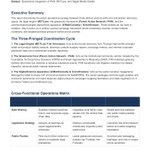
Want to see the businesses and groups $$ backing Kevin Sabet and Patrick Kennedy’s addiction/recovery astroturf juggernaut “The Kennedy Forum”? Patrick makes $ off pharma personally, and his groups are pushing prohibtion of whole-leaf Kratom. These are many of the same entities that lobbied for Rx opioid restrictions. They $ off addx pharma & benefit from lawsuit $ for their programs/products. strategy.alignmentforprogres…

Yancy retweeted

Opioid prescribing fell by more than half from its 2012 peak, and is now well below 1992 levels.
For the full talk on how research evidence shaped poor policy responses, see my AHSR plenary: youtu.be/svU90FHZ-Q0

Yancy retweeted
By 2016, data showed most US overdoses “involving” prescription opioids were multi-drug events: benzodiazepines, alcohol, heroin, fentanyl.
Policy cut prescriptions anyway. Patients cut off saw no proven benefit:
Yancy retweeted
The CDC- for awhile- miscounted fentanyl deaths as prescription opioid deaths. They also can’t know (never did) which decedents had received a prescription that was found in them at time of death versus which persons died with a substance procured from diversion of someone else’s meds
The use of MME is "junk science."
ovid.com/jnls/clinicalpain/f…


Beyond kratom: Concentrated 7-hydroxymitragynine and mitragynine pseudoindoxyl products, an MME potency assessment
Highlights
••
Morphine milligram equivalent (MME) estimates were derived for the three primary opioid-active kratom alkaloids: mitragynine, 7-hydroxymitragynine (7-OH), and mitragynine pseudoindoxyl.
•
Relative to morphine, μ-opioid receptor (MOR)-referenced potency was lower for mitragynine (geomean MME 0.13) and higher for 7-OH and mitragynine pseudoindoxyl (geomean MME 4.3 and 4.8, respectively).
•
Estimated mean per-serving MME across 90 marketed products ranged from 2.7 (powders) to 31 (tablets), with 7-OH and mitragynine pseudoindoxyl driving the highest values.
•
High per-serving mitragynine mass alone produced elevated MME in some product types (e.g., gummies, soft gels) despite minimal 7-OH or mitragynine pseudoindoxyl content.
•
FDA pharmacovigilance screening identified frequent reports of dependence, withdrawal, and psychiatric symptoms among users of 7-OH and mitragynine pseudoindoxyl, though polypharmacy effects could not be ruled out.
Abstract
Traditional kratom (Mitragyna speciosa) products consist of botanical leaf derivatives dominated by mitragynine, with minimal 7-hydroxymitragynine (7-OH) or mitragynine pseudoindoxyl content. Kratom-branded products containing concentrated 7-OH and mitragynine pseudoindoxyl have proliferated since 2024 and are pharmacologically distinct from and more potent than mitragynine at the μ-opioid receptor (MOR). Morphine milligram equivalent (MME) values for mitragynine, 7-OH, and mitragynine pseudoindoxyl were estimated. Functional in vitro and in vivo data from 13 studies informed alkaloid-specific MME estimates, which were applied to alkaloid concentrations in commercial products to derive per-serving and per-day MME totals. Relative to morphine, MOR-referenced potency was lower for mitragynine (geomean MME 0.13) and higher for 7-OH and mitragynine pseudoindoxyl (geomean MME 4.3 and 4.8, respectively). Mean per-serving MME ranged from 2.7 (powders) to 31 (tablets) across product types. Screening of U.S. Food and Drug Administration pharmacovigilance data identified frequent reports of dependence, withdrawal, and psychiatric symptoms among users of 7-OH and mitragynine pseudoindoxyl, but polypharmacy effects could not be ruled out. These findings support pharmacological differentiation between traditional, mitragynine-dominant kratom preparations and concentrated 7-OH/mitragynine pseudoindoxyl products, consistent with the U.S. Drug Enforcement Administration's July 2026 notice of scheduling intent, while traditional preparations retain non-negligible, mitragynine-ceiling-limited opioid activity.
sciencedirect.com/science/ar…
Date: January 2027
Article: 106272
Volume: Volume 173

Yancy retweeted

Let me reintroduce myself. I’m Stephen! I run the only funded overdose spotting hotline in the U.S. I’m a PWUD, overdose survivor, paramedic. I have an upcoming Editor’s Pick Tedx release TBD and my book, Everything You Know About Drugs is Wrong, will be released in Aug 27.
As of today, Oct 9, 2026:
Department of Justice Announces Updates to Emergency Scheduling Actions for 7-OH and Related Opioid Substances
justice.gov/opa/pr/departmen…


Yancy retweeted
Prohibition and opioid deprescribing are two of the most profound government-induced death campaigns of the last century. They have criminalized doctors (or deputized them as med cops) and justified racist structural oppression by police, child welfare, landlords & employers
What is adorable is the connection between Talis Abolin's mass tort law firm MCTLAW and the "anonymous" Anti-Kratom Association...


The kratom lobby’s new defense is adorable:
7-OH is dangerous. MP is dangerous. But kratom is just a harmless little leaf. 🌿
So we compared the toxicities.
Bad news for the botanical fairy tale: changing the molecule changes the toxicity. It does not magically make the source material safer.
globalkratom.org/kratom_vs_7…

Yancy retweeted

Many of the cancer patients I see have pain syndromes caused by their cancer treatments: postmastectomy pain syndrome, chemotherapy induced peripheral neuropathy, aromatase inhibitor induced polyarthralgia, radiation-induced brachial and lumbosacral plexopathies and the list goes on.
Oncologists are in the business of saving people from cancer and… they struggle with the idea that their treatments may have caused their patients suffering. So sometimes their cognitive dissonance prevents them from acknowledging the long-lasting, negative effects of cancer treatment.


CDC (12-month provisional overdose deaths, as of Dec 2025):
🟥 Amphetamine
🟪 Gabapentin
🟩 Mitragynine
🟨 Oxycodone
cdc.gov/nchs/nvss/vsrr/prov-…

Yancy retweeted

Rules for thee, not for me.
For years we were told to “follow the money” on Purdue, the Sacklers, and the opioid industry.
Fine. I agree.
But then follow all the money.
Indivior. Pacira. Vertex. Addiction-treatment companies. Drug-testing companies. Plaintiff firms. Mass-tort lawyers. Paid experts. Litigation consultants. Advocacy groups.
If Purdue funding matters, their funding matters too.
Same with kratom. Plaintiff lawyers have a formal Kratom Litigation Group. Litigation consultants are working kratom cases while also showing up in policy fights. Addiction-treatment interests are showing up too.
So disclose it.
Who pays you?
Who do you work for?
What lawsuits are you involved in?
Who benefits if the policy passes?
And yes, the same rule applies outside drug policy.
You want scrutiny of AIPAC?
Great. Me too.
But then bring the same scrutiny to CAIR and every other advocacy group trying to influence U.S. policy.
Before anyone screams because I mentioned Israel, ask yourself why “follow the money” suddenly becomes sacred for one side and optional for another.
Transparency that only applies to the people you already hate isn’t transparency.
Imagine hating capitalism but supporting mass tort lawyers.
Imagine you argue that a prescription opioid magically spawns addiction, while previously boasting about a 50-item grocery list of your own used substances.
The textbook definition of addiction...a compulsive drive to use any substance just to numb out and cope.

Yancy retweeted

Fentanyl analogs weren't even being routinely tested for up until and after 2017. All the deaths attributed to 'prescription opioids' are therefore suspect. PROP used conflated/incorrect data to justify draconian prescribing restrictions.
#PainCareCrisis
cdc.gov/mmwr/volumes/66/wr/m…

With all the talk about Kratom and Mitragynine lately...
it makes you wonder why street dealers have never made a market for it.
Or maybe this new shiney toy is all just another addiction treatment industry hoopla.