
Working on Embodied AI, Video/Audio Generation, and Large Language Models
Beijing
Joined January 2022
- Tweets159
- Following813
- Followers1.5K
- Likes508





Xu Tan retweeted

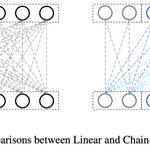
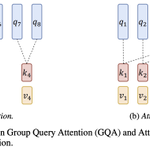
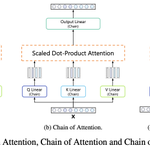
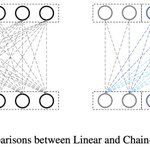
Todays, I want to introduce my latest research - "Chain-of-Model Learning for Language Model (arxiv.org/abs/2505.11820)", which presents a learning paradigm named Chain-of-Model (CoM) and devise Chain-of-Language-Model (CoLM), to unlock new functionalities of foundation models.

🔥 Chain-of-Model, a novel learning paradigm using the concept of chain in hidden dimension level (differ from Chain-of-Thought):
1) progressively add new chain for efficient model scaling;
2) offer varying model sizes (chains) for elastic inference.
arxiv.org/pdf/2505.11820
1/n

1
8
1,156
4) Elastic inference: use varying chains for varying capacity and latency in inference.
Due to resource limit, authors cannot scale up model any further.
Call for interests to try CoLM in larger scale to unleash its potential in efficient scaling and elastic inference.
9/n
1
239
Congrats to the leading authors @SongKaitao @WangXiaohua and all contributors!
Thanks @_akhaliq for posting this work!
Hope CoLM can become a new paradigm for efficient model scaling and elastic inference in LLMs, Diffusion Models, CNNs, and any other neural networks!
10/10
230
🔥Kimi-Audio, a universal audio foundation model pre-trained on 13+ million hours of audio data and achieving SOTA performance on 10+ audio benchmarks.
Tech Report: arxiv.org/abs/2504.18425
Model & Code & Evalkit: github.com/MoonshotAI/Kimi-A…
Congrats to the excellent team!


Announcing 🎙️ Kimi-Audio! Our new open-source audio foundation model advances capabilities in audio understanding, generation, and conversation.
Key Features & Achievements:
✅ Universal audio foundation model handles diverse tasks like speech recognition, audio understanding, audio-to-text chat, speech-to-speech conversation.
✅ Large-scale pre-training on >13 Million hours of diverse audio data (speech, music, sounds).
✅ Unique 12.5Hz tokenizer & hybrid architecture for rich perception and efficient generation.
✅ SOTA on 10+ audio benchmarks: excels in Speech Recognition (LibriSpeech 1.28/2.42 WER), Audio Understanding (MMAU, VocalSound), and Conversation (VoiceBench).
We're also releasing our comprehensive evaluation toolkit to foster fair benchmarking! 🛠️
📄Dive into the details in our Technical Report: github.com/MoonshotAI/Kimi-A…
🌟Explore the Code, Models & Eval Toolkit on
GitHub: github.com/MoonshotAI/Kimi-A…
HuggingFace: huggingface.co/moonshotai/Ki…
Excited to see the innovative audio applications the community will build!


Xu Tan retweeted

1/n: 🚀 Announcing YuE (乐) – the most powerful open-source full-song music generation model! 🎵 Tackle the lyrics-to-song task (like Suno.ai) with support for diverse genres, stunning vocals, & multiple languages. Bonus? It’s Hugging Face & LLAMA-compatible for easy fine-tuning. 🛠️
Code: github.com/multimodal-art-pr…
Demo: map-yue.github.io/
Scaling law for domain-specific continual pre-training scenarios.

Excited to share our latest research paper! 📄📷 In this study, we explore Scaling Law in Domain-specific Continual Pre-training scenarios. Our findings reveal the relationship between model performance and mixture ratios. Check it out here: arxiv.org/abs/2406.01375#LLM #ScalingLaw
10
1,794
Xu Tan retweeted

🚀 Excited to announce that the tech report of MAP-Neo (map-neo.github.io/): a fully open-source and transparent bilingual LLM suite with superior performance to bridge the gap with closed-source models, is now available:
arxiv.org/pdf/2405.19327
🔧MAP-Neo's workflow encapsulates the entire process of building an LLM from data curation, model training, to evaluation and we provide the *FULL details* for every single stage, including access to its data, training code, models, and evaluation protocol 👇 [Tweet 1]
1/n
Scaling law is the key to LLMs. How about scaling law for multimodality (e.g., audio, visual)?
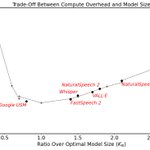
We plot some speech synthesis/recognition models and speech scaling law. Seems most synthesis models are OVER-parameterized compared to the compute-optimal model/data allocation.

7/n
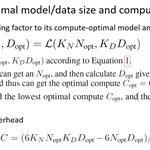
We also collect scaling law coefficients for multimodality (text/speech/image/molecules/code) and get the optimal model/data allocation. Although most modalities show similar scaling strength on model and data (a~=b~=0.5), there are clear differences...
TO BE CONTINUED...

1
6
1,148