


xonkius retweeted

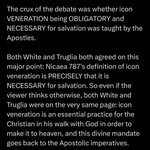
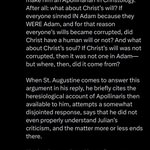
Archpriest Konstantine Jincharadze on the opinions of Romanides, Meyendorff, Vlachos, and Schmemann concerning original sin.


xonkius retweeted

J’ai entendu dire que la France était finie, qu’il était trop tard pour la sauver.
Mais la France est toujours aussi belle, enviable même. Sa grandeur n’a pas disparu, elle ne demande qu’à renaître.
Nous avons surmonté en un an un problème cent fois plus grave, sans avoir les moyens dont dispose la France.
La France pourrait y arriver en une semaine.


xonkius retweeted

Priest John Romanides' screed against the Franks became so extreme that he praised the atheist French Revolution that murdered the King of France and his family. Via Pantelis Kalaitzidis in The Image of the West in
Contemporary Greek Theology, pp. 146, 147
In 1814, Tsar Alexander I of Russia entered Paris, after defeating Napoleon, and he ordered 7 Russian Orthodox priests to hold a ceremony to cleanse France from the sin of regicide.
Kalaitzidis would point out that this was an example, according to Romanides, of Slavic collaborationism with the Germanics against the the authentic Orthodox Romiosyne.
academia.edu/6489751/The_Ima…


xonkius retweeted

Antioch and Rome remained in full communion until 1100A.D. The appearance of Our Lady occurred in 1061 A.D.
The Antiochian Church has allowed us to commemorate this important part of English Chrisendom in both the Eastern and Western Rite. (In the U.K., even the Eastern Rite clergy make pilgrimage to Walsingham with their Metropolitan annually).
antiochian-orthodox.com/post…

xonkius retweeted
One of the reasons why there is this a-historical bias against the West in certain very niche Orthodox circles is due in part to particular kinds of ethnophobia via Priest John Romanides. A fellow Greek criticizes him for his Anti-Germanic and Anti-Slavic bias here. This is, consequently, why I'm constantly engaging in exposing more people to the Pre-Schism Orthodox Catholic faith of the Anglo-Saxons, the Franks, and the Nords. Far too many Orthodox Catholics have fallen for this slop pretending to be history from the rantings of a man who was an extreme Hellenistic supremacist.
classics-at.chs.harvard.edu/…

xonkius retweeted

‘One of the dogmas most hated by liberals and modernists is the doctrine of original sin, in which all mankind participates and for which it bears responsibility. Adam was the representative of mankind, and all mankind was potentially contained in him. Adam’s sin was a voluntary and conscious rupture of his union with God and a surrender of himself, together with his descendants, into the power of Satan.’
–Archim. Raphael (Karelin), “This Is a Great Mystery...”: Questions and Answers on Family Life, Are Children Responsible for the Sins of Their Parents?

xonkius retweeted
‘But a layman may even, out of humility, think: “Well, he is a priest; he knows better. If he says it, then that is how it is.” No. Unfortunately, a priest too can say things that are not Orthodox. It is therefore very important to read more of the Holy Fathers and more books on doctrine. This is harder than turning on a video, or even than going to hear a lecture or an address, because reading requires more labour.
But unless we labour, we shall not be Christians. As the Lord said: “The Kingdom of Heaven suffereth violence, and the violent take it by force”(Mt. 11:12). It is therefore important, of course, to learn and to study. If it seems to you that a priest is saying something not in accordance with the Holy Fathers, it may indeed be that he is speaking incorrectly.’
–Fr. George (Maximov), The Rampage of Modernism at the All-Siberian Forum of Orthodox Youth, 51:04-51:53

xonkius retweeted
Dr. Tikhon Pino on the rhetoric & exoticism of “energies” in pop-Orthodoxy and the twofold patristic sense of ἐνέργεια:
‘I have mixed feelings about the language of “energies” in a world after Leibniz, after Newton, in the context of modern physics in other words. The word “energy” is ambiguous at best, evoking physical processes—material force—in a way that was completely alien to Greek patristic usage, which inherited the word ἐνέργεια as we all do from Aristotle and Ancient Greek philosophy.
In the context of modern Orthodox identity, the language of “energies,” like other exoticisms, has also been weaponised as part of an Orthodox spirituality and theology that is meant to be imbued with a certain mystique, and differentiated from “rationalist” forms of Christianity associated with the West. Which, are in turn, thought to be devoid of even the categories and language for talking about [the] mystical experience.’ [...]
‘The way they [the ἐνέργεια] are talked about at the popular level, one gets the impression that they are something like physical forces, powers or entities—a unique reality only known to Eastern Christians, who have special access to some kind of spiritual electricity. A reality that usually comes across as distinctly impersonal standing somewhere between God himself and created reality—this is why God is able to send his energies. That’s the popular connotation of this language.
My research, which you can read more about in specifically in Ch. 2 of the book, led me to discover that the reason for this confusion is that the divine energies in Palamas are—as we understand them in English—are kind of caught between two concepts.
On the one hand, the ἐνέργεια or operations of God are simply the divine attributes. So God’s goodness, holiness, Infinity, Justice, etc., we can call these the Divine Names. Traditionally they’re spoken of as the things around God or surrounding the divine essence.
Greek patristic authors have spoken about the ἐνέργεια of God since at least the 4ᵗʰ century, when this becomes an important technical term of trinitarian theology since Father, Son and Holy spirit have a single ἐνέργεια or operation.
Later on in the Christological controversy St. Maximus and others will defend the idea that Christ is fully human and divine [and] has two ἐνέργειες—two operations, human and divine.
[...]
...in order to understand the modern confusion over the language of “energies,” it’s important to see that in addition to this general usage of the divine ἐνέργεια is often just another word for one specific divine attribute, what Palamas (following the hymnography of the Medieval Church) calls the natural or essential beauty of the divine nature—so, the beauty of the divine nature as a property of the divine nature.
This is the uncreated light in which God is wrapped as the psalm says as with a garment. And it's this uncreated garment of God that he bestows on Adam in paradise which Adam loses but which can be given again in baptism. In other words, it's the uncreated light identified with uncreated grace or deifying grace—sanctifying grace—an attribute of God himself shared with human beings and constituting them as saints.
And it’s this, I think, it’s these two intersecting denotations which have a commonality that cause a lot of the semantic confusion. Because if we say energies when we mean grace, and we think we mean something other than grace—and if we’re unaware of how the broader metaphysical category of ἐνέργεια works (no pun intended for the Greek students)—we can quickly slip into thinking that Eastern Christian idiom is working within a completely different paradigm than Western Christianity.
More importantly, we can forget that grace in the Orthodox tradition is not a substantivized intermediary standing between God Himself and creatures. Palamas’ category for this, for something that’s not God and not a regular creature, is monster—a sort of super creature.’
–Dr. Tikhon Pino, Identity and Distinction in Byzantine Theology: Gregory Palamas on the Essence and Attributes of God


xonkius retweeted

SAINT MARK OF EPHESUS ON ORIGINAL SIN AND THE ATONEMENT
- To Dionysius, the most revered among the Hieromonks of Kyrgyzstan, about the Sovereign and Divine Blood
Already the great father, Gregory the Theologian, was perplexed about the Master’s Blood: to whom it was brought and how. However, since [the teacher] liked to be brief [in his speeches], and the festive word itself did not allow him to devote enough time to such research, he resolved [the difficulty] in a few words and rushed on. You, moved by your ordinary love of knowledge and [questions] of others, ask us, as far as possible, to give a complete and detailed solution to this perplexity. So, fulfilling obedience and forgetting about our inseparable weakness and worthlessness in thought and word, we affirm the following.
The apostate devil conquered our nature and took it into his possession; he took it captive through sin and mastered it, so that it remained in his power (partly against our will, and partly voluntarily, caught by pleasure as a bait) - all this from the very time he deceived the first man with harmful advice, cast him out of paradise and from life and subjected him to death. For subsequently, all those who traced their family to him received from him an inheritance, like some kind of paternal lot, that passed on to them sin and death, and therefore were subject to the dominion of the evil demon. And how could they resist him, being far from their Fatherland - they, who had become mortal and subject to countless passions? After all, even while still in their stronghold, they so easily succumbed to deception, [for which] they were subjected to a regrettable expulsion. So, everyone was forced to inherit the suffering and mortality of nature assigned to [the forefather] (παθητὸν καὶ θνητὸν τῆς φύσεως καταψηφισθὲν). They adopted sin not in exactly the same way, but following their own aspirations, and, moreover, imitating their predecessors. And thus, both before death and after death, they were in the power of the evil one: during life they served the air spirits, and after death they were given over to the underground. Pointing to this, the Divine Apostle writes: “death reigned from Adam to Moses, even over them that had not sinned after the similitude of Adam’s transgression” (Rom. 5:14) - but does not say “over those who have not sinned at all,” but “over those who have not sinned like Adam,” because if they did not dare to commit such a crime, they committed some other lawlessness.
It seems to me right to explain what has been said by means of an example. Suppose there is a certain leader of robbers who, by deception and cunning, seduced a certain rich and noble husband and, as a captive, took him to himself, forcing him, along with his wife and children, to be his slaves. [The captive], little by little getting used to slavery, no longer thought about freedom, but even began to find pleasure in this painful life. Thus, he passed slavery on to his entire family. And, although he found himself in slavery not of his own free will, he was kept in it both against his will and of his own free will - as many say, “both voluntarily and involuntarily.” What could be done for someone who found himself in such an unfortunate situation and yet was so unaware of it? One of two things: either one of his relatives had to pay a ransom (λύτρον) for him in order to save him; or the king himself, ruling in that state, taking pity on [the captive], could send soldiers against the vile robber, deprive him of power, to which he had no right, and free him who was in such deplorable slavery.
This is approximately how things stood with human nature before the coming of our Savior. It consisted of such slavery to the evil one. For the rational and judging part of the soul was corrupted by contempt for the Creator and by following the destructive demons; the passionate part, in turn, is a voluntary enslavement to diverse passions.
xonkius retweeted

I'll never forget what one monk said about Brother Raphael I and me during our visit to Athos: "How wonderful! We've finally found our Latin brothers, whom we once knew in ancient times." He didn't see us as a couple of more or less successful Eastern monks, but specifically as—

xonkius retweeted
St. Philaret of Moscow:
168. Why did not the first man only die, and not all, as now?
Because all have come of Adam since his infection by sin, and ***all sin themselves***. As from an infected source there naturally flows an infected stream, so from a father infected with sin, and consequently mortal, there naturally proceeds a posterity infected like him with sin, and like him mortal.
169. How is this spoken of in holy Scripture?
By one man sin entered into the world, and death by sin, and so death passed upon all men, for that all have sinned. Rom. v. 12.