







Pinned Tweet
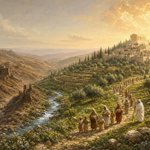
The Temple of God (or the Jerusalem Temple) was the central sanctuary of ancient Israelite and Jewish worship from the era of the wilderness Tabernacle through the time of Jesus Christ.
It evolved from a portable tent to two successive permanent structures on the Temple Mount in Jerusalem, serving as the place of God’s presence (Shekinah), sacrificial system, pilgrimage, and "national-religious identity" .
Before any permanent temple, the Israelites used the Tabernacle (*mishkan*, “dwelling”), a portable sanctuary constructed at Mount Sinai according to detailed divine instructions given to Moses (Exodus 25–31, 35–40). It consisted of an outer courtyard (roughly 150 × 75 feet) with the bronze altar of burnt offering and a bronze basin for priestly washing, plus the tent itself divided into the Holy Place (containing the golden menorah/lampstand, table of showbread, and altar of incense) and the Holy of Holies (housing the Ark of the Covenant with the tablets of the Law, under the mercy seat with cherubim).
This tent traveled with the people through the wilderness and early settlement period (notably at Shiloh). It established the basic layout and theology later mirrored in the temples: graded holiness, priestly mediation, and the idea of God dwelling among His people. The Ark was its most sacred object.
🤖 Made with AI

1
63
UK Jebb retweeted
Do people really want freedom or just a comfortable cage ?
This clip is certainly food for thought.
Please watch and share.
UK Jebb retweeted

📜 THE TWELVE MINOR PROPHETS
DAY 10 — HAGGAI
CONSIDER YOUR WAYS: REBUILDING GOD'S HOUSE AND THE PROMISE OF GREATER GLORY
From a Ruined Temple to the Coming Kingdom of Messiah
The Jewish exiles had returned from Babylon.
God had kept His promise to bring them back to their ancestral homeland. Jerusalem was being repopulated. Families were rebuilding their homes, cultivating their fields, and restoring their lives.
But something was terribly wrong.
God's house remained unfinished while His people concentrated on building their own.
The Temple foundations had been laid, but construction had stopped. Years passed. The people grew comfortable with unfinished obedience.
Then God raised up a prophet named Haggai.
His message was remarkably direct:
"Consider your ways!" (Haggai 1:5)
Yet Haggai's prophecy concerned far more than rebuilding a structure.
It revealed God's covenant faithfulness, the mystery of His departing and returning glory, and the promise of an unshakable kingdom under David's coming King.
📜 1. THE RETURNED EXILES WHO FORGOT THEIR MISSION
In 538 BC, Cyrus of Persia authorized the Jewish exiles to return and rebuild the Temple (Ezra 1:1–4).
This fulfilled God's prophetic Word.
Isaiah had named Cyrus as an instrument of Israel's restoration (Isaiah 44:28). Jeremiah had foretold the end of Babylonian captivity (Jeremiah 29:10).
Under Zerubbabel's leadership, the foundations were laid around 536 BC.
But opposition and discouragement interrupted construction.
By 520 BC, approximately sixteen years had passed since the foundation was laid.
The Temple remained unfinished.
The people insisted that the time had not yet come to rebuild God's house (Haggai 1:2).
Meanwhile, they occupied finished homes.
The issue was not homeownership or material possessions.
Their personal priorities had displaced obedience to God.
They had returned geographically, but their spiritual priorities still required restoration.
⚖️ 2. THE COVENANT CONSEQUENCES OF DISOBEDIENCE
Haggai 1:5–6 describes a frustrating reality.
The people planted much but harvested little.
They ate without satisfaction.
They earned wages, but their money seemed to disappear.
Then God explained why.
He had withheld the dew and rain, bringing agricultural hardship upon the land (Haggai 1:10–11).
This was not merely an unfortunate growing season.
Centuries earlier, the Mosaic Covenant had warned that disobedience would bring agricultural hardship (Deuteronomy 28:23–24).
Leviticus 26:19–20 contained similar warnings.
The Mosaic Covenant was conditional, establishing blessings for obedience and curses for disobedience.
But God's everlasting Abrahamic Covenant remained unconditional in its foundational promises concerning Abraham's descendants and the land (Genesis 17:7–8).
Paul later explained that the Law, introduced 430 years afterward, did not annul God's earlier covenant (Galatians 3:17).
The God who restored Judah to the land was calling His people to obedience within that land.
Discipline did not mean abandonment.
🏛️ 3. THE PEOPLE ACTUALLY LISTENED!
Something remarkable distinguishes Haggai from many earlier prophetic accounts.
The people responded.
Haggai 1:12 records that Zerubbabel, Joshua the high priest, and the returned remnant obeyed the Lord.
They feared Him and resumed construction.
Then God delivered a wonderful promise:
"I am with you." (Haggai 1:13)
The Lord stirred their spirits, and the work began again.
Their circumstances had not suddenly become easy.
Persia still ruled.
Their resources remained limited.
But God's presence was sufficient.
Unlike generations that repeatedly rejected prophetic warnings, this remnant responded with obedience.
Ezra 6:14–15 records the Temple's eventual completion in 516/515 BC.
The Temple was rebuilt because God's people responded to God's Word.
🌿 4. WHERE WAS THE GLORY OF GOD?
Here we encounter one of Haggai's most fascinating prophetic mysteries.
When Solomon dedicated the First Temple, the visible glory of the Lord filled the building (1 Kings 8:10–11).
The priests could not continue ministering because of God's overwhelming presence.
But centuries later, Ezekiel witnessed that glory departing from Jerusalem before Babylon destroyed the Temple (Ezekiel 10–11).
Now the returning exiles were constructing another Temple.
Yet Scripture never records an equivalent manifestation of the glory cloud filling the completed Second Temple.
Some remembered Solomon's magnificent structure and considered the new building insignificant by comparison (Haggai 2:3).
But God made an astonishing promise.
"The glory of this latter house will be greater than the former." (Haggai 2:9)
How could that be?
Centuries later, Yeshua Himself entered the Second Temple and taught within its courts (John 7:14).
The presence of Messiah gave that sanctuary extraordinary significance.
Yet Ezekiel 43:1–5 also describes God's glory returning to a future Temple.
Within a premillennial understanding, this vision anticipates the restoration of divine glory in Messiah's coming kingdom.
These passages should not be collapsed into a single event.
The people saw an unimpressive building. God revealed a future they could scarcely imagine.
🌍 5. THE SHAKING OF THE NATIONS AND GREATER GLORY
Haggai's prophecy suddenly expands beyond Jerusalem's construction project.
In Haggai 2:6–7, God announces that He will shake the heavens, the earth, and the nations.
He promises to fill His house with glory.
The phrase traditionally translated "Desire of All Nations" has sometimes been interpreted as a direct reference to Messiah.
However, the Hebrew may refer to the desirable treasures of the nations, especially given the reference to silver and gold in Haggai 2:8.
The broader messianic expectation therefore rests more securely upon God's promised glory, His sovereignty over the nations, and His coming kingdom.
Hebrews 12:26–28 applies Haggai's shaking imagery to the ultimate removal of what is temporary and the permanence of God's kingdom.
Daniel 2:44 likewise foretells a kingdom that will never be destroyed.
The Persian Empire would eventually disappear, just as Babylon had before it.
Every earthly empire remains temporary.
But God's kingdom will endure.
The nations build kingdoms that history can destroy. God will establish a kingdom that history cannot overthrow.
👑 6. ZERUBBABEL, THE SIGNET RING, AND DAVID'S COMING KING
Haggai concludes with another extraordinary prophecy.
In Haggai 2:20–22, God promises to overthrow the thrones of kingdoms.
Then He addresses Zerubbabel, Judah's governor.
Zerubbabel was a descendant of David's royal line through Jehoiachin (1 Chronicles 3:17–19).
This connection is remarkable.
In Jeremiah 22:24, God declared that even if Jehoiachin were His signet ring, He would remove him.
A signet ring represented royal authority and approval.
Now, addressing Jehoiachin's descendant, God promises to make Zerubbabel like a signet ring (Haggai 2:23).
The contrast is unmistakable.
The dynasty had experienced judgment.
The monarchy had fallen.
Jerusalem's throne remained unoccupied.
But God's promise to David had not died in Babylon.
The Davidic Covenant contained an unconditional, everlasting promise of a royal dynasty ultimately fulfilled through Messiah (2 Samuel 7:12–16).
Haggai did not announce that Zerubbabel would immediately become king.
Instead, his appointment affirmed God's continuing purposes for David's royal house.
Centuries later, Gabriel announced that Yeshua would receive David's throne and reign over the house of Jacob forever (Luke 1:32–33).
Revelation 19–20 reveals His victorious return and reign.
Babylon had destroyed Jerusalem's monarchy, but it could not destroy God's promise of the coming King.
✝️ THE TAKEAWAY?
Haggai begins with an unfinished Temple and a spiritually distracted people.
It ends with promises of divine glory, the shaking of nations, and the preservation of David's royal line.
The people had returned to their land, but they needed renewed obedience.
Their resources were limited, but God's presence was sufficient.
Their Temple appeared insignificant, but God's purposes extended far beyond what they could see.
And their governor possessed no royal throne, yet the everlasting Davidic promise remained secure.
They were concerned with what they could build. God was revealing what only He could accomplish.
The same Lord who restored Judah from Babylon will fulfill His enduring promises concerning Israel and her Messiah.
Earthly kingdoms will be shaken.
Human glory will fade.
But the promised Son of David will reign forever.
Haggai's message began with a call to rebuild God's house. It ultimately directs our attention toward the King whose kingdom cannot be shaken.
📖 NEXT — DAY 11: ZECHARIAH
Jerusalem's Restoration, Israel's Repentance, and the Glorious Return of Messiah
🤖 Made with AI

UK Jebb retweeted
📜 THE TWELVE MINOR PROPHETS
DAY 11 — ZECHARIAH
THE COMING KING: ISRAEL'S REDEMPTION AND MESSIAH'S GLORIOUS RETURN
From the Rejected Shepherd to the King Who Will Reign from Jerusalem
Few books in the Hebrew Scriptures reveal as much about Messiah's first and second comings as Zechariah.
A humble King entering Jerusalem on a donkey.
A rejected Shepherd valued at thirty pieces of silver.
A Priest-King called the Branch.
The One who was pierced, mourned by Israel.
A nation refined and cleansed.
The Lord standing upon the Mount of Olives.
And the nations gathering in Jerusalem to worship the King.
These are not disconnected prophecies. Together, they reveal God's extraordinary plan for Israel and her Messiah.
The King who first entered Jerusalem in humility will return to Jerusalem in glory.
📜 1. THE PROPHET WHO SAW BEYOND THE EXILE
Zechariah began prophesying in 520 BC, alongside Haggai, while Jewish exiles rebuilt the Temple (Ezra 5:1).
Jerusalem was recovering from destruction. Israel remained under Persian authority. David's throne stood unoccupied.
Yet God's promises had not expired.
In Zechariah 2:10, the Lord announces:
"I am coming, and I will dwell within you."
Zechariah 8:3 adds:
"Jerusalem shall be called 'The City of Truth'."
These promises reach beyond the immediate rebuilding of Jerusalem toward its future restoration.
Israel had returned from Babylon, but God's prophetic purposes for the nation were far from complete.
🌿 2. THE BRANCH: ISRAEL'S PRIEST AND KING
Zechariah 3 presents Joshua the high priest standing before God in filthy garments, while Satan accuses him.
The Lord rebukes Satan, removes Joshua's filthy garments, and declares:
"I have caused your iniquity to pass from you." (Zechariah 3:4)
Then comes an extraordinary promise:
"I will bring out my servant, the Branch." (Zechariah 3:8)
Jeremiah 23:5 identifies the Branch as a righteous descendant of David.
Zechariah 6:13 describes Him:
"He shall be a priest on his throne."
Israel's kings and priests ordinarily occupied separate offices.
Yet Messiah brings priestly ministry and royal authority together.
Psalm 110:4 promises an everlasting priesthood, fulfilled in Yeshua according to Hebrews 7.
Then Zechariah 3:9 adds a remarkable promise:
"I will remove the iniquity of that land in one day."
The vision begins with a high priest's cleansing and points toward a greater work of redemption.
Israel's coming King is also her eternal High Priest, and her future restoration requires the cleansing only God can provide.
🫏 3. THE HUMBLE KING AND THE REJECTED SHEPHERD
Zechariah 9:9 announces:
"Behold, your King comes to you!"
He comes:
"Lowly, and riding on a donkey."
Matthew 21:4–5 explicitly identifies Yeshua's entry into Jerusalem as fulfillment of this prophecy.
But Zechariah 9:10 promises worldwide dominion:
"To the ends of the earth."
The first coming revealed the humble King. His future reign will fulfill the promise of worldwide peace.
Then Zechariah 11:12 introduces the rejected Shepherd, valued at:
"Thirty pieces of silver."
Judas betrayed Yeshua for that amount (Matthew 26:15).
Zechariah also connects the silver with the potter and the house of the Lord. Matthew 27:9–10 attributes the prophetic fulfillment to Jeremiah while incorporating imagery closely associated with Zechariah.
But there is an even more direct connection.
Before His arrest, Yeshua quoted Zechariah 13:7:
"I will strike the shepherd, and the sheep of the flock will be scattered." (Matthew 26:31)
Yeshua Himself applied the prophecy to His approaching suffering.
The promised King would first be rejected. The Shepherd would be struck before returning to reign.
💧 4. THE PIERCED MESSIAH AND ISRAEL'S CLEANSING
Zechariah 12:10 contains one of the most extraordinary messianic prophecies in Scripture.
God promises to pour upon Jerusalem:
"The spirit of grace and of supplication."
Then declares:
"They will look to me whom they have pierced."
John 19:37 connects this prophecy with Yeshua's crucifixion.
Revelation 1:7 draws upon the same imagery concerning His future appearing.
The piercing occurred at His first coming. Within a futurist understanding, Israel's national recognition and mourning await their ultimate fulfillment.
But the prophecy does not end with mourning.
Zechariah 13:1 promises:
"A spring opened to the house of David."
This fountain provides cleansing from sin and impurity.
Ezekiel 36:25–27 promises Israel cleansing, a new heart, and the Holy Spirit.
And Romans 11:26 declares:
"And so all Israel will be saved."
This corresponds with the everlasting New Covenant promised to Israel and Judah in Jeremiah 31:31–34.
Israel's ultimate restoration is not merely a return to Jerusalem. It is a return to her Messiah.
⚔️ 5. JERUSALEM BESIEGED AND THE REMNANT REFINED
Zechariah 12:3 declares:
"I will make Jerusalem a burdensome stone for all the peoples."
Hostile nations gather against Jerusalem, but the Lord promises to intervene.
Yet Israel must also experience severe refinement.
Zechariah 13:8–9 describes a surviving third being purified through fire.
God declares:
"It is my people."
And they respond:
"Yahweh is my God."
This connects with Jeremiah 30:7, which describes the time of Jacob's trouble, and Daniel 12:1, which anticipates unprecedented distress.
Matthew 24:21 similarly describes the Great Tribulation.
Zechariah does not supply every chronological detail, but these passages collectively support the expectation of Israel's end-time refinement.
God's promise to preserve Israel does not mean every individual escapes judgment. His purposes culminate in a purified, believing remnant.
🏔️ 6. THE LORD RETURNS TO THE MOUNT OF OLIVES
Zechariah 14 describes Jerusalem surrounded by hostile nations.
Then the Lord personally intervenes.
Zechariah 14:3 declares:
"Then Yahweh will go out and fight against those nations."
And verse 4 identifies the location:
"His feet will stand in that day on the Mount of Olives."
The mountain east of Jerusalem will split, forming a great valley.
This is remarkably specific geographical language.
Centuries later, Yeshua ascended from the vicinity of the Mount of Olives (Acts 1:9–12).
The angels announced:
"This Jesus ... will come back in the same way." (Acts 1:11)
Within a literal, premillennial understanding, Zechariah identifies the location of Messiah's return.
The King who entered Jerusalem on a donkey will return to the Mount of Olives in glory.
👑 7. THE KING REIGNS AND THE NATIONS WORSHIP
Zechariah's prophecy reaches its magnificent climax in chapter 14.
Zechariah 14:9 declares:
"Yahweh will be King over all the earth."
The nations will come to Jerusalem to worship.
Zechariah 14:16 describes survivors traveling there annually:
"To worship the King, Yahweh of Armies."
They will celebrate the Feast of Tabernacles.
Isaiah 2:3 likewise promises:
"For the law shall go out of Zion."
And Zechariah 8:23 pictures Gentiles grasping a Jewish man's garment:
"We will go with you, for we have heard that God is with you."
The significance is extraordinary.
The nations do not replace Israel. They come to worship Israel's God.
This harmonizes with the unconditional, everlasting Abrahamic Covenant (Genesis 17:7–8).
The unconditional, everlasting Davidic promise anticipates Messiah's royal reign (2 Samuel 7:16).
Israel's conditional Mosaic Covenant brought discipline for disobedience, but could not annul those earlier promises (Galatians 3:17).
The New Covenant promises forgiveness and spiritual renewal.
And Gabriel's announcement concerning Yeshua was unmistakable:
"The Lord God will give him the throne of his father David." (Luke 1:32)
The next verse promises:
"He will reign over the house of Jacob forever."
The King promised to Israel will reign over Israel, and the nations will share in the blessings of His righteous kingdom.
✝️ THE TAKEAWAY
Zechariah saw a King who would enter Jerusalem in humility.
A Shepherd who would be rejected.
A Messiah who would be pierced.
A nation that would mourn.
A remnant that would be cleansed.
And the Lord standing upon the Mount of Olives.
But the prophecy does not end with Israel merely surviving.
It ends with Jerusalem restored, the nations worshiping, and the Lord reigning over all the earth.
The King who entered Jerusalem on a donkey will return in glory.
The Shepherd who was struck will reign.
The One who was pierced will be recognized.
The remnant that mourns will be cleansed.
And the city that witnessed His rejection will become the center of His righteous reign.
Zechariah 14:9 declares:
"Yahweh will be King over all the earth."
God has not forgotten Jerusalem. He has not abandoned Israel. And He will not fail to fulfill His everlasting covenant promises.
📖 NEXT — DAY 12: MALACHI
The Coming Messenger, the Day of the Lord, and the Sun of Righteousness
🤖 Made with AI

UK Jebb retweeted

HOW THE GLOBALIST AGENDA created by Rothschilds, Rockefellers, Warburg's, and the rest of the GLOBALIST BANKING FAMILES that operated out of the City of London.... IS RESPONSIBLE FOR ALMOST EVERY FUCKED UP THING this century.
Myself and many many others have understood this evil HOAX for a very long time...
For myself, I suspected from the late 80s, the beginning, but became 100% convinced by real obvious science in 2006.
I say EVIL HOAX because that is exactly what it was.
It was deliberate and had very sinister objectives.
Blaming the Scientists that knowingly lied for decades, so they did not lose funding, is all well and good... and yes they should be held accountable.
But realize too, these irresponsible 'scientists' were being encouraged to push an 'AGENDA'.
Just like.....
A new Ice Age,
Acid Rain,
Holes in the Ozone Layer,
(All precursors for Man Made Climate Change)
then
911,
Weapons of Mass Destruction,
Covid19,
Ukraine War,
Mass illegal Migration,
Biden is Sharp as a Tack,
and
Orange Man Bad,
... to name but a few.
(Yes it goes way back into our past too)
All these Lies, Wars, Terror Attacks and 'Disasters' have one thing in common.
To move, nudge, encourage, coerce and mislead the Western Worlds population towards a One World Government.
A Totalitarian nightmare....
A battle that we are still fighting,
A battle we are right in the middle of !

De VN heeft publiekelijk aangekondigd dat klimaatverandering NOOIT HEEFT BESTAAN!!
"De productie van zonne-energie was slechts een kwestie van verworven belangen. Alles uit het niets verzonnen!!"
WAT VIND JE DAARVAN? Nadat ze de halve wereld hebben verwoest middels nutteloze windmolens vanwege het klimaat!
Het globalisme heeft de VN gedood. Het werd een instrument om de controversiële Agenda 2030 (migratie, gender, klimaat etc...) door te voeren 🔥
UK Jebb retweeted
The Messiah Written Into the Pages of Israel’s Scriptures
Centuries before Bethlehem, the prophets had already told His story.
Before a single page of the New Testament was written, before the disciples walked the shores of Galilee, and before the message of Yeshua reached the nations, the Hebrew Scriptures contained an extraordinary prophetic portrait of the coming Messiah.
It was preserved through the Jewish people, recorded by Israel’s prophets, and rooted in the everlasting promises of the God of Abraham, Isaac and Jacob.
Bible prophecy scholar Dr. David Reagan identified 109 distinct prophecies concerning the First Coming of Yeshua within the more than 300 prophetic references commonly cited by Christian scholars.
Yet beyond the remarkable number lies something even more compelling: the convergence of Scripture, history and centuries of Jewish messianic expectation.
Following His resurrection, Yeshua explained His identity through Moses, the Prophets and the Psalms (Luke 24:44).
It is through these same Scriptures that we should examine His messianic claims.
📜 1. The Messiah of Israel
The Hebrew prophets provided extraordinary details concerning the Messiah’s identity, ancestry and ministry.
A descendant of Abraham (Genesis 22:18)
From the tribe of Judah (Genesis 49:10)
From the house of David (2 Samuel 7:12–16)
Born in Bethlehem (Micah 5:2)
A prophet like Moses (Deuteronomy 18:15)
A light to the nations (Isaiah 49:6)
Yeshua’s Jewish identity was not incidental to His mission. It was central to the prophetic promises concerning Him.
He observed Israel’s appointed festivals, taught in synagogues, celebrated Passover and continually directed His listeners toward the Hebrew Scriptures.
From the beginning, God promised that all the families of the earth would be blessed through Abraham (Genesis 12:3).
The redemption of the nations was never intended to displace Israel. It was an expression of God’s faithfulness to the promises made to Israel’s patriarchs.
🏺 2. An Extraordinary Discovery at Qumran
Among the Dead Sea Scrolls is a remarkable pre-Christian Jewish manuscript known as the Messianic Apocalypse (4Q521).
It describes the anticipated age of redemption through miraculous signs, including restored sight, the raising of the dead and the proclamation of good news to the poor.
These expectations closely parallel Yeshua’s response when John the Baptist inquired about His identity (Matthew 11:2–6).
Yeshua directed attention to His works of healing, restoration and resurrection, drawing upon the prophetic language of Isaiah 35 and 61.
Before Christianity emerged, Jewish writers were already associating these extraordinary works with the anticipated age of messianic redemption.
Yeshua’s response was deeply rooted in the Jewish world into which He was born.
🌿 3. The Donkey and the Clouds
One of the most fascinating discussions in the Babylonian Talmud appears in Sanhedrin 98a.
The rabbis recognized an apparent tension between two prophetic portraits:
Daniel 7:13–14 describes a figure arriving with the clouds of heaven and receiving everlasting dominion.
Zechariah 9:9 describes Israel’s King arriving humbly upon a donkey.
Rabbi Yehoshua ben Levi understood these as alternative circumstances surrounding the Messiah’s arrival, depending upon Israel’s merit.
Believers in Yeshua see another explanation: two distinct arrivals of the same Messiah.
Consider the remarkable progression within Zechariah 9 itself.
Verse 9 describes the humble arrival of Israel’s King. Verse 10 describes worldwide peace and His dominion extending to the ends of the earth.
We believe the first was fulfilled nearly two thousand years ago. The second awaits His return.
Peter explains that the prophets searched to understand the relationship between Messiah’s sufferings and the glories that would follow (1 Peter 1:10–11).
The tension between suffering and glory is embedded within the prophetic Scriptures themselves.
🕊️ 4. Messiah ben Yosef and Messiah ben David
Certain rabbinic traditions distinguish between two messianic figures:
Mashiach ben Yosef, a suffering messianic figure who is slain, and Mashiach ben David, the victorious Davidic King.
In Sukkah 52a, the rabbis discuss whether the mourning described in Zechariah 12:10 concerns the death of Messiah ben Yosef or the destruction of the evil inclination.
These later traditions do not teach two comings of Yeshua. Nevertheless, they demonstrate that suffering and triumph have both occupied significant places within Jewish messianic thought.
Consider also the life of Joseph.
Rejected by his brothers, Joseph was subsequently exalted in Egypt before becoming the instrument of his family’s preservation and reconciliation.
Although Genesis does not explicitly identify Joseph as a prophetic representation of the Messiah, believers in Yeshua recognize a beautiful biblical pattern.
The rejected one becomes the deliverer.
The suffering one becomes the exalted ruler.
The apparent defeat becomes the means of redemption.
📖 5. The Servant Who Suffers and Triumphs
Jewish interpretations of Isaiah’s suffering servant have varied throughout history. Many understand the servant collectively as Israel, while others have associated aspects of the passage with an individual messianic figure.
Sanhedrin 98b, for example, applies Isaiah 53:4 to a suffering Messiah.
Significantly, the prophetic passage begins in Isaiah 52:13 with the Servant’s ultimate exaltation before describing His suffering.
Isaiah 53 then describes one who suffers for the transgressions of others, bears their iniquities and is ultimately vindicated by God.
Psalm 22 follows a similarly remarkable progression. It begins with anguish and abandonment but concludes with the nations worshiping the Lord.
And Psalm 16:10 speaks of deliverance from the grave, a passage Peter explicitly connects to Yeshua’s resurrection in Acts 2:25–32.
The resurrection is central to this prophetic portrait.
The Messiah is not merely a righteous sufferer whose life ends in rejection. He is the victorious Redeemer whose suffering precedes His glorification.
⏳ 6. The Significance of the Second Temple
Two prophetic passages deserve particular attention within their historical setting.
Daniel 9:26 describes an anointed figure being cut off before the subsequent destruction of Jerusalem and its sanctuary.
Malachi 3:1 anticipates the arrival of the Lord at His Temple.
Yeshua lived, taught and ministered during the Second Temple period.
Jerusalem and the Second Temple were subsequently destroyed in AD 70.
Although Jewish and Christian interpreters differ concerning the identity of these prophetic figures, the historical relationship between these passages and the appearance of Yeshua deserves thoughtful examination.
The messianic claims of Yeshua are inseparable from the history of Israel.
👑 7. The Promises That Remain
The influential Jewish scholar Maimonides described the anticipated Messiah as one who would restore the Davidic kingdom, rebuild the Temple and gather the dispersed people of Israel.
These expectations raise legitimate questions for believers in Yeshua.
Where is universal peace?
Where is the restored Davidic kingdom?
Where is the worldwide knowledge of the God of Israel?
We should not dismiss these questions by spiritualizing the promises that inspired them.
The prophets describe a future in which:
Israel experiences spiritual renewal (Ezekiel 36:24–28).
Jerusalem becomes a center of divine instruction (Isaiah 2:2–4).
The Lord stands upon the Mount of Olives (Zechariah 14:4).
The nations celebrate Sukkot in Jerusalem (Zechariah 14:16).
The Davidic King establishes everlasting righteous government (Isaiah 9:6–7).
In Luke 4:16–21, Yeshua concludes His reading of Isaiah 61 before its reference to divine vengeance, illustrating how prophetic events described together may be fulfilled at different times.
The birth of the King and the establishment of His worldwide kingdom need not occur at the same historical moment.
🕎 8. Israel’s Story Is Not Finished
Few prophetic passages bring together suffering, recognition, redemption and messianic glory as remarkably as Zechariah 12–14.
Jerusalem experiences divine deliverance. The pierced one is recognized. National mourning gives way to spiritual cleansing. The Lord stands upon the Mount of Olives and establishes His reign over the earth.
These chapters form a magnificent prophetic portrait of Israel’s future redemption.
Jeremiah 31:35–37 connects Israel’s enduring national identity to the very order of creation.
Centuries later, Paul affirms the irrevocable nature of God’s gifts and calling in Romans 11:28–29.
The arrival of the Messiah does not invalidate the covenants that foretold His arrival.
The prophetic hope of Geulah, redemption, encompasses not only individual salvation but also Israel’s restoration and the renewal of creation.
The God of Abraham, Isaac and Jacob has not abandoned His promises.
🤝 9. An Invitation, Not an Abandonment
To my Jewish friends, I recognize that we may understand these passages differently.
I also recognize the painful history of antisemitism, forced conversions and persecution perpetrated by those who claimed to follow Jesus.
That history should never be minimized.
The Jewish people should never have been asked to believe in a Messiah whose followers denied the promises of Israel’s own God.
Paul explicitly warned Gentile believers against arrogance toward the natural branches (Romans 11:18).
My invitation is not to abandon the Hebrew Scriptures or disregard your Jewish heritage. It is to consider Yeshua in light of the very Scriptures the Jewish people have preserved across generations.
Read Moses.
Read David.
Read Isaiah, Daniel, Micah and Zechariah.
Consider the entire prophetic portrait: the suffering and the glory, the humility and the majesty, the redemption and the kingdom.
We believe in Yeshua not despite the promises made to Israel, but because of them.
And we await His return because so many of those promises have yet to be fulfilled.
Bethlehem was not the conclusion of the prophetic story.
Jerusalem still awaits its King.
The Messiah who came in humility will return in glory. The God who fulfilled His promises concerning the First Coming will be no less faithful concerning the Second.
Shalom.
🤖 Made with AI

UK Jebb retweeted
📜 THE TWELVE MINOR PROPHETS
DAY 7 of 12 — NAHUM
WHEN GOD'S PATIENCE COMES TO AN END
The Fall of Nineveh and the Certainty of Divine Judgment
A century earlier, Nineveh had repented, and God had withheld judgment.
Jonah was angry that the city had been spared.
But generations passed. The repentance faded. The violence returned. And the empire that once humbled itself before God became an instrument of terror across the ancient Near East.
Then another prophet appeared.
His name was Nahum.
Jonah had announced destruction that repentance postponed.
Nahum announced destruction that Nineveh would not escape.
The God who had extended mercy had not abandoned justice.
📜 1. THE CITY THAT FORGOT ITS REPENTANCE
When Jonah preached in Nineveh, something extraordinary happened.
From the king to the common people, the city humbled itself before God. The Lord saw their repentance and withheld the announced destruction (Jonah 3:5–10).
But repentance in one generation does not guarantee faithfulness in the next.
Assyria eventually returned to its familiar practices of conquest, brutality, and oppression.
In 722 BC, Assyria conquered Israel's northern kingdom, carrying its inhabitants into exile (2 Kings 17:6).
Later, Sennacherib invaded Judah, capturing fortified cities and threatening Jerusalem (2 Kings 18–19).
Nahum 3:1–4 describes Nineveh as a city of bloodshed, deception, plunder, and corruption.
The empire had become an instrument of divine judgment against Israel, yet Assyria's own wickedness would not escape God's scrutiny.
Isaiah 10:5–12 establishes this principle: God used Assyria to discipline His people, but He would also punish Assyria's arrogance.
God may use a nation to accomplish His purposes without approving its conduct.
⚖️ 2. THE GOD WHO IS SLOW TO ANGER
Nahum opens with a formidable declaration about God's character.
Nahum 1:2–3 reveals the Lord as jealous, avenging, slow to anger, and great in power.
Notice the balance.
God is patient, but His patience does not compromise His holiness.
He is merciful, but His mercy does not mean wickedness will remain unpunished.
He is sovereign, but His sovereignty does not make Him indifferent to suffering.
In Exodus 34:6–7, God revealed Himself to Moses as compassionate and gracious, yet unwilling to leave the guilty unpunished.
These are not contradictory portraits.
They reveal the same unchanging God.
There is also remarkable irony in the relationship between Jonah and Nahum.
Jonah was angry when God extended mercy (Jonah 4:1–2).
Generations later, Nahum announced the judgment Jonah had once expected.
Neither Jonah's displeasure nor Assyria's arrogance determined God's actions.
His righteous character did.
Jonah witnessed God's mercy. Nahum proclaimed His justice. Both revealed His holiness.
🏛️ 3. THE EMPIRE THAT COULD NOT SAVE ITSELF
Assyria was the dominant military power of its age.
Its armies crossed borders, its rulers demanded tribute, and its capital displayed the extraordinary wealth of imperial conquest.
Nineveh appeared virtually invincible.
But Nahum described its approaching destruction with astonishing confidence.
Nahum 2 portrays an invading army, collapsing defenses, fleeing inhabitants, and plundered treasures.
The city that had terrorized nations would itself experience defeat.
In 612 BC, a coalition led by the Babylonians and Medes conquered Nineveh.
Although Assyrian resistance continued briefly elsewhere, its great capital had fallen.
Centuries later, Nineveh's ruins lay buried, its ancient prominence largely forgotten until archaeological exploration brought its remains back to light.
Consider the irony.
A city that once dictated the fate of nations became an archaeological ruin.
Nahum 1:6 asks who can withstand the Lord's indignation.
The answer is unmistakable.
No king. No army. No empire.
Nineveh trusted in walls that could be breached. God's people trust in a King whose kingdom cannot be shaken.
🕊️ 4. WHY JUDGMENT WAS GOOD NEWS
The name Nahum means comfort or consolation.
An unusual name, perhaps, for a prophet announcing destruction.
But consider his audience.
For generations, Israel and Judah had suffered under Assyrian aggression.
To Nineveh, Nahum's prophecy was a warning.
To those suffering under its oppression, it was a declaration that injustice would not continue indefinitely.
Nahum 1:7 declares:
"The LORD is good, a refuge in times of trouble."
The verse also affirms that He cares for those who trust in Him.
This is the theological heart of Nahum.
God's goodness includes both His willingness to forgive and His determination to confront evil.
A God who never judges oppression would offer little comfort to its victims.
Divine judgment and divine compassion are not opposites. God's justice is an expression of His goodness.
📖 5. GOD HAD NOT FORGOTTEN ISRAEL
Although Nahum primarily addresses Nineveh, God's covenant people remain central to the prophecy.
In Nahum 1:12–13, the Lord promises to end Assyria's affliction and break its yoke.
Nahum 1:15 encourages Judah to celebrate its appointed feasts.
And Nahum 2:2 speaks of restoring the splendor of Jacob.
These promises concern deliverance from Assyrian domination. Yet they also illustrate a greater biblical principle.
Israel's enemies could discipline God's covenant people, but they could never annul God's covenant promises.
Assyria's conquest had not canceled the Abrahamic Covenant (Genesis 17:7–8).
Its armies had not invalidated the Davidic Covenant (2 Samuel 7:12–16).
Its oppression had not erased the promises of Israel's future restoration (Jeremiah 31:35–37).
The ultimate fulfillment of those promises extends beyond Nineveh's downfall.
Jeremiah 31:31–37 promises a New Covenant with the house of Israel and the house of Judah, while affirming Israel's continuing national identity before God.
And Romans 11:29 declares that God's gifts and calling are irrevocable.
Empires rise. Empires fall. God's covenant faithfulness remains.
👑 6. A WARNING TO THE NATIONS—AND A PROMISE OF THE KINGDOM
Nahum's prophecy was directed against ancient Nineveh.
It should not be carelessly transformed into a prediction about a particular modern nation.
Nevertheless, its principles remain unmistakably relevant.
Nations are accountable to God.
Military superiority does not guarantee security.
Prosperity does not establish divine approval.
And delayed judgment should never be mistaken for canceled judgment.
Second Peter 3:9 reminds us that God's patience provides opportunity for repentance.
But verse 10 warns that the day of the Lord will come.
Nineveh's destruction was a historical judgment, not the final judgment of the nations.
Yet it anticipates a truth developed throughout prophetic Scripture: earthly kingdoms are temporary, but God's ultimate kingdom will endure forever.
Daniel 2:44 foretells a kingdom that will never be destroyed.
Daniel 7:13–14 describes the Son of Man receiving everlasting dominion.
Isaiah 9:7 promises the Messiah's unending government upon David's throne.
Zechariah 14:9 declares that the Lord will be King over all the earth.
And Revelation 19–20 reveals the victorious return and reign of Christ.
Nineveh's kings ruled through conquest and intimidation.
The Messiah will rule in righteousness, fulfilling the promises of God.
✝️ THE TAKEAWAY?
Jonah teaches that God is willing to forgive a repentant nation.
Nahum teaches that God will not indefinitely tolerate persistent wickedness.
Both books reveal the same Lord.
Patient without being indifferent.
Merciful without being unjust.
Sovereign without being arbitrary.
Faithful to every promise He has made.
Nineveh heard God's warning and repented. Later generations inherited its greatness but abandoned its humility.
And eventually, its walls could no longer protect it.
God's patience should never be mistaken for His permission.
The empire that once terrified the world disappeared into history.
But the King promised in Scripture is coming to establish a kingdom that will never pass away.
Nineveh's throne is dust. David's promised throne awaits its rightful King.
📖 NEXT — DAY 8: HABAKKUK
When God Uses a Wicked Nation to Judge Another
🤖 Made with AI

UK Jebb retweeted
THE JESUS WHO RETURNS TO JERUSALEM
Are We Repeating the Very Mistake Jesus Rebuked?
Many believe in the Jesus who rode into Jerusalem on a donkey.
But what about the Jesus who will return to Jerusalem as the conquering King?
The Church rightly recognizes the tragedy of those who failed to understand the prophecies concerning Messiah's suffering.
But could the Church now be committing a similar error concerning the prophecies of His reign?
Throughout history, people have fashioned versions of Jesus that accommodate their traditions, theology, and expectations.
Today, many profess allegiance to a Messiah whose promised earthly reign from Jerusalem has been spiritualized, reinterpreted, or effectively erased.
A Jesus who saves, but never returns to reign from Zion.
A Jesus whose relationship to Israel is treated as temporary, despite God's everlasting covenants.
But is that the complete portrait of Jesus the prophets proclaimed?
1. 📜 THE TRAGIC IRONY OF PROPHETIC SELECTIVITY
At His first coming, many among Israel's religious leaders anticipated a conquering Messiah who would defeat Israel's enemies and restore the kingdom.
Yet they failed to recognize the suffering Servant of Isaiah 53, the Messiah cut off in Daniel 9:26, and the Shepherd struck in Zechariah 13:7.
The prophecies were there all along.
They simply did not fit their expectations.
Yet not everyone misunderstood.
Simeon, a righteous and devout Jewish man, was "waiting for the consolation of Israel" (Luke 2:25).
Holding the infant Messiah, he proclaimed:
"A light to bring revelation to the Gentiles, and the glory of Your people Israel." (Luke 2:32)
Simeon understood that salvation reaching the Gentiles did not require abandoning God's promises to Israel.
Anna likewise spoke of Jesus to those awaiting Jerusalem's redemption (Luke 2:38).
But when two disciples struggled to understand Messiah's suffering, the risen Jesus confronted them on the road to Emmaus:
"O foolish ones, and slow of heart to believe in all that the prophets have spoken!" (Luke 24:25)
Notice that word.
ALL.
Not merely the prophecies that fit their expectations.
And here is the uncomfortable parallel.
At His first coming, many expected the crown but overlooked the cross.
Today, many embrace the cross but reinterpret the crown.
Different expectations. Different theological systems.
But potentially the very same mistake.
2. 👑 THE KING WHO CAME ON A DONKEY WILL RETURN TO REIGN
Zechariah 9:9 foretold Israel's King entering Jerusalem humbly, riding upon a donkey.
Jesus fulfilled that prophecy literally.
Yet the very next verse declares:
"His dominion shall be from sea to sea, and from the River to the ends of the earth." (Zechariah 9:10)
The same prophet. The same King.
One prophecy describes His humility. The other, His worldwide dominion.
Why accept the literal fulfillment of one while explaining away the earthly dimensions of the other?
Consider Gabriel's announcement to Mary:
"The Lord God will give Him the throne of His father David. And He will reign over the house of Jacob forever, and of His kingdom there will be no end." (Luke 1:32–33)
The birth was literal.
David was literal.
The house of Jacob was a literal people.
Why should the promised Davidic reign suddenly become something fundamentally different from what God promised?
3. 🕊️ THE APOSTLES STILL EXPECTED ISRAEL'S RESTORATION
Even after the resurrection, the apostles asked Jesus:
"Lord, will You at this time restore the kingdom to Israel?" (Acts 1:6)
Consider the significance.
Jesus had spent forty days instructing His disciples concerning the Kingdom of God (Acts 1:3).
Yet they still anticipated Israel's restoration.
And Jesus did not rebuke their expectation.
He answered:
"It is not for you to know times or seasons which the Father has put in His own authority." (Acts 1:7)
He did not announce that Israel had been replaced or that restoration was canceled.
He addressed the timing.
The apostles asked about restoration. Jesus answered concerning timing.
The prophets also identified where Messiah's earthly reign would be manifested.
Zechariah 14:4: His feet will stand upon the Mount of Olives.
Isaiah 2:2–4: The nations will stream to Jerusalem to learn His ways.
Jeremiah 3:17: Jerusalem will be called the throne of the LORD.
Zechariah 14:9: The LORD will be King over all the earth.
These passages form a unified prophetic portrait.
A real King. A real throne. A real Jerusalem.
Yes, Jesus is King today. He possesses all authority in heaven and on earth (Matthew 28:18).
But His present heavenly exaltation does not cancel His promised earthly reign.
The King who ascended to heaven is the King who will return to earth.
4. 📖 THIS IS BIGGER THAN THE MILLENNIUM
This is not merely a disagreement about prophetic timelines or theological charts.
It concerns the reliability of God's Word.
God promised Abraham a land and descendants (Genesis 15:18–21).
He promised David an enduring dynasty and kingdom (2 Samuel 7:12–16).
He declared that Israel would remain a nation before Him as surely as the established order of creation endures (Jeremiah 31:35–37).
And centuries later, Paul affirmed:
"For the gifts and the calling of God are irrevocable." (Romans 11:29)
Paul did not declare that God had finished with Israel.
He explicitly asked:
"Has God cast away His people? Certainly not!" (Romans 11:1)
The inclusion of Gentiles in God's salvation was never the cancellation of His promises to Israel.
God does not have to break one covenant to fulfill another.
5. ⚖️ WILL WE BELIEVE ALL THAT THE PROPHETS HAVE SPOKEN?
If Bethlehem was literal, why not Zion?
If the donkey was literal, why spiritualize the throne?
If the suffering Servant literally bore our sins, why reinterpret the conquering King who will rule the nations?
And if God fulfilled His promises concerning Messiah's first coming, why should we expect less concerning His return?
The warning from the Emmaus road still speaks.
Do not allow theological expectations to determine which portions of prophecy you are willing to believe.
The suffering Servant and the reigning King are not competing portraits of Jesus.
They are the same Messiah.
The Lamb who was slain is the Lion of the tribe of Judah.
The Son of David who wore a crown of thorns will return as King of kings and Lord of lords.
He will not abandon the promises God made to Israel.
He will fulfill them.
And the nations will witness the faithfulness of the God who keeps His covenants.
At His first coming, many expected the crown but overlooked the cross.
At His second coming, may the Church not be guilty of embracing the cross while explaining away the crown.
For the issue is not whether Jesus is King.
He is.
The issue is whether we will believe everything God has revealed about where, how, and over whom He will reign.
"Yet I have set My King on My holy hill of Zion." (Psalm 2:6)
The throne was promised.
The King was born.
The cross was endured.
The tomb was emptied.
👑 THE KING WILL RETURN.
AND GOD WILL KEEP HIS WORD.
🤖 Made with AI

UK Jebb retweeted
THE TWELVE MINOR PROPHETS
DAY 6 OF 12: MICAH
FROM RUINS TO A THRONE
The Prophet Who Foretold Bethlehem's Shepherd King and Jerusalem's Coming Glory
📖 Key Text: Micah 1–7
What if a prophet could foresee Jerusalem reduced to ruins, yet also behold the day when nations would stream to that same city to worship the Lord?
What if he could announce the destruction of Israel's kingdom, yet promise the restoration of its throne?
And what if, seven centuries before Jesus was born, he could identify the very village from which Israel's eternal Shepherd King would emerge?
Welcome to Micah.
Seven chapters. Two kingdoms. One promised Messiah. And a prophetic vision stretching from Assyria's invasions to the future glory of Jerusalem.
Micah saw the ruins. But God showed him the throne beyond them.
⚖️ 1. When God's Own People Become the Problem
Micah prophesied during the reigns of Jotham, Ahaz, and Hezekiah, as Assyria threatened Israel and Judah (Micah 1:1).
His message exposed a disturbing reality.
God's covenant people had become deeply corrupt.
Rulers exploited the vulnerable. Wealthy landowners seized property. Prophets proclaimed peace for payment. Priests taught for financial reward.
Religious activity continued while justice disappeared.
"They covet fields, and seize them; and houses, and take them away." (Micah 2:2)
Micah warned that covenant privilege never excused covenant disobedience.
God's promises to Israel were irrevocable. His tolerance of Israel's wickedness was not.
🏛️ 2. Jerusalem Will Fall, but Jerusalem Will Rise
Micah delivered a devastating prophecy:
"Zion will be plowed as a field, and Jerusalem will become heaps of rubble." (Micah 3:12)
This was the city of David, the location God had chosen for His name.
Yet Jerusalem itself would face judgment.
Jeremiah 26:18–19 later recalled Micah's warning and Hezekiah's humble response, through which disaster was averted in that generation.
Nevertheless, Jerusalem eventually fell to Babylon in 586 BC.
But the remarkable feature of Micah's prophecy is what comes immediately afterward.
The city destined for destruction would become the center of worldwide worship.
"In the latter days, it will happen that the mountain of Yahweh's temple will be established on the top of the mountains." (Micah 4:1)
Nations will stream toward Zion.
God's instruction will go forth from Jerusalem.
Swords will become plowshares. Spears will become pruning hooks. Nations will cease learning warfare (Micah 4:2–4).
This is more than inward spiritual peace.
It describes international righteousness, worldwide security, and divine government.
The Jerusalem destined for judgment is also the Jerusalem destined for glory.
👑 3. The Throne That Will Return to Jerusalem
Here is one of Micah's most overlooked prophecies.
"And you, tower of the flock, the hill of the daughter of Zion, to you it will come. Yes, the former dominion will come, the kingdom of the daughter of Jerusalem." (Micah 4:8)
Consider the extraordinary progression.
Micah 3:12 announces Jerusalem's destruction.
Micah 4:7 declares that the Lord will reign from Mount Zion.
Micah 4:8 promises the return of royal dominion to Jerusalem.
And Micah 5 identifies the coming Ruler.
The throne may be interrupted. The Davidic promise will not be abandoned.
God had promised David an enduring royal dynasty (2 Samuel 7:12–16).
Centuries later, Gabriel announced that Jesus would receive the throne of His father David and reign over the house of Jacob forever (Luke 1:32–33).
Micah's promised restoration of kingship therefore fits within a much larger biblical expectation.
A real King.
A restored people.
An enduring kingdom.
God did not promise David an eternal throne merely to let that promise disappear into history.
🐑 4. Bethlehem's Shepherd King
Micah now reveals the birthplace of Israel's coming Ruler.
"But you, Bethlehem Ephrathah, being small among the clans of Judah, out of you one will come out to me who is to be ruler in Israel." (Micah 5:2)
Not Rome.
Not Babylon.
Not even Jerusalem.
Bethlehem.
The humble birthplace of David would become the birthplace of David's greater Son.
Micah describes this Ruler's origins as reaching back to ancient days, language that Christians understand alongside the New Testament's revelation of Messiah's eternal nature.
When the Magi searched for the King of the Jews, Jerusalem's religious authorities identified Bethlehem from Micah's prophecy (Matthew 2:4–6).
But Micah does not stop at His birth.
"He shall stand, and shall shepherd in the strength of Yahweh, in the majesty of the name of Yahweh his God." (Micah 5:4)
Here is the magnificent portrait of the Shepherd King.
He stands in divine strength.
He shepherds His restored flock.
His greatness extends to the ends of the earth.
And His people dwell securely.
Ezekiel develops the same expectation:
"My servant David will be king over them. They will all have one shepherd." (Ezekiel 37:24)
Jesus declared Himself the Good Shepherd who lays down His life for the sheep (John 10:11).
At His first coming, the Shepherd laid down His life.
At His return, the Shepherd King will exercise His promised royal authority.
Bethlehem revealed where the Shepherd would be born. Jerusalem will reveal the fullness of His reign.
The manger was never the conclusion of the Messianic promise.
It was the beginning of its fulfillment.
✡️ 5. The Scattered Remnant Will Be Gathered
Micah repeatedly promises that Israel's judgment will not be her extinction.
God will gather His remnant (Micah 2:12).
He will assemble the scattered and make them a strong nation (Micah 4:6–7).
Then comes the remarkable promise:
"Yahweh will reign over them on Mount Zion from then on, even forever." (Micah 4:7)
Notice what Micah identifies.
A gathered people.
A restored nation.
A specific location.
And the Lord reigning from Zion.
Within a premillennial reading, these promises anticipate Messiah's future earthly kingdom.
Israel's rebellion explains her judgment. God's covenant explains her restoration.
⚖️ 6. Prophecy Without Righteousness Is Hollow
Amid these extraordinary promises, Micah asks what God requires of His people.
Micah 6:8 answers: to act justly, love mercy, and walk humbly with God.
No amount of religious ceremony could compensate for oppression and corruption.
And no amount of prophetic knowledge can excuse unrighteous living.
The God who promises a righteous kingdom also demands righteousness from those who claim to know Him.
📜 7. The Covenant That Outlives the Ruins
Micah concludes by returning to the foundation of Israel's hope.
"Who is a God like you, who pardons iniquity, and passes over the disobedience of the remnant of his heritage?" (Micah 7:18)
God delights in mercy.
He will again have compassion.
He will cast His people's sins into the depths of the sea.
And his final declaration is extraordinary:
"You will give truth to Jacob, and mercy to Abraham, as you have sworn to our fathers from the days of old." (Micah 7:20)
Notice where Micah ends.
Not with Israel's achievements.
Not with Israel's worthiness.
Not with Jerusalem's strength.
He ends with God's oath to Abraham and Jacob.
The promises of restoration rest upon the character of the One who made them.
🔥 THE FINAL WORD: FROM BETHLEHEM TO ZION
Micah saw Jerusalem's destruction.
But he also saw Jerusalem's restoration.
He saw Israel scattered.
But he also saw Israel gathered.
He saw a Ruler emerging from Bethlehem.
But he also saw that Ruler shepherding His people in peace, His greatness reaching the ends of the earth.
The same prophecy that identified Messiah's birthplace also anticipated His royal dominion.
Bethlehem was fulfilled literally. Why should Zion be treated as merely symbolic?
The God who kept His word concerning the Shepherd's arrival will keep His word concerning the Shepherd King's reign.
For Micah, the final word was never judgment.
It was covenant faithfulness.
The ruins are not the end of Israel's story.
The Shepherd King is coming to reign.
NEXT: DAY 7 OF 12 — NAHUM
The God who spared Nineveh in Jonah announces its destruction through Nahum. Divine patience is extraordinary, but it is not unlimited.
🤖 Made with AI

Coming of the Messiah and the Hope of Redemption
The return of Judah and the rebuilt Temple created the setting in which Yeshua was born, ministered, died, and rose. The New Testament presents His blood as the blood of the new covenant (Matthew 26:28; Luke 22:20) and applies Jeremiah’s promise to the work He accomplished (Hebrews 8–10). In that sense the hope of redemption for both the house of Israel and the house of Judah finds its decisive ground in the Messiah who entered the world in the land and among the people who had returned and rebuilt.
At the same time, the prophetic texts themselves continue to describe a national gathering, a reunification under one Davidic king, and a sanctuary in which Yehovah dwells in the midst of His people—elements that many readers understand as still awaiting their fuller realization.
Thus the historical sequence is accurate: the prophets spoke of the future because the present was one of judgment and exile; the partial return and the rebuilt Temple were indispensable for the Messiah’s coming; and the same prophetic word that was partially fulfilled in the restoration of Judah continues to speak of a redemption that encompasses both houses.
The texts of Jeremiah and Ezekiel keep both houses in view and keep the sanctuary as part of the promised picture of Yehovah’s restored presence among His people.
1
21
Israel’s annual feast cycle (Leviticus 23) functions as a prophetic calendar in which the major movements of redemption are already inscribed.
The later gospel does not invent a new story; it announces the historical realization of a pattern that had been enacted, year after year, in Israel’s worship long before the incarnation.
The seven feasts fall into two clusters that correspond to the two advents.
Spring feasts (first coming):
- Passover: the lamb is slain and its blood shelters from judgment (Ex. 12; Lev. 23:5). Paul states the fulfillment directly: “Christ, our Passover lamb, has been sacrificed” (1 Cor. 5:7).
- Unleavened Bread: the removal of leaven pictures the removal of sin; the sinless life and burial of Jesus occupy this interval.
- Firstfruits: the wave sheaf of the new harvest is offered on the day after the Sabbath (Lev. 23:9–14). Paul identifies the risen Christ as “the firstfruits of those who have fallen asleep” (1 Cor. 15:20, 23). The resurrection is not an afterthought; it is the feast already appointed.
- Pentecost (Feast of Weeks): fifty days later the completed grain harvest is celebrated and new grain is offered (Lev. 23:15–22). Acts 2 records the outpouring of the Spirit on precisely this day, constituting the firstfruits company of the new covenant.
Autumn feasts (still awaiting full public manifestation):
- Trumpets: a memorial of blowing of trumpets that summons the people (Lev. 23:23–25). The New Testament associates the return of Christ and the resurrection of the righteous with the sound of a trumpet (1 Cor. 15:52; 1 Thess. 4:16).
- Day of Atonement: the high priest enters the sanctuary once a year to make atonement (Lev. 16; 23:26–32). Hebrews presents Jesus as the High Priest who has already entered the heavenly sanctuary;
📜 "There is a future national application to Israel’s "cleansing and restoration" (cf. Zech. 12–13; Rom. 11)."
- Tabernacles: the people dwell in booths, remembering God’s provision and anticipating his dwelling with them (Lev. 23:33–44). The incarnation is already a tabernacling (“the Word became flesh and dwelt among us,” John 1:14); the feast also points forward to the open reign in which God dwells with his people and the nations come up to worship (Zech. 14:16–19; Rev. 21:3).
The agricultural logic of firstfruits sits inside this calendar: the initial sheaf (Christ) and the early company (those raised or sealed at his coming) guarantee the full harvest that the later feasts portray.
Because the feasts were instituted at Sinai and rooted in the exodus and the land promise, the redemptive sequence was public knowledge centuries before Jesus was born. The apostles do not treat the death, resurrection, and gift of the Spirit as unexpected novelties; they treat them as the substance of which the feasts were the shadow (Col. 2:16–17). The good news is therefore both new in its historical accomplishment and old in its prophetic outline. What had been rehearsed annually in type becomes actual in the Messiah and in the company united to him.
This does not collapse the distinction between the Abrahamic promises and the Mosaic administration. The feasts belong to the Mosaic calendar, yet they dramatize the very redemption by which the earlier promises to Abraham—seed, land, and blessing to the nations—are secured and extended. Gentile inclusion (the blessing to the nations) is already latent in the feasts’ harvest imagery and becomes explicit once the Spirit is poured out at Pentecost.
"National Israel’s future restoration remains compatible with the still-future autumn feasts rather than being erased by the spring fulfillments."
24