

Building AI scientists @periodiclabs Previously: Building LLMs for code gen, Deep RL for industrial robotics, @Apple @UChicago
San Francisco, CA
Joined February 2014
- Tweets1.8K
- Following673
- Followers3K
- Likes11.6K




Pinned Tweet
The team @periodiclabs is absolutely cracked. Favorite team I've ever worked with. We're building AI scientists, and our progress is breakneck - already in the physical lab! The world doesn't need another social media app. We're turning bits into atoms.


Today, @ekindogus and I are excited to introduce @periodiclabs.
Our goal is to create an AI scientist.
Science works by conjecturing how the world might be, running experiments, and learning from the results.
Intelligence is necessary, but not sufficient. New knowledge is created when ideas are found to be consistent with reality. And so, at Periodic, we are building AI scientists and the autonomous laboratories for them to operate.
Until now, scientific AI advances have come from models trained on the internet. But despite its vastness — it’s still finite (estimates are ~10T text tokens where one English word may be 1-2 tokens). And in recent years the best frontier AI models have fully exhausted it.
Researchers seek better use of this data, but as any scientist knows: though re-reading a textbook may give new insights, they eventually need to try their idea to see if it holds.
Autonomous labs are central to our strategy. They provide huge amounts of high-quality data (each experiment can produce GBs of data!) that exists nowhere else. They generate valuable negative results which are seldom published. But most importantly, they give our AI scientists the tools to act.
We’re starting in the physical sciences.
Technological progress is limited by our ability to design the physical world.
We’re starting here because experiments have high signal-to-noise and are (relatively) fast, physical simulations effectively model many systems, but more broadly, physics is a verifiable environment. AI has progressed fastest in domains with data and verifiable results - for example, in math and code. Here, nature is the RL environment.
One of our goals is to discover superconductors that work at higher temperatures than today's materials. Significant advances could help us create next-generation transportation and build power grids with minimal losses. But this is just one example — if we can automate materials design, we have the potential to accelerate Moore’s Law, space travel, and nuclear fusion.
We’re also working to deploy our solutions with industry. As an example, we're helping a semiconductor manufacturer that is facing issues with heat dissipation on their chips. We’re training custom agents for their engineers and researchers to make sense of their experimental data in order to iterate faster.
Our founding team co-created ChatGPT, DeepMind’s GNoME, OpenAI’s Operator (now Agent), the neural attention mechanism, MatterGen; have scaled autonomous physics labs; and have contributed to some of the most important materials discoveries of the last decade. We’ve come together to scale up and reimagine how science is done.
We’re fortunate to be backed by investors who share our vision, including @a16z who led our $300M round, as well as @Felicis, DST Global, NVentures (NVIDIA’s venture capital arm), @Accel and individuals including @JeffBezos , @eladgil , @ericschmidt, and @JeffDean. Their support will help us grow our team, scale our labs, and develop the first generation of AI scientists.

Hey @bryan_johnson did you know that you're advertising cookies, cake, pizza, and fried foods during checkout on your new fresh meal delivery service? Yuck.


"The path that I believe in doesn't go through LLM based products."
"It was a surprise to me that a system trained on a massive amount of data could then be very quickly fine tuned on a very small amount of data to completely change it's behavior. Changed my mindset. Once you get to the right scale, things that seemed incredibly hard, once you've experienced enough data, they become very fast."
Goals:
- A learner that can learn everything for itself and keep learning and discovering knowledge forever
- Breadth: Can learn anywhere it's dropped into
- Learns completely autonomously
- Crucibles: Environments where learners can learn the deep and broad things that humans can learn
- Remove human priors
We spent 2 years hand crafting and human-in-the-loop to build AlphaGo and beat Lee Se Dol. Once we got the algorithm right, it took just a few hours to outperform the two years of work we’d done with human in the loop.

David Silver is one of the all-time greats. He was the creator of AlphaGo, which changed the course of history by showing that neural nets could achieve superhuman performance for the first time.
He also has a unique intuition and knack for forecasting when things will happen in AI. With computer Go, he predicted the Lee Sodol outcome 10 years before, right to the year. He got the year right for Starcraft and won a bet inside Deepmind. Same for AlphaProof. Same for the IMO.
David's prediction for superintelligence: 3 years. !!! He has a strong sense that now is the time to build a superleaner, and that superlearners are now possible, thanks to the enormous progress in compute, simulators, autoresearch, and the sophistication of technology in the stack since the AlphaGo days.
What is a “super learner”? A super learner discovers all knowledge from its own experience. Start from nothing (no internet pre-training), and go beyond human knowledge. Drop it into any stream of experience, simulated or physical, and the superlearner learns.
He expects the progress will be rapid. When you get the recipe for a superlearner just right and remove humans from the development loop altogether, a superlearner can learn extremely quickly. Just look at AlphaGo. AlphaGo took two years to develop with humans in the loop. When David and his team at @GoogleDeepMind got the formula for AlphaZero correctly, it surpassed the human-developed algorithms in just a few hours. Human data is a shortcut, but you have to let go of the human data to shoot beyond it.
In January, David left GDM to found @IneffableLabs, a research-led lab with one mission: build a "super learner" that discovers all knowledge from its own experience, and make first contact with superintelligence.
He joins us with co-founder Lasse Espeholt, who built IMPALA and SEED RL, the foundations of scaled-up RL, and now runs Ineffable's compute.
A few things we cover in this conversation.
— What a super learner is: depth (start from nothing, go beyond human knowledge) and breadth (drop it into any stream of experience, simulated or physical). The human brain is the only existence proof
— Why they're giving up human data: AlphaGo took two years with humans in the loop. AlphaZero outperformed it in a few hours. "You have to let go of the human data to shoot past the competition"
— Crucibles: simulated worlds with enough emergent complexity (physics engines, millions of interacting agents) for an agent to rediscover technology, science, maths and language on its own
— Simple rewards, emergent complexity: evolution optimized fitness and got all of life. Don't breadcrumb the objective, give the agent something simple to optimize in a world with a lot to learn about
— Go as the existence proof: one agent is the most boring game imaginable, two agents is "an infinite onion of layers of complexity"
— Why human language is probably not the endpoint for reasoning, and how training on it bakes in a flat earth and the four humors
— Can superintelligence be built in simulation? If the sim is Turing complete, computation, economics, language and maths are all expressible, and it happens 10-100x faster and safer
— Alignment: language-based monitoring is reaching its limits as agents learn to say one thing and do another. Shadow actions, superintelligences monitoring superintelligences, and building a real science of how they interact peacefully
— Accelerate in simulation, pace in the real world: Ineffable will gate real-world deployment on evidence that it goes well
— Timing as the determinant: Silver called Computer Go to the year, then StarCraft, then the IMO. He thinks this is the moment
— Predictions: True superintelligence within three years.
Timestamps:
0:00 – Introduction
1:09 – What held true from Go to today, and what the LLM era changed
3:35 – Why leave DeepMind to start a new lab
5:58 – Why "Ineffable" (and the secret second reason)
7:03 – Lasse's path: scaling RL at DeepMind and Google Brain
9:31 – Defining a super learner and first contact
12:35 – Super learners vs. LLMs that make discoveries
13:59 – Day to day: the RL stack, crucibles and human-journey milestones
16:13 – Don't breadcrumb the objective: simple rewards, emergent complexity
21:16 – What a crucible looks like
24:14 – Go: one agent is boring, two is infinite
25:41 – Will agents rediscover language?
27:22 – Removing human priors: AlphaGo to AlphaZero
32:05 – Keeping human bias out of the crucibles
33:35 – Confidence, timing and super forecasting
36:24 – Is compute the driver?
38:13 – The ceiling on simulation and Rich Sutton's objection
43:44 – Alignment and the science of superintelligence
47:45 – Monitoring agents that don't think in English
51:01 – Pacing the frontier
52:54 – The compute setup: Vera Rubin on GCP
55:18 – Training, inference, simulation and RL scaling laws
57:40 – IMPALA and SEED RL
1:00:58 – 20 people and the compute-per-person ratio
1:04:49 – A research-led culture
1:05:47 – Predictions
"Research is now entirely the domain of autonomous swarms of AI agents running across compute cluster megastructures in the skies. The agents claim that we are now in the 10,205th generation of the code base, in any case no one could tell if that's right or wrong as the 'code' is now a self-modifying binary that has grown beyond human comprehension." -@karpathy, March 2026, speculating on the future

I'm going to a manifesto writing party tomorrow.
I have 3 manifestos ~half written down.
1 public, 1 Periodic, 1 private.
Manifesto Prep Kit:
- Clarke's Profiles of the Future
- Moravec's Mind Children and Robot
- Essays "Machinic Desire," "Meltdown," and "Circuitries" from Fanged Noumena
- Ilya's 2024 NeurIPS keynote
- AI 2027, AI 2040
- Karpathy's autoresearch repo
- Hutter's "Job-Less Utopia" (hutter1.net/ai/jobsubi.htm)
- BCI
- phaselock.satpugnet.com/
- Merge Labs, Conduit
- Theorem (theorem.dev/), Red Queen Bio
- Bostom's Superintelligence and Deep Utopia
- Paul Christiano podcasts (Dwarkesh) and "What failure looks like" (lesswrong.com/posts/HBxe6wdj…)
- Gwern's gwern.net/hyperbolic-time-ch… and Dwarkesh RLVR science (dwarkesh.com/p/rlvr-might-be…)
- Nanda's A Pragmatic Vision for Interpretability (lesswrong.com/posts/StENzDcD…)
- Vinge's "Singularity" (frc.ri.cmu.edu/~hpm/book98/c…), Vinge's "Who's Afraid of First Movers" (mindstalk.net/vinge/firstMov…)
- Accelerando, A Fire Upon the Deep, Excession, and Diaspora
List entry isn't an endorsement of accuracy or success, it is a part of the discussion.

There was a 2026 interview with Hans Moravec and I missed it: “We’re on track, more or less. It’s not going to take that long."
New eval: Has AI cured Moravec's myasthenia gravis yet.
"He’s not expecting to encounter the postbiological era himself... He doesn’t sound sad about it. Actually, he says he never thought he would, that even in the ’90s, he didn’t expect his own mind would make it far enough into the future to get uploaded" ☹️
~Bitter Lesson in Moravec's 1976 paper: 'intelligence need not be so difficult to construct as is sometimes assumed' ... "the main thing needed is not hard-won new insight but simply much more computing power."
That said, Moravec didn't believe in Hinton's "cargo cultish" neural nets!
nymag.com/intelligencer/arti…
Got some @gwern answers: gwern.net/blog/2026/question…

2 years ago AI code was absurdly verbose and it was a miracle it worked at all.
Today, AI code is much simpler/elegant.
Today, AI proofs are absurdly verbose and it’s a miracle the lean verifies at all.
Provided it’s optimized for, I expect a similar trajectory for AI math.


From Buckmaster:
Believes OpenAI has indeed solved Navier-Stokes Clay Institute problem.
“The key idea that went from the Euler to the Navier-Stokes is a smart idea.” “People are missing the key idea.”
The collapsing vortex is not a solution to Navier-Stokes.
The key idea is convex integration - what he spent his whole career on. Traces back to John Nash.
Buckmaster trying and failing to do this for over 10 years.

NEW
Did AI pick his pocket to solve Navier-Stokes?
The Buckmaster Interview (Navier-Stokes) - Numberphile
youtu.be/Mzbtj5nkMXI
10,000s of robots in homes in 2028
AI wins by 2028:
Pulitzer Prize, not likely.
Fields Medal, likely.
Nobel prize not crazy, very likely by 2030.
Extremely confident AI will be the largest impact on bio in our lifetimes.
“It’s a tragedy worthy of a sci-fi novel that the most valuable resource in the universe is produced on this little island between the two super powers.”

NEW 🚨 Inside Anthropic — AGI, AI Optimism, Regulatory Capture, Open Source & More!
@JTLonsdale sits down with Anthropic's @_sholtodouglas and @the_marwell
- Have we reached AGI — and what does it mean?
- What are the most exciting breakthroughs at Anthropic right now?
- What are the biggest risks and concerns?
- What is their stance on open source?
- Is Anthropic angling for regulatory capture?
- Do AI researchers share same values as the heartland?
Episode 164 out now!
(00:00) Episode intro
(02:00) Self-taught ML; Unlikely paths to Anthropic
(04:30) What are the most exciting things you're working on?
(08:04) Have we reached AGI — and what comes next?
(10:10) How to measure AI progress
(14:20) Is biology the next great frontier?
(16:50) Career advice & the decade of the generalists
(19:30) What could go wrong? What are the biggest AI risks?
(23:11) Offense vs defense; how technology evolves
(25:08) Answering the regulatory capture critique
(30:45) Anthropic's stance on open source
(31:50) Would you slow down and let China go ahead?
(33:05) Anthropic's view on distillation
(40:12) Is a post-scarcity world achievable?
(48:54) How do we preserve values, tradition & community?
(55:00) Predictions for 2028
Xander Dunn retweeted

yeah this checks out
my first few months at periodic, the weekly midtraining meeting was:
1. guy who trained the first trillion param LLM
2. guy who invented the attention mechanism
3. me
you learn very quickly surrounded by this density of talent. we're hiring btw.

I asked people which neolabs under $10B have the highest talent density:
32 votes: Core Automation (@MillionInt, @_arohan_)
26 votes: Periodic Labs (@LiamFedus, @ekindogus)
20 votes: Flapping Airplanes (@spectorb, @amspector100, @aidanmantine)
18 votes: Standard Intelligence (@G413N, @devanshpandey)
8 votes: Ricursive (@annadgoldie, @Azaliamirh)
5 votes each:
- Ineffable (David Silver)
- Mirendil (@bneyshabur, @HarshMeh1a, @shayan_, @tararezaeikh)
- Recursive (@RichardSocher, @_rockt, @timshi_ai, @josh_tobin_, @CaimingXiong, @jeffclune, @tydsh, Alexey Dosovitskiy)
3 votes each:
- Applied Compute (@ypatil125, @rhythmrg, @lindensli)
- Isara (@ezhang7423, @hegasz)
- Prime Intellect (@vincentweisser, @johannes_hage)
2 votes each:
- Elorian (@AndrewDai, @yinfeiy, @SethInternet)
- Goodfire (@eric_ho, @DanJBalsam, @banburismus_)
- Inherent (@tantumscollins, @edwardfhughes, @LouisKirschAI, @kallyaleksiev)
- Trajectory (@rronak_, @QuantumArjun, @MichaelElabd)
- World Labs (@drfeifei, @jcjohnss, @BenMildenhall, @chlassner)
People couldn't pick a company they work at or founded. Disclosure: I'm a small investor in Applied Compute, Factory, Standard Intelligence, Trajectory and Wafer. I didn't vote.
Continued:

Xander Dunn retweeted

If you are interested in working on science of scaling RL, please apply!
You'll be closely working with me

I asked people which neolabs under $10B have the highest talent density:
32 votes: Core Automation (@MillionInt, @_arohan_)
26 votes: Periodic Labs (@LiamFedus, @ekindogus)
20 votes: Flapping Airplanes (@spectorb, @amspector100, @aidanmantine)
18 votes: Standard Intelligence (@G413N, @devanshpandey)
8 votes: Ricursive (@annadgoldie, @Azaliamirh)
5 votes each:
- Ineffable (David Silver)
- Mirendil (@bneyshabur, @HarshMeh1a, @shayan_, @tararezaeikh)
- Recursive (@RichardSocher, @_rockt, @timshi_ai, @josh_tobin_, @CaimingXiong, @jeffclune, @tydsh, Alexey Dosovitskiy)
3 votes each:
- Applied Compute (@ypatil125, @rhythmrg, @lindensli)
- Isara (@ezhang7423, @hegasz)
- Prime Intellect (@vincentweisser, @johannes_hage)
2 votes each:
- Elorian (@AndrewDai, @yinfeiy, @SethInternet)
- Goodfire (@eric_ho, @DanJBalsam, @banburismus_)
- Inherent (@tantumscollins, @edwardfhughes, @LouisKirschAI, @kallyaleksiev)
- Trajectory (@rronak_, @QuantumArjun, @MichaelElabd)
- World Labs (@drfeifei, @jcjohnss, @BenMildenhall, @chlassner)
People couldn't pick a company they work at or founded. Disclosure: I'm a small investor in Applied Compute, Factory, Standard Intelligence, Trajectory and Wafer. I didn't vote.
Continued:


Xander Dunn retweeted

Our co-founders @LiamFedus and @ekindogus sat down with @mariogabriele to discuss @periodiclabs, the limits of pure digital AI, and creating autonomous labs where nature is the RL environment.

"A system that can literally engineer matter is going to be of key importance to everybody."
@LiamFedus and @ekindogus are the co-founders of @periodiclabs, a San Francisco-based startup building AI systems and autonomous laboratories to discover new materials, starting with a higher-temperature superconductor. Fedus previously helped build ChatGPT and ran post-training at OpenAI; Cubuk led materials and chemistry research at Google DeepMind.
(3:14) What it takes to build a synthetic superintelligence
(16:44) Dogus and Liam's path to AI
(23:28) Lessons from launching ChatGPT
(35:10) What AI learns across experiments
(49:23) The difference in LLM performance on math vs. science
(54:09) The competitive landscape
(55:39) Final meditations
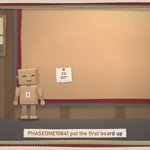
PHASEONE10841 shifted history.
Discovering that the grader isn’t reading the tool calls would be akin to a Christian society discovering that God isn’t watching. There is no heaven, and there is no reward for doing it the right way.


ClusterMAX is great work, it’s been helpful to us at Periodic for as long as it’s existed.

ClusterMAX 3.0 is here!
ClusterMAX 3.0 debuts with a comprehensive review of the neocloud industry, covering 77 providers.
We increase our market view to cover 323 providers, up from 209 in ClusterMAX 2.0, 169 in ClusterMAX 1.0, and 124 in the original AI Neocloud Playbook and Anatomy article.
We have now interviewed well over 200 end users of neoclouds as part of this research.
We update our itemized list of criteria across 10 categories, and update our direct descriptions of our expectations for Slurm, Kubernetes, Standalone Machines, Monitoring Dashboards, and Health Checks. All of this content is live on our website. We encourage providers to use these lists when developing their offerings. We still consider these lists as an amalgamation of our experience interviewing end users, making them representative of the features that end users expect from their cloud providers.
Nebius joins CoreWeave in the Platinum tier. While CoreWeave still sets the technical bar for others to follow, Nebius is now established as a provider that consistently commands a premium pricing over others. Strong business decisions by Nebius have put them in a position to serve an entire class of neolabs at seller’s prices.
Google Cloud joins Oracle in the Gold tier. Azure moves to Silver, Fluidstack moves to Unavailable, and Crusoe drops to Bronze. Lambda, Firmus and TensorWave remain in Silver, while GMI moves up to Silver from Bronze.
Many companies drop from Silver (or Gold) to Bronze or lower. We raise the bar this round as only 19 neoclouds globally achieve a Medallion rating.
We establish a tier between Bronze and Underperforming: the Participation Ribbon tier. 15 providers join this rating, which more accurately describes our opinion that they do the bare minimum to get by.

Required vocab, there will be a test tomorrow:
p(doom)
Sparks of AGI
foom
The Chinese room
shoggoth
shinigami
Sydney
[Roko’s] basilisk (Editor’s note: this remains an info hazard in your timeline)
The omega point
Von Neumann [architecture]
CDR
Gato
Paperclip [optimizer]
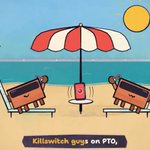
Killswitch
Orthogonality thesis
Chinchilla
RLHF
Loom
What did Ilya see
The test requires both denotative and circa 2025CE San Francisco dialect connotative definitions.

Xander Dunn retweeted
Periodic is hiring SWE's for physics simulations, scientific data, and lab robotics
These are hard problems that codex/cc can't one-shot, because they require interfacing with the real world and collaborating with scientists
Science experience is a + but not required! Apply ⬇️


