

Asst Prof @SFU 🌌☯️🇨🇦🌺 I study how people make sense of others and ourselves. | https://xitter.cf/t.co/FojTzn9i36 | http://xallysie.bsky.soci
Vancouver, British Columbia
Joined August 2009
- Tweets493
- Following491
- Followers489
- Likes2.3K




Pinned Tweet
SFU social psych is hiring a tenure-track Asst Prof!! 🤩🎉 Our search prioritizes Black scholars.
Come join a wonderful dept full of smart, kind people, and do psych research surrounded by natural beauty 🏞️🌊 & a city 🌃 in BC.
AMA & pls share widely!
flyn.im/dGFOwuT
Sally Xie retweeted

Wow. I woke up to an impressive number of upset people who apparently don’t understand how LLMs work and can’t cope well with me pointing it out.
An LLM is a statistical next-token prediction model. That’s how it works. It’s an extraordinarily sophisticated calculator performing math you could theoretically do by hand (if you were sufficiently masochistic).
Math doesn’t know what it’s calculating. Pi doesn’t spend its evenings contemplating the nature of circles, and c doesn’t ponder the relationship between matter and energy.
That doesn’t make the results any less accurate, impressive, or useful.
Between inference requests, an LLM isn’t sitting around thinking. It isn’t reconsidering its answers, wondering whether it made a mistake, contemplating its existence, or questioning whether it’s conscious. Its weights remain fixed (it doesn’t learn), and computation resumes when it receives input.
We know this because we designed these systems. The architectures, mathematics, implementations, and research are extensively documented. You can study them yourself.
Of course, some people immediately lean into comparisons of biological intelligence or philosophical debates over consciousness because that is what they know.
But biological intelligence and artificial neural networks are fundamentally different systems. Similar outputs don’t establish equivalent internal experiences.
I experience consciousness directly. I infer that other humans do too because we share biological structures and processes. We don’t have equivalent evidence for an LLM, and nothing about its known operation gives evidence of conscious experience.
Which brings me back to my original point.
To me, understanding is conscious comprehension. It means being aware of information, recognizing its meaning, and experiencing that comprehension. If I wasn’t conscious I could not understand.
We can perform actions unconsciously. We can produce correct results without knowing why they’re correct. But I distinguish those capabilities from consciously understanding what we’re doing.
An LLM can solve complex problems, explain difficult concepts, and produce remarkably accurate information. I give it full credit for those capabilities.
But producing an answer that we rationalize as understanding isn’t the same as experiencing understanding.
You don’t have to agree with my definitions. We can debate functional understanding versus conscious comprehension all day, but that won’t establish whether an LLM actually experiences anything.
The right debate is this…
Could machines exhibit something different from human consciousness, something measurable, meaningful, and worth studying?
I think so, absolutely!
I’m entirely open to discussing “machine consciousness” in terms of observable, testable computational properties. We built these systems, we can instrument them, examine their internal mechanisms, and investigate what they’re capable of.
That seems far more productive than endlessly arguing over whether a machine experiences life the way humans do.
So here’s my question:
How would you define machine consciousness, and more importantly, how would you measure it?

Sally Xie retweeted

What’s the evidence on rent control?
I charted the findings from 112 studies:
Great for rent-controlled tenants ✅
But:
Pushes up rents for other people ❌
Pushes down new housing construction ❌
Pushes down building quality ❌

Sally Xie retweeted

Life has changed dramatically in the last 30 years.
We all use the internet far more, and are far less likely to read books, host friends, attend parties, play cards, attend classes, join clubs, go to picnics, and stay late to work.
I'm hosting a party this week and had a board game night a few weeks ago. I'm trying to do my own small part in bringing back social activities :)
derekthompson.org/p/the-deat…

Sally Xie retweeted
Cornell just produced a massive new report on higher education noting that companies have a “jarring” skepticism of higher ed thanks to a new generation of degree holders who lack key skills like handling uncertainty, compromising, and absorbing feedback.
Faculty also report that incoming students, despite four years of undergraduate education, are “underdeveloped” in these relational or interpersonal skills.
This is a serious crises in higher education and the report calls for a greater need for conflict-resolution training. We need to do a better job training our students to deal with these issues.
These are traditionally the skills students developed in higher education. I loved college because it challenged me, sparked debate, and required me to grapple with complexity. This should be an essential part of college--inside and outside the classroom.
chronicle.com/article/compan…

Sally Xie retweeted

Nature has just published a pretty incredible paper.
The authors introduce a framework that turns research papers into interactive AI agents.
Rather than engaging with a paper only as static text, researchers can question its agent, ask it to reproduce an analysis, or apply the paper’s methods to new data.
This could make research methods much easier to understand, reproduce, and use.
It also opens up a strange possibility: research papers that can, in a sense, talk to one another. The authors demonstrate this by connecting agents derived from different papers so that they can combine their methods and data.
Used carefully (and with human scientific judgment still firmly in the loop) this could become a powerful new form of scientific communication.
*
Full paper in the first reply

Sally Xie retweeted

MIT published a brutally honest report on what AI is doing to students.
A committee of professors and students spent five months studying how AI changed learning on campus, and the findings read like a warning to every university on the planet.
Study groups are disappearing. Office hours are emptying out. Problem sets and take-home exams no longer prove anything, because AI can produce credible solutions to almost any written assignment in the undergraduate curriculum. Students who lean on chatbots lose mastery and confidence, and some slip into what the report calls cognitive surrender, reaching for AI at the first hint of struggle.
The numbers are rough. 46 percent of surveyed MIT undergrads use LLMs daily. 90 percent worry about their own overreliance. Undergrads who feel AI makes them replaceable now outnumber those who feel it makes them capable.
The committee's answer surprised me. They refused to fight AI with surveillance. The report calls AI detectors unreliable, says lockdown browsers feel like spying, and warns that policing students builds a classroom atmosphere of mutual distrust.
Instead, MIT wants to rebuild education around the things AI can't replace. That means oral exams, semester portfolios, in-person project work, and a required social component in every subject. The report even floats the idea of rethinking grades entirely, since without a GPA to optimize, much of the incentive to cheat with AI evaporates.
The committee warns professors against replacing undergrad research assistants with AI agents just because they're cheaper, because a university exists to grow people, not output.
The most famous tech school on earth admitted the machines broke its way of teaching. Its answer is more humans, not more software.

Sally Xie retweeted
Modern academic structures are constraining scientific creativity and holding back early-career researchers
A new paper explains how research is increasingly structured around short funding cycles, productivity-based evaluation criteria, and risk-averse frameworks that favor predictable and non-transformative research outputs.
Such systems place disproportionate pressure on early-career researchers by incentivizing safe, tractable and easily evaluated outputs. Peer review and funding, escalating publication costs and institutional inequalities interact with precarious employment and hierarchical dependencies make strategic conformity the rational career path.
This nails a lot of the same problems I see in modern academia. Open science has improved the quality of research, but the nature of the research is often highly derivative.
nature.com/articles/s41562-0…

Sally Xie retweeted

The shrinking landscape of linguistic diversity in the age of large language models dlvr.it/TV8ZXZ

Sally Xie retweeted
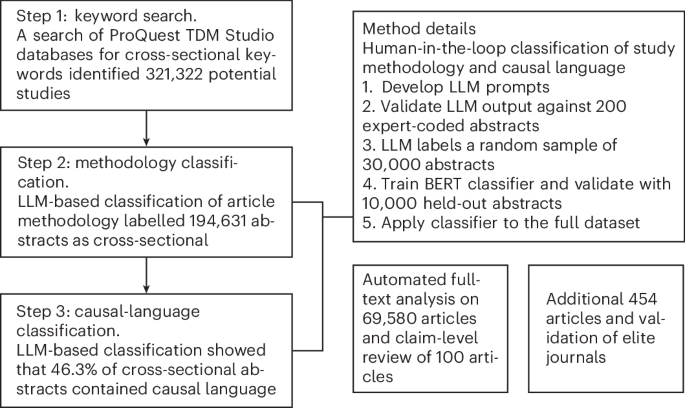
Quantifying the prevalence and impact of overreaching causal claims in social science dlvr.it/TV8Hhb
Sally Xie retweeted

‼️ BREAKING: Journalists hid an Airtag in a rare book shipment and confirmed Amazon to be one of the buyers behind the bulk orders destroying rare-books to feed their AI.
They tracked it to Amazon's LAS8 warehouse in Las Vegas, home to VGT3 (see logo below), a scanning operation feeding Amazon's AI training data, where workers say they cut the bindings off books to scan them faster.
Amazon won't say why the books are destroyed.


Sally Xie retweeted
Professors do not influence their students' politics.
New data from 33 major universities finds that students become more liberal during colleagues regardless of the ideology of their professors--they find no effect of faculty partisanship on student partisanship.
Instead, liberal students opt into majors with more liberal topics (and conservative students students opt into majors with more conservative topics).
If, anything the study finds a small backlash effect to Democratic faculty (with a slightly higher chance of the student becoming a Republican). It also finds that Democratic profs don’t include more liberal topics or textbooks in their courses.
This research debunks a lot of rhetoric about how faculty impact their students, and instead reveals the power of situation selection--students opt into majors that align with their beliefs.
micah-baum.github.io/files/b…

Sally Xie retweeted

This paper gives a fancy name to a problem you can already feel in your bones
"The Tragedy of the Cognitive Commons." Checking AI output requires deep expertise. Deep expertise comes from doing grunt work for years. And grunt work is the first thing AI eats
So we're building systems that need expert supervision while dismantling the only known process for making experts
The paper calls the shared pool of human expertise the "cognitive commons." Every profession drinks from it. Nobody's refilling it.
By eliminating junior roles, each company is acting totally rationally, and the collective result: a profession that can't catch AI's mistakes anymore because it never learned to do the work in the first place
Who checks AI's homework in 15 years?

Sally Xie retweeted

should be obvious by now, but OpenAI and Anthropic are just gonna keep cannibalizing all their biggest customers.
it’s simply too profitable for them to resist. and it’s already happening:
1. Figma partnered with Anthropic on AI design tools. then Anthropic’s product chief quit Figma’s board, and 3 days later Anthropic launched Claude Design to compete with Figma. CEO Dylan Field said Anthropic was “not consistently candid.”
2. Novo Nordisk uses Claude to help develop drugs. now Anthropic is developing drugs of its own.
3. Microsoft poured billions into OpenAI. now OpenAI is building a Jobs Platform to compete with LinkedIn, and reportedly a code repository to compete with GitHub. Microsoft owns both.
4. Harvey uses Claude to sell AI contract analysis, due diligence, and litigation tools. now Anthropic sells those same workflows through Claude for Legal.
5. Intercom used OpenAI’s Realtime API to build Fin Voice. now OpenAI sells its own voice-and-chat support agent through Presence.
6. Abridge and Ambience build clinical documentation products on OpenAI. now OpenAI sells ChatGPT for Healthcare directly to hospitals with clinical documentation built in.
7. Benchling uses Claude to power its biotech R&D platform. now Anthropic sells its own scientific workbench through Claude Science.
the frontier lab playbook is simple:
1. sell their models to the world’s most valuable businesses
2. help wire them into those companies’ most valuable and sensitive work
3. map the business from the inside and find where AI can take over
4. turn those capabilities into their own products and become the customer’s competitor

It’s well within Anthropic’s rights to compete in any market they choose.
What’s funny, in this instance, are the number of Pharma companies, who through their unchecked use of Anthropic, are driving revenues into what they think is a model provider but is in fact a competitor lurking in the shadows thereby accelerating their own demise.
I suspect any end market with reasonable ROCE that could be AI accelerated is on the table.
If I were them, I’d probably do the same.


Sally Xie retweeted

🚨Published in @Nature: We show how AI can simulate human behavior to predict experimental results as accurately as experts
Our work has many implications for AI safety. For example, simulators can be used to aid harmful manipulation, and current safeguards do not prevent this🧵
Sally Xie retweeted

Misinformation as strategy: Epistemic consequences and the undermining of shared truth
Review by Ullrich Ecker, Emily Spearing, Renee DiResta (@noUpside), & Stephan Lewandowsky
tinyurl.com/yces8vpr

Sally Xie retweeted

Nature Communications
Human brain changes after first psilocybin use
nature.com/articles/s41467-0…

Sally Xie retweeted

Only surprises carry new information. Yet most papers are written to confirm what their readers already believe.
New in @ScienceMagazine with Casey Petroff and @kinggary: why scientists should design and write for surprise, and how to make framing part of formal inference.
doi.org/10.1126/science.aej4…

Sally Xie retweeted
This new PNAS paper is so interesting!
The authors asked a fascinating question: Do we need language to reason logically?
They combined brain imaging in healthy adults with tests of two rare patients who had extensive damage to the brain's language network and profound aphasia.
Both patients showed severe grammatical impairments, often performing at or near chance on language assessments.
Yet their logical reasoning remained remarkably intact.
They could infer hidden rules governing transformations of number sequences, solving 19/25 and 39/40 problems.
They also excelled at nonverbal matrix reasoning, scoring 25/30 and 26/30—well above age-matched norms.
The brain-imaging results pointed in the same direction. Neither inductive nor deductive reasoning substantially recruited the language network.
The conclusion is powerful: natural language is not the medium of formal logical thought.
Language allows us to communicate thoughts, but it is not necessarily the machinery that produces them.
We can express understanding through language. But linguistic competence, by itself, is not evidence of understanding.
I think it is crucial to keep this distinction in mind in an age in which fluent machines are increasingly mistaken for thinking machines.
*
Full paper in the first reply

Sally Xie retweeted
Why do human societies adopt rigid moral rules?
Rigid rules can protect cooperation when motives are opaque.
Flexible rules allow justified exceptions but also make it easier for cheaters to hide behind plausible excuses. People often have legitimate reasons for failing to cooperate, yet those reasons are typically opaque to observers, allowing opportunists to disguise selfishness as justified hardship.
This creates a trade-off between maximizing welfare and protecting cooperation from those who would exploit excuses to justify selfishness.
Flexibility maximizes welfare when trust is secure, whereas rigidity preserves cooperation when trust is fragile. This account explains why rigid rules are common when others are perceived as unreliable.
pnas.org/doi/10.1073/pnas.25…
