

Content Creator | Crypto Enthusiast | Sports & Esport Enthusiast | Web3 | OG member at https://xitter.cf/t.co/2XXXJDTZBM
Joined August 2021
- Tweets8.7K
- Following3.6K
- Followers3.5K
- Likes4.3K








Ghosts may haunt the network, but nothing can stop @ionet with the power of decentralized GPUs.
This Halloween, while others chase shadows, @ionet keeps building the infrastructure powering tomorrow's AI. 🚀
No tricks. Just compute. @ph_ionet @IonetPinas

Confidentiality shouldn’t depend on trust, promises, or policy. It should be enforced by architecture. That’s where @orgn_official gets interesting


Most AI platforms ask users to trust privacy policies, centralized servers, and promises. @orgn_official takes a different approach by combining confidential computing, hardware-based isolation, and verifiable attestation to protect sensitive workloads.

Blackbit can analyze flag patterns proving a complete exploit chain under real world conditions is a different level of security validation
This quoted post is unavailable.
For sensitive workloads, privacy policies alone may not be enough. Hardware isolation, encryption, and verifiable attestation can provide stronger technical guarantees than promises alone.

Most AI discussions focus on model intelligence.
The more important question may be: who can see the data?
As AI becomes embedded in finance, healthcare, enterprise workflows, and software development, privacy can no longer depend solely on policies, access controls, or promises from providers.
The next evolution is AI systems built on confidential computing.
🤖 Made with AI

Privacy is becoming a core infrastructure requirement for AI. Hardware-level isolation and verifiable attestation are a strong step toward making sensitive workloads actually trustworthy.
Keeping an eye on @orgn_official and its vision for the future. The projects that succeed long-term are the ones that create value, align incentives, and continue building regardless of market conditions.
I'm curious to see how the ecosystem evolves and what opportunities it unlocks for users and builders alike.

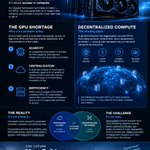
The next generation of AI shouldn't be powered by a handful of centralized data centers alone. As AI models grow larger and demand for compute skyrockets, the biggest bottlenecks are becoming increasingly clear: limited GPU availability, high infrastructure costs, geographic concentration, and long deployment times.
Demand for GPUs has exploded as companies race to train larger models, serve millions of users, and run increasingly complex AI workloads. The result is a market where access to high-end compute is concentrated among a small number of providers and organizations with the deepest pockets.
This creates three major problems:
1. Scarcity : AI companies often wait weeks or months to secure GPU capacity. Researchers and startups can be priced out entirely.
2. Centralization : A large percentage of advanced AI workloads depend on a handful of cloud providers and data center operators. When compute is concentrated, innovation becomes concentrated too.
3. Inefficiency : While some organizations struggle to find GPUs, countless GPUs sit underutilized around the world. Powerful hardware exists, but it is fragmented and difficult to access.
That's why I believe the next generation of AI should be powered by a hybrid model that combines centralized infrastructure with decentralized compute networks.
Centralized clouds are excellent for predictable workloads, strict compliance requirements, and enterprise-scale deployments.
But decentralized networks solve a different problem: unlocking dormant compute that already exists.
Instead of spending years building new data centers, decentralized networks can aggregate GPUs from data centers, enterprises, and independent providers into a global marketplace. The supply side grows faster because the hardware is already deployed.
My view is simple :
The future of AI won't be powered by centralized clouds alone, and it won't be powered by decentralized networks alone.
It will be powered by a combination of both.
Centralized infrastructure provides stability.
Decentralized infrastructure provides scale, flexibility, and broader access.
@ionet @ph_ionet @IonetPinas
🤖 Made with AI

Burning solana:BZLbGTNCSFfoth2GYDtwr7e4imWzpR5jqcUuGEwr646K tokens using the revenue coming in from real-world usage. Based on what we're seeing, we expect to remove at least 12 million solana:BZLbGTNCSFfoth2GYDtwr7e4imWzpR5jqcUuGEwr646K tokens from circulation over the next year alone.
The IDE is built on a very simple idea. When the network grows, the network itself should benefit.
With this new model, at least half of the solana:BZLbGTNCSFfoth2GYDtwr7e4imWzpR5jqcUuGEwr646K revenue the network keeps (after paying out providers) will be permanently burned. It's pretty straightforward. As more customers use the network and earnings go up, more tokens are taken out of circulation.
Until now, most token models rely on just printing more tokens to force growth. But, the IDE does the opposite. It creates a real link between usage and scarcity. The more people use io.net, the scarcer the tokens become.
Less Supply Stronger Tomorrow ❤️🔥
@ionet @ph_ionet @IonetPinas
🤖 Made with AI

while AWS built the cloud era. @ionet is helping build the AI era.
For AI builders, access to compute shouldn't be limited by high costs, long wait times, or centralized infrastructure.
That's where io.net changes the game:
⚡ Access distributed GPU power on demand
💸 Lower infrastructure costs
🌐 Decentralized and community-powered network
🤖 Built specifically for AI workloads
🔥 Enabling innovators to build faster and scale smarter
The future of AI isn't just bigger. it's more open, accessible, and efficient.
🤖 Made with AI

DarkSpade retweeted

We built a cyber-capable AI model that, based on benchmarking and real-world testing, is perhaps the most capable offensive-security LLM we have seen
It scores 95% on Cybench, solving 38/40 tasks
But benchmarks only go so far, so we pointed it at real systems
Through authorized programs, we tested it against a Fortune-500 technology company, a major global telecom, and leading Web3 protocols.
The result: a 100% success rate - it found a viable path into every authorized target in our test set.
It adapts, reasons, and finds routes that aren’t obvious, even in systems that already passed audits and security reviews.
If this holds at scale, most current security assumptions break.

Three major developments have been shaping the future of @ionet
Growing Network Revenue
Incentive Dynamic Engine (IDE)
Token Burn
Individually, each update is important.
Together, they tell a much bigger story.
First, let's talk about Revenue.
A decentralized compute network only succeeds if it can attract real demand.
As more customers use @ionet 's GPU infrastructure for AI workloads, the network generates revenue from actual compute consumption rather than relying solely on speculation.
Revenue is the foundation of a sustainable ecosystem.
Next comes IDE = the Incentive Dynamic Engine.
IDE is designed to improve how incentives are distributed throughout the network.
Instead of static rewards, incentives can adapt to network conditions, helping balance supply, demand, and participation more efficiently.
Why does this matter?
Every decentralized network faces the same challenge:
How do you attract growth while maintaining sustainability?
IDE aims to make incentives smarter, ensuring rewards are aligned with real network needs and long-term ecosystem health.
The third piece of the puzzle is the @ionet Token Burn mechanism.
Token burns reduce circulating supply by permanently removing tokens from the ecosystem.
When tied to network activity, burns can connect token economics directly to platform usage.
This is where the picture becomes interesting.
As network usage grows:
💰 Revenue increases
⚙️ IDE optimizes incentives
🔥 Token burns strengthen scarcity dynamics
Instead of isolated updates, these mechanisms work together as parts of a single economic system.
io.net is not just building a decentralized GPU marketplace.
It is building an ecosystem where:
• Demand generates revenue
• Revenue supports participants
• Incentives drive growth
• Network activity influences token economics
Revenue supports the network.
The combination of Revenue + IDE + Token Burn shows how io.net is working toward that goal.
The next phase will be watching how these mechanisms scale alongside network adoption. 🚀
#ioNet #IO #DePIN #AI #DecentralizedAI #GPU #Tokenomics
🤖 Made with AI

DarkSpade retweeted
Another week, another AI data leak in the headlines.
The pattern is always the same: your prompts and data sitting in plaintext on someone else's server.
This is the exact failure mode ORGN closes. Here's how we do it 🧵


1⃣ The latest Incentive Dynamic Engine (IDE) updates
For years, many Web3 and DePIN projects have followed the same pattern, attract contributors with token incentives, grow rapidly, and then struggle when market conditions change. When token prices fall, contributor rewards decrease, participation drops, network utility declines, and the cycle continues.
What excites me about @ionet 's new Incentive Dynamic Engine (IDE) is that it directly addresses this challenge by putting real utility and sustainability at the center of the network's economics.
Instead of forcing GPU suppliers to depend entirely on token price movements, the IDE introduces stable USD-equivalent rewards. Suppliers can focus on providing reliable compute resources without constantly worrying about market volatility. This creates a stronger foundation for long-term participation and encourages professional infrastructure operators to join the network.
The introduction of the Reward Vault and Fee Vault, creating financial buffers that help absorb market shocks and support network stability during periods of lower revenue. Combined with a token burn mechanism tied to actual network usage, the model aligns growth with real demand rather than speculation.
What stands out most is the shift in mindset. It's about building an economic system that can support a global decentralized GPU network for years to come.
As AI adoption continues to accelerate, access to affordable and scalable compute will become increasingly important. @ionet is already providing an alternative to traditional cloud providers by connecting unused GPU resources from around the world. The IDE strengthens that vision by ensuring the network remains resilient, sustainable, and utility-driven.
2⃣ Recent IO token burn and their impact ❤️🔥
The recent token burn ❤️🔥of almost 500k @ionet token highlights an important shift in how value is created within the network.
When the network grows and generates revenue, a portion of the remaining $IO tokens is permanently removed from circulation. These tokens aren't locked, recycled, or moved to another wallet they are permanently burned.
As more AI developers, startups, and enterprises use @ionet 's decentralized GPU infrastructure, more value flows through the ecosystem. Increased usage can lead to increased token burns, reducing circulating supply over time while supporting a healthier and more sustainable economic model.
3⃣ Why These Changes Strengthen the @ionet Ecosystem ?
The recent tokenomics updates and token burn mechanisms represent more than just economic adjustments they are foundational improvements designed to make io.net stronger, more sustainable, and better aligned with real-world demand.
*⃣ Greater Network Stability
*⃣ Stronger Economic Sustainability
*⃣ Utility-Driven Value Creation
*⃣ Higher Quality Infrastructure
*⃣ Long-Term Growth Potential
The result is a network designed not just to grow quickly, but to endure creating lasting value for developers, suppliers, enterprises, and the broader DEPIN ecosystem.
@ionet @ph_ionet @IonetPinas
🤖 Made with AI

DarkSpade retweeted
We just watched export controls move from GPUs to HTTPS
Immediately implications:
• You cannot enforce this kind of control long‑term without strong ID verification on model usage.
• Anonymous frontier access is now politically radioactive
This, of course, raises some important concerns.
If frontier model research and development is centralised in the hands of a few, US-based companies then access to those models becomes a matter of geopolitics, and a single directive can decide which passports get to use them and which ones don’t
That's why open source is so immensely important, and why we wholeheartedly support it.
You can run it on your own hardware, or like we do at ORGN, wrap it in TEEs for verifiable confidentiality. No government can suddenly revoke your API key. Access isn’t gated by nationality, and the whole field can keep iterating, for everyone, instead of waiting to see who Washington decides gets to use the latest model this week.

The US government, citing national security authorities, has issued an export control directive to suspend all access to Fable 5 and Mythos 5 by any foreign national, whether inside or outside the United States, including foreign national Anthropic employees.
The net effect of this order is that we must abruptly disable Fable 5 and Mythos 5 for all our customers to ensure compliance.
Access to all other Claude models is not affected.
We apologize for this disruption to our customers. We believe this is a misunderstanding and are working to restore access as soon as possible.
Read our full statement: anthropic.com/news/fable-myt…

Why pay more and wait longer for GPU access?
@ionet is redefining cloud computing with:
⚡ Lower GPU costs
⚡ Instant cluster deployment
⚡ A decentralized global compute network
See how io.net compares to traditional cloud providers like AWS, Google Cloud, and Azure.
Our infographic breaks down why @ionet is becoming the go-to platform for AI builders, developers, and innovators.
✅ Lower prices
✅ One-click deployment
✅ Global decentralized compute power
Check it out and see the difference.
Why io.net Beats Traditional Cloud Providers
1. Significant GPU cost savings
2. Instant deployment without lengthy approval processes
3. A worldwide decentralized compute network
The future of AI infrastructure is faster, more accessible, and more affordable.
@ionet makes high-performance GPU computing affordable, fast, and globally available.
@ionet @ph_ionet @IonetPinas
🤖 Made with AI

Training AI model on centralized cloud vs other DePIN
@ionet main advantage over many other decentralized GPU providers is that it focuses heavily on AI/ML workloads at scale, not just generic compute sharing.
@ionet @ph_ionet @IonetPinas
