

On-demand market research platform for B2B. Learn what your target audience thinks, needs and wants
Where your customers are
Joined September 2019
- Tweets1.4K
- Following109
- Followers2.6K
- Likes280






We took the value-prop copy from the 5 biggest CRMs and deleted the company names.
Then we asked 100 B2B marketing leaders to match each one back to the brand.
They scored 1.86 out of 5.
Just the words these companies chose to describe themselves. Salesforce. HubSpot. Oracle. Zoho. Pipedrive.
43% got one or zero right. Only 8% got four or five. Random guessing would've scored 1.0.
And they knew it. 74% told us they were "not very confident" or "just guessing."
Your positioning isn't bad because it's wrong. It's bad because it's interchangeable.
Every CRM says AI-powered, automate your pipeline, close more deals. Delete the name and nobody can tell who's talking.
They're confused because you sound exactly like the competitor you're trying to beat.

Chase Doelling helped build a recurring research program that moved call conversion 14%.
Most original research dies the week it ships. Launch push, a few carousels, then nobody in sales mentions it again. Next quarter someone asks for original data and it starts from zero.
The problem is upstream. Teams pick the question that makes a good headline instead of the one a buyer is stuck on.
Chase runs it differently. Recurring cadence, questions reps actually reuse, findings that end up in calls.
He's showing how at our Wynter Workshop this Thursday, Sept 10.
Register free here, recording goes out to everyone who signs up: wynter.com/how-to-build-a-re…
🤖 Made with AI

41% of B2B buyers say they chose a vendor for a genuinely different product capability.
What about the other 57%?
Easiest to buy from (24%), existing relationship or trust (21%), price (12%).
The easy story is that buyers are irrational. We don't buy that. These are senior operators.
For most of them, a real product difference wasn't on the table. So you fall back to what's left, who's easier to work with, who you trust, who costs less.
The 57% is a differentiation problem. Or maybe brand opportunity.

64% of buyers said it is hard to tell competing vendors apart.
We used a Wynter survey to ask 100 B2B marketers about vendor comparison.
Majority constantly thought "these all basically do the same thing".
When everything reads the same, buyers split. 56% dug deep to find a real difference. The other 44% gave up trying and decided on other factors.
One CMO stopped using vendor material entirely: "I stopped reading and using their info and looked to my peers for insights and recommendations on the tool(s) they use. That was far more informative than anything I got from any of the vendors."
So when the website doesn't make the difference clear, what closes the deal?
Two things, neck and neck.
32% said it came down to fit. Whoever proved they matched the exact use case, stack, and integrations won.
31% said the sales experience was the real difference. As one CMO put it: "their sellers were able to do a good job of explaining the differences that the website by itself was not able to do."
Companies are scared (or stupid?) to not focus on their differentiation. If they're lucky enough to still get a demo request, it's then up to the salespeople to explain it. But all but the best-known brands get just ignored.

87% of B2B buyers get to a vendor through a peer recommendation.
72% already knew the vendor before the search started.
"Their messaging stood out"? 29%. Fourth place.
We used Wynter to ask 100 marketing leaders what actually gets a vendor onto their shortlist.
The thing that gets you considered is other people talking about you, and having been around long enough to be familiar.
So the questions worth asking: how many of your customers are happy enough to put their name on a recommendation? How easy do you make it for them to do it? And are you consistent enough, long enough, to be the vendor people already know when the search begins?
You get shortlisted by being the one people already trust.

ALT Vendors Shortlisted Stats Wynter
70% of CMOs say becoming an AI leader is critical this year. 70% admit they're not ready.
Same Gartner survey. Same people. And the survey gets worse: budgets flat at 7.8% of revenue, 18% below four years ago. 56% say they can't fund their own strategy. Boards want proof anyway.
Right when the pressure to know your buyer peaks, the buyer became invisible.
Your ICP now researches you inside Claude/ChatGPT. Compares you against competitors there.
No pixel fires in that window. Your analytics see the last 10% of a journey that's 90% done.
We watch it in our own numbers
Self-serve discovery through AI went from 30% of our inbound to 39%. These buyers arrive pre-convinced, nothing in our stack saw it happen.
So every signal marketers used to read their ICP with is degrading at once. Traffic is falling as research moves into AI. Intent data covers rooms buyers no longer visit. Attribution tracks the visible sliver.
That's low-fidelity information about your buyers, getting lower.
There's one high-fidelity source left, and it's the one most companies skip: the buyers themselves.
Ask your ICP what they're trying to solve, how they evaluated, what nearly stopped them.
First-person answers from real buyers were always the best data.
The tools are increasingly more blind. But your buyers didn't go mute. Run more target buyer interviews and surveys.
Tomorrow: how PostHog spends $45k/month on weird marketing ideas, and why it works.
Joe Martin, Marketing Lead at @posthog , joins us for a live Q&A as part of the Wynter Workshop series. No deck, no pitch, just real answers on the weird ideas budget, why they hire for taste over experience, and what they've cut that most marketing teams still do.
8am PT | 10am CT | 11am ET | 10am Bogota | 3pm UTC
Haven't registered? Grab a spot: wynter.com/posthog-weird-ide…

AI-based Wynter alternatives keep popping up.
Test your messaging against AI personas instead of real ICPs. $199/mo.
We built one too. It's completely free.
The methodology is real. Personas sampled across firmographics, Big Five traits, adoption stance and buyer modality, with dispersion measured so genuine consensus gets separated from a collapsed simulation. 0.13 to 0.23 prose overlap on real runs.
It will catch a vague headline or an undifferentiated value prop. Reliably. For nothing.
What it can't have is a budget, a renewal coming up, or a boss asking about this quarter.
For anything you're actually betting on, test with humans who are in-market.
Got a B2B site? Try it.
grader.wynter.com

70% of CMOs say becoming an AI leader is critical this year. 70% admit they're not ready.
Same Gartner survey. Same people. And the survey gets worse: budgets flat at 7.8% of revenue, 18% below four years ago. 56% say they can't fund their own strategy. Boards want proof anyway.
Right when the pressure to know your buyer peaks, the buyer became invisible.
Your ICP now researches you inside Claude/ChatGPT. Compares you against competitors there.
No pixel fires in that window. Your analytics see the last 10% of a journey that's 90% done.
I watch it in our own numbers at Wynter.
Self-serve discovery through AI went from 30% of our inbound to 39%. These buyers arrive pre-convinced, nothing in our stack saw it happen.
So every signal marketers used to read their ICP with is degrading at once. Traffic is falling as research moves into AI. Intent data covers rooms buyers no longer visit. Attribution tracks the visible sliver.
That's low-fidelity information about your buyers, getting lower.
There's one high-fidelity source left, and it's the one most companies skip: the buyers themselves.
Ask your ICP what they're trying to solve, how they evaluated, what nearly stopped them.
First-person answers from real buyers were always the best data.
The tools are increasingly more blind. But your buyers didn't go mute. Run more target buyer interviews and surveys.
New in Wynter: chat with data. Ask a question, get an answer sourced straight from your respondents.
Go try it.

You can now chat with your data.
Often when analyzing survey data, you develop specific questions - I wonder how many people said this? Or you might developon an insight based on what a participant said, and start wondering whether this is a thing or or many people feel this way.
You can now ask your survey and message test data questions directly inside Wynter. Give it a spin.
You can now chat with your data. Often when analyzing survey data, you develop specific questions - I wonder how many people said this?
Or you might develop an insight based on what a participant said, and start wondering whether this is a thing, how many people feel this way, etc.
You can now ask your survey and message test data questions directly inside Wynter. Give it a spin.
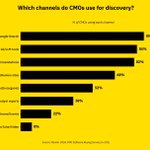
The new discovery stack:
• AI gives the landscape view (84%)
• Peers validate with real experience (82%)
• G2 provides social proof (68%)
• Google checks for red flags (89%, but often last, not first)
You can't run ads to get into ChatGPT's recommendations. You can't sponsor your way into a Slack group conversation.
These channels are earned through product quality, customer satisfaction, and actual market presence.
(This is finding #4 from Wynter's 2026 CMO Software Buying Survey. Full report in Wynter website).

There is a massive gap between a demo that sits on a page and one that actually converts.
Join Natalie Marcotullio, Head of Growth and Product Marketing at @navattic , for an exclusive deep dive into the 2026 Interactive Demo Strategy Report.
Drawing from a massive dataset of over 40,000 demos, Natalie will reveal the specific patterns, placements, and design choices that separate the top 1% of performers from the rest of the pack.
Register here: wynter.com/workshop/how-the-…

All marketing conferences have the same problem.
The best conversations happened in the hallway. At the bar. Never during the actual sessions.
We built Spryng differently.
We hand-match attendees before the event. Similar company stage, similar challenges, similar goals.
To build even stronger connections we are adding a VIP boat experience the day before the conference.
30 people total. Two boats. Split by company size. It's a $199 add-on.
But if you grab a ticket before January 31st, you get it for free.

In B2B SaaS, you're competing on your story.
On whether they like you enough to pick you over the alternatives that do the exact same thing.
Most companies don't know where to start with shaping a story that resonates.
That's why we're bringing Matthew Dicks to Spryng 2026 in Austin this March.
1. He's giving a keynote on storytelling for business. Teaching everyone in the room how to do it.
2. Then he's picking 3 attendees from the room and creating a business story for them. Live. In front of everyone.
Google "Wynter Spryng" and buy your ticket!

When we asked marketing leaders what's holding them back from doing ongoing ICP research, the top 3 reasons are:
1. Lack of access to ICPs
2. Time constraints (takes too long to do it)
3. Hard to prioritize insights over other stuff that needs to get done (resource allocation)
Having this in mind, we've been working on a new thing at Wynter to make all 3 reasons become non-issues.
It's a product that delivers you rich, qualitative insights from specific ICPs on a monthly basis. Without you lifting a finger.
We're calling it ICP Pulse: wynter.com/solutions/icp-pul…

We wanted to know: when LLMs surface unknown vendors, do buyers trust it?
We partnered with Omniscient Digital to find out. Using Wynter, we surveyed 100 B2B decision-makers about how they actually use LLMs during vendor research.
42% now start their search with an LLM or traditional search.
Here's what happens when an unknown player surfaces:
• 51% go straight to the brand's website to fact-check
• 25% check third-party reviews
• 14% contact the vendor directly (often knowing very little about what they do)
• 13% consult their peers
The customer journey isn't linear anymore.
This is why brand consistency matters. You need to be showing up in AI search results and perform well in the higher-trust validation layers: peer networks, review sites, transparent website content.
Read the full research: beomniscient.com/blog/from-p…

In our new Wynter research we ran with Omniscient Digital, 42% of B2B buyers said they use ChatGPT early in their search for vendors. But almost no one trusts it to make the final call.
AI helps people find options faster. Then they double-check everything, on Google, review sites, vendor websites, and with peers.
The new buying loop is AI for speed and humans for trust.
Buyers bounce between AI, search, and people as they narrow down options.
Our report digs into what’s really happening, how buyers use AI, where trust breaks down, and how to show up credibly in both AI and human searches.
Showing up in AI matters but trust still closes the deal.
Read the full report: beomniscient.com/blog/from-p…

Buyers changed how they buy. Marketing strategies haven't caught up.
Using Wynter we surveyed 300 B2B SaaS CMOs, CTOs, and CFOs at $50M + companies. Here's what we found:
On AI: 20% of executives now use AI for vendor research, up from 0% last year. But 99% of brand strategies still focus only on traditional awareness channels. Just one person mentioned LLM optimization.
On retention: 86% of marketers don't connect brand to customer loyalty, even though every executive type told us peer recommendations are how they discover vendors. We're underfunding the exact mechanism buyers actually use.
On measurement: Half of marketing teams don't measure if they're on buyers' shortlists. Of those who do, most don't trust the data. Zero feel confident about what they're seeing.
One marketer explained: "I can't justify measurement tools without ROI. Can't prove ROI without measurement. Can't get budget without ROI."
But CFOs told us something different: "CFOs don't dislike spending, we dislike wasting money. Speak in financial outcomes, not marketing metrics."
There’s a gap between what executives need and what marketers deliver. Between how buyers research and where brands show up. Between what you could measure and what you actually do.
The buying process changed. Strategy needs to catch up.

Here's what actually happens when someone decides to buy your software, according to 300 B2B SaaS CMOs, CFOs, and CTOs at $50M+ companies.
First, the team researches 3-5 vendors based on features and price.
Then, the executive double-checks everything.
79% of CMOs review the team's shortlist.
56% of CFOs run their own verification.
CTOs check technical decisions.
Finally, 78% of financial leaders do a third round of checking. This includes: calling references and questioning assumptions (including ROI).
Your product gets scrutinized at least three times by three different people looking for three different things.
Teams care about daily usability and integrations. Executives care about strategy and whether the vendor is stable. Finance leaders care about total cost and whether your ROI claims hold up.
One VP of Finance put it this way: "I rely on the teams to give me their analysis, but I view it with professional skepticism and ask probing questions."
By the time you're doing a demo, you've already survived two rounds of elimination you never saw.
Most vendors focus on the team’s evaluation. The best prepare for all three levels of scrutiny.
