

A maths teacher in North Yorkshire
Joined November 2019
- Tweets592
- Following93
- Followers77
- Likes347

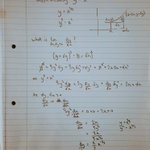


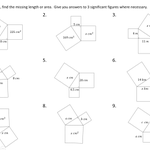


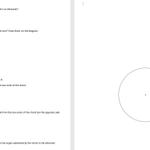

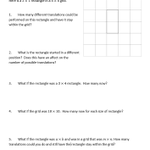
There has been lots of discussion about the chain rule recently, including the role of infinitesimal.
Here is a possible way to introduce the chain rule, using a quite different way of deriving dy/dx for a function.
Thoughts?


Mt 11s have just finished negative and fractional indices and I wanted some equations that required them to apply their understanding. The first 7 are linear with a sneaky quadratic at the end.

I have some questions about direct instruction in maths but am not sure who to speak to. Can anyone point me in the right direction?
I've read the EEF report and some articles/explainers but want to find out more.
@MrGoodwin23 @ProfCoe @adamboxer1
I wrote this puzzle for a year 12 class who had covered polynomial division but are yet to meet the quotient rule.
I like it because I wanted them to have to think about why some divisions do not seem to work, but also apply a process to an unstructured problem.

Their strategies were varied but broadly fell into one of three groups.
1. Pick 3 factors that give a product of 60 and expand.
2. Try each factor with one of the polynomials.
3. Try one factor with each polynomial
1
Lastly; I wanted my 10s to have a really good feel for the circle theorems involving tangents, leading towards the alternate segment theorem. They enjoyed this and we had some nice discussions about circles, symmetry and lines.

1
Secondly; I wanted to look at recurring decimals in much more depth with my y8 class. We spent a could of lesson just doing arithmetic with recurring decimals (and enjoying the weirdness), before moving on to this activity.

1
I haven't posted any resources for a while, so thought I'd chuck up a few from this week.
First up, I struggled to find translation problems with any depth or challenge for my year 7 class so have juts tweaked a classic problem.

I work in a school with a maths culture heavily based on notes, examples and methods.
Are there any articles or papers discussing note taking in Mastery? I always want to teach for understanding and find that the two come into conflict.
Thanks in advance
@NCETM
@WRMathsSec
Year 9 are looking at Distance Time graphs and Velocity time graphs, a topic I have struggled to give much depth in the past.
Thankfully, I've had a bit of gained time to devote to producing some more interesting activities.
Please let me know what you think.
The next activity ask the same set of questions about two graphs (of the same journey it turns out). I wanted to reinforce the idea of using either graph to find speeds or distances, but also checking to make sure our answers matched up.


1


I wrote this task for my year 9 class, as I thought they'd enjoy a bit of a puzzle. There are 8 equations/graphs that need to be put into 4 pairs so that each statement (in the 3rd picture) is true. It totally bombed, but I still think there is a good lesson in there somewhere!


3
WBarrassHemmens retweeted

I've been thinking about this in terms of transformations. For a shear, the line of shear would be a line of invariant points and all lines parallel to the line of shear would be invariant lines. For a reflection in a line, the line would be a line of invariant points and all...
I wrote this selection of problems on straight line graphs a few years ago.
My year 9s enjoyed them this afternoon, so I thought I'd post it. They had to think about different relationships and properties of the graphs to solve the problems.


