

Associate Professor at Tel Aviv University
Rehovot, Israel
Joined November 2009
- Tweets134
- Following522
- Followers262
- Likes179



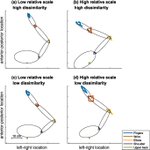

A new conference proceedings paper is out using neural networks to simulate motor tasks using networks trained to have hemispheric specialization. The model comparisons suggest that this strategy can take advantage of each hemisphere's strengths doi.org/10.1007/978-3-031-82…

We published a new paper showing that people with Parkinson's disease produce more submovements than controls. In contrast to previous experiments, we used a tracking task so all participants would move at the same speed and for the same duration. jneuroengrehab.biomedcentral…

PhD position: I’m looking for a PhD candidate to lead a project on how modulating variability can improve motor learning in my lab at Tel Aviv University. The position will be part of the TReND doctoral network with 11 other PhD students from around Europe movementsciences.sites.tau.a…
Our study on finger coordination in children with cerebral palsy and traumatic brain injury is out today in @FrontiersIn Human Neuroscience frontiersin.org/articles/10.…. Thanks to my great collaborators from the Loewenstein hospital.
We quantified finger coordination using the uncontrolled manifold (UCM) and found opposite results for children with CP and TBI. As children with CP get older, their synergy index increases (better coordination) whereas for children after TBI, the synergy index decreases with age

Thanks to Prof. Robert Sainburg from Penn State for his great recent talk in biomed@TAU motor learning hub: "It's the Wrong Hand, Bob" Why treat the good hand in Stroke Patients? youtube.com/watch?v=FU5FoHYV… on movement differences between hands and which hand to treat after stroke
Looking forward to the next zoom talk in the Biomed@TAU Motor learning hub this Monday at 1600 Israel time (=1400 UTC) from Prof. Bob Sainburg on "It’s the Wrong Hand, Bob!" Why treat the good hand in Stroke Patients?" en-biomed.tau.ac.il/events/m…
Jason Friedman retweeted

Listen up! Registration and abstract submission deadline for our Multisensory Integration in Action workshop has been extended until November 20th! Don’t miss it! Motorcognition2022.wixsite.c…

Today I finally got the phone call from our dean - I was promoted to Associate Professor! I was in the middle of teaching and had to wait an hour to call her back and make sure it was the news I was hoping to hear. Thanks to all my great colleagues, collaborators, and students.
Published a new paper today with @MariaKormanPhD and Assaf Amiaz in @SciReports on whether forcing people to be more or less variable when training on a motor sequence task leads to improved learning
doi.org/10.1038/s41598-022-1…
The intervention was a series of beeps with a random rhythm - the participant needed to copy the timing. We used this intervention because previous studies have shown that the inter-movement timing causes most of the improvement in this task.
@AMoringen will be presenting on Thursday our study on automatic evaluation of piano playing at #UMAP2022 in Barcelona: how to automatically rate different features of performance for use in piano learning systems dl.acm.org/doi/10.1145/35032… @GifResearch @Tel_Aviv_Uni @unibielefeld
Also - Nina Ziegenbein will be presenting another piano-related study at the HAAPIE workshop at #UMAP2022 on Monitoring the Learning Progress in Piano Playing with Hidden Markov Models dl.acm.org/doi/10.1145/35110…

Should an expected sensory response change the motor representation of the action in the brain? Thanks to Prof. Roy Mukamel from @TelAvivUni for his great recent talk on "Linking Actions to their Sensory Outcomes" in the Biomed@TAU Motor learning hub: youtube.com/watch?v=ttbmarxv…
Thanks to Joe Galea @GaleaLab for the great talk yesterday on "Reward-Based Improvements in Motor Control" in the @Tel_Aviv_Uni BioMed@TAU Motor learning hub, I learned a lot! It's available now on youtube: youtu.be/VjtubfxnUrI
Published a new paper in JNER on the differences in drawing movements between typically developing children with and without handwriting problems with colleagues from Alyn children's hospital rdcu.be/cDAQv

We recorded the kinematics of drawing on a graphics tablet, but also the proximal and distal joints of the arm (using a motion capture system). Each joint drew a smaller and smaller version of the shapes.
