

National Cancer Center Korea clinical assistant professor (2024.3~), fellow (2021.3~2024.2), tweets are on my own
Joined August 2016
- Tweets1.2K
- Following495
- Followers364
- Likes1.5K





Ji Hyun Kim retweeted

6,000번 누른 손에 영장이 왔다
돌도 안 된 아이의 가슴은 손가락 두 개로 누른다.
어른처럼 손바닥을 포갤 자리가 없다.
1분에 100번이 넘는다. 2분마다 사람이 바뀐다.
60분이면 6,000번이 넘는다.
손을 떼도 아무도 탓하지 않을 시간을 한참 지나서야 손은 멈췄다.
아이는 떠났다…
땀이 마르기 전에 형사 2명이 들어왔다.
보호자가 그 자리에서 경찰을 불렀던 것이다.
뒤따라 과학수사대 3명이 카메라를 들고 들어왔다.
77일 뒤에는 8명이 왔다.
그때 의사는 다른 아이의 숨길을 겨우 틔워 놓고 처방을 넣던 참이었다고 한다.
의사는 돈만 안다는 말은 오래된 노래다.
돈 보고 의대 갔다는 말은 그 후렴이다.
돈만 아는 사람이 셈이 빠른 것은 맞다.
그런데 셈이 빠른 손은 60분을 가지 않는다.
30분이면 셈이 끝난다. 60분은 셈이 아니라 미련이다.
미련은 돈이 되지 않는다.
돈만 안다던 손이 돈과 가장 먼 60분을 보냈고,
그 60분을 보낸 방에 영장이 왔다.
다음 아이도 60분을 받을까?
손은 거짓말을 못 한다. 그러나 손도 배운다.
그보다 먼저 문이 닫힐지도 모른다…
소아응급센터 간판을 내리자는 말이 학회에서 나왔다.
6,000번은 셀 수 있다.
하지만 오지 않을 손은 셀 수가 없다.


출세한 의사는 의사를 그만둔 사람이다
돈 잘 벌고 출세하려고 공부만 한 인간들이라는 말이 떨어지고 흰 가운들의 얼굴이 굳는다.
나는 그 얼굴들에게서 다른 것을 본다.
어른들 말을 제일 잘 들은 아이들이다.
공부하라니까 했고, 잘하면 의대에 가라니까 갔다.
그 가운은 학원 앞에 시동을 켜 놓고 기다리던 부모들이 입힌 옷이다. 공부만 한 것이 죄라면 공범이 너무 많다.
출세라는 말은 더 어색하다.
출세란 하던 일을 놓고 더 높은 자리로 옮겨 가는 것인데, 의사는 30년이 지나도 첫날 그 자리에서 같은 일을 한다. 출세한 의사는 대개 의사를 그만둔 사람이다.
돈 쪽은 더 재미있다.
이 드라마에서 돈 얘기는 돈을 좇는 소개소 소장이 맡고 윤리 얘기는 의사가 맡는다. 분업이 깔끔하다.
돈을 더 벌고 싶은 마음은 체온 같아서
누구에게나 있고 없으면 큰일 난다.
세상은 의사에게는 유독 체온계를 들이대고 열이 있다고 한다. 나도 30년째 미열이다. 그 덕에 오늘도 진료실에 있다.

Ji Hyun Kim retweeted

Highly recommend reading these three papers in advance!
Also subscribe to our monthly newsletter here- oncologybg.com/newsletters/


Are you heading to #ESMO26 in Madrid? Don’t forget to attend the ESMO-MCBS special session on Friday afternoon! @oncology_bg will talk on how to read a clinical trial! cslide.ctimeetingtech.com/es…

Ji Hyun Kim retweeted

🔴 Mobilisation des lycéens :
"Je ne veux pas être représentant de quoi que ce soit, moi je suis un produit des réseaux sociaux, j'en suis conscient. Dès que la vibe des blocus disparaitra, je disparaitrai avec", affirme Elwan dans #LaGrandeConfrontation
Ji Hyun Kim retweeted

🆕article in press: Efficacy of cryotherapy in preventing taxane-induced neuropathy: The CryoPac randomised controlled trial
doi.org/10.1016/j.annonc.202…

Ji Hyun Kim retweeted

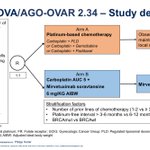
🚨 NEW ASCO 2026 GUIDELINE: Recurrent Ovarian Cancer
A practical treatment algorithm worth saving 👇
PLATINUM-SENSITIVE recurrence
→ Platinum doublet remains backbone:
• Carboplatin + PLD
• Carboplatin + paclitaxel
• Carboplatin + gemcitabine
→ Bevacizumab may be added, followed by maintenance bevacizumab
→ Do NOT add trabectedin to PLD
PLATINUM-RESISTANT / REFRACTORY
⭐ FRα-high: Mirvetuximab soravtansine = strong recommendation
Other options:
• PLD
• Paclitaxel
• Bevacizumab + chemotherapy
• Relacorilant + nab-paclitaxel
• Gemcitabine
SURGERY
Secondary cytoreduction is not routinely recommended based on current evidence, but may be discussed when complete gross resection is highly achievable.
HIPEC
Evidence remains insufficient for a routine recommendation.
Key message:
Recurrent ovarian cancer is becoming increasingly biomarker-driven and patient-selected, especially in platinum-resistant disease.
@ASCO @JCO_ASCO @OncoAlert
#OvarianCancer #GynOnc #Oncology


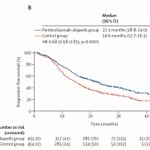
🧬 KEYLYNK-001 (Lancet Oncol 2026)
Does adding pembrolizumab to chemo + olaparib help first-line BRCA non-mutated ovarian cancer?
doi:10.1016/S1470-2045(26)00223-8
📊 Progression-free survival:
Pembro+ola 22.1 vs 14.6 mo
HR 0.68, p<0.0001
Pembro alone (CPS≥10): HR 0.95
Overall survival: HR 1.04

Ji Hyun Kim retweeted

논문 PDF만 쌓이고, 읽고 나서도 남는 게 없다면 이 3개 저장해두면 됨.
관련 논문 찾기 → 막힌 내용 질문하기 → 근거와 메모 남기기.
관심 분야를 처음 공부하거나 연구 주제를 탐색할 때 쓰는 조합임.
1. ResearchRabbit
논문 하나를 기준으로 비슷한 연구와 앞뒤로 이어지는 연구를 찾아보기.
“이 논문 다음에는 뭘 읽어야 하지?” 싶을 때 쓰기 좋음.
기본 검색과 논문 모음 기능은 무료임.
researchrabbit.ai/
2. Gemini Notebook — 기존 NotebookLM
논문 PDF를 넣고 연구 문제·방법·결과를 질문하기.
이해가 안 되는 부분을 좁혀 묻고, 답변에 붙은 출처로 원문을 확인할 때 쓰면 됨.
notebook.google/
3. Zotero
논문과 메모를 함께 보관하고, 밑줄 친 부분을 출처가 연결된 노트로 모으기.
나중에 “이 설명이 어느 논문에 있었지?”를 다시 찾을 때 쓰기 좋음.
zotero.org/
논문 찾기 → 질문하며 읽기 → 원문 근거와 메모 저장하기.
처음에는 논문 한 편에서 ‘무슨 문제를 풀었는지, 어떻게 풀었는지, 어디까지 확인했는지’만 남겨보면 됨.
AI 요약을 모으는 것보다, 내가 설명할 수 있는 내용과 다시 확인할 근거를 함께 남기는 데 쓰면 좋음.


Ji Hyun Kim retweeted
In advanced high-grade serous #OvarianCancer, early assessment of chemosensitivity may help identify patients most likely to benefit from response-adapted treatment intensification before maintenance therapy. ja.ma/4jxZys4

Ji Hyun Kim retweeted

Historically, medical research has relied heavily on male participants, with findings often generalized to women and children.
If women’s health is discussed at all, it’s largely framed around reproduction.
This special issue of Science highlights the research that is seeking to close the critical gaps in women’s health. Learn more: scim.ag/4hy8ACT

ALT Women make up more than half the population, but most of what we know about women’s biology comes from extrapolation of studies in men. This has been changing in recent years, and this special issue highlights some of the progress in understanding the biological basis of sex differences in health and disease and medical issues relevant to women’s health across different stages of life. Illustration: Chiara Vercesi
Ji Hyun Kim retweeted

🎯 Toxicidad de ADCs y combinaciones ICI-ADC.
ADCs e ICIs pueden producir toxicidades con mecanismos distintos, pero con manifestaciones en los mismos órganos.
Con su incorporación en líneas más tempranas, la atribución y manejo de toxicidades pulmonares, hepáticas, gastrointestinales y cutáneas será cada vez más relevante.
Un marco basado en 3 mecanismos puede ayudar a orientar su manejo:
• Activación inmunológica
• Citotoxicidad del payload
• Efectos independientes del payload
La estandarización del fenotipo de toxicidad será clave para optimizar el manejo y evaluar la seguridad de combinaciones ICI-ADC.
📖 @NatRevClinOncol
DOI 👉🏻 doi.org/10.1038/s41571-026-0…
#CánCare #ADC #immunotherapy #ICI #oncology


Ji Hyun Kim retweeted

Online Now: Retraction Notice to: Taxanes trigger cancer cell killing in vivo by inducing non-canonical T cell cytotoxicity dlvr.it/TVMdRB

Ji Hyun Kim retweeted

Chemotherapy with or without pembrolizumab followed by maintenance pembrolizumab with or without olaparib as first-line treatment of patients with advanced BRCA non-mutated epithelial ovarian cancer (ENGOT-OV43/GOG-3036/KEYLYNK-001): thelancet.com/journals/lanon…
Ji Hyun Kim retweeted

Sid's cancer story is a glimpse into the future of healthcare.
He was diagnosed with cancer, went through the standard treatments, and initially responded well. Then the cancer came back.
By 2024, his doctors told him they'd run out of options (in other words: we don't know how)
So Sid started digging into his own case. He built a 1,000-page G-doc, garnered specialists from different fields, and then used single-cell sequencing to find out what's driving his tumor.
His findings took him to Germany to receive experimental treatment.
Today, he is in remission.
His story says a lot about where healthcare is going.
i.e. towards autonomy and less dependance on the traditional system.
We can already see the "infrastructure" for that future slowly being built, for example:
- Diagnostics are getting cheaper. Genome sequencing once cost more than $100M, and today you can get it done in your living room for $100.
- AI reasoning is improving fast. Most models are already outperforming doctors.
- People are no longer waiting passively for the healthcare system to help them. Peptide craze and self-experimentation is a clear sign that people want more control over their own health.
Does this mean that hospitals and doctors are going away? Not at all. But they will no longer be the primary source of health intelligence.
Those who can combine AI, better (and cheaper) diagnostics, continuous health data, and 10x doctors will be able to make faster and more informed decisions about their health.
Sid's story, and many others, is proof that this shift is already happening.

My cancer case is n=1. I'm not holding it up as a model, because most of what I did is not specifically replicable or scaleable. But it is a proof of concept that fully personalized medicine, built around one patient's own biology, is viable in ways it simply wasn't a few years ago. I have lived a version of the future of cancer care that I think is worth aspiring to more broadly.
Many of the tools that made this future possible for me are getting better, faster, cheaper, and more accessible every year. I think what we need next is the infrastructure to deploy these tools, and the community willing to build this infrastructure, one patient at a time.
I want to help that future arrive faster. I wrote an article in The Cancer Letter cancerletter.com/guest-edito… for the physicians and researchers closest to the patients who could benefit most from this approach, who also believe in this future. If you are working towards building the systems and practices that will make personalized medicine operationally real, we want to collaborate with you too.

Ji Hyun Kim retweeted

🚨🧬 Precision oncology needs precision trial design! @NatRevClinOncol #CCA #FGFR2
🧐 Look at #FIGHT302: 4,563 prescreened, but only 167 (~4% yield!) randomized before early termination due to shifting standard of care.
🔥 It’s time to embrace modern solutions:
👉 Pragmatic enrollment (allowing standard therapy while awaiting profiling & local testing).
👉 External or synthetic control arms drawn from high-quality real-world datasets.
👉 Multi-arm platform trials with a shared control arm to reduce redundancy.
🙏 We have the drugs. Now we need the pathways to test them.
DOI: doi.org/10.1038/s41571-026-0…
@ILCAnews @myESMO @ASCO @EASLnews #PrecisionOncology #ClinicalTrialDesign


Precision oncology needs precision trial design: lessons from FGFR2-rearranged cholangiocarcinoma | Nature Reviews Clinical Oncology nature.com/articles/s41571-0…

Ji Hyun Kim retweeted
Among non BRCA HRR alterations, PARPi-ARPi combinations improve outcomes in CDK12 and PALB2 mutations, but no CHEK2 and ATM which is still an unmet need


Ji Hyun Kim retweeted

💫Online today
The Review on intratumor heterogeneity by @Jonathancmwan, @NickyMcGranahan and @CharlesSwanton
🔗nature.com/articles/s43018-0…
Check out the rest of the Series on Tumor Heterogeneity and Plasticity here: nature.com/collections/gfbbj…
