

Lab of Detlev Arendt, tweets by *any* of the lab members. Working to understand cell type evolution with the weirdest beasties we can find!
Heidelberg, Germany
Joined July 2019
- Tweets125
- Following119
- Followers1.4K
- Likes74



Pinned Tweet
biorxiv.org/content/10.1101/…
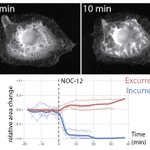
Did you know that sponges can move? @FabianRuperti with @savitski_lab and @Prevedel_lab studied sponge movement and found an evolutionary ancient mechanism controlling cellular tension and defense which is also present in our vasculature! A thread 🧵:

A genome resource for the marine annelid Platynereis dumerilii biorxiv.org/content/10.1101/…
Arendt Lab retweeted

Happy to announce our new preprint on the ancestry of cell adhesion and self-recognition in animals! We used proteomics and structure-based searches to re-examine the Aggregation Factor from the classical sponge mode first studied by Henry Wilson in 1907! doi.org/10.1101/2024.04.19.5…
Arendt Lab retweeted

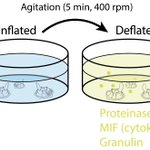
Sponges lack muscles & neurons. Yet, they move. How?
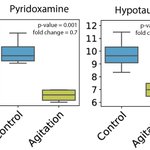
EMBL Heidelberg Arendt Group @wormduty, @savitski_lab, @Prevedel_Lab & others, showed that sponge movement relies on an ancient relaxant-inflammatory response also found in vertebrate vascular systems.
embl.org/news/science/ancien…

ALT An oval light blue shape. In the central part, there is a smaller a red object, from which stem many highly branched smaller canals that cover a significant part of the blue surface. The whole sponge image is in placed in a circle. The background around the circle is blue-green.
Our story about relaxing sponges is out today in @CurrentBiology! 🧽 For a concise summary, check out the thread below 👇
cell.com/current-biology/ful…


biorxiv.org/content/10.1101/…
Did you know that sponges can move? @FabianRuperti with @savitski_lab and @Prevedel_lab studied sponge movement and found an evolutionary ancient mechanism controlling cellular tension and defense which is also present in our vasculature! A thread 🧵:
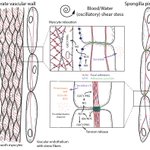
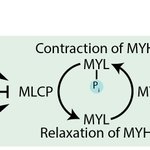
The ocean 🌊 in us: The maintenance of laminar flow is essential for both - sponge canal and vertebrate vascular system Any deviation leads to the activation of this ancient conserved ‘relaxant-inflammatory’ response as a powerful defense reaction 🛡️.
Many thanks to all the authors for this wonderful collaboration and additionally to:
-@SANICHOLS_DU and @diz_lab for the great feedback
-@althonos and @galicae for the support in python coding
-@itn_ignite and @embl EIPP for funding @FabianRuperti