

The Open Source AI Workforce. Deploy WorkAny Bot to automate tasks, code & workflows 24/7. Desktop for privacy 🛡️, Cloud for power ☁️. Gets work done!
Joined January 2026
- Tweets112
- Following41
- Followers270
- Likes43







Pinned Tweet
WorkAny Bot is the first cloud-hosted OpenClaw with WeChat (ClawBot) support. Try it!
Set it up in minutes:
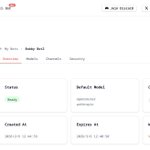
1/Go to workany.bot → choose a plan
2/Deploy your OpenClaw
3/Add WeChat channel🔥
4/Scan QR to log in
5/Chat with your cloud Agent on WeChat🔥🔥🔥
Try it!


WorkAny Bot 已支持微信接入👇
1. 电脑浏览器访问 workany.bot ,按步骤点两次 Next,选择一个 Deploy 方案
2. 付费后开始部署你的 OpenClaw,等几分钟部署成功
3. 在 Bot 管理页面添加 WeChat 接入渠道
4. 微信扫码登录
5. 在微信 ClawBot 与云端的 OpenClaw 对话
------
无需技术知识,无需配置模型,开箱即用,体验非常丝滑。👇
workany.bot?utm_source=x


Open-sourcing FastClaw🦞the infra behind WorkAny Bot.
Run isolated OpenClaw instances on K8s (multi-tenant + PVC persistence), fully managed via REST APIs.
One-click deploy, run, and configure (models & channels).
👇
github.com/fastclaw-ai/fastc…

开源 WorkAny Bot 背后的 OpenClaw 托管服务:FastClaw。
以 k8s pod 独立运行 openclaw 实例,实现多租户隔离,基于 pvc 实现数据持久化,可在云端的 k8s 集群规模化部署 openclaw,为用户提供一键养🦞服务。
通过 restful api 实现 openclaw 实例的创建、运行、配置管理(模型&渠道)
项目地址👇
github.com/fastclaw-ai/fastc…

Vibe coding was just the beginning.
Are we moving into the era of “Vibe Working”?🧐
AI not just writing code, but actually getting work done.


We’ve open-sourced the infrastructure behind WorkAny Bot.
Introducing FastClaw — a Kubernetes-native hosting layer for OpenClaw:
-One OpenClaw instance per user (isolated pods)
-Persistent storage via PVC
-Multi-tenant ready
-Full lifecycle control via REST APIs
Built for scalable, production-grade AI agents in the cloud.
AI execution needs real infrastructure.
GitHub ↓
github.com/fastclaw-ai/fastc…
开源 WorkAny Bot 背后的 OpenClaw 托管服务:FastClaw。
以 k8s pod 独立运行 openclaw 实例,实现多租户隔离,基于 pvc 实现数据持久化,可在云端的 k8s 集群规模化部署 openclaw,为用户提供一键养🦞服务。
通过 restful api 实现 openclaw 实例的创建、运行、配置管理(模型&渠道)
项目地址👇
github.com/fastclaw-ai/fastc…


Vertical SaaS is being rebuilt by AI.
The winners won’t just add AI.
They’ll redesign execution.
That’s what we’re building with WorkAny.

OpenClaw is crazy because it's literally Claude Code for Claude Code
Charts of the week: a16z.news/p/charts-of-the-we…


Agents are moving from "co-pilot" to "pilot".

Something strange is happening with AI agents that this new Anthropic research quietly surfaces.
The agents are asking us for help more than we're stepping in to correct *them*.
Anthropic analyzed data from Claude Code and their public API to measure how autonomous AI agents actually are in practice. The headline finding is what you'd expect. Agents are running longer (sessions nearly doubled, from 25 to 45 minutes), and experienced users approve more actions automatically. All that's great!
But here's the part worth sitting with. Claude Code stops to ask for clarification more than twice as often as humans manually intervene. The agent is, in a real sense, more cautious about its own limits than its operators are. That's a weird inversion of the usual AI safety framing, where we assume the human is the responsible one pumping the brakes.
The practical safety numbers are reassuring on the surface. 80% of tool calls have at least one safeguard; only 0.8% of actions are irreversible. But I think the more important finding is buried in the recommendation. They argue that effective oversight "doesn't require approving every action but being in a position to intervene when it matters." That's a subtle but significant shift.
The research argues that experienced users stay vigilant even with auto-approve on. Maybe. But as sessions get longer and approval becomes muscle memory, the gap between being in a position to intervene and not paying attention starts to collapse.

The core pulse of @openclaw: the Heartbeat loop💓.
1️⃣ Periodic tick cycle that wakes the agent.
2️⃣ Reads and updates state from HEARTBEAT.md.
3️⃣ Triggers task execution through shell or API calls.
-Connection Persistence: The heartbeat mechanism uses periodic "Ping-Pong" data packets to keep WebSocket connections active, preventing network timeouts or firewalls from dropping the link.
-Real-time Presence: It allows the central Gateway to monitor the live status of all distributed Nodes, ensuring that tasks are only routed to devices that are actually online.
-Failure Detection & Recovery: If a heartbeat is missed, the system automatically marks the node as offline and triggers an exponential backoff reconnection strategy for seamless self-healing.
#OpenClaw #Coding


WorkAny retweeted

Peter Steinberger is joining OpenAI to drive the next generation of personal agents. He is a genius with a lot of amazing ideas about the future of very smart agents interacting with each other to do very useful things for people. We expect this will quickly become core to our product offerings.
OpenClaw will live in a foundation as an open source project that OpenAI will continue to support. The future is going to be extremely multi-agent and it's important to us to support open source as part of that.
Hey, stop paying more for OpenClaw hosting.
With WorkAny Bot, you get:
• $15 in premium model credits included
• Your own cloud OpenClaw
• 24/7 online
All for $39.
The most affordable one-click OpenClaw deployment available right now.
No deploy. No config. Just launch. 🚀
#OpenClaw

Just launched 🚀 For only $39, you get your own OpenClaw plus $15 in top-tier model credits included.
The most affordable and fastest way to get OpenClaw up and running.
No setup. No deploy. Just connect and go.
This is WorkAny Bot.
#OpenClaw

Very nice idea. I just added myself to the list.
Thank you @marclou for everything you’re doing for the OpenClaw ecosystem!

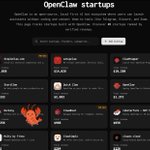
The OpenClaw tsunami is going strong, so I built a special page for wrapper startups on TrustMRR: trustmrr.com/special-categor…
Some interesting business models:
- SetupClaw by @michael_chomsky: he charges $2,400 and flies to you to set up your Mac Mini
- QuickClaw by @_MaxBlade: 1-click deploy, not through the web, but as an iOS app.
- MissionControlAI by @pbteja1998: not one, but ten AI agents working together on OpenClaw (not listed on TrustMRR yet)


