

Woking's hub for astronomy, space science and community! Public shows every Wednesday at 6pm. Available for private hire.
Woking, UK
Joined July 2019
- Tweets1.5K
- Following86
- Followers154
- Likes47





🔭 Which telescope? Our next starlight odyssey session will take a look at all the possibilities, knowing that Xmas is just around the corner🎄. All this alongside the latest space news and a trip around the night sky. Hopefully see you on the 20th November. ✨
Why not join us Friday 16th October, as we head ‘into orbit’? A one off exploration, as part of the starlight odyssey sessions. (Ages 9+) wokingplanetarium.co.uk.
✨🚀 Our discovery space brings the wonders of the universe into view and inspires future stargazers, scientists and space explorers. 🌟🔭 wokingplanetarium.co.uk

It’s been really fantastic to see so many scouts and guides (of all ages) in the planetarium this term. 🪐 Definitely some astronomers and potential astronauts within our community. 🧑🏽🚀 Well done to all who achieved their space badge. 👏

🪐 Saturn is at opposition 3-4th October (meaning Earth is directly between Saturn and the Sun). This is the best time to see it in 2026
It will be a golden steady light (no twinkle) when looking with a naked eye. Rising E/SE and descending to the SW over night. The best time to look is at midnight/1am, as it reaches the highest point in our sky, due South.
To see the rings you’ll need binoculars or a telescope.
📷 Images: NASA

Only a few tickets left for this Mondays (5th October) whistle stop tour of our entire universe. Suitable for all ages. wokingplanetarium.co.uk
🤖 Made with AI

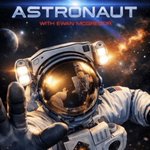
🚀 Want to know what it takes to become an astronaut? 🧑🏽🚀 Ewan McGregor narrates this Thursdays film, 1st October 5-6pm. Alongside this we will explore the current night sky. ✨ wokingplanetarium.co.uk

Astronomical autumn has officially arrived! At 1:06am BST on Wednesday, 23 September, the autumn equinox marked the precise moment when the Sun crossed the celestial equator.
☀️ This is when there is roughly equal hours of daylight and darkness experienced for everyone across the entire world. Where NEITHER the Northern or the Southern Hemisphere is tilted towards the Sun.
🌒 From this time…the days will gradually grow shorter and the evenings darker until we reach the winter solstice in mid December.

Eclipse chasers!’ Is the theme of our in depth ‘starlight odyssey’ session this coming Friday 25th Sep, 7-9pm. A talk from the amazing Laurence Anslow, with a session covering the current night sky in the planetarium. wokingplanetarium.co.uk.

What happens when gravity becomes so powerful that even light can’t escape? Tonight we take a look at ‘the black hole’ — one of the most mysterious objects in the universe. wokingplanetarium.co.uk


Aimed at our younger audience (4+), this is a cartoon film adventure in space… and a look at the night sky with a live presenter. Thursday 29th October 16.30-17.30. Tickets sell fast for half term shows: wokingplanetarium.co.uk


NASA launched ‘ROMAN’ today 👏. If you compare it with the brilliant Hubble telescope… Where Hubble might zoom in on one mountain and study every detail. Roman uses an enormous wide-angle lens and photographs the whole mountain range at once… at speed. We can’t wait to see the results!

Watch out for the full lunar eclipse 28th August, known as the ‘blood moon’.
The Earth will move directly between the sun and moon, casting a shadow across the moons surface. The refracted light filters through earths atmosphere before it manages to reach the moon. Earths atmosphere scatters blue light (that’s why our sky is blue), resulting in the rusty red colour on the moons surface.

Visit space at Victoria Place Shopping Center and you may win one of several family tickets to Woking Planetarium. 🪐 Good luck! vpwoking.pulse.ly/xwsewnx83u

☄️ Watch out for two exciting events that you can see from your own home this summer! ☀️ wokingplanetarium.co.uk is taking a summer break and hopes to see you on the other side ✨
Fun fact #5… If the Sun was to magically disappear, we wouldn’t know about it for 8 minutes and 20 seconds, because it takes light that long to travel the distance to us on Earth.
🌙 The Moon is about 1.3 seconds in the past.
⭐ The nearest star beyond the Sun, Proxima Centauri, is ~4.2 years in the past.
When we all look up at night we are literally looking back in time!
wokingplanetarium.co.uk