

IoT maker & freedom fighter
Joined May 2008
- Tweets10.4K
- Following726
- Followers653
- Likes12.6K





Walter Jerusalinsky retweeted

Párrafo aparte merecen los periodistas que toda la vida trataron de chantas y vulgares defensores del neoliberalismo a los Melconian, Santángelo, Broda, Cachanosky, etc. y ahora, porqe critican a Milei, los invitan y los presentan como "serios consultores, muy escuchados".
Walter Jerusalinsky retweeted
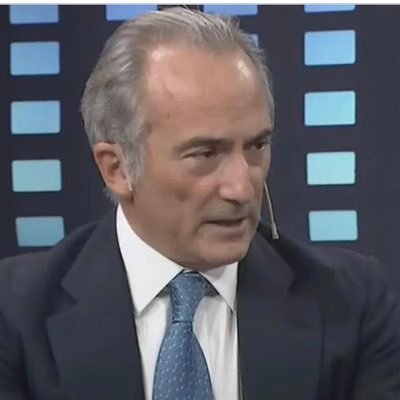
El candidato de la chantocracia

💬 "Quiero liderar un proceso de crecimiento"
@CarlosMelconian explicó por qué se postula a la presidencia. Su visión sobre Javier Milei, la centralidad en los ciudadanos, la importancia del diálogo y el rol de la universidad.
📺 En Comunidad de Negocios
Walter Jerusalinsky retweeted

I'm going to close the "ecological transition" debate once and for all.
Next time someone lectures you about degrowth and "saving the planet", here's the full genealogy. Bookmark this.
It starts with the Frankfurt School. Their problem: the Western working class never revolted, because capitalism kept making it richer. So Marcuse and co. changed the target. The enemy was no longer poverty. It was abundance itself. Consumer society. Growth.
Add Gramsci's playbook on top: don't seize the factories, seize the culture. Win the schools, the universities, the media, and politics will follow.
In 1972, the Club of Rome publishes The Limits to Growth. An MIT computer model telling the world that growth will hit a wall, resources will run out, collapse will follow. Fun detail: the Club was founded by an industrialist and a technocrat, and the study was funded by the Volkswagen Foundation. That's the trick. The anti-growth idea leaves the radical campus and puts on a lab coat and a suit.
Same year, the Marxist philosopher André Gorz picks it up and gives it a name: "décroissance". Degrowth. The loop is closed: a Marxist critique of abundance, wrapped in a scientific-looking doom model.
Fifty years later, the doom calendar keeps slipping. Extreme poverty has collapsed. Food per capita is up. France, the UK and the US all emit less CO2 than in 2005 with a bigger GDP.
So the narrative needed a new face. Enter Greta Thunberg. Not a scientist. Not an engineer. A teenager on a sailboat telling adults "how dare you". You can't debate a crying child. That's the whole point.
And here's the core sleight of hand: they welded growth and capitalism to the destruction of the planet. As if the solution was to produce less, consume less, build less, live less.
It's exactly backwards.
What decarbonized French electricity? Nuclear. A massive engineering project, not a sobriety campaign. What made solar ~90% cheaper in a decade? Markets, scale and innovation. Poor countries burn their forests. Rich countries replant them. Wealth is what pays for a clean environment.
Today it's dressed up in Davos language. "Great Reset". "You'll own nothing and be happy". Eat bugs. Fly less, drive less, have fewer kids. Rationing sold as virtue, preached by people who fly private to tell you about it.
And it trickles down into French politics. Even the "center" now calls water "the common good of humanity", and the answer to drought is... a new ministry. Always the same reflex: the world is finite, so the State must manage scarcity.
Our answer is the opposite. Scarcity is not a law of nature, it's an engineering problem. Abundant energy. Nuclear. Desalination. Space.
Degrowth isn't ecology. It's a death drive with a green coat of paint.
There is NO limit to growth. 🚀


Walter Jerusalinsky retweeted
On me demande tout le temps comment grossir sur X.
Voici le growth hack. Il est gratuit, il marche, et presque personne n'a le courage de l'appliquer.
Étape 1 : comprends comment le WEF est né.
Janvier 1971, Davos. Un professeur de Genève, Klaus Schwab, réunit environ 450 patrons européens sous le patronage de la Commission européenne. Ça s'appelle alors le European Management Forum. Ça devient le World Economic Forum en 1987. En cinquante ans, un séminaire de management est devenu le salon où PDG, chefs d'État et fondations décident ensemble de ce qui est bon pour toi.
Étape 2 : comprends ce que c'est vraiment.
Pas du capitalisme. Le capitalisme, ce sont des entreprises qui se battent pour te servir. Davos, c'est l'inverse : les plus grosses entreprises, les gouvernements et les fondations assis à la même table pour planifier. Ils appellent ça « stakeholder capitalism ». J'appelle ça du communisme en costume trois pièces. Même logique du plan, même méfiance envers le choix individuel. Seul le Politburo a changé : il porte un badge.
Étape 3 : cartographie la périphérie.
Le forum n'est que le centre. Autour, il y a les programmes de formation des élites, comme les Young Global Leaders lancés en 2004, dont la liste des anciens est publique. Les fondations de milliardaires qui financent ONG, médias et contentieux. Les agences qui transforment des « recommandations » en normes. Personne n'a voté pour eux. Personne ne peut les révoquer.
Étape 4 : comprends la mécanique.
Une idée naît à Davos. Une fondation la finance. Des ONG la portent. Des médias la relaient. Une institution la transforme en règle. Et un matin, tu découvres une nouvelle norme qui s'applique à ta vie, sans que personne se souvienne de l'avoir votée.
Le plus fou : tout est public. Les rapports, les partenariats, les financements. C'est du code open source. Le problème, c'est que personne ne lit le code.
Étape 5 : lis le code, et raconte-le.
Les personnes. Les entités. Les milliardaires qui financent l'opinion. Avec des dates, des montants, des captures, des liens. Pas des insultes : des faits. Avec l'IA, tu peux éplucher en une soirée des rapports que plus aucun journaliste n'ouvre.
Étape 6 : publie. Tous les jours.
Pas du spam. Du volume. Un fait par jour, sourcé, impossible à démonter. Au bout de trois mois, tu es une référence. Au bout de six, ils te citent pour te contredire. C'est là que tu sais que tu as gagné.
Le système a passé cinquante ans à compter sur une seule chose : que personne ne regarde.
Regarde.
Walter Jerusalinsky retweeted
It's absolutely insane.
Despite Javier Milei's results in Argentina, especially on inflation and the dramatic reduction in extreme poverty since he took office, there are still people desperately trying to discredit his reforms.
Inflation has fallen dramatically. Extreme poverty remains well below its late-2023 level, despite a recent uptick.
I think people are massively underestimating what could happen over the next decade.
It's entirely possible that Argentina could become a paradise on Earth.
A prosperous, free, technologically advanced nation where entrepreneurship, innovation, and wealth creation progressively replace bureaucracy and dependency on the state.
And you know what?
Even if Argentina eventually had 99% of its population living in extraordinary prosperity and just 1% living in poverty, you'd still have left-wing ideologues desperately searching for something to complain about.
They'd find one statistic, one inequality, one tiny imperfection to declare the entire system a failure.
Because for some of them, the problem was never poverty. The problem is the possibility that capitalism might actually prove it works.
They're incorrigible.
VIVA LA LIBERTAD, CARAJO! 🇦🇷
🤖 Made with AI

Walter Jerusalinsky retweeted

Tarde o temprano la IA va a alcanzar a tu profesión y va a hacer tu trabajo mejor que tú. Así es como debes adaptarte para que no te afecte el cambio.
Antes mis editores me enviaban sus videos para que verificara que cumplieran con el estilo de EDteam y no hubieran cortado nada importante. Yo los aprobaba o les pedía correcciones.
Algunos, con el tiempo, subían de nivel y podían trabajar sin mi revisión. Otros necesitaban correcciones constantes.
Ahora todos editan con IA (está completamente editar a mano). Usan ChatGPT con el MCP de DaVinci y nuestras propias skills. La IA hace los cortes, las transiciones, quita equivocaciones y cuenta la historia siguiendo nuestro estilo. Los resultados son excelentes.
Y ahora ellos hacen el trabajo de revisión que yo hacía antes. Eso los obliga a subir de nivel porque ya no pueden esperar a que yo les diga qué corregir. Ahora les toca a ellos corregir a la IA, validar lo que entregan y hacerse responsables. Nadie puede lavarse las manos diciendo «la IA se equivocó».
Además, les toca mantener actualizadas las skills y perfeccionar los procesos. Su trabajo no es solo sentarse a mirar cómo edita la IA y decirle dónde se equivocó.
Eso significa que se siguen necesitando editores y que muy seguramente pronto contrate uno o dos más. Pero eso si, editores con mucho criterio. Un editor que hace cualquier cosa y espera que alguien más la revise no es útil.
Y eso exactamente es lo que va a pasar en todas las profesiones. Conforme la IA automatice el trabajo operativo, tendrás que convertirte en un gerente y supervisar su trabajo, perfeccionar los procesos y responder por el resultado. Para adaptarte, necesitas desarrollar mucho más su criterio.
Y es por eso que a muchas personas les cuesta usar la IA, porque el criterio escasea. Como dice el dicho: el sentido común es el menos común de los sentidos. He trabajado con profesionales que me entregan lo que produce la IA sin siquiera leerlo. Les cuesta detectar qué está mal y cómo corregirlo.
Y esto también destruye el mito estúpido de que usar la IA te vuelve más tonto. Los que lo dicen en realidad son personas asustadas porque aún no se han podido adaptar y solo le queda maldecir a la IA como si con eso el cambio fuera a detenerse.
Para 2027, el criterio va a ser prácticamente la habilidad más importante a desarrollar.

Walter Jerusalinsky retweeted

Hoy se cumplen 37 años de la caída del Muro de Berlín. Recordar que entonces, como hoy, la gente huye para un solo lado.
Walter Jerusalinsky retweeted
Esta gente está en guerra contra la realidad. A falta de poder ganar con argumentos, pretende censurar. Ya lo hace la tv pública belga: no debaten ni dan la palabra en vivo a los indeseables electos. En Francia buscan cerrar el canal de noticias más visto

Walter Jerusalinsky retweeted
In the next ten years, humanity will make one choice that decides the next thousand.
Option A: an Orwellian world run by a tiny hyperclass that controls AI, owns every resource, and turns the rest of us into permanent dependents.
Option B: for the first time in history, a world where the systemic corruption that has ruled us for decades simply stops being possible.
Yesterday I wrote that Milei and Bukele exposed the empire of lies. Javier Milei reposted it. Today I want to explain why that post was only the beginning, and why I've never been more optimistic.
If you're on the left, or even the far left, read this one to the end. I'm not trying to convert you. The stakes are your future too.
Start from first principles. A system produces exactly what it rewards.
For decades, the Western system has been captured by one worldview: administrations, universities, NGOs, media, international institutions. The left didn't win the argument. It won the hiring committees.
Once a system is captured, its incentives flip.
You don't get promoted for solving problems. You get promoted for managing them. A solved problem kills a budget line. A managed problem renews it every year.
You don't succeed by telling the truth. You succeed by saying the right words. So hypocrisy becomes a career skill. The professor who preaches equality and runs the most closed network in the country. The politician who votes for open borders and lives where none of it ever reaches him.
You don't build fair systems. You build systems that look fair and quietly pay the people who run them. Inflation is a tax on the poor that funds the state. Programs fund the consultants who design more programs.
That's what "systemic" means. Nobody has to be evil. Honest people inside the machine either adapt or leave. After forty years, the ones still there are the ones who adapted.
Here's the irony. The first countries to break free were the ones at the very bottom.
Argentina was bankrupt. El Salvador was a graveyard. The system had nothing left to promise them, and that's exactly why they woke up. When the lie stops paying, people stop believing it.
No civilization is dead as long as its people can still see the problem clearly. Rock bottom is often where the rebound starts.
Now the West is caught in a vise.
On one side, AI. A technology that exposes managed incompetence. When a model can read a 2,000-page law, audit a national budget and compare outcomes across 50 countries in seconds, "it's complicated" stops working. The expert class loses its monopoly on knowledge.
On the other side, a generation of tech builders who think from first principles and don't owe their careers to the system. They have more capital, more talent and more reach than most countries. And they've seen up close how the machine works.
Put the two together and the old system is close to checkmate. It can't compete on results. It can't hide behind complexity. It can't control the narrative anymore.
So what does a system do when it can't win? It tries to own the thing that's beating it.
Listen to Marc Andreessen. He has said publicly that in 2024 he sat with Biden administration officials who told him AI would be two or three big companies working hand in hand with the government, that investors shouldn't even bother funding AI startups, and that parts of the underlying math could be classified the way nuclear physics was in the Cold War. He walked out and endorsed Trump. Former Biden officials now say that's not what was said. Read both versions and decide who you believe.
The logic doesn't depend on one lunch, though. Control three companies and you control the models. Control the models and you control what billions of people read, ask, learn and are allowed to say. Add a digital ID, a programmable currency and the scanning of private messages that Europe keeps putting back on the table. Then you don't need a Ministry of Truth anymore. A compliance department is enough.
1984 with a better UX.
And last Tuesday, Democrats took back Congress. This isn't theoretical anymore. The keys to the house are on the table.
Now imagine we don't hand them over.
Intelligence becomes almost free. Expertise stops being a privilege. A kid in a village in Brittany or a suburb of Lagos gets the same doctor, the same lawyer, the same tutor as a billionaire's son. The cost of producing almost everything collapses. And systemic corruption becomes nearly impossible, because anyone can audit every budget, every law and every promise, instantly.
For the first time in human history, a society that could be truly equal. The old left version was equality by sharing scarcity. This one is equality through abundance. A world where poverty stops being a law of nature.
Which is exactly what the left always said it wanted.
So to my friends on the left, one honest question. Which side actually leads there? The side that wants AI open, cheap and in everyone's hands? Or the side that wants it locked inside three companies and a regulator?
Milei and Bukele proved the impossible was possible at the scale of a country. AI is offering the same thing at the scale of civilization.
All we have to do is not give the keys to the people who were paid to keep the problem alive.
That's the choice. And I've never been more optimistic, because for the first time, we can all see it.

History will remember two men as the ones who exposed the empire of lies: Javier Milei and Nayib Bukele.
For decades, the same class of experts, NGOs, think tanks and international institutions told us two things were impossible.
That you could kill inflation without destroying a country.
That you could kill violent crime without "addressing root causes" for another 30 years.
Milei took the first one.
Argentina, December 2023: inflation over 200% a year, 25% in a single month. A central bank printing money to fund a state that had become a vote-buying machine. Every economist on TV predicted a social explosion if anyone touched it.
He cut the number of ministries in half. He balanced the budget in his first year. Monthly inflation went from 25% to under 2%. Poverty, which peaked at 52.9% right after the devaluation, fell to 28%, the lowest since 2018. It's not a straight line, poverty ticked back up this year, and he says so himself. But the point is proven: the "impossible" was possible all along.
The lesson is brutal. Endless money printing was never a technocratic necessity. It was a hidden tax on the poor, quietly paying for the people who designed the system and lived off it.
Bukele took the second one.
El Salvador, 2015: 106 homicides per 100,000 people. The most violent country on earth outside a war zone. Gangs ran neighborhoods, taxed every bus driver and every street vendor, and decided who lived and who died.
El Salvador, 2025: 1.3 per 100,000. Lower than the United States.
Every international expert said it couldn't be done. The NGOs called it barbaric. Salvadorans re-elected him with over 80% of the vote, because they're the ones who used to bury their kids.
And now his helicopters are in Haiti, pulling his own soldiers out of gang territory, telling the gangs: we finished with ours, we can finish with you.
So ask yourself the real question. If it was this simple, why didn't anyone do it?
Because an entire ecosystem lived off the problem.
Inflation funded the state that funded the clients that funded the elections. Crime created fear, and fear created demand for programs, consultants, studies, panels, subsidies and "experts" who never had to deliver a result. In Latin America it was the gangs. In the West it's mass immigration with no integration and crime with no consequences. Different symptom, same business model: the problem is never solved because too many people are paid to manage it.
Milei and Bukele didn't just fix two countries. They published the proof. Every politician who still says "it's complicated" now has to explain why a guy with a chainsaw and a guy with a baseball cap did in two years what they couldn't do in forty.
Thank you Javier Milei. Thank you Nayib Bukele.
The world is going to heal with your solutions.
Europe is next. We're waiting.

Walter Jerusalinsky retweeted

Un paso imprescindible en el proceso de adopción de IA es capturar parte de la experiencia y criterio de las personas a las que se espera liberar del trabajo repetitivo. Las entrevistas y algo de método pueden ayudar.
idoneos.com/articles/captura…


Walter Jerusalinsky retweeted
Hijos de puta. ¿Por qué no van pintando una cruz donde viven los hijos de las personas que odian? El resentimiento es el motor de esta gentuza.
Walter Jerusalinsky retweeted

【衝撃】イーロン・マスク「世界中から批判されてもXは手放さない」その理由が考えさせられる。
記者「なぜそこまでXにこだわるんですか?」
イーロン「どういう意味だい?」
記者「買収してから批判ばかりじゃないですか」
イーロン「そうだね」
記者「政治家からも批判されている」
イーロン「うん」
記者「規制当局との対立もある」
イーロン「そうだね」
記者「正直、売却した方が楽じゃないですか?」
イーロン「なぜ?」
記者「テスラもSpaceXもあるでしょう?」
イーロン「あるね」
記者「わざわざ論争の中心にいる必要はないですよね?」
イーロン「でも、それで何が解決するんだ?」
記者「……え?」
イーロン「僕は自由に意見を交わせる場所が重要だと思っている」
記者「でも嫌な意見もありますよね?」
イーロン「もちろん」
記者「間違った意見もある」
イーロン「そうだね」
記者「だったら制限するべきでは?」
イーロン「どこまで制限する?」
記者「それは……」
イーロン「誰が正しい意見を決めるんだ?」
記者「……」
イーロン「自分が賛成する意見だけを守るのは簡単だ」
記者「はい」
イーロン「でも、反対意見が出てきたときは?」
記者「……」
イーロン「そこで初めて、言論の自由に対する考え方が試されるんじゃないかな」
これ考えさせられる。
もちろん言論の自由と誹謗中傷や違法な投稿への対応は別問題。
Xの運営方針についても賛否が分かれている。
ただイーロンが掲げる「自由な議論の場」という理想には一つの問いがある。
自分と違う意見をどこまで受け入れられるか。
自分に都合のいい意見だけを歓迎するのは簡単。
でも本当に難しいのは自分が不快に感じる意見と向き合うこと。
これはSNSだけじゃなく組織運営でも同じだと思う。
Walter Jerusalinsky retweeted
🇺🇸 Aber Kawas, con el apoyo de Zohran Mamdani, ganó el escaño del distrito 12 de Queens en el Senado del estado de Nueva York. Aquí se la ve agitando una vincha de Hamás.
Walter Jerusalinsky retweeted

¿Querés celebrar Halloween? Está bien. ¿Querés celebrar Saint Patrick? Está bien. ¿Querés celebrar la fiesta de la Pacha Mama? Está bien.
¿Sabés lo que está mal?
Ser una amargada.

No se en que momento la celebración de Halloween se convirtió en algo tan importante y llamativo en CABA. Fui esta tarde a la calle Triunvirato. Era imposible transitar entre niños y adultos disfrazados q pedían caramelos en los negocios. Es la primera vez q advierto semejante celebracion. Me fui. Era imposible caminar. 😬👻🎃
Walter Jerusalinsky retweeted
238 000 followers. Près d'un milliard d'impressions sur un an. Un revenu qui tombe tous les jours, sans funnel, sans sponsor, sans pub.
On me demande comment faire pareil. Voici la vraie réponse. Elle ne tient pas dans une technique de growth. Elle tient dans un état d'esprit.
D'abord, désinfecte-toi du communisme mental.
On t'a appris que réussir plus que les autres était suspect. Que vouloir être au-dessus était indécent. Que l'ambition devait s'excuser d'exister. Tant que tu as ce logiciel dans la tête, tu vas te saboter toi-même avant que quiconque ait besoin de le faire. Efface-le. Tu as le droit de vouloir gagner. Tu as le droit de vouloir être le meilleur.
Ensuite, envoie balader tous les boomers, d'âge ou d'esprit, qui te disent « reste humble ».
Ils confondent humilité et manque de confiance en soi. L'humilité, c'est savoir qu'on a tout à apprendre. La confiance, c'est savoir qu'on va y arriver. Les deux vont ensemble. Et quand quelqu'un te demande de te faire petit, demande-toi pourquoi. Souvent, c'est parce que ton succès lui renverrait son propre échec en pleine figure. Ce n'est pas ton problème.
Sois curieux de tout.
L'économie, la philosophie, l'histoire, la tech, la stratégie, la biologie. Les idées les plus puissantes naissent toujours au croisement de domaines que personne ne pense à relier. La curiosité, c'est le carburant. Sans elle, tu n'as rien à dire.
Utilise l'IA pour tout.
Pour apprendre plus vite, pour coder, pour écrire, pour analyser, pour produire. Jamais dans l'histoire un individu seul n'a eu autant de levier. Celui qui refuse de s'en servir aujourd'hui, c'est celui qui refusait l'électricité en 1900.
Deviens un polymathe.
Pas un expert à 100 % dans un seul domaine. Bon à 80, 90 % dans dix domaines. Avec l'IA, c'est devenu accessible à n'importe qui de motivé. Et ce profil-là est infiniment plus rare et plus précieux que le spécialiste. Puis construis des choses. Et partage tout ce que tu apprends en chemin.
Trouve un moyen de faire du volume.
Le volume, c'est ce qui crée la boucle de feedback. Chaque post est une expérience. Certains vont faire un flop, d'autres vont exploser. Tu ne peux pas savoir à l'avance. Tu ne peux que publier, observer, ajuster, recommencer. Celui qui publie une fois par mois n'apprend rien. Celui qui publie tous les jours apprend tout.
Ne cherche pas à être aimé.
Si tout le monde est d'accord avec toi, c'est que tu ne dis rien. Une idée qui compte divise toujours. Les gens qui te détestent font partie du prix à payer pour ceux qui t'adorent.
Ignore le regard des autres.
Ta famille, tes anciens collègues, tes potes d'école qui voient passer tes posts. Certains vont trouver ça bizarre, prétentieux, gênant. Dans deux ans, ils te demanderont comment tu as fait.
Et surtout, joue. Et ne t'arrête jamais.
C'est un jeu. Un jeu infini où l'algorithme te remet à zéro à chaque partie. Il n'y a pas de rente, pas de ligne d'arrivée, pas de moment où tu peux te reposer sur tes acquis. C'est exactement ce qui le rend beau. Le seul moyen de perdre, c'est d'arrêter de jouer.
Je n'ai rien inventé. J'ai juste écrit ce que je pense et j'ai publié. Encore et encore.
À ton tour.
Petit récap de mon compte X aujourd’hui :
• 238k followers
• 964M impressions sur les 12 derniers mois
• 12.1M engagements
• 7.7M likes
• 1.7M reposts
• ~209k followers actifs sur les dernières 24h
Maintenant, la partie intéressante : la monétisation.
→ Revenue share X : ~$330–$660/jour
Soit un run rate d’environ $10k–$20k/mois
→ Subscriptions : 370 abonnés actifs
$3,120 de revenus estimés actuellement
$5,526 générés au total depuis le lancement
→ Précommandes de mon livre : 202 ventes
$1,904.70 de CA
dont ~$947 sur les 30 derniers jours.
Et pourtant, je n’ai quasiment rien optimisé.
Pas de funnel.
Pas vraiment de stratégie de subscriptions.
Pas de sponsors.
Pas de publicité.
Pas d’affiliation.
Pas de produit digital optimisé.
Et mon livre est encore en early bird.
J’ai essentiellement passé mon temps à écrire ce que je pense et à publier.
La partie intéressante, c’est que la monétisation actuelle reste encore très faible par rapport au potentiel réel de cette audience.
238,000 personnes me suivent.
~209,000 ont été actives au cours des dernières 24h.
Et près d’un milliard d’impressions ont été générées en un an.
Je n’ai encore pratiquement rien construit au-dessus de cette distribution.


Walter Jerusalinsky retweeted

Aviso, los feriados por el Papa son un delirio.
La general paz ¿línea divisoria del trabajo? Corta suministros, logística, etc
Consulta ¿Dios prefiere q trabajemos? O ¿ganaras el pan con el sudor del feriado?
Todo un delirio..
De a uno o en barra como prefieran.
Walter Jerusalinsky retweeted

🇩🇪🚨MEGA-ESCÁNDALO: La ganadora de las elecciones de BERLÍN, del partido de ultraizquierda Die Linke confiesa por error que Hamás controla su partido y teme por su vida💣
Un error acaba de generar una crisis de seguridad impresionante. La revista Der Spiegel —un medio, cabe destacar, de marcada tendencia izquierdista— ha sacado a la luz un documento interno que prueba cómo Die Linke ha sido secuestrado por el islamismo.
Su candidata a gobernar Berlín, Elif Eralp, envió por accidente a la redacción las notas privadas de una entrevista donde confiesa estar coaccionada y aterrorizada por Hamás que opera dentro de su propio partido.
Resulta que luego de una entrevista, el equipo de la candidata revisó la transcripción. Durante este proceso, Eralp hizo comentarios internos que debían quedar en la más estricta confidencialidad. Sin embargo, el documento con las acotaciones sin borrar fue devuelto a los periodistas.
El contenido de esas notas es dinamita. Cuando Der Spiegel le preguntó por Ibrahim Ibrahim —un propalestino simpatizante de Hamás que celebró la masacre del 7 de octubre—, la respuesta pública iba a ser esquiva. Pero en el margen del documento filtrado, Eralp escribió la verdad: «Hay un PROBLEMA. [...] mi marido no, y yo tampoco, quiero nombrar nombres concretos, él tiene miedo de esta gente y yo también».
La filtración expone la cruda realidad del islamoizquierdismo en Alemania: Eralp llegó a comparar el nivel de amenaza de estos militantes pro-Palestina con el del Crimen Organizado e implora abortar la publicación: «No puedo poner en peligro a mí misma y a mi familia por Der SPIEGEL. ¿Qué hacemos ahora? ¿Anulamos toda la entrevista?».
El mayor chiste de toda esta situación, sin embargo, quedó plasmado en una de las frases que Eralp sí quería publicar. En un alarde de desconexión absoluta, la candidata afirma en la entrevista: «Lo que sí puedo decir con total claridad es que, como alcaldesa gobernante, velaré por la seguridad de todas las berlinesas y todos los berlineses». Una promesa que resulta irrisoria viniendo de una dirigente que, en el mismo documento, reconoce en secreto que ni siquiera puede proteger a su propia familia de las bases de su partido.
Luego del escándalo, Eralp ha anunciado que procederá legalmente contra Der Spiegel y presentará una queja formal ante el Consejo de Prensa por haber citado sus anotaciones internas. Esta maniobra judicial evidencia de inmediato lo susceptibles y completamente desbordados que están en realidad estos cuadros dirigentes frente a situaciones de crisis.
La izquierda radical berlinesa creyó que podía capitalizar electoralmente el extremismo islámico; hoy, los documentos demuestran que es el extremismo quien los tiene de rehenes.

