

Bring ideas into your orbit. An upcoming experiment from @andy_matuschak. This account tweets flotsam from the development process.
Joined August 2020
- Tweets47
- Following0
- Followers1.6K
- Likes26

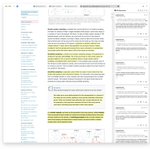

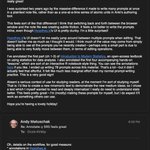




Mnemonic PDF viewer, with per-section reviews and "peek" interaction to re-read source text when you don't understand an answer.
loom.com/share/32bbc8cea3614…


Tough to negotiate the macOS house icon form (slightly rounded 3D tablet, hence slight diffuse gradient) with Orbit's art direction as highly graphic, poster-like (hence flat). Still, the general balance is working for me.


An unusual positive report: adding Apple Silicon support to Orbit's React Native-based macOS Catalyst app took… no work at all. Just a recompilation. Everything worked perfectly on the first try. Baffling!
Continuing to iterate on a list architecture inspired by textual "to-do" lists, while delimiting identity, "front/back". Two somewhat promising structures emerging…
1. Inspired by source editors, gutter delimiters.
2. Status indicators as identity/delimiter.

(trying/failing to contend with the scenario of displaying a list of prompts which have heterogenous colors)
Reminds me of a (correct) comment Jony once made about some of my work: "a little… carnival, don't you think?"

I've been working on a "notebook"-style interface for writing and editing collections of prompts, inspired by the fluid interactions of outline editors. Iterating around the tension between a continuous textual canvas and the need to delimit persistent entities with identity.

Orbit is now open-source! github.com/andymatuschak/orb…


One design element I’ve been iterating on is a variable type hierarchy. Prompts often have very short questions/answers, which look shrimpy and strange if presented the same as long text. So we choose from five type scales.


