

Creative, Market, Product Intelligence for eCommerce. +500k users
Eindhoven, Nederland
Joined May 2026
- Tweets286
- Following52
- Followers62
- Likes521




Pinned Tweet
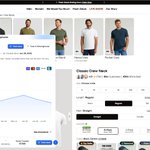
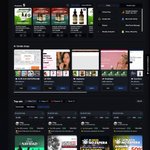
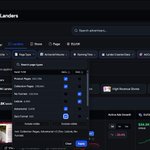
Introducing ecom's first landing page library
now inside WinningHunter
Go beyond tracking your competitors pages and explore what brands are scaling across any niche
Listicles, advertorials, product pages...
all in one place.
winninghunter retweeted

Some ads only make sense after you've already wanted the product
A short reminder
A delivery update
An answer to one final objection
Someone familiar with the brand may understand everything immediately
A new customer may still need to know what the product does and why the promise is believable
Before using an ad as a reference, I'd compare it with the brand's other creatives and landing pages inside @winninghunt
My first question would be:
What does the viewer need to know before this message makes sense?
Then I'd check whether the ad:
- Introduces the problem
- Explains how the product works
- Supplies evidence
- Answers a specific hesitation
- Gives an existing prospect a reason to return
The message can suggest an awareness stage
It cannot confirm the campaign's actual targeting or attribution settings
That distinction matters when writing the next brief
If you borrow a reminder-style ad, you may also be borrowing assumptions your audience has never been given a reason to believe.
Check the ads here:
app.winninghunter.com/ad/288…
app.winninghunter.com/ad/172…


winninghunter retweeted

My product research stack before I spend a penny:
Winning Hunter → stores whose traffic is growing this month
Meta Ads Library → which of their ads have been running longest
Claude → what each ad actually promises, in one line
Amazon + TikTok reviews → what buyers say is still missing
Spreadsheet → one row per product, one column for "why I'd lose"
If you can't fill in the last column, you haven't researched it yet.
winninghunter retweeted

Everybody takes MONTHS to get their Google store off the ground.
And I'm not talking about 2/3 months but literally 7 whole months before they start their first bit of profit.
And the reason for this is because EVERYONE does their product research wrong…
And with Winning Hunter you could literally get 4 months of competitor research down to only 1H a week.
This is how I do it using Winning Hunter:
Follow 5 relevant Google advertisers inside WinningHunter.
Open Brand Tracker → Activity
Choose:
• View: Timeline
• Activity: Google
• Date range: October 14–20
• Brands: All brands
Now inspect what those brands launched
One example showing right now:
Dr. Squatch launched 3 Google ads on October 16, then 11 on October 17
Open each batch
Write down the products, offers and destination pages
Then group the variations. Eleven ads might contain several versions of the same product or message
Finish with 3 specific research briefs:
The product worth investigating
The buying reason being tested
The page supporting the offer
Now you have something concrete to check against suppliers, search demand and your margins
Run this every Monday
Your competitor research gets considerably more useful when you can explain what changed since last week.
What's your next campaign missing?
Study the ads, offers and landing pages brands in your market keep using..
WinningHunter connects that research with store insights, TikTok Shop data and competitor emails
Use MCP to bring the findings into your AI and build a brief for your next test
See the full workflow below👇

winninghunter retweeted

Found this 13-second Lumin ad using @winninghunt
It has been active since May 3 and currently ranks #2 out of 399 active ads from the brand
The product appears in the first frame, then the ad completes its entire sales argument before the video ends
Here's how it's structured:
1- Show the desired outcome immediately
The first three seconds combine a follicle animation, the bottle, the customer, and the claim that she ditched her wigs after 28 days
No introduction
The result comes first
2- Collapse the alternatives
Hair transplants and ineffective serums are dismissed in one sentence while the visuals show both treatments
3- Make the routine feel effortless
"Take 2 capsules every morning"
The entire product demonstration takes one second
4- Make the transformation visible
A before-and-after comparison shows the exact change the viewer is being asked to imagine
5- Sell the identity payoff
"No more wigs. No more headbands"
The ad moves beyond hair growth and sells freedom from hiding.
6- Close without adding friction
"Get yours today"
No extra explanation
No second offer
No complicated CTA
The creative lesson isn’t that shorter ads are always better
It's that every second should move one belief forward
For your next 15-second brief, define the six things the customer must believe. Then assign one visual to each
WinningHunter shows this ad has been active since May 3 and ranked #2 out of 399 active Lumin ads
Runtime and rank are research signals, not proof of profitability.

Indeed..

A large catalogue can hide weak conviction
A small catalogue can reveal it immediately
Inside @winninghunt, I compared two beauty stores:
Meimei Beauty:
- 6 indexed products
- 648 active ads
- 212.7K monthly visits
- $1.15M to $1.9M estimated 30-day revenue
MARTINE COSMETICS:
- 118 indexed products
- 36 active ads
- 922.4K monthly visits
- $4.97M to $8.16M estimated 30-day revenue
The interesting difference is not which store is (better)
It is how differently they allocate attention
Meimei has roughly 108 active ads per indexed product
MARTINE has fewer than one active ad for every three products
(One appears to concentrate creative volume around a very narrow catalogue)
(The other distributes demand across a much broader assortment)
Before copying a store's advertising strategy, I want to know:
- Is it building depth around a few products?
- Is it managing demand across many categories?
- Does one hero product carry the account?
- Are most products inventory, or actual acquisition vehicles?
Creative volume means something different when six products share it than when 118 products share it
Always divide the marketing activity by the business it has to support.

winninghunter retweeted

Quick UGC research trick
Open a brand on WinningHunter and compare its older ads with what it's running now
What did they add to the script? A demo? A reason it costs more? An answer to something buyers keep asking?
Those details can give you more to work with than the hook
I'd want to understand that change before writing the next script.
winninghunter retweeted
Bundles are often analysed as an AOV tactic
That misses their psychological role
The Medicube body-care set currently shows an estimated:
- $6.76M TikTok Shop revenue over 30 days
- 205.3K units sold over 30 days
- $31 average price
- 12.9K reviews
- 4.6 product score
- 30-day revenue growth of 33.8%
The offer combines a body peel shot, wash, toner pad, toner and mist
A customer researching uneven texture could otherwise face five separate decisions:
Which ingredient?
Which product?
Which order?
Which combination?
Which routine?
The bundle replaces those decisions with one prepared system
That can increase order value, but it can also reduce cognitive load
When I study bundles inside @winninghunt, I ask:
- Are the products complementary?
- Is the usage sequence obvious?
- Does the bundle represent a complete outcome?
- Is the buyer saving money or avoiding decisions?
- Would the products be less persuasive individually?
Sometimes customers choose the bundle because it is cheaper
Sometimes they choose it because the brand has already done the thinking.

How does a competitor introduce a new product?
Choose a brand in WinningHunter Activity and set the date range around its launch
Review the new ads, pages they lead to and emails sent during that period
Study how the message develops from introduction to offer
Pick one launch
Build the timeline before writing your next brief.

Brand tracking should answer one question:
what changed?
The new Activity tab turns every tracked brand into a timeline across Meta, TikTok, Google, emails, landers, traffic and more..
Filter by brand, channel or date
Then surface the ads gaining reach or rank, changing landers, recent emails and bestseller movement
One place to see where the market is moving.
winninghunter retweeted
Seed is quietly doing OVER $17M a month using Quiz funnels
If you're in ecom, pay attention to what happens after the click
Instead of sending every visitor to the same product page, Seed uses a quiz to identify their biggest problem, desired outcome, objections and best product match
Those answers shape the recommendation, emails, retargeting and future ad angles
Claude can build the quiz
The real advantage is knowing what to ask.
winninghunter retweeted

A Google Ads library has two signals:
stock and direction
Stock is everything the advertiser has tested
direction is whether the live ad inventory is expanding, stable, or contracting over time
Koriderm currently shows 255 indexed ads, 78 live ads, and +21.9% growth inside @winninghunt
The total gives me enough history to study
The activity curve tells me the account is still moving
A large but declining library can be outdated
A growing library without much history can be too early
I want competitors with enough evidence to reveal patterns and enough current movement to remain relevant.

winninghunter retweeted
How to find $10K products using these Winning Hunter settings:
First, set store traffic to 400k+ monthly visits
1) Products brands keep advertising
- Active
- Image
- Shopping
- Evergreen 30+
- USA
2) Video angles brands keep running
- Active
- Video
- YouTube
- Evergreen 30+
- USA
3) Words brands keep paying to appear for
- Active
- Text
- Search
- Evergreen 30+
- USA
And you'd probably ask yourself why these settings are good...
- Shopping shows you the inventory
- YouTube shows you how they sell it
- Search shows you how they frame the demand
Run all 3 before adding another 50 random products to your store.
Ain't that complicated.
Kind regards
Ecom Daddy


Found a trend worth exploring?
See how brands are selling around it
In WinningHunter Trends, choose a category and compare growth over time
Then open related ads through Magic AI to study the products, messaging and offers
Take what you learn into your next test.
winninghunter retweeted
Carpe is scaling like crazy ($25M+/month)
These are the 3 steps I would follow to scale them even more
They sell a clinical-strength antiperspirant lotion built around one core promise: 100 hours of sweat and odor control, PhD formulated, dermatologist tested
Their own copy claims over 3.2 million customers and 40,000+ five-star reviews, and the account is running 4,710 active Meta ads right now
The creative is strong, so I would not touch the core angle
It is the drugstore-failure hook: you've already tried regular deodorant, it already let you down, and this is positioned as the clinical-grade upgrade instead
But there is a real gap sitting inside the account itself. This is where I would look
1- The funnel is a gamified spin-to-win page, and it's the only one running
Almost every top ad routes to some version of the same (flip to win prizes) discount wheel landing page, just renamed across a few URL variants
That's a good funnel for a cold, curiosity-driven click. But there's no direct-to-product page in the mix, and no quiz-style funnel that qualifies someone by sweat severity or trigger (workouts, anxiety, humidity) before showing them the offer
When one funnel format carries the entire account, you're one algorithm shift away from a real problem
Splitting spend across a second funnel type protects the account and probably lifts conversion for the audience that dislikes gamified pages
2- Several of the top ads are running with broken dynamic copy
More than one of their highest-ranked active ads currently show the literal placeholder text ((product-brand)) and ((product-description)) instead of real copy, meaning the dynamic creative template never filled in
That's not a strategy gap, it's a QA gap, but it's costing conversions on ads the algorithm has already decided to favor
Fixing the feed that populates those templates is the single cheapest win available in the account, no new creative required
3- Symptom instead of condition
The hook currently speaks to sweating in general
But sweating that costs someone confidence shows up in specific, higher-stakes moments: the job interview handshake, the first date hug, the wedding suit
Naming the moment instead of the condition usually reads as more personal and opens a wider net than a generic "stop sweating" claim, at the cost of a slightly longer ad and a marginally higher CPA
4- There's an untapped affiliate and editorial network already linked to the brand
Publisher pages like Bustle, Popsugar, Thrillist, Reader's Digest, and even a named dermatologist's own page (Ashish C. Bhatia, MD) show up as sources running ads that route back to mycarpe.com
That's a real affiliate and native-content network already in motion, but most of those pages are only carrying one or two active ads each
If those placements are converting at all, they are a massively underfunded channel next to the 4,710 ads running from the brand's own page
Scaling spend behind the editorial-style placements that already exist would likely outperform another round of brand-page creative, since native advertorial content reads as third-party validation rather than an ad.
5- The brand is split across two Facebook pages with very different trust signals
Some of the top ads run from a Carpe page sitting at 67,958 likes. Others, using nearly identical creative, run from a second Carpe page at 485,968 likes
A cold viewer who clicks through before buying has no way of knowing which page is the (real) one, and lands on wildly different trust signals depending on which ad they saw
Consolidating spend onto the page with the stronger like count and history removes a source of doubt that has nothing to do with the offer or the creative
6- The bundle offer is inconsistent across otherwise identical ads
Some ads promise a free 10-pack of Clean Skin Club towels
Others promise a free pack of Neuro Gum
Others mention no bundle at all, on the same discount and the same core copy
Since the underlying hook and price point are already proven, standardizing on whichever bundle actually lifts conversion, and testing it as a controlled variable instead of letting it vary by ad, is a low-effort way to find real average-order-value gains without touching the parts of the ad that are already working
One more thing..
The account already leans on (dermatologist tested) as a badge, which is now close to a commodity claim in this category, the same way (vet approved) became one for pet brands
Naming an actual credentialed person on camera, a board-certified dermatologist walking through why sweat glands overreact, would likely read as more credible than the badge alone, precisely because it isn't the generic version everyone else already runs
They've clearly nailed the hook and the volume. What's left is fixing the feed, adding a second funnel, and getting more specific about who's sweating and why.
winninghunter retweeted
Carpe was running 4,710 active Meta ads end of September
$25M+/month brand
One core promise, 100 hours of sweat and odor control, tested in thousands of ways
Most brands think 20 ads is volume 👀
xitter.cf/thedennis/status/21045…

Carpe is scaling like crazy ($25M+/month)
These are the 3 steps I would follow to scale them even more
They sell a clinical-strength antiperspirant lotion built around one core promise: 100 hours of sweat and odor control, PhD formulated, dermatologist tested
Their own copy claims over 3.2 million customers and 40,000+ five-star reviews, and the account is running 4,710 active Meta ads right now
The creative is strong, so I would not touch the core angle
It is the drugstore-failure hook: you've already tried regular deodorant, it already let you down, and this is positioned as the clinical-grade upgrade instead
But there is a real gap sitting inside the account itself. This is where I would look
1- The funnel is a gamified spin-to-win page, and it's the only one running
Almost every top ad routes to some version of the same (flip to win prizes) discount wheel landing page, just renamed across a few URL variants
That's a good funnel for a cold, curiosity-driven click. But there's no direct-to-product page in the mix, and no quiz-style funnel that qualifies someone by sweat severity or trigger (workouts, anxiety, humidity) before showing them the offer
When one funnel format carries the entire account, you're one algorithm shift away from a real problem
Splitting spend across a second funnel type protects the account and probably lifts conversion for the audience that dislikes gamified pages
2- Several of the top ads are running with broken dynamic copy
More than one of their highest-ranked active ads currently show the literal placeholder text ((product-brand)) and ((product-description)) instead of real copy, meaning the dynamic creative template never filled in
That's not a strategy gap, it's a QA gap, but it's costing conversions on ads the algorithm has already decided to favor
Fixing the feed that populates those templates is the single cheapest win available in the account, no new creative required
3- Symptom instead of condition
The hook currently speaks to sweating in general
But sweating that costs someone confidence shows up in specific, higher-stakes moments: the job interview handshake, the first date hug, the wedding suit
Naming the moment instead of the condition usually reads as more personal and opens a wider net than a generic "stop sweating" claim, at the cost of a slightly longer ad and a marginally higher CPA
4- There's an untapped affiliate and editorial network already linked to the brand
Publisher pages like Bustle, Popsugar, Thrillist, Reader's Digest, and even a named dermatologist's own page (Ashish C. Bhatia, MD) show up as sources running ads that route back to mycarpe.com
That's a real affiliate and native-content network already in motion, but most of those pages are only carrying one or two active ads each
If those placements are converting at all, they are a massively underfunded channel next to the 4,710 ads running from the brand's own page
Scaling spend behind the editorial-style placements that already exist would likely outperform another round of brand-page creative, since native advertorial content reads as third-party validation rather than an ad.
5- The brand is split across two Facebook pages with very different trust signals
Some of the top ads run from a Carpe page sitting at 67,958 likes. Others, using nearly identical creative, run from a second Carpe page at 485,968 likes
A cold viewer who clicks through before buying has no way of knowing which page is the (real) one, and lands on wildly different trust signals depending on which ad they saw
Consolidating spend onto the page with the stronger like count and history removes a source of doubt that has nothing to do with the offer or the creative
6- The bundle offer is inconsistent across otherwise identical ads
Some ads promise a free 10-pack of Clean Skin Club towels
Others promise a free pack of Neuro Gum
Others mention no bundle at all, on the same discount and the same core copy
Since the underlying hook and price point are already proven, standardizing on whichever bundle actually lifts conversion, and testing it as a controlled variable instead of letting it vary by ad, is a low-effort way to find real average-order-value gains without touching the parts of the ad that are already working
One more thing..
The account already leans on (dermatologist tested) as a badge, which is now close to a commodity claim in this category, the same way (vet approved) became one for pet brands
Naming an actual credentialed person on camera, a board-certified dermatologist walking through why sweat glands overreact, would likely read as more credible than the badge alone, precisely because it isn't the generic version everyone else already runs
They've clearly nailed the hook and the volume. What's left is fixing the feed, adding a second funnel, and getting more specific about who's sweating and why.
winninghunter retweeted
Google Ads competitor research is much more useful when it has a timeline
A snapshot tells me what a brand is running today
WinningHunter's new Activity tab shows what changed and when
Filter a tracked brand by Google, then compare the sequence with:
- new landing pages
- country expansion
- traffic movement
- emails
- changes in ad characteristics
I'm not looking for one isolated ad
I'm looking for coordinated moves that could change how I build the campaign
The ad shows the execution
The timeline shows the strategy taking shape
winninghunter retweeted

A page going from 4 active ads to 5 is 25% growth
Useful context before treating every growth percentage equally
On @winninghunt, I pair:
Page Active Ads → Moderate activity (20–100) or Many active ads (100+)
Active Ads Growth → Scaling page (25%+)
Window → 1 month
Media type → Images
Status → Active
Percentage tells you the direction
The active-ad count tells you the scale.

winninghunter retweeted
Most competitor research focuses only on what brands are launching
I also want to know what they quietly stop supporting
A product disappears from new ads
Fresh variations stop appearing
A landing page no longer sits behind active campaigns
Ad volume falls after a short burst
Another product begins receiving most of the creative attention
I use Brand Tracker inside WinningHunter to preserve that sequence instead of relying on isolated screenshots
A discontinued campaign does not automatically mean failure
The product may be out of stock, seasonal, or part of a completed test
But repeated withdrawal is still useful evidence
What a brand launches shows its possibilities
What it continues funding shows its current priorities
What it gradually abandons can reveal where conviction disappeared.
winninghunter retweeted
Brand tracking should answer one question:
what changed?
The new Activity tab turns every tracked brand into a timeline across Meta, TikTok, Google, emails, landers, traffic and more..
Filter by brand, channel or date
Then surface the ads gaining reach or rank, changing landers, recent emails and bestseller movement
One place to see where the market is moving.