

AI-first ghostwriter monetizing creative work
Vienna, Austria
Joined January 2019
- Tweets6.2K
- Following669
- Followers678
- Likes11K
Lukas Weichselbaum retweeted

The people with the best lives almost always went through a period where everyone thought they were making a huge mistake.
Lukas Weichselbaum retweeted

I have stage 4 cancer. I thought I'd fight it alone.
I was wrong.
Since mid October, ~20 strangers on X have stepped up to help me. All for free so far:
- An NYU Langone lab offered to run my tumor data through their system to sharpen my vaccine targets
- A U Michigan lab offered to test drugs on my actual tumor cells
- A biotech ran AI analysis on my tumor RNA
- A vaccine company offered to design a second vaccine to check the first one
Scientists. Engineers. People I've never met.
Cancer has been picking us off one at a time for all of human history. It counts on us fighting it alone, scared and quiet.
Not anymore.
We have AI. We have the internet. We have each other.
Cancer, we're coming for you, bitch. Buckle up!


Lukas Weichselbaum retweeted
I regret to inform you that once you've built your own business, being told what to do by another adult will seem ridiculous.
Lukas Weichselbaum retweeted

We gave a room of GTM engineers 3 hours to turn a post into booked conversations.
Tuesday night at Encode Hub in London, powered and sponsored by @smartlead_ai.
The rules:
• Teams of 2-3
• One real target company
• The whole loop runs from one window
The 3 sprints:
1. Analyse what already wins in your space
2. Create your pillars and first posts
3. Qualify the engagers and launch a live Smartlead campaign
The idea: every engager is a warm lead.
"Saw you commented on that post" isn't a cold email.
First place: team OpenWide (Daniel, Loukas and Nezihe). They take home 3 months of Smartlead Pro.
Big thank you to Smartlead for backing the night, and to Encode Club, Flywheel, Corgi, Tano and Thrad for building it with us.


Lukas Weichselbaum retweeted

i write x content for busy small-business owners.
you know your business better than anyone. you just don't have time to post about it.
here's how it works:
- you send me voice notes.
- i turn them into 12–16 posts a month that sound like you.
- you approve everything before it goes out.
$500/month. no long contract.
not sure yet?
dm me "WRITE" and i'll write you a week of posts for free.
if they don't sound like you, you’ve lost nothing.


Lukas Weichselbaum retweeted

Create from your heart, avoid thinking about an outcome. Help others in things you have already achieved. Someone out there needs your advice.
Lukas Weichselbaum retweeted
Another grok bot lover. 😄
Amazing. Maybe having fun is a superior motivation to learn anything actually. :)
Ok. @bot help work out a schedule for me to study @thedankoe's writing principles. I have his bootcamp you can log in and get all context there. Pull everything relevant to notion so I have maximum freedom to interact with the information including graphics. Offload all heavy processing to my stored Claude API key. Your role is my tutor. Devise study plan with fable (API) but give it all relevant context so that has to be gathered first. Main sources are the jotted bootcamp I have, all jotted bootcamp templates I have in my Notion workspace.
The end result is:
- a complete Notion database of all learning materials. They need to be in tnere, no placeholders, it all needs to be in there. Images OCRed and indexed. This includes all relevant client context because this will inform the curriculum and learning process. Especially my call with David and what he taught me. Also Dan's free offers have Claude check them against the kortex course. He has so many courses it's confusing me. Figure out the red line and adapt it to my context without changing his teaching. Its about picking the right parts and sequencing them.
- a full study curriculum devised by fable based on ALL relevant context.
- give this project to studybot for now
- how we fit this into my schedule.
- remind me to feed you ultra learning book
- a visual study map. Main focus right now is essay format, newsletter structure, hooks and presentation of newsletters so they perform, best ways to connect my own ideas to topics/angles that are proven. And skill development. Actually skill development is more important than short term results.
Once you have ingested all this feed it to fable via api and then ask it this question and let's continue this project in the studybot chat in grokbot. Also administrate this as a Notion project. Also listen to the full version of the interview I quoted below there might be something
> Restate in your own words what you think my goals are and what the problem i'm trying to solve is @poteto <3

This is f*cking insane. Andrej Karpathy (ex-OpenAI, ex-Tesla AI lead):
"Agents aren't magic. They're distillation at scale
99.99% of your model's capacity is wasted on data it never needed"
In a 16-minute conversation, he lays out the stack that actually works: a small model, the right tools and a closed loop
Big Model → Small Model → Right Tools → Closed Loop → Self-Improving Agent
Most people keep paying for a bigger model. The loop is what makes a small one dangerous
Worth more than any $500 AI course this year
Bookmark and watch it today
Then read the "Harness, Loops, Graphs" guide below - the closed loop is the harness ↓
Lukas Weichselbaum retweeted
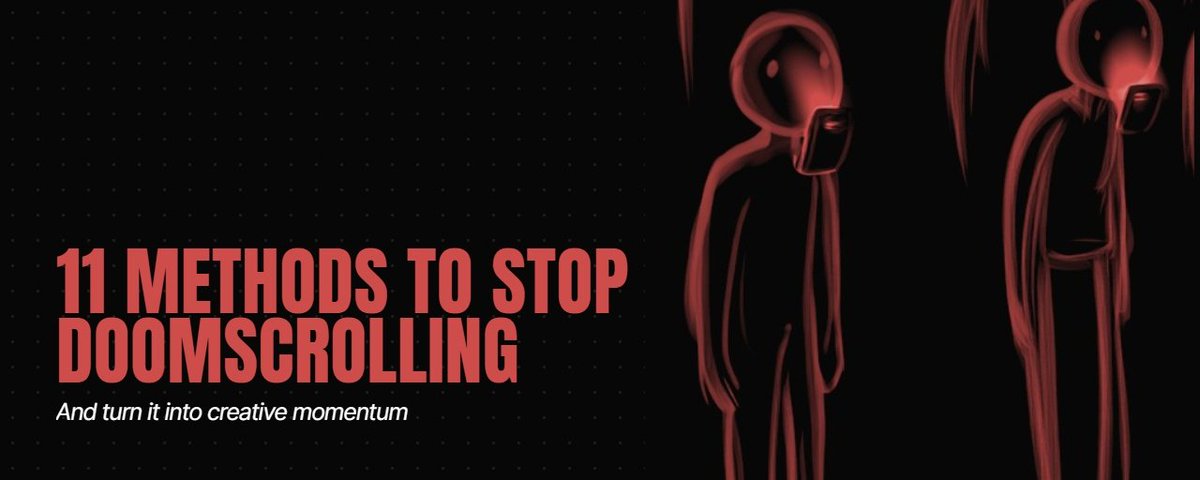
Stop doomscrolling. Build something meaningful...
Here's 11 Methods To Disrupt Your Dopamine Loops:
- Curate your interface and control your inputs
- Disrupt the habits that are causing you harm
- Turn that reclaimed time into creative momentum
tommy.eden.so/11-methods-to-…


Lukas Weichselbaum retweeted
@bot let's get this done. Delegate to CSO and focus on mainly my email addresses being in spam directories but also my phone number. Be thorough. Use my Claude API credits where possible or outside heavy tasks to Claude where it makes sense. Report back to PAB with TLDR decisions and summary of what you've done. Only ask stuff you actually need my input on.
Lukas Weichselbaum retweeted

I am begging you to start writing by hand to preserve your ability to think.



Lukas Weichselbaum retweeted

for sure, the immersion point is real. a long piece of work allows for two things -
1. repetition - in ancient india one of the primary methods of learning was periodic repetition of the idea in verse (often with rhymes)... when i was in school, the general attitude was to look down upon memorisation and hold understanding at a pedestal.
later when i was doing math research, i met a very reputable old indian mathematician in US who actually remembered his 6th/7th std lessons in coordinate geometry verbatim... i was mind blown at the time.. gradually over the years i realised that both have a role in helping us learn - memorisation and understanding.
even in classical music, we often repeat a single idea several times but it changes a little bit in every repetition.. like looking at a diamond from multiple perspectives.
2. leisure as default - i think one of the strongest aspects of a book is the implicit assumption that both the author and the reader have time to spare. that vibe allows the author to bring in , at first what seem like unrelated things, into the narrative.. then they kinda all weave in together at the end and everything falls in place.. the thing with articles, docs, social media posts is that they work on the principle of compression = intelligence... i'm not totally against this either.. i think both make sense on different occasions.
as to the point regarding book/reading selection :
what seems to work for me is a method that is difficult and not scalable.. but it works..
in one way or another, either through serendipity or seldom through conscious search, you meet an outlier mind... someone who thinks clearly.. differently...
that's the signal..
if the state of that mind is good (at that time), then one consumes the output of that mind, be it in books, articles, podcasts, posts or whatever.. the format is secondary... the person is the 'load-bearing' thing :)
as an example, i found @kepano a while back when i was transitioning to markdown files as a memory substrate. i read a couple of articles of his and something just clicked... i found a beautiful mind... an honest and sincere mind... so i read a lot of his articles and even sat through a painful 3 hour podcast he did with a host who insisted on talking about himself on every occasion... but it was worth it.. so many of our ideas matched too.. he is deeply influenced by the 'file over app' philosophy.. in my own writings i have expressed this as 'owning over renting'...
i had a similar vibe with aurobindo ghose, alexander grothendieck, vilayat khan's sitar.... i ended up consuming almost all their collected works..
maybe the following idea is worth exploring more (for me!) :
minds over books.
Lukas Weichselbaum retweeted

I have to remind myself often: Doing the unscalable is scaling.
Let's look at American history for a great example. In 1948 every relevant national poll had incumbent President Truman losing. He made a crazy decision and used serious initiative to beat the odds:
Truman had never actually been elected president. He took it over when Roosevelt died. His own party had tried to replace him with Eisenhower just months earlier.
At some point he made the crazy and unscalable decision to spend six weeks mainly living on a 17-car train with his wife and daughter, rolling through small towns and speaking from the back platform. Most days started with a speech right after breakfast and ended with preparing for the coming ones.
Founders profit so much from this way of making decisions and leaning far into behaviors that almost no one around you really gets. It's what happens when you truly decide to make something new happen.
Truman and his family traveled roughly 21,900 miles and he held around 275 speeches. His wife and daughter would also step out onto the back platform with him at every stop. More than once the money ran out and they had to raise it on the spot before they could pull out of the station (sound familiar?).
All three big pollsters had stopped polling early. The Chicago Daily Tribune was so sure it printed 150,000 copies saying “DEWEY DEFEATS TRUMAN,” before the count was in.
His opponent had the more professional campaign and nobody thought he could pull it off.
As you are expecting at this point point: Truman won anyway.
What he did was not even that clever. It was uncomfortable, intense and scrappy.
I see a lot of parallels to startups. You see a possibility and a path others don't. You make a bet on what you need most right now. And then you live inside that bet for a while. Looking back on my past two years, that's really not a comfortable experience. The setbacks come early. The money is tight. Your life arranges itself around the thing in a way that would look quite strange to anyone watching.
That is not the exception. That is what starting something big is, for pretty much everyone who does it.
The takeaway is not to be blindly relentless and gritty!
I think it is that the direct, unscalable, slightly ridiculous thing is often the one that works, and it rarely feels like a plan while you are in it.
I am still not great at spotting which one that is for me. Usually I see it clearly about a month late and first try to find a way to automate things... But then I go do the unscalable again. Like writing content because AI just doesn't nail it and creates effects I find highly undesirable.
So what is the unscalable thing you have been avoiding?


Lukas Weichselbaum retweeted
Spending more time creating than consuming is the most powerful shift you can make in your life.
I'm designing a coaching program right now, and shifting from consuming to creating is one of its core pillars. One I am challenged by daily. So I'm going to think out loud about it here, which is fitting, because thinking out loud in public is also a nice example for the kind of creating I mean.
Every week I meet a friend and mentor of mine, Phil Goddard, and we build this program together. The more we work on it, the more convinced I am that the balance between consuming and creating sits close to the root of how good your life actually feels.
Generative AI has made this urgent. There is now endlessly more to consume, endlessly more to distract yourself with, endlessly more pulling you away from what you care about. The default gravity of your day is consumption. You have to choose creation on purpose.
Here is why creating wins, on two levels.
On the human level, it is simply more nourishing. It rests on the same foundations that make art therapy works. It is why writing out your thoughts and feelings, or channeling them into an instrument, can heal a part of you that scrolling only makes fade away. I know this in my own body. I start feeling numb after a while of staring myself into oblivion through the screen of my phone. My body of awareness distant, my emotions muted. A bit numb.
Then I finally get up, and play fifteen minutes on my hang drum. It takes a while for me to ease into the music but once I get into the flow it simply resets my nervous system. Fifteen minutes of watching other people play music on Instagram does not come close, even though in the moment it feels like the easier option and our habit might command the first impulse.
On the practical level, creating builds something that lasts within you. When you make something, you have built a skill and an asset. You can share it. You show people who you actually are in a way that a quickly uploaded photo never will. Create consistently and you build a presence that compounds.
There's one company in particular, Fonio, doing exactly this at scale. They have quite a few of their people sharing on their personal LinkedIn accounts, and the whole business has become loud and visible as a result. That is what happens when an organization shifts from consuming to creating. It starts showing up everywhere, talking about every part of what it does.
It’s amazing, honestly. Great work, Fonio.
This is relevant to you whether you're building a company or just trying to feel more alive in your everyday life. The honest, slightly uncomfortable question is this: how much of my time goes into consuming, especially to escape how I feel, and how little goes into making something of my own?
You don't need a grand project to start. Next time you have an insight, write it down as it comes, unfiltered. Or post one honest thought inspired from reading ten of them.
Or just sit down and write about that problem that's been plaguing you. (That's what's happening in the picture here.) Then notice how different you feel afterward.
Create a little more than you did last week.
Maybe even share some of it.
That’s the practice.
