



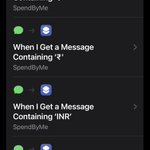





boot time down from ~40s to ~13s, available RAM up from ~250MB to ~600MB
always wanted to do this, but previous debloating attempts were underwhelming, so kept putting it off
saw this post and gave it another shot on my 8 year old tv with just 1GB RAM and a ton of bloatware. turns out, it works surprisingly well on tv's

my parents' old Android TV was full of bloatware and sponsored rows you couldn't turn off.
so I had Claude rip it all out.
Claude Code ran on my Mac mini and did everything over ADB.
it disabled the bloatware, the tracking and the auto-installers, and uninstalled 11 apps nobody used.
free RAM went up about 90%.
then it built a custom launcher with just the apps they actually use.
and every change can be undone with one command.
honestly it feels like a new TV now.

i made the new Roadster land with its thrusters… by turning JavaScript code into a neural net 🚀
used Handwired and gradient
descent to figure out when to fire the thrusters and stick the landing
all running in the browser

wanted to understand @_chenglou’s Handwired a little better, so i built a tiny rocket that learns to land 🚀
the entire simulation is a neural net written in TypeScript. ran it backwards with gradients to find the thrust inputs that land it
no pretrained models. all in the browser


Built it as an open-source package too
GitHub: github.com/wei-b0/gram-rende…
Live demo: t.me/gramrender_bot
Prompt / structured data -> instant Telegram UI, powered by JEV.


i've recently gotten used to having Wispr Flow in my everyday workflow, and naturally started noticing everything i wished it could do
that rabbit hole led me to @VoiceOSApp
if you're still paying for Wispr Flow without having tried VoiceOS, you're probably missing the more interesting half of what voice interfaces can be
.@darkbloomai brought DePIN back into the conversation
there's something really cool about taking resources that are sitting around underutilized, pooling them together at network scale and turning them into something people actually need
the internet has no shortage of resources, just a coordination problem

For those who missed it, here's the full Darkbloom timeline so far:
> Apr 14: @gajesh launches @darkbloomai on 1st day of his vacation
> Apr 16: Darkbloom hits #1 on Hacker News
> Jun 15: Darkbloom goes LIVE on @OpenRouter (@ 600K tokens per minute)
> Jun 16: 100M tokens/day
> Jul 5: 1 Billion tokens/day
> Jul 13: 25 billion tokens served, 2 billion/day
> Jul 18: 3 billion tokens/day
> Jul 25: 3.8B/day on the same machines + 98% reliability
> Jul 27: Re-architected continuous batching design of MLX making prefill 3x-4x faster
> July 27: @gajesh and @0xkydo share a massive community update on Darkbloom Slack
> Aug 11: We run mlx.fast to accelerate open intelligence
> Aug 20: Moved from FREE to PAID/standard tier on OpenRouter
> Aug 21: 5 billion tokens/day, 164 billion served in aggregate
100M/day to 5B/day in just over 2 months and ~250 macs online making $120-200 per month per machine.
Somewhere in between all of this, we also started rethinking Darkbloom from the ground up, positioning, new website, new design and a pretty crazy video in the works.
This is still the beginning!
Many many many more things lined up!

i'm unable to find the input/output token ratio, but assuming a 90% input / 10% output split, this would've cost me ~$120 on GPT-5.6 Sol
spent hours with the new stealth model Ox Alpha today and damn, what an experience
i've always been reluctant to use opencode, but today was probably the longest i've stuck around with it, entirely because of Ox Alpha
if the quality stays this good, i might finally say goodbye to codex


out of the ~500 music websites that popped up in the last 72 hours, i've tried dozens
only a handful supported media keys
there's a UX lesson somewhere in here: building something new doesn't mean forgetting the boring little things users already expect to just work

