




WeVent retweeted

We recently released Essentials of Mechanical Ventilation, a free online resource for clinicians and students working with COVID-10 patients. Learn more about this resource today!
WeVent retweeted

The answer: Early cycling it is! How do you deal with it? #VentRounds @CCF_PCCM @CleClinicRespir #FOAMed #SoMe4MV


You walk by the ICU, you glance at a ventilator. This is what you see going on. No alarms. Patient looks comfortable. #VentRounds @CCF_PCCM #some4mv #FOAMed @CleClinicRespir

WeVent retweeted
What is the patient-ventilator discordance
17%Early trigger
23%Late trigger
47%Early cycle
12%Late cycle
821 votes • Final resultsSo important to recognize the nuances of managing #ventilators in all patients, including those with #COVID19. You cannot safely just “set it and forget it”. See below for a breakdown of patient-vent discordance illustrated by @emireles_c @CleClinicRespir #ModesWithLimitations
Here is the answer! Work shifting indeed. Great job @krveshi @msiuba @siddharth_dugar @SGBraunthal @Thind888 #VentRounds #MedTwitter A deeper explanation at rc.rcjournal.com/content/65/…

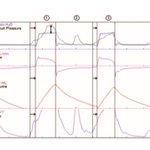
Can plateau pressure be higher than peak pressure? Read 👇
#WeVentWednesdays @some4mv

Can we measure Plateau pressure during pressure support? And what does it indicate? coemv.ca/can-we-measure-plat…

1/ Lesson#9: Proportional Assist Ventilation (PAV)
#WeVentWednesdays #WaveformsMatter
@CritCareMed @some4mv
#FOAMed
References:
bit.ly/2FBwmMA
bit.ly/36Cb7Gz
bit.ly/2N7diu7


WeVent retweeted

Wolbrink et al : GamER Study-residents had superior knowledge acquisition with virtual ventilation simulator before PICU rotation.
Link:ow.ly/ETvI50xA3Ne
@sccm #CritCareMed #MedEd
Fig : Change in test scores throughout the study by arms

1/Happy New Year WeVenters! Looking forward to an educational & productive 2020!
Lesson#8:Let’s start off with a lesson on Neurally Adjusted Ventilatory Assist (NAVA)
References for this lesson:
bit.ly/36pWXbe
bit.ly/2rKKXST
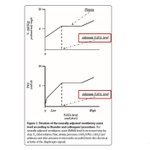
6/Goal of setting NAVA level: unload the increased effort of resp muscles
Techniques:
1) stepwise uptitration to achieve inflection point on curve below – Brander et al
OR
2) set @ 60% of highest EAdi during SBT w/ 7cmH20 in PSV & retest daily until extubation – Roze et al

7/Waveform analysis with NAVA (upper panel) & PS (lower panel). Note dyssynchrony in lower panel with ineffective triggering & pressure and flow waveform not matched to neural EAdi waveform
Further reading:
bit.ly/2rOpkRG
bit.ly/2QynDAc
bit.ly/356EGOY

1/ Lesson#7: Airway Pressure Release Ventilation (APRV)
#WeVentWednesdays #WaveformsMatter
@CritCareSociety @ATSCritCare @CritCareMed
#EMCritCare #PulmCC #AnesCritCare #FOAM
Lesson based on and modified from bit.ly/33NAnYP

Additional resources:
bit.ly/2NKzRoT
bit.ly/34Vv9KI
bit.ly/350OVVc
bit.ly/32Ltx4W
Check out this video!
youtube.com/watch?v=-rgrBtIL…