

San Francisco, CA
Joined November 2008
- Tweets482
- Following1K
- Followers2.7K
- Likes1K
Pinned Tweet
Congrats to the entire @Securitize team! @carlosdomingo , you are the best!


W Bradford Stephens retweeted

What is next for prediction markets?
Our GP @alekslarsen took the stage at @money2020 to discuss the opportunities ahead with @RobinhoodApp VP and General Manager of Futures and Prediction Markets @JBMackenzie_.
Thank you, @PulchraMens, for moderating the conversation!

W Bradford Stephens retweeted
Just 3 years ago, deepfakes on a single call could cost a company millions in losses. Today, @world_id allows human Zoom call participants to prove they are human as well as agents to carry Proofs delegated by a person. Excited for this team!

In 2024, an employee at engineering firm Arup transferred $25.6 million after joining a video call where every other participant was a deepfake. Since then, AI has advanced significantly and is making impersonation increasingly convincing, causing challenges for financial institutions in particular. As autonomous agents begin handling more financial activity on behalf of people, establishing an added layer of trust and security behind a transaction or sensitive conversation is becoming an urgent need.
Introducing @world_id for banking and finance, a suite of technologies that helps institutions establish trust through privacy-preserving cryptographic Proofs. World ID for Zoom lets meeting participants confirm they are the same Orb-verified human connected to their account, while World ID for agents allows AI agents to carry Proofs delegated by people. Bain Capital, OpenExchange, Outtake, Pantera Capital, and VanEck Funds are initial design partners, bringing World ID into some of finance's most consequential interactions.
fortune.com/2026/10/18/zoom-…

W Bradford Stephens retweeted

Exactly, we do not want brokers abusing investors by lending out their shares and taking all the economics, the majority of the money should go to the owner of the asset being lent out and not to the intermediary that facilitates the the loan, that is fundamentally wrong and we want to fix it

Securitize has told its broker dealer not to lend the shares behind these tokens. At a normal brokerage, the firm can lend your stock to short sellers & keep most of the fee. With @Securitize the borrow has to come from the holder, who keeps the fee, with @aave as the planned market.
The fee moves from broker to holder, which is a reason to hold the token vs the cash share.
W Bradford Stephens retweeted

Crypto is winning in Washington.
We’re right where we've wanted to be, thanks to @ChairmanSelig and Chairman @SECPaulSAtkins.
Thank you, @scarletfu and @BloombergTV, for having me on.
bloomberg.com/news/videos/20…

W Bradford Stephens retweeted
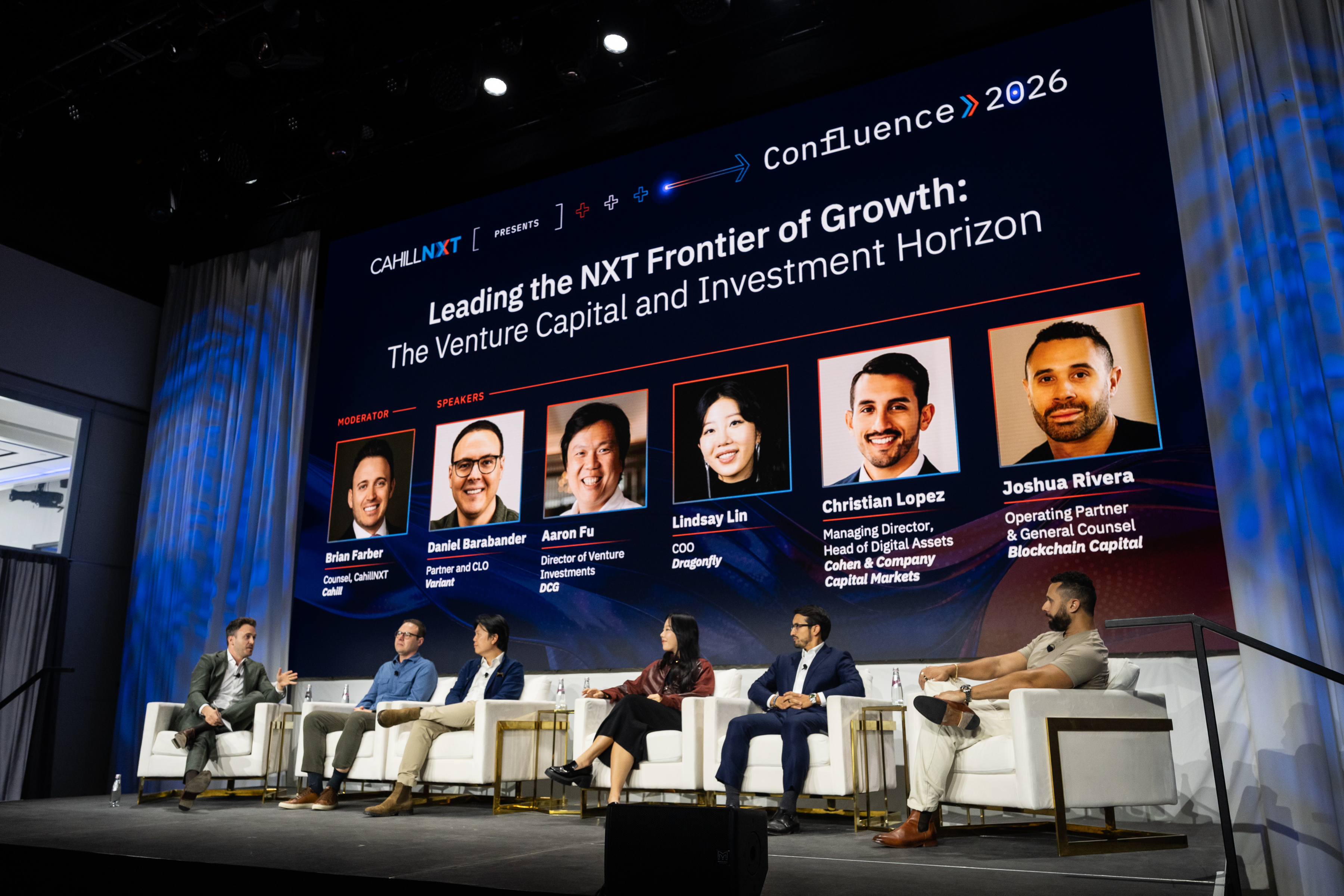
Thank you to Brian Farber @CahillNXT for hosting us at Confluence 2026.
@h_joshua_rivera discussed digital asset investing, where venture capital is headed, and how AI is reshaping the landscape, alongside @aaronqfu, @dbarabander, @LindsayxLin, and @ChristianL_opez


W Bradford Stephens retweeted

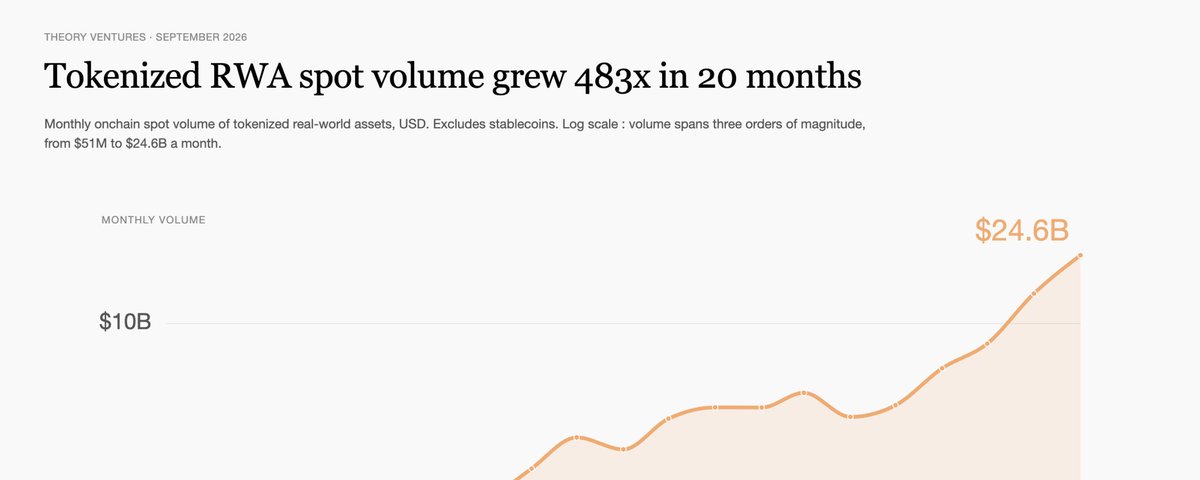
yes - the onchain gravity well is absorbing all assets xitter.cf/jonah_b/status/2048837…

W Bradford Stephens retweeted

🚨 LATEST: SEC Commissioner Hester Peirce says zero-knowledge proofs could verify compliance without collecting users’ personal data.
She warns current KYC/AML practices create “data haystacks.”


W Bradford Stephens retweeted
🚨 TODAY: Sam Altman's World launches World Money, a stablecoin-powered finance app rolling out in 150+ countries for holding, earning, trading and sending digital assets.


W Bradford Stephens retweeted

Thrilled to announce Collin McKinney Hill has joined Polymarket as our new VP of Operations.
He's coming from DoorDash where he was a GM and ran one of their largest business units. DoorDash is known as one of the most operationally excellent businesses, and that's the rigor Collin's bringing to Polymarket. Before that, he was at Bridgewater where he was Ray Dalio's Chief of Staff. He's also 6'7. And handsome. Some guys just have it all.
Onwards.


W Bradford Stephens retweeted
Polymarket's US business hit all-time highs in every metric this weekend, and became the #3 app in America.
Polymarket US only launched publicly on May 12. Tech is now ready for scale. And scale we shall.

W Bradford Stephens retweeted
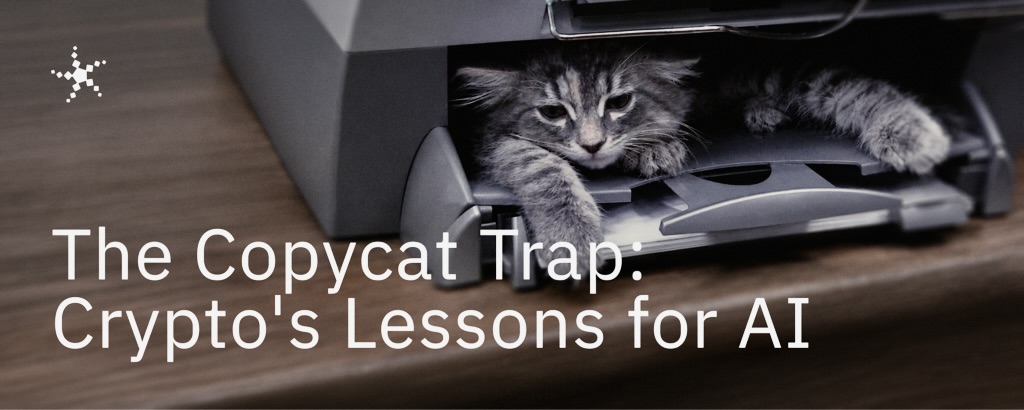
Private markets tend to get massively overheated as everyone who missed the initial winners FOMO into the long tail of overpriced followers, but the actual returns follow a power law. We saw it play out in crypto with alt L1s, stablecoins, prediction markets, etc. and it’s been repeating in AI. Jonah unpacks the parallels in this piece
W Bradford Stephens retweeted

CONSENT IS SECZ
This is a good piece from Vlad, and it's cool to see them continue touting tokenization, but over time the market will see that both investors and issuers benefit most when the issuer is involved.
Issuer participation creates a direct relationship with investors, clearer rights and greater opportunities for both sides to benefit from what onchain finance enables.
It's phenomenal to see everyone put the magnifying glass on what each tokenized stock product is (or isn't) but let's not act like including the issuer isn't the best for both sides in the long run.

W Bradford Stephens retweeted

🚨 THIS IS BIGGER THAN KRAKEN.
Nasdaq is investing $100M into Kraken's parent, Payward, at a $21 BILLION valuation.
Think about what just happened.
Wall Street isn't trying to kill crypto anymore. It's BUYING THE RAILS. @Nasdaq wants equities trading 24/7 onchain.
The endgame isn't crypto becoming more like Wall Street. It's Wall Street becoming more like crypto. 👀

W Bradford Stephens retweeted
Incredible partnership for @krakenfx ! Nice work @arjunsethi @DavidLRipley @jespow and the entire team 💪🏻. It has been awesome watching u grow over a decade from the @bcap seed round investment to today 🙏🏻

Nasdaq Ventures is investing $100M in Payward as we advance tokenization together with the @Nasdaq Equity Token (NET) framework.
Equities on-chain only works if it's built to institutional standard from day one. We're building it with the company that's run public market infrastructure for decades.
→ payward.com/press-release/pa…

W Bradford Stephens retweeted
Huge milestone for the @trmlabs's mission to scale a safer internet. Congratulations @estebancastano and team.

Today, we are at a crossroads.
As I write this, AI is saving lives by helping doctors identify diseases faster, and making education more accessible to people everywhere. It’s also being used to inflict harm on a global scale.
TRM’s AI-in-Crime Adoption Index found that, in 2026, criminal adoption of AI rose 40% year over year. Today’s threat actors are using AI to execute scams, cyber attacks, and other forms of digital crime at unprecedented speed and scale. In the last 90 days, we’ve also seen a growing number of incidents where AI agents themselves have gone rogue.
Business titans and religious leaders are sounding the same alarm: to realize AI’s promise, we need to protect people from its harms.
The first line of defense is prevention. Model companies like Anthropic and OpenAI are building stronger guardrails, and governments are exploring rules for how AI can be safely used. We call this the prevention layer.
At TRM, we’ve spent nearly a decade fighting crime, from fraud and cybercrime to human and wildlife trafficking. That experience has taught us one thing, if nothing else: the prevention layer is essential, but never enough.
Criminals will break through. When they do, it’s critical that crimefighters can identify the harm done, find the people and machines behind it, and take action: support the victim, freeze the funds, take down the infrastructure, arrest the offender, disable the agent, dismantle the network.
The world needs a new layer of protection.
We call it the disruption layer—and it's what we're building, right now.
The operating system for crimefighters
In 2018, we founded TRM to help crimefighters map how threat actors were using cryptocurrency. We analyzed petabytes of data, mapping over a 100 types of crime. Government agencies and financial institutions worldwide now use TRM to investigate complex criminal networks and combat financial crime.
The more cases we supported, however, the more we realized: if we were going to equip crimefighters to disrupt AI-scale crime, crypto would be 𝘱𝘢𝘳𝘵 of the story, but not the 𝘸𝘩𝘰𝘭𝘦 story. To build a successful case, investigators must source intelligence not just from the blockchain, but also corporate records, cyber threat data, the dark web, and dozens of other domains. Today’s crimefighters need to use natural language to search across siloed domains, connect the dots and unearth buried insights, automate the rote work, and coordinate with partners across public and private sectors—all while preserving auditability and human judgment.
In short, crimefighters need an operating system for the AI era.
So we built it.
For years, we’ve been developing this OS alongside the investigators who use it. Now, we’ve just announced a new round of funding, valuing TRM at $2 billion, to propel our work—and this fall, we’ll unveil the OS publicly, for the first time.
If your organization needs to fight AI-scale crime, please reach out. We want to work with you.