Building @use_corn | Prev: @mktg working w/ @adidas, @Scotiabank, @AmericanApparel, @LiveNation, @TangerineBank, @Raptors, @MapleLeafs | @umusic
Joined April 2009
- Tweets163
- Following1.5K
- Followers424
- Likes1.1K
Pinned Tweet
The members tour started from a simple belief. You can’t ask someone to trust a club they’ve never been inside.
So instead of selling Corn from a deck or feature-driven content, @Spadaboom is taking it city to city, meeting people face to face and letting them see how the club actually works.
The whole point is to earn trust first and let the relationship start the way it should, breaking bread in person.
If you’re interested in learning more about Corn, my DMs are open.


Eight figure islands paid for with stablecoins. Send it higher.

Corn, the black card and private members club built for digital asset holders, has secured limited-time exclusive rights to offer a $72 million private island at Baccarat Hotel & Residences Maldives.
That's right. You can now purchase an island with @USDC exclusively through Corn. Every purchase runs through Corn's stablecoin payment infrastructure, powered by @base.
This collaboration introduces a new way for digital asset holders to acquire luxury real estate.
Read the full release: usecorn.com/newsroom/corn-ba…
Register interest at usecorn.com/baccaratmaldives.
Will retweeted
We're hitting 10 cities before the end of 2026.
We're growing the club face to face. Each city is a chance to show what the Corn card actually unlocks.
Tokyo set the bar. Singapore is next
The Corn Members Club is going on a world tour.
Instead of just telling you what the club is, we're going to show you, one city at a time.
Tokyo was the first stop, Singapore is next in October, and the first round of Corn Curated is coming soon, open to you whether you're a member or not.
If you're in Singapore for Token2049, request your invite at usecorn.com
Today Apple revealed they are bringing a new live music venue to London. Aptly named Apple Music Hall, it sits inside the old Battersea Power Station and is designed to connect artists and fans through bespoke, intimate performances unlike anywhere else.
You may be wondering why the building looks so familiar. Its place in music history was cemented long before today. In January 1977, while half the station was still generating power and the other half sat derelict, its four chimneys appeared on the cover of the most divisive album Pink Floyd ever made, Animals.
In an unusual turn, the band set aside the concepts from their usual designers at Hipgnosis in favour of an idea from Roger Waters, who drove past the old power station regularly while living nearby. They commissioned Ballon Fabrik, the German firm that had built Zeppelin airships, alongside the Australian new media artist Jeffrey Shaw, to build a 40ft inflatable pig known as Algie.
With a marksman hired to shoot it down if it came loose, the balloon was inflated and moved into position on December 2, 1976. Bad weather delayed the shoot to the following day, but the band's manager forgot to rebook the marksman. The balloon broke free, drifted into the flight paths over Heathrow, and grounded a run of flights before coming down on a farm in Kent, where it was recovered by a furious farmer whose cows it had frightened.
The pig was retrieved and the shoot ran a third day. Despite repositioning it, the earlier photographs of the power station were judged the stronger images, and the pig was superimposed onto a shot taken by the photographer Howard Bartrop.
The most famous pig in music, actually flew.


Will retweeted

Polychain Capital has made its third investment in Corn in support of a new private members club purpose built for digital asset holders.
Read the full story: crypto.news/corn-launch-priv…


Has anyone even entertained the fact that Steven Bartlett is just a good marketer who understands how rage baiting works?

Steven Bartlett says a few glasses of wine ruined the next 3 days of his life
“It's one of those areas where you don't understand the hidden cost until you really give it up for a while. I stopped drinking at 30 years old. I'm now 33. When I was 31, I thought, I'll have a drink again because now I could really A/B test it. I had a year of not drinking, decided to have a drink again”
“It ruined three days of my life. I had a couple of glasses of wine, didn't get drunk. It ruined three days of my life because of the domino effect it caused”
“I got worse sleep that night, and then because I got worse sleep that night, I ate more poorly the next day because my dopamine system or whatever, the cortisol system was all messed up. I podcasted worse. I didn't go to the gym that day or the day after because I felt really bad. I then slept worse, and I could track all of this on my Whoop”
I think it’s easy to view @RickRubin as some sort of divine creative genius. But I actually think the reason for his success is much more human than that: self-mastery.
The confidence he has in his own taste and intuition is so grounded that it becomes magnetic. There’s something undeniably powerful about people who are fully aligned with who they are.
How can anyone believe in you if you don’t even believe in yourself first?
What makes Rubin special is that he doesn’t overpower the creative process, he creates space for it. He’s mastered what a lot of highly creative people struggle with: overcoming fear and self-doubt enough to trust instinct, play a supporting role with confidence, and leave room for magic to happen.

This conversation with @RickRubin is special. Here's a 2 minute preview that I’ve watched 15 times.
The episode will be out tomorrow:


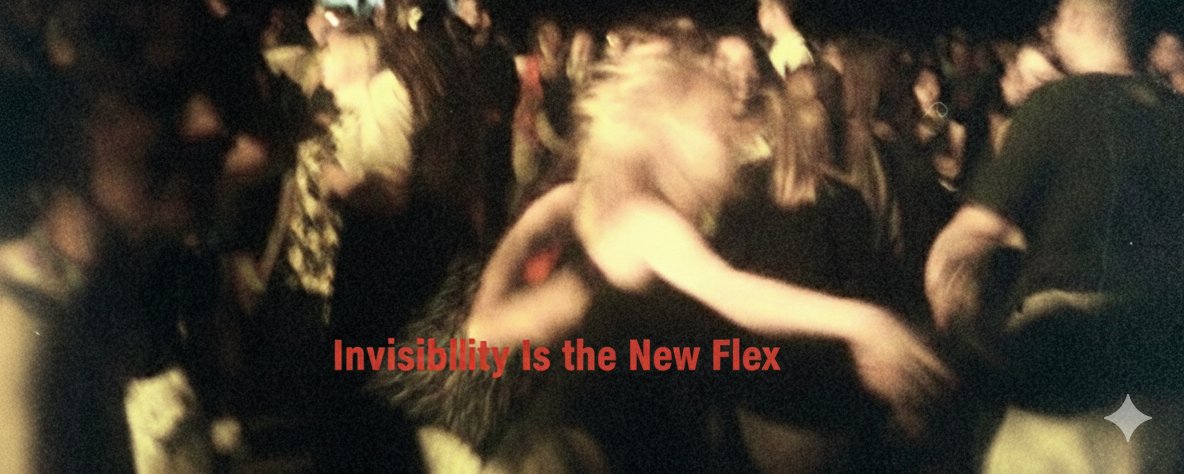
Being perpetually online has indoctrinated us into believing that the key to a successful and enriched life is to always be on. I often think about how the boomer generation had the luxury of leaving their work at work. There was a definitive line on any given day between the thing that made you money (your job) and the things that fueled your soul (connection with other humans). Those two things didn’t have to overlap or be the same.
I think the desire to unplug or feel invisible isn’t a need to disconnect from people, but rather a desire to remove the expectation of outcome from everything we do. To truly experience a dinner, an event, or a shared moment without trying to optimize, document, or monetize it. To stop blurring the line between productivity and actually embracing the human experience.
The thing I really struggle with is seeing thousands of people pay hundreds of dollars to see their favorite artist live, only to experience the show later through a recording on their phone. Something about that feels broken. Events and how we experience them, needs to be rewired.
Much like individuals, companies need to adjust their expectations and optimize for presence. Event FOMO on the timeline doesn’t equal revenue...at least not in any meaningful or measurable way. Analog experiences will always matter, especially the ones where participants have no choice but to be mindful and present. They should be standard for all, not a luxury for some.
Really insightful piece and a great read @cryptokwueene🫡