

She/her. Proud mom of an amazing kid. Seismic data manager. Ph.D in Volcano seismology from University of South Florida Geosciences. Same handle on Post & Blue
Fairbanks, AK
Joined October 2018
- Tweets3.4K
- Following652
- Followers315
- Likes18.9K





Dr. Heather McFarlin 🟧 retweeted
What’s Shaking Alaska?! Over the past week, we recorded about 360 seismic events. The largest was a magnitude 4.7 earthquake on December 12th, part of the seismic swarm series south of Adak that we reported on last week.
In part two of how the Earthquake Center measures seismic activity, we share some insight into how our analysts locate an earthquake.
When rocks rupture during an earthquake, different types of seismic waves travel differently through the ground. To pinpoint the rupture origin, we mainly look at the signals of P, or primary waves, which arrive at our seismic stations first, and S, or secondary waves, which travel slower but cause more shaking. The farther the station is from the earthquake, the longer the time difference between when the P and S waves arrive. By looking at P and S arrival times for several stations in different places around the earthquake, we can determine its exact location.
We use information from a minimum of 8 stations, but the more data our analysts review, and the closer the stations are to the epicenter, the more accurate the location is. Our seismic data analysts comb through the data squiggles, looking for the patterns that indicate earthquakes or other seismic events, such as landslides, icequakes, explosions, or volcanic activity.
Visit the Resources tab at earthquake.alaska.edu for more AEC news, and for our previous episodes.

Dr. Heather McFarlin 🟧 retweeted
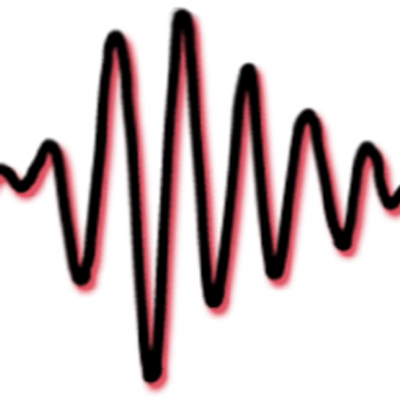
Celebrating Winter Solstice with a sprinkle of science! ☃️ ❄️ In September of this year, a series of 5 landslides at the Surprise Glacier moved about 900 million gallons worth of debris into Harriman Fjord. The squiggly line featured in this post is the seismic signal—picked up by our monitoring network in Prince William Sound—from the largest of the landslides, which spurred a 1.6-inch tsunami.
💚 Aurora picture captured by Ayumi Bakken Photography 💚

Dr. Heather McFarlin 🟧 retweeted
The elevated level of seismic activity continues south of Adak, with many aftershocks, some sizable, including a shallow magnitude 5.7 just after 9 am. Residents of Adak, how are you feeling? In the graph below, you'll see that the number of earthquakes has tapered off since yesterday, but this new event is likely to generate more aftershocks.


Dr. Heather McFarlin 🟧 retweeted
If you live, work, or play in coastal Alaska, do you know where to go if a tsunami warning occurs? The Earthquake Center has a variety of tsunami resources for nearly 70 coastal communities! Check out how we create tsunami hazard information and resources earthquake.alaska.edu/tsunam…

Dr. Heather McFarlin 🟧 retweeted
We are proud to announce Dr. Natalia Ruppert, our Senior Seismologist, as lead editor for the upcoming book "Tectonics and Seismic Structure of Alaska and Northwestern Canada: EarthScope and Beyond". This book brings an avalanche of new data, highlighting the stunning discoveries of the last two decades, and stands as a testament to the revolutionary changes within the field of geology, brought by the @EarthScope_sci project in Alaska and Canada. Stay tuned for the release this fall!📚 #Geophysics #EarthScience #Tectonics #Seismic #EarthScope


Dr. Heather McFarlin 🟧 retweeted
What’s Shaking Alaska?! Over the week of Nov. 21–27, we detected just over 400 earthquakes, the largest of which were a pair of magnitude 4 earthquakes south of Sand Point. On the afternoon of November 24th, a magnitude 3.3 near Girdwood was reported felt by more than 300 people.
Have you ever wondered how earthquakes are detected? This week, we kick off a series on how Alaska Earthquake Center instruments monitor seismic activity. We begin with the primary tool—seismometers. Simply put, seismometers record ground motion.
Early seismometers were made of heavy masses hung on springs, and strong ground shaking would cause the mass to vibrate. A pen attached to the vibrating pendulum recorded the ground motion on a rotating drum of paper.
Modern-day seismometers have a few key differences. First, the mass is now a dense magnet wrapped in wire. There is no pen and paper anymore; instead, ground motion is captured as electromagnetic signals sent through wires. A digitizer turns the vibrations into a digital signal, which gets sent to the Earthquake Center for analysis. Stay tuned for a future update on how we determine earthquake location and magnitude.

Dr. Heather McFarlin 🟧 retweeted
We have reviewed a magnitude 2.9 event at 7:03 AM, 9 miles deep and 4 miles SE of Kenai. This event was reported as felt near Kenai and Sterling.
The event page is available below earthquake.alaska.edu/event/…

Dr. Heather McFarlin 🟧 retweeted
We have reviewed a magnitude 3.1 event at 9:26 AM, 35 miles deep and 24 miles SE of Tyonek. This event was reported as felt across the Kenai Peninsula.
The event page is available below earthquake.alaska.edu/event/…

Dr. Heather McFarlin 🟧 retweeted
Join us as we express our deepest gratitude for the steadfast commitment of our hardworking team here at the Alaska Earthquake Center, and you! 💛 Your continued support and engagement encourages us to build a safer and increasingly resilient Alaska. 🏔️ Together, we can weather the tremors of life, one earthquake at a time. Now, let's gobble until we wobble! Wishing everyone a terrific Turkey Day! 🦃🍂
Dr. Heather McFarlin 🟧 retweeted
Discover how we can tune into Earth's seismic rhythm more accurately using weather data! 👂 Read all about it in our new web story 🌬️ 🌤️ 🌧️ ❄️ earthquake.alaska.edu/quakes…

Dr. Heather McFarlin 🟧 retweeted
Celebrating Natalia Ruppert's 30 remarkable years in seismology with the University of Alaska Fairbanks! 💙 💛 As we turn the page, we're thrilled as she steps into her new role as National Coordinator for ShakeAlert, the earthquake early warning system. Here's to the next chapter in a phenomenal career. 🥂 Discover more about her journey from graduate student to Senior Seismologist at Alaska Earthquake Center here: earthquake.alaska.edu/staff-…

Dr. Heather McFarlin 🟧 retweeted

ATTENTION PHILLY! If you voted by mail or voted a provisional ballot, you may need to confirm your ID with our county Board of Elections to make sure your vote counts.
The deadline is TOMORROW, Nov. 12 at 5PM for Philadelphia County.
Learn more here: PADems.org/PhillyVotes
Dr. Heather McFarlin 🟧 retweeted

I have been tweeting this every day.
Will you join me?
Over 5700 Missing and Murdered Indigenous Women #MMIW
#MMIWG2S.
#MMIP.

ALT From the top: Hashtags #MMIW and #MMIWG with silhouettes of women to signify the many missing and murdered Indigenous women and girls. Text at the bottom of the images: Mother - Wife - Cousin -Grandmother - Niece - Sister - Daughter
Dr. Heather McFarlin 🟧 retweeted

We don’t advertise or spend a nickel on marketing at costplusdrugs.com The mission is to offer the lowest price we can.
It’s all word of mouth. So please tell everyone to check out @costplusdrugs !

Dr. Heather McFarlin 🟧 retweeted

For the next two weeks, we’re offering ten free ebooks for getting free
Another world is possible if we fight for it
haymarketbooks.org/blogs/517…

Dr. Heather McFarlin 🟧 retweeted

We know that many of you, like us, are trying to wrap your heads around what the next few years will hold. These are a few titles that have helped us think through what we are up against and the resistance we need. Please read them, share them, use them. akpress.org/featured-product…

Dr. Heather McFarlin 🟧 retweeted

PENNSYLVANIA:
Did you check and discover your ballot wasn’t counted? Below is how to get it counted—and if enough of you do this, Democrats can win.
DO check and be sure your ballot was counted, anywhere, because we can still win the House if you’ll fix every ballot.

Bob Casey is within .5% - 25,000 Votes.
Many PA ballots need curing.
You can check on your mail ballot here.
pavoterservices.pa.gov/Pages…
You can help notify people with errors!
Dr. Heather McFarlin 🟧 retweeted

MISSING CAT!! FAIRBANKS IF YOU SEE THIS CAT, let me know! Lathrop near McCarty behind the movie theater

Dr. Heather McFarlin 🟧 retweeted
I have been tweeting this every day.
Will you join me?
Over 5700 Missing and Murdered Indigenous Women #MMIW
#MMIWG2S.
#MMIP.

ALT From the top: Hashtags #MMIW and #MMIWG with silhouettes of women to signify the many missing and murdered Indigenous women and girls. Text at the bottom of the images: Mother - Wife - Cousin -Grandmother - Niece - Sister - Daughter