
Exploring how invisible coordination of our systems (buildings, orgs, families) can be legible. Building https://xitter.cf/t.co/4RQTJGhGTb for parents of little kids
Joined December 2014
- Tweets1.8K
- Following754
- Followers1.3K
- Likes4.3K







There’s a small joy in having your family AI know how many people you usually cook for. So dinner recipes come out ready to the size you need.
I cook for 2 families! And kids need lunch the next day! That’s a lot of servings.
109

A new skill of app design-builders will be determining which elements of their products are the floors/ walls/ ceiling and which elements are the furniture
The furniture for moving and adapting, as liquid affordances. The walls to keep the stable subassemblies— in Herb Simon’s words— near-decomposable (ie sufficiently maintainable)

I'm now building an "improvements" feature into all of my personal vibecoded applications: a freeform text input that's hooked up to an agent that yolo implements whatever is submitted.
It's an interesting experience -- the activation energy barrier to sanding any rough edge or implementing any new feature becomes extremely low. Someone else who uses one of the applications I created has already implemented 150 improvements over the course of a few days. This pattern feels like a new kind of tool -- liquid software? -- and every application that doesn't have this feature now has a slightly rigid and anachronistic flavor. Why can't I just tell it how I want it to be different?
Now, it's not obvious to me how this pattern can or should scale. Does it become unmaintainable after a while? (Maybe model intelligence improvement outstrips my feature appetite such that it's fine?) How does collaborative software work in this model? Can software designed this way be secure and reliable?
Whatever the larger questions about broader deployment, it definitely works great in a personal context. It reminds me a little of the visions of Lisp/Lisp machines, Smalltalk, and HyperCard -- systems that the user can take control of and modify. Those visions never quite worked, though: the vast majority of software today is not end-user modifiable in any useful way. So, while this "liquid" affordance is a very small touch, the way it changes one's relation to the software feels a bit transgressive and empowering in a Lickliderian and Engelbartian way.

4
206

Update: this is going well!!
I asked Muse about archery for 4 year olds (inspired by a recent visit to Sanjusangen-do in Kyoto)
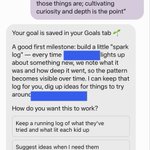
After giving me some options around SF, it asked if I wanted to add it to her “spark log,” ie it’s proactive way of cataloging her interests over time 😎


Adding “Expose my kids to a lot of things early… cultivating curiosity & depth is the point” as a @Muse goal… wondering what it will eventually do!
With little kids under 5, sometimes my brain is too tired/overloaded to pay attention to the seeds of blossoming interest

1
4
230
With agents I can be more rational relative to the product quality a company offers me, but do I know how to be more rational about my own desires and needs?
Using Herbert Simon’s words, agents today now have a much expanded search space
Agents also act as attention allocators for their consumers— “hey, given your interests and priorities (and real time data environs), focus on this”
But out of the box, the result agents offer to their humans is still a satisficed answer from the consumer perspective
To counter balance this (ie greater search space on the agent side, but still satisficed output on the user side), consumers need to be able to articulate their criteria such that the agents output for them goes *beyond* the typical satisficed option
But do we know how to articulate these sentiments for ourselves? Is it our job as consumers to articulate it? Or perhaps it’s the job of the best agents to suss it out for us…
Assorted things I've been mulling over regarding agents in the economy:
• Companies are in some sense the original superintelligence. It's often the case that they can use their amortized cognitive surplus to advance their interests against those of certain consumers: relative to the optimization capacity of companies, consumers can be inattentive, underinformed, irrational, etc. (Think, say, of some of the classic insurance upsells at the end of a booking process, which is typically priced substantially above what a regular policy would cost.) Herbert Simon introduced the idea of bounded rationality, and firms often end up benefiting from it. Thanks to personal agents, we will probably get somewhat more rational in how we engage with companies.
• How exactly will outcomes change? Well, certain kinds of price discrimination will work less well (how do coupons work if every agent hunts fastidiously for them?), and certain kinds of customer cross-subsidy will change (today, people who forget to cancel subscriptions subsidize those who don't). Taken across the economy as a whole, I'm not sure what the incidence of all of this will be.
• In corporate strategy, people have long debated the relative importance of distribution and product quality. Perhaps you've made something better, but does anyone know about it? Won't people just continue to buy the ACME Corp Mousetraps? Personal agents will, I think, act as a kind of structural subsidy for product quality. How would markets look different if individuals always spent at least 10 hours researching their purchases? On the margin, focusing on making a product better is, I think, going to become a more effective strategy for companies. This is good!
• It true, a corollary is that information about product quality will become more important and impactful. Today, most people have very limited ability to aggregate and integrate such data, but agents will have insatiable thirst for such signals. (It's often said that data is becoming more valuable because it helps in the training of models. That's obviously true, but I think there's a secondary way in which it's more valuable simply as a complement to cheaper intelligence.)
• A big question is whether agents will increase superstar effects (rational agents all settle on the same product) or increase dispersion (because everyone has slightly different tastes and preferences, which agents are good at eliciting, finally overcoming the artificial clustering we've been subjected to).
• Many internet companies have monetized demand routing, which is in turn often predicated on short attention spans. "I'll click on the first thing I see." This has led to some amount of inefficiency, as companies try to propitiate capricious ranking algorithms and incur various placement fees. It's not all deadweight loss (willingness to pay is itself a kind of signal, which is valuable to buyers), but it's not great. How will the nature and value of this routing change in a world of personal agents? I don't know the answer, but I think that the effects might be pretty big.
• Much of what I'm writing hinges on the assumption that personal agents will be on the consumer's side. I suspect that that will be the winning strategy, but whether it's true, and what it means to be true, involves a lot of other questions.
Taken as a whole, the market is a massively parallelized, decentralized, and highly imperfect value attribution machine, and, taking stock of all of the effects, it seems to me that the quality point may well be the biggest: that agents will change the nature of the backpropagation such that the rewards for better products increase. Maybe this is too optimistic, but I suspect (and hope) that companies that make things that they're proud of will feel that the universe is a little more partisan in their favor.
1
2
173
I want to be able to invite my favorite personal AI into an app with me to collaborate on something.
Can I do that yet? I’m talking beyond shared browser use
1
100

We started “Neighbor Sundays” once a month this year and it’s been amazing!
Neighbors with similar aged kids come over. Recurring so we know it’s on the calendar, always same time and same drill (no plans, bring a potluck item).
And sweet release from “making the house ready”

New newsletter: THE DEATH OF THE AMERICAN HOST
The share of Americans who say they host friends or family at their home at least monthly has declined by 70 percent in the last 50 years.
derekthompson.org/p/the-deat…

2
293
Adding “Expose my kids to a lot of things early… cultivating curiosity & depth is the point” as a @Muse goal… wondering what it will eventually do!
With little kids under 5, sometimes my brain is too tired/overloaded to pay attention to the seeds of blossoming interest

Since I have two young kids and spend all day thinking about technology, I've thought a ton about how to raise kids given how fast everything is changing.
So for the launch of HAA, Alex Danco and wrote about how we teach our kids & whether we'd send them there.
(We don't think it'll be up to us to choose.)

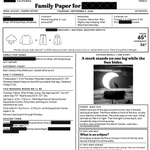
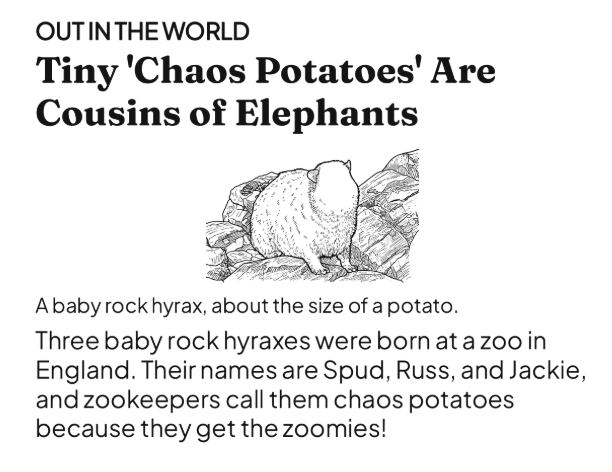
Playing around with our family paper on Muse.ai
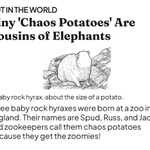
I like it. But... the cute images never have faces!
1
121
Fun addition to the family paper & e-ink screen, adding our home book collection using Liblib 📖
Asked specifically for a book about kindness to read to my toddler


1
3
91

Built the TenderYears @bot for families with little kids, based on @clairevo 's amazing Tradbot. Now, the family paper more geared to pre-readers, a sitter guide, and uses the Tender Years plugin for all the family stuff that doesnt live in calendar/email
x.ai/bot/o7VRdRSxHvBEYbzkJQm…


Claire's Tradbot is legit my fav bot right now. Amongst other things it creates a daily newspaper of your family's plans that day + kid-friendly news from the neighborhood.
Get it: x.ai/bot/uY_7s1TZILVzUeJ9lLO…

I cant stand recipe blogs
Especially when I’m trying to mad cook dinner before kids back from preschool. Too many annoying ads, fluff stories, unnecessary pictures
So I had grok @bot suggest a new recipe based on what we like, and add it to Tender Years directly! 🤩


1
108
Liz Voeller retweeted

With the other infrastructure appreciators.
(This is a flood mitigation structure under Tokyo. You can just do things.)
I've been working on a theory that the Japanese have an annual concrete consumption quota that they absolutely must hit. Approximately one ton per man, woman, and child.


Can you imagine if one of these floated around your home, coming up to your kid to remind them it’s bedtime?!

Researchers built a soft floating robot for indoor interaction.
It uses helium and flapping fins instead of propellers.
The result is quiet, lightweight, and safe to touch.
It can follow people, give reminders, and act as a study buddy.
Published at ACM DIS 2026.
1
1
379
