

All 📸 photos by me. | Telling history through art. Different angles of ancient & some medieval ruins & pieces. | Creator of The Cobra Effect Podcast.
Joined July 2024
- Tweets8.2K
- Following643
- Followers23.8K
- Likes127K


Pinned Tweet
1/ By the 1st century AD, approx. 800k inhabitants lived in the "Eternal City." The imperial grain dole went to 200k of them every month. This was a logistical nightmare for the port city of Ostia.
The solution? The Harbour of Claudius.
A feast to the eyes, 🧵 of 📸 below!

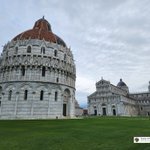
In the first 📸, the Pisa Baptistery (built between 1152–1363) appears closest, followed by the Cathedral (built between 1063–1092) and the Leaning Tower (the bell tower, built between 1173–1372). Behind the Baptistery is the Camposanto, a cemetery founded in 1277.
📸 by me.


I may post my own small coin and paper currency collection from time to time! I hope you find it as interesting as I do.

Although this account is mainly for Ancient History, I am interested in all history and economics. Today, I'd like to share this curious banknote from my small collection.
Printed in 1975, this 10 Riel bill from Democratic Kampuchea (modern Cambodia) never circulated. You see, from 1975 to 1979, Democratic Kampuchea was the absolute dominion of the Communist Party of Kampuchea (CPK), also known as the Khmer Rouge.
In an extraordinary and suicidal attempt to bring paradise to earth, in 1975, the Khmer Rouge decided to abolish all private property, markets, and… money. This is the only attempt in modern history that I know of a state abolishing currency. They blew up the Central Bank, literally, with explosives. Banknotes like the one I bring you today flooded the streets of the capital, Phnom Penh.
In 1977, Pol Pot, the leader of the Khmer Rouge, said in a speech: "Apart from the aforementioned questions, we continue to operate without the use of money, with no daily salary. Our entire people, our Revolutionary Army, all our cadres, and all our fighters live in a collective system through a communal support system, which is being improved with every passing day." However, instead of banknotes or coins, people used rice as money. Pol Pot and his men ignored basic economic principles.
I bought this banknote on eBay as a reminder. One side shows a field of rice and the other a machine gun. Precisely, it is sadly ironic that during the reign of terror of the Khmer Rouge, at least 25% of the population (~ 1.5 – 2 million people) died due to famine and the state-sponsored annihilation of the enemies of the revolution.


Visuals of the Ancients retweeted

All Romans to the follow button!

Welcome to @RomaVisuals
A page dedicated to artwork and aesthetics of the ancient Roman world!
𝐑𝐎𝐌𝐀 𝐈𝐍𝐕𝐈𝐂𝐓𝐀!


Visuals of the Ancients retweeted

The 5.3m tall Lion of Amphipolis once stood guard over the tomb of Olympias, mother of Alexander the Great, atop the Kasta Mound, but was reconstructed from fragments 5km from its original site in the late 1930s next to the River Strymon where its fragments were found 1/🧵

Money before "the money."
Before the invention of coinage in Asia Minor (in the Greek city of Ephesus or the kingdom of Lydia) around the mid-7th century BC, humans still used money.
Precious metals or anything valuable, such as sheep or grain, were used to exchange goods and services or for the state to tax its subjects. Today, let’s look at an excellent example of money from before coinage. This "coil" money is made of silver and dates to the Old Babylonian period (c. 2025 or 2004 BC – c. 1595 BC).
You are familiar with this period because between c. 1792 BC and c. 1750 BC the famous Hammurabi ruled over Babylon and the territories of southern Mesopotamia. This piece is housed at the Institute for the Study of Ancient Cultures (formerly the Oriental Institute) of the University of Chicago.
The museum’s description reads: "When silver was needed as currency, the desired weight was achieved by either cutting a piece from the coils or by combining smaller silver pieces. The ends of these coils reveal that pieces were twisted, hammered, or cut off. Texts from the Old Babylonian period mention money ‘rings’ being used to purchase land, possibly a reference to these coils."
The question now is, what could we have bought with this silver coil?
📸 by me.


Ditto @DanDonatoV is a must follow!

I have just finished my good friend @DanDonatoV's first book 'The Privateer'
And I am absolutely blown away!
The best compliment I can give is that it is the fastest I have ever finished a book.
A proper page turner.
I am normally a one chapter a night kinda guy, but I found myself unable to put it down.
If you love adventure tales, particularly those based in the world of privateers and pirates, then you will LOVE this.
And well you are at it, go follow Dan, he's an awesome guy


At first glance, it's hard to imagine the origin and use of this piece. It looks pre-Columbian and ceremonial. Far from it.
Made of diorite and dating to the 1st Egyptian Dynasty, c. 3100-2900 BC, this is a door socket excavated at an archaic temple in Hierakonpolis.
It’s on display at the Penn Museum, and the museum’s description reads: “This carved figure represents a captive on the ground with his arms bound behind him. A circular depression in the prisoner’s back held the post of a heavy wooden door that symbolically crushed Egypt’s enemies every time the door swung open.”
📸 by me.


Nike. Dating to the end of the 2nd century AD and the early 3rd century AD, this Roman copy is based on an original Hellenistic piece.
📸 by me at the National Archaeological Museum of Naples.


Although this account is mainly for Ancient History, I am interested in all history and economics. Today, I'd like to share this curious banknote from my small collection.
Printed in 1975, this 10 Riel bill from Democratic Kampuchea (modern Cambodia) never circulated. You see, from 1975 to 1979, Democratic Kampuchea was the absolute dominion of the Communist Party of Kampuchea (CPK), also known as the Khmer Rouge.
In an extraordinary and suicidal attempt to bring paradise to earth, in 1975, the Khmer Rouge decided to abolish all private property, markets, and… money. This is the only attempt in modern history that I know of a state abolishing currency. They blew up the Central Bank, literally, with explosives. Banknotes like the one I bring you today flooded the streets of the capital, Phnom Penh.
In 1977, Pol Pot, the leader of the Khmer Rouge, said in a speech: "Apart from the aforementioned questions, we continue to operate without the use of money, with no daily salary. Our entire people, our Revolutionary Army, all our cadres, and all our fighters live in a collective system through a communal support system, which is being improved with every passing day." However, instead of banknotes or coins, people used rice as money. Pol Pot and his men ignored basic economic principles.
I bought this banknote on eBay as a reminder. One side shows a field of rice and the other a machine gun. Precisely, it is sadly ironic that during the reign of terror of the Khmer Rouge, at least 25% of the population (~ 1.5 – 2 million people) died due to famine and the state-sponsored annihilation of the enemies of the revolution.

In under four years, Cambodia's government killed about a quarter of its own people.
When the communist Khmer Rouge, led by Pol Pot, seized the country in 1975, they declared it "Year Zero." History would start over from scratch.
They emptied the cities at gunpoint, marching some two million people out of the capital and forced the entire population onto collective farms.
Money was abolished. So were private property, religion, and schools. The goal was a pure agrarian state, built by forced labor.
The Communists set out to erase anyone who might think for themselves. Being a doctor, a teacher, or a monk could get you killed. So could speaking a foreign language or simply wearing glasses.
To save bullets, executioners often used hammers, hoes and sharpened bamboo. The bodies filled the mass graves that became known as the Killing Fields.
By the time a Vietnamese invasion drove the Khmer Rouge out in 1979, between 1.5 and 2 million Cambodians were dead out of a population of roughly 8 million.
One in four Cambodians. Dead. Not by war or natural disaster. From their own Communist government.


Unapologetic monthly reminder: if you want ancient history and art through original 📸 close-ups, make sure to follow Visuals of the Ancients.
My guarantee is zero drama and slop. Here you will have Romans, Assyrians, Minoans, Aztecs, and much more!

Visuals of the Ancients retweeted
Today in 52 BC,
The surrender of Vercingetorix marked the end Julius Caesar’s conquest of Gaul after pulling off one of the greatest ever feats of strategic brilliance and defeating over a hundred thousand Gauls at…
• 𝐓𝐇𝐄 𝐁𝐀𝐓𝐓𝐋𝐄 𝐎𝐅 𝐀𝐋𝐄𝐒𝐈𝐀 •
[Thread]🧵

View across the cella of the Second Temple of Hera of Paestum. Below is a thread on this ancient city and another of its temples, the Temple of Athena.
📸 by me.

