

Postdoc at Oxford Brookes University Working on stem cells and regeneration in invertebrates. Passionate of Biology, Evolution and Development (+✈️🎶🎭🏂)
Siena, Toscana
Joined May 2017
- Tweets37
- Following214
- Followers69
- Likes82





Pinned Tweet
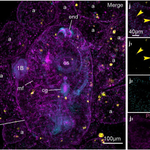
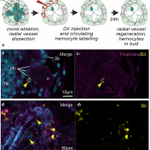
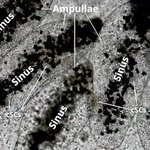
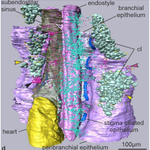
Hello, SciTwitter community! I am very thrilled to present our new paper in BioRxiv (doi.org/10.1101/2023.05.15.5…). In this work, we characterized a new stem cell niche in the ampullae of Botryllus schlosseri using different approaches. 1/16
Virginia Vanni retweeted

Presenting our new bioRxiv: we combine single cell expression and chromatin accessibility data with gene perturbations to model Gene – “Regulatory”?* – Networks, in whole adult planarians
X-plainer! 🧵👇
biorxiv.org/content/10.1101/…
*the question mark will be resolved at the end

Virginia Vanni retweeted
Our new bioRxiv! The Hydractinia Cell Atlas.
Neither the hermit crab, nor the dead mollusc that once occupied the shell, but the colonial cnidarian growing on top.
Can we learn more about how this association evolved using single-cell analysis?
🧵👇
biorxiv.org/content/10.1101/…

ALT Pic by Erling Svensen - it is Hydractinia echinata, not symbiolongicarpus
Virginia Vanni retweeted
Biological systems are complex. Sometimes, removing just one tiny piece can be catastrophic…
Can we study this with single cell analysis?
Read our new bioRxiv (or this X-plainer) to find out! Please RT/RP!
biorxiv.org/content/10.1101/…
Amazing work from the lab I’m proudly part of! Have a look at the allometric implications in planarians at single cell resolution (also a striking example of how scRNAseq can answer many and diverse questions!)

Are animals of different sizes made of the same cell types?
(or are there size-specific cell types?)
This is the question that we address in our recent bioRxiv, using planarians.
Here’s an X-plainer (formerly known as tweetorial) of our results.
biorxiv.org/content/10.1101/…

4
450