

All-in-one AI video creation app. Visualize ideas fast with seamless workflow. Create videos hassle-free. https://xitter.cf/t.co/TgfSWdr9MW
Boston, MA
Joined June 2021
- Tweets348
- Following70
- Followers1.2K
- Likes1K








Pinned Tweet
We didn't build Vimerse Studio because AI is cool.
We built it because we were tired of fixing the same production problems.
After editing hundreds of corporate training videos, we kept seeing:
• Bad lighting
• Echoey audio
• Inconsistent camera quality
• Presenters uncomfortable on camera
• Compliance changes after the "final" edit
So we stopped asking how AI could make video production faster. We asked how it could eliminate those problems altogether.
The result is the MNPI training video below.
Need to change one sentence?
Regenerate only those scenes.
No reshoots.
No microphones.
No conference rooms.
No matching lighting.
No trying to make new footage look like footage shot months ago.
For corporate training, AI's biggest advantage isn't speed.
It's predictable quality and painless revisions.
👇
#AI #CorporateTraining #Compliance
3
297
Clueso shipped an MCP Tuesday and hit #1 on Product Hunt.
The interesting part isn’t video generation. It’s what an agent can do after:
→ Swap assets
→ Update on-screen text
→ Rebrand an entire video library
→ Trim clips + adjust transitions
→ Make changes across multiple videos
Generation is expensive. Reusing and modifying existing videos could cut costs significantly.
At our agency, we often need to make changes without the original project files. This could be a huge unlock.
1
113
We gave GPT-6 Astra a 16:9 video and asked it to turn it into a 9:16 version for social media.
No simple center crop. It had to track the subject, anticipate movement, and dynamically adjust the framing.
The result? Pretty solid for a first pass.
It kept the subject in frame and made the vertical composition feel intentional.
AI is starting to handle the small, time-consuming decisions editors make every day.
Would you use this as a first pass? 👇
1
116
A Chinese client recently asked us to make 500 AI videos.
Meanwhile, many of our U.S. clients are still hesitant to use AI in their videos.
And the data reflects that gap.
Ipsos’ 2026 data:
🇨🇳 86% are comfortable with AI-generated ads
🇺🇸 49%
For AI-written TV/movie scripts:
🇨🇳 77%
🇺🇸 40%
The technology is here. But adoption is moving at very different speeds.
What do you think is holding the U.S. back?

1
97
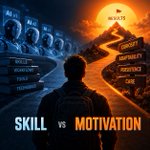
AI might make motivation more valuable than skill.
The tools you master today could be outdated tomorrow. The workflows you spent years perfecting could be replaced overnight.
So the advantage isn’t just knowing how to do something.
It’s caring enough about the result to keep figuring it out.
That’s how we approach AI video production: use AI where it creates leverage, and human expertise where accuracy matters.
The best tool is the one that gets you closer to the final result.

79
AI won’t just take jobs. It will create jobs we haven’t imagined yet.
We’re already seeing it in video.
AI can generate the product video, but humans still catch the wrong proportions, changing buttons, and inconsistent details.
AI handles the heavy lifting. Humans bring judgment and precision.
That’s the future I see:
Less repetitive work. More room for creativity.
So the question isn’t just, “Will AI take our jobs?”
It’s:
“What will we create when video becomes this easy?”

61
The future of apps might be built by users, not developers.
AI is making it possible to describe what you need, build it, test it, and iterate.
We’re already seeing this in video.
Users describe.
AI builds.
Humans refine.
The question is shifting from:
“What can developers build?”
to:
“What can users create?”

69
MiniMax H3 Max Turbo is ridiculously fast. ⚡
We tested it with a cinematic video prompt.
Prompt → finished video: 1.39 seconds.
AI video iteration is getting FAST.
Watch the test 👇
145
AI can cut your video budget.
But can it cut the right corners?
A $3,000 video might become a few hundred dollars with AI.
Sounds like a no-brainer, right?
Not always.
We had a client create an entire product video with AI. It looked great at first, until the details started falling apart:
→ Product proportions were off
→ Buttons changed between shots
→ Product interactions looked unnatural
For a generic lifestyle ad, you might get away with it.
For a product where details matter, those inaccuracies can hurt credibility.
So don’t just ask:
“How much can AI save me?”
Ask:
“Can AI save me without hurting the result?”
AI is great for testing concepts before committing to a bigger production budget.
The goal isn’t to use AI for everything.
It’s knowing what to generate, what to shoot, and where AI actually saves you money.
Thinking about using AI for your next video?
DM “AI VIDEO” and we’ll help you figure it out.

58
AI can turn a bad idea into a very polished mistake.
AI moves fast. Give it the wrong direction, and it can scale that mistake before you realize what happened.
One bad instruction can become an entire page, video, or campaign.
We’ve seen this with AI video.
A client tried creating an entire product video with AI. It looked great at first.
Then we noticed:
→ Proportions were off
→ Buttons changed between shots
→ Small details became inconsistent
The lesson?
Don’t just ask:
“Can AI do this?”
Ask:
“Should AI do this?”
AI gives us more power.
That means our decisions matter more.
Think first. Then click.
What’s one thing you wouldn’t trust AI to handle completely on its own?

57
AI video isn’t about using AI everywhere.
Just because you can make 100% of a video with AI doesn’t mean you should.
We recently had a client try to create an entire product video with AI.
The result looked great at first.
Then we noticed:
→ Buttons changed
→ Proportions were off
→ Small details became inconsistent
That’s when it clicked:
The question isn’t “How much AI can we use?”
It’s “Where does AI make this video better?”
Our rule:
🎥 Precise product details? Shoot it.
🤖 Concepts, environments, simple motion? Use AI.
🔀 Need both? Combine them.
AI doesn’t have to replace production.
The best results come from knowing when to use AI and when not to.
What’s one shot you still wouldn’t trust AI to create?

57
AI video is getting harder to spot.
The EU is changing the rules.
As AI content becomes more realistic and widespread, transparency matters more than ever.
The EU AI Act is introducing transparency requirements for certain AI-generated and manipulated content, including deepfakes.
At Vimerse Studio, we’re building with this shift in mind:
🛡️ Transparent AI workflows
👤 More creator control
⚖️ Responsible AI use
🔎 Compliance-ready workflows
🔐 Trust and accountability by design
We don’t see regulation as slowing AI down.
We see it as part of building better AI.
AI video is moving fast.
Responsible production needs to move with it.

49
AI won’t replace editors.
It’ll raise the bar for great ones.
When AI can generate 10 good shots in seconds, the valuable skill isn’t making the footage.
It’s knowing:
• Which shot to choose
• What to cut
• How to pace the story
• How to direct AI
• How to make it all feel cohesive
AI handles execution.
Editors handle taste and decisions.
The role is moving upstream:
From “How do I make this?”
to “What should this be?”
AI made creation faster.
It made taste more valuable.
What skill do you think will matter most for editors in the next 2–3 years?

39
1 AI video is easy. 100 is a different story.
100 clips means 100 voiceovers, prompts, images, audio files, aspect ratios, and more to manage.
That’s where things get messy.
Vimerse Studio handles the work behind the scenes, so 100 videos can feel like making just one.
DM “VIDEO” to see how.

57
AI isn’t just answering you anymore. It’s starting to judge you.
As AI gets more powerful, companies are adding more safeguards. But sometimes, it’s not just blocking illegal actions. It’s also blocking things that might be misused.
So where’s the line?
Is that safety, or is AI starting to police our intentions?
Curious to hear what you think.

50
Every few weeks, there's a new AI model promising better quality, faster generation, or lower costs.
And they're all getting better.
But for most creators, the bottleneck isn't the model anymore.
It's the workflow around it.
Switching between tools. Moving files. Waiting on exports. Keeping everything in sync.
The next big leap in AI won't just be smarter models.
It'll be removing the friction between them.
What's the biggest bottleneck in your workflow today?

Everyone is chasing the newest AI model.
But creating better videos isn't about adding more tools to your stack.
The real advantage comes from reducing friction between every step. Less switching tabs. Less downloading and uploading. Less time managing files.
The teams that publish consistently aren't always using the "best" AI model. They're using the best workflow.
What's the biggest bottleneck in your AI video process today?
#AI #AIVideo #GenerativeAI #VideoCreation #WorkflowAutomation

39
A prospect likes the proposal... but still won't sign.
This sample video walks through the conversation step by step, explaining how the salesperson uncovers the real concern, addresses hesitation, and moves the discussion forward without applying pressure.
A practical example of how realistic AI-generated videos can be used to create engaging, scenario-based learning for sales teams.
#AI #CorporateTraining #Sales #LearningAndDevelopment #AIVideo
59
The best thing about AI isn't the answers.
It's having a place where no question feels stupid.
That's why Vera is part of Vimerse Studio.
Sometimes the biggest breakthrough starts with:
"Why doesn't this scene feel right?
114
We talk a lot about AI replacing work.
I think we should be talking more about AI helping people learn.
Imagine turning hours of research into a one-minute video that actually makes someone curious enough to keep learning. That's one of AI's most underrated superpowers.
What subject do you think AI can make dramatically easier to understand?
66
What happens when AI generated people become impossible to tell apart from real ones? With Seedance 2.5 in early July, we may get there.
Will audiences still value human performers, or will they care more about the message than how it was created?
What about stories that are impossible or incredibly expensive to film? A journey through space. Dinosaurs roaming the Earth. Entire worlds that only AI can create.
As AI continues to improve, the line between AI and non AI content will become harder to see. The conversation may shift from who created the content to whether the content is worth watching.
AI is already making production faster, more affordable, and more accessible.
So the real question is this.
Should creators start using AI today to future proof their workflow?

167