

check the highlights tab - email: [email protected]
Joined February 2017
- Tweets3.2K
- Following1.7K
- Followers4.4K
- Likes86.5K








abdullah retweeted

I built a growing gallery of motion graphics made with Claude Opus 5.5, each shown next to the prompt or skill that made it.
226 so far, all pulled from posts here and credited to their creators.
prompt-motion.com
he definitely did the Andrew Ng machine learning coursera course at some point

Ben Affleck reveals he writes Python, understands convolutional neural networks, worked extensively with GPUs, and used his celebrity status to get private looks at Google and OpenAI’s video models
“I’ve always been kind of into computers since I was young. Then, when film started to move from analog film to digital, I became more interested in that aspect of it. The visual-effects workflow for many years has included machine learning, so I can write pretty shitty Python scripts and stuff like that.
“With convolutional neural networks, which were the precursors to what the transformer can do, which is much more computation simultaneously, you would do things like look at what’s called a tensor. That’s the numerical translation of a visual image in numbers, like the batch number, the frame number and the red, green and blue values of each pixel in each frame. It’s just that simple. That numeric is called a tensor.
“You’d use a convolutional neural network to identify patterns that reveal what’s called edge detection or feature extraction, which is identifying patterns well enough to know, this is where the window ledge is, so we can more easily take the green-screen image out and replace it with something.
“That was familiar to me early on because, prior to Artists Equity, I had a small visual-effects company. I’ve worked with GPUs a lot too. The visual-effects guys said, ‘Hey, you should see. There are a couple: Google and this other company, OpenAI, are doing really interesting stuff with transformers in video.’
“I’ve learned that I can actually just call up and go, ‘Hey, it’s Ben Affleck. Can I come see what you’re doing?’ Sometimes people say yes, to my astonishment.”


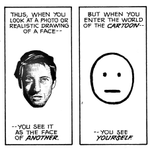
Also, as a sidenote, I think this idea of people seeing themselves in simplified cartoons is probably useful in advertising, and I think large brands like Nike are aware of this.
Every now and then they'll make an ad with an obscured/generic face and I think they do this specifically to "leave space" for the viewer to slot themselves into.
I think the point is to make it relatable and to give the user the chance to see themselves in the subjects shoes. Literally, in Nike's case.


abdullah retweeted
I built a Street Fighter inspired agent arcade game
Sprites and animations were generated by astra
agent-fighter-gamma.vercel.a…


there's a lot to learn from steamdb. it's just another UI for steam but with different and often better information architecture

abdullah retweeted
lots of twitter design engineering content is microinteractions and animation work, whereas the 95% should be ripping through feature prototypes and pulling weeds in the app*. You gotta put yourself on the critical path folks
*both of which produce excellent content btw
Left: Normal ASCII shader
Right: Shape-aware ASCII shader
ASCII characters are chosen based on their shape, so you get clearer edges
Vectors are calculated and compared with WebGPU compute shaders
It's based on an altered version of Alex Harri's approach. I'll link below
The way I build the vectors is slightly different:
The screen is divded into cells. Then I divide those cells into a subgrid. The average luminance of each cell in the subgrid is what I use to build the vector
I think the math also differs in some places because it all runs in compute shaders
alexharri.com/blog/ascii-ren…

I found this list of Three.js performance tips from @utsuboco. quite helpful
utsubo.com/blog/threejs-best…
