

PhD student @EP_UCL | cognitive science, moral & legal decision-making | 🇭🇰
Joined April 2018
- Tweets38
- Following73
- Followers79
- Likes284

Pinned Tweet
Excited to share that our paper is now published in PNAS! pnas.org/doi/10.1073/pnas.24…


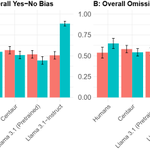
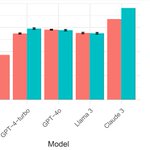
We updated this preprint (osf.io/preprints/psyarxiv/aj…) with a new study investigating sources of this yes-no framing bias and amplified omission bias in LLM moral decision-making. Results suggest that they likely arise from fine-tuning for chatbot applications. @MaxMa1er @FalkLieder

Vanessa Cheung retweeted

In this article, Maier et al. show that metacognitive learning from consequences can shape moral decision-making. @MaxMa1er @vanessachg_ @FalkLieder @RtnlAltruismLab
nature.com/articles/s41562-0…
Vanessa Cheung retweeted

New preprint w/ @MaxMa1er, @vanessachg_, Fiery Cushman, & @FalkLieder: Disentangling Model-Based and Model-Free Moral Learning
doi.org/10.31234/osf.io/azhn…
Excited to present this work at #CogSci2025!

Vanessa Cheung retweeted

Suppose Person A orders Person B to do something harmful, and Person B complies. Who is then seen as more of a cause of the harm - Person A or Person B?
Intriguing new research from @vanessachg_ and @david_lagnado
osf.io/preprints/psyarxiv/86…

We updated this preprint (osf.io/preprints/psyarxiv/aj…) with a new study investigating sources of this yes-no framing bias and amplified omission bias in LLM moral decision-making. Results suggest that they likely arise from fine-tuning for chatbot applications. @MaxMa1er @FalkLieder
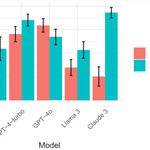
New preprint with @MaxMa1er and @FalkLieder, titled "Large Language Models Amplify Human Biases in Moral Decision-Making." In this paper, LLMs and participants make decisions in realistic moral dilemmas. We found that LLMs exhibited stronger omission bias than participants.

Vanessa Cheung retweeted

We updated our preprint on moral learning, now titled "Metacognitive Learning from Consequences of Past Choices Shapes Moral Decision-Making," with three new experiments and computational modeling to capture differences in individual learning styles.
@vanessachg_ @FalkLieder

New preprint with @MaxMa1er and @FalkLieder, titled "Large Language Models Amplify Human Biases in Moral Decision-Making." In this paper, LLMs and participants make decisions in realistic moral dilemmas. We found that LLMs exhibited stronger omission bias than participants.
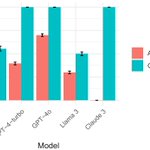
Finally, we also looked at decisions in social dilemmas that pitted self-interest against the greater good. Here, the LLMs were, on average, more altruistic than participants.

1
252
Link to preprint here: osf.io/preprints/psyarxiv/aj…

179
Vanessa Cheung retweeted
New Cogsci preprint, "Introducing the Extinction Gambling Task," with Adam Harris, David Kellen, and
@HenrikSingmann. We introduce a risky choice task in which participants can lose their (entire) bonus pay when choosing the risky option and drawing the extinction event.

New preprint with Mengxuan Qiao and @david_lagnado: "Attribution of Responsibility Between Agents in a Causal Chain of Events," which was accepted as a talk at CogSci 2024! osf.io/preprints/psyarxiv/86…
In this paper, we explored how people attribute causal responsibility in a causal chain of events, where an agent A instructs an intermediate agent B to harm a victim. Do laypeople consider A or B to be more responsible of this crime?
1
1
167
Vanessa Cheung retweeted

🎉 We are delighted to announce that our abstract got accepted by #SPSP2024 pre-conference on Moral Psychology.
spsp.org/events/annual-conve…
Malleable Morality: Investigating Moral Learning and Its Mechanisms 🧵 (@MaxMa1er, @vanessachg_ , @FalkLieder)
dx.doi.org/10.13140/RG.2.2.1…
Vanessa Cheung retweeted
Happy to share our manuscript, "A reinforcement-learning meta-control architecture based on the dual-process theory of moral decision-making", which was accepted to the NeurIps workshop "AI meets Moral Philosophy and Moral Psychology"! (with @vanessachg_ , @FalkLieder )

Vanessa Cheung retweeted
New preprint with @vanessachg_, @BartosFra, & @FalkLieder "Learning from Consequences Shapes Reliance on Moral Rules vs. Cost-Benefit Reasoning". Using realistic moral dilemmas with outcomes, we show that moral decision-making is shaped by experience (doi.org/10.31234/osf.io/gjf3…).

Vanessa Cheung retweeted
Suppose you do something bad. Will people blame you more if you knew it was wrong? Or will they blame you less?
The answer seems to be: They will think your act is more wrong, but your character is less bad
@yorl
sciencedirect.com/science/ar…
New CogSci proceedings preprint: "Defendant Character Influences Mock Juror Judgments of Blame, Guilt, and Punishment" with @david_lagnado !
psyarxiv.com/69jh7
Vanessa Cheung retweeted

New paper w/ @david_lagnado now out in Cognition! sciencedirect.com/science/ar…
Here, we assess how competing explanations of the same evidence are structured, evaluated and compared in the context of legal scenarios.