

The Institute for Stem Cell and Regenerative Medicine at the University of Washington is changing the way human beings confront chronic disease.
- Tweets1.2K
- Following414
- Followers1.1K
- Likes1.2K




ALT In this work, we employ de novo protein design methodologies to generate a suite of self-assembling multimeric proteins, whose step-growth heteropolymerization into bulk hydrogels and condensates can be exogenously triggered through small-molecule addition. Our results highlight how changes in programmed multimer valency and their triggered assembly yield materials with varying structures and viscoelasticity. We anticipate that these approaches will prove useful in rapidly generating large libraries of stimuli-responsive biomaterials that are precisely tailored to specific applications in the biosciences and beyond.


ALT Jen Davis, senior author of Science paper published this week on cells that can both repair and harm the heart, with Bella Reichardt in a genetic engineering lab at the UW Medicine Institute for Stem Cell and Regenerative Medicine.



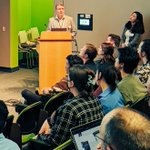
ALT The Inclusive Leadership Workshop, held in Seattle, Washington from May 5-8, 2025, is sponsored by the UW Institute for Stem Cell and Regenerative Medicine and the Office for Research and Graduate Education. The in-person, four-day program is for postdoctoral researchers from outside the University of Washington who are exploring academic career paths in regenerative medicine/engineering and related fields and who are committed to inclusive teaching, mentoring, and lab leadership. Postdoctoral researchers from marginalized and historically excluded backgrounds (e.g., Black, LatinX, Hispanic, Indigenous, disabled, LGBTQ+) are highly encouraged to apply. There are no program costs for the Inclusive Leadership Workshop. Travel and lodging will be covered. The priority deadline to apply for the Inclusive Leadership Workshop is January 12, 2025.


ALT Phototriggered release of various cargos, including soluble protein factors and small molecules, has the potential to correct aberrant biological events by offering spatiotemporal control over local therapeutic levels. However, the poor penetration depth of light historically limits implementation to subdermal regions, necessitating alternative methods of light delivery to achieve the full potential of photodynamic therapeutic release. Here, we introduce a strategy exploiting bioluminescence resonance energy transfer (BRET)–an energy transfer process between light-emitting Nanoluciferase (NLuc) and a photosensitive acceptor molecule–to drive biomolecule release from hydrogel biomaterials.


