

I co-found companies with experts ready to own outcomes, not give advice.
Singapore
Joined February 2008
- Tweets5.5K
- Following135
- Followers930
- Likes1.9K







Outcome-based pricing doesn’t remove labour.
The contract decides whose payroll the exceptions land on.
1
51
Technology has turned everything into digital content and we are now entering the phase where everything can converted be into a bet.
What started as simple gamification loops was institutionalized by seminal books like Nir Eyal’s bestselling Hooked, which gave product teams a model for building habit-forming products.
Crypto entered the scene and was one of the early models for making speculation feel like a consumer product.
During Covid, WallStreetBets took this further as Robinhood brought options trading to a much larger audience. Roaring Kitty’s GameStop thesis became the defining story which has become a legendary meme and resulted in several documentaries and movies.
Today, Polymarket and Kalshi have completed the loop by making any event into a wager.
Regardless of what the investigation described in the article finds, we are now living in a world where private information about almost any event can become an edge that you can bet on.
🤖 Made with AI

1
3
67

Work gave us a pathway to convert our competence into moving upwards in society. It wasn't equally open to everyone, but people didn't need to like you to acknowledge you were good at what you did.
If that path starts to fracture, social mobility could weaken considerably. We could also lose a signaling mechanism for others to place us.
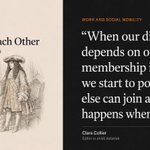
This essay provided historical examples on how aristocratic societies organized themselves when their material needs were met but they still needed a way to signal their worth to others. Your standing depended on who you knew and the family you came from. Moving up meant gaining the approval of those who already belonged.
The author leaves us with difficult questions as machines start to take on more of the work through which we could prove ourselves.
If you couldn't use work to improve your standing in society, what other paths would be open to you?

1
3
82

Steve Kerr shared a story about Roger Federer answering the question from one of the Warriors on how he was able to sustain success for as long as he did.
In Kerr’s retelling, his answer didn’t include the cliches of working harder than everyone. Rather, it talked about how he makes his kids breakfast every day and drops them off at school. He has a routine he repeats daily that hones his craft without killing his body. He has lunch with his wife and in the evening they cook together as a family.
That routine is on repeat and one he attributes much of his success to.
Listening to the story, I felt a tension within me. There may have been times when that routine was disrupted and Federer had to work much harder, then as his life changed he adjusted. We don’t get the whole history when we hear the story.
We hear snapshots like Federer finding balance or Kobe doing early-morning workouts before anyone else arrives to train. While listening to each of these we try to superimpose other people’s balance and outcomes onto our own lives because that’s what we believe it takes and what a good life should look like.
But a good life can look very different to two different people. If we restrict ourselves to judging that someone’s life is good because they achieved a certain outcome, that blurs the reality, because we romanticize it. That’s where I need to regularly catch myself and not do that.
While the story is great, each of us will find balance in our own ways, and each of us needs to define what success means to us, rather than what society deems the prize to be.
🤖 Made with AI

1
4
135
As input cost observability goes down, the push by clients to compress fees will only get stronger. In most cases a hybrid fee structure will appease both parties as each will have skin in the game.
But this will add considerable pressure to margins if fees fall faster than delivery costs, which impacts the formation pipeline and leads to much bigger long term restructuring of what the firm looks like.

1
46

BPO companies aren’t dead. Their recent stock rally also doesn’t remove the structural risk in their current operating model.
The AI infrastructure trade fractured over the last 30 days. Capital rotated into cash-generative businesses.
framebreak.com/posts/artifac…

2
246
The better you are at solving problems, the harder it is to stop solving them.
Every fix is rational.
Accumulation is what kills you.
1
78
You cannot follow a flowchart and expect to win.

Despite the proliferation of startup pundits over the last 25 years, no one knows how to make startups more successful.
The New Pundits have sold millions of books, and their entrepreneurship “science” is taught in universities and accelerators all over the world. But none of it has made a difference.
Startups are no more likely to survive today than they were in 1995. By some measures, they are even less likely to work.
In his latest essay, legendary venture investor @ganeumann presents the data, diagnoses the problem, and proposes something that might actually work.
It involves Robert Boyle, Peter Thiel, Paul Feyerabend, and Lewis Carroll’s Through the Looking-Glass.
colossus.com/article/we-have…

1
103
The skills that matter now were created by doing the work that's being automated.
We labeled it grunt work but it was the training ground where judgment and taste developed.
Cut the path from junior to senior and the problem runs deeper than a talent shortage. We're cutting the system that produced the talent in the first place.
1
64
Introspection was always supposed to have an action loop.
Socrates examined so he could live better.
Aurelius journaled so he could govern better.
Over the last century the action loop got removed and examination became the perpetual end state.
An entire industry exploded around keeping people examining because action ends the engagement.
63
There are always levels in the game, you might be crushing it and then you see someone playing at a higher level and realize you can always go further.
It sounds like hustle harder but it's not.
Excellence is a process, whether that's through pain or consistency or edge, whatever you have to do to get through it.

"Go all the way until it hurts. If you're doing something and it's easy, it's not valuable." - @travisk
"If anyone says a strategic thing was easy, I'm like, 'You messed up. You could have gone way further. More competitive advantage. More differentiation. Get it together.'"
71
Firms are cutting costs and claiming transformation, but they're unwilling to let the old form die, and increasingly what's left behind is the hollowness Will writes about here.


59
"Projects that used to require big teams now get accomplished by a single very talented person." Zuckerberg
Society built its entire infrastructure around a normal distribution. Education, hiring, career ladders, compensation bands.
All of it assumes people are roughly average and can be trained into competence.
The system is still producing people for a bell curve world, the market is reconfiguring around the power law.

Block cuts 40% (~4,000 people). Stock jumps 24%.
Atlassian cuts 10% (~1,600 people). Stock moves 1-3%.
Both CEOs cite technology but the market reacts differently.
It comes down to leverage and whether the market believes the technology is an accelerant for your business or not.
Atlassian needs to figure out its place in the rapidly changing technology stack or it gets left behind as a tool which manages artifacts which are no longer relevant.

Atlassian CEO Mike Cannon-Brookes announced plans to cut about 1,600 workers, saying the shift to AI was a key factor behind the move bloomberg.com/news/articles/…

99