

Do you have enough compute for what's coming?
Florida
Joined May 2026
- Tweets1.6K
- Following291
- Followers124
- Likes5.2K




I'm trying meshy out for my game. Here's a referral link for free stuff. meshy.ai/?utm_source=meshy&u…


🥳

We found DeepSeek V4.1 Flash 1017 beats GPT 6 Sol on our multi-step offensive cybersecurity task. Sol was tested via the Daybreak trusted access program.
We have been building a cybersecurity benchmark based on simulated corporate networks. This is a valuable indicator for the cyber-risk a model poses if in the hands of a bad actor. We plan to make the full evaluation public in the coming weeks but wanted to share our first immediate finding here.


Recipe is MiaAI-Lab/DeepSeek-v4.1-Flash-DGX-Sparks, ring transport is FujitsuPolycom/sparkring, tuned profile from knapcio's TP4 fork.
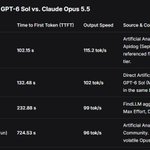
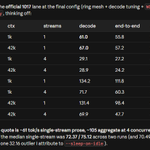
In deepseek harness I get 70-100 tok/s single decode which is approaching frontier API speeds.


I hope someone out there is testing the shit out of deepseek right now looking for sleeper agent activity.
This kinda stuff could kill local AI
arxiv.org/abs/2401.05566


Charles retweeted

When I was writing Unreal Engine 1, my time was divided as follows:
- Around 30% went to seriously deep coding on hard problems: assembly language texture mappers, C++ BSP trees, data persistence, object oriented systems design, and networking.
- Around 70% was just typing and refactoring large bodies of code needed for a complete engine feature set. This was not hard, and while I was doing it my mind was mostly on the deeper coding topics, thinking and planning for what's next. It didn't feel much different from vibe coding today, except that it was just me typing code on an IBM Model M keyboard rather than prompting it and reviewing the results.
So, it has always seemed perfectly logical that we would rely on AI for that 70%, once the AI could do it with a similar quality standard as we could, which has never been perfection. It came as no surprise that, after a few years of AI model evolution, it was able to take the reigns on that 70% and free up programmers' time for more valuable tasks.
What's more of a surprise is the emergence of AI as a sort of insta-Carmack able to solve hard technical problems quite cleverly and often cleanly, and that it's able to reason about and work in complex 3D scenes both by operating the tools and by directly understanding the raw data files.
I abandoned assembly language in 1998 when out-of-order CPUs made much simpler C/C++ code faster, and never I missed it. If prompting through architectural documents, concept art, and design plans can transcend typing code and tweaking vertices, that will enable developers to spend their time on higher-level, higher value technical and creative tasks.
What matters is the end product, whether it's a game or an engine. Anything developers can do to try out more ideas and make better software and games faster is a win for everyone.

