

Working with creative & community organisations to show high quality, thought-provoking work created by disabled artists. Instagram: @proudandloudart
- Tweets2.2K
- Following873
- Followers1.1K
- Likes1.4K








ALT 'CRIPtic Arts' in black, white and blue letters - the background is white on the left and black on the right creating a rectangle around the words.


ALT Slide 1 of 6. Dear Shakespeare’s Globe. We are writing to express our deep concern around the casting of Michelle Terry as Richard III, in your forthcoming Summer Season. We’ve tried to contact you to resolve this off-line and internally – to no appropriate resolution – and now believe an open letter is the only solution. We, the undersigned, who are members of the disabled community and allies from across the theatre and arts industry, are outraged and disappointed by the casting of a non-physically disabled actor in this role, and the implications it has for not only disability, but the wider conversations surrounding it. Richard III is an iconic disabled character. Perhaps the most famous disabled character in the British canon. He is one of the first characters who experiences and documents the socialised effect of an attitudinally disabling society.

ALT Slide 2 of 6. How those attitudes embitter us, break us; ruin our integrity and character; and how Richard, himself, salvages his scraps of power into a vile immorality, as the only way to survive and rule as a disabled man. The script frequently mentions how he is disabled from birth, and the effects of the viewing of his disabled form affects his relationships, power, status and perception. It is indisputable this man is disabled, if not a defining disabled character of all time. Richard’s identity is directly linked to his physical impairment, or self-titled “deformity”. It is not an acquired sickness or disability. It’s about a from-birth socially ostracising difference. To see The Globe announce this casting within this production is shocking. His disabled identity is imbued and integral to all corners of the script. The production cannot be successfully performed with a non-physically disabled actor at the helm, steering the complex and vitally important narrative.

ALT Slide 3 of 6. It additionally contravenes the Globe’s ethos of diversity and inclusion across all protected characteristics, not to mention the striving for representation of a full cross-section society in the canon’s work. There’s been incredible progress made across all facets and routes of the industry regarding disabled inclusion, including the casting of disabled actors across disabled and traditionally non-disabled roles. But this role belongs to us. It is offensive and distasteful for Richard to be portrayed by someone outside the community. It reduces disability down to a disguise and physical act, rather than a true grounded understanding of what disability means. Disability means exclusion, ostracisation, pain, anger, a lifetime of fighting for basic rights. It isn’t something one can wear for the sake of a show, and remove in the dressing room.

ALT Slide 4 of 6. Disability is a protected identity that is often disrespected, ignored, adopted by outsiders for artistic purposes. After the incredible hardship that we have suffered over the last few years seeing rights stripped away by this government, leaving our community depleted, tired, forgotten; it is more important than ever to stand with us and work harder to implement more inclusive working practices and casting ethos. Consultation and engagement with disabled collaborators leads to authentic portrayals that send powerful messages to the world and how it views us. We ask that you respect your disabled peers and artists enough to let them take control of their own narratives. There can be Nothing About Us Without Us. Additionally, we believe in conversation around this production’s exploration of ‘charismatic narcissism’. Using mental health conditions as explanation for obsessive egotism and abominable manipulative behaviour directly negates the agency in odious conduct.

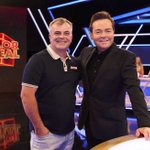
ALT Simon Gregson leaning on the deal or no deal desk, smiling.


ALT Simon Gregson and Stephen Mulhern smiling in the ITV Deal or No Deal studio.

ALT Two flyers on a table. The first flyer is in focus and reads: 'Heart of Salford 2023 Awards Brochure in graphic text'


ALT A lime green vertical banner to the left hand side, which reads '2024 Development Producer, Apply Now!'. Above this text are the CRIPtic Arts & Arts Council England Logos. The background is black, with slanting turquoise hollow text reading 'CRIPtic 2024' which repeats again and again.

ALT Pink and red geometric graphic image. White text in a black box reads: 'IT ALL STARTS WITH A SPARK'. The Arts Council logo and Manchester City Council can also be seen in the right hand corner.


ALT Withington Baths Christmas Markets Sat 2nd December 10am to 2pm.


ALT Shortlisted Volunteer of the Year nominees


ALT A turquoise vertical box on the left hand side reads ‘2024 Artist Development now open!' Above this are the CRIPtic Arts & Arts Council England Logos. The background is black, with repeated slanting turquoise text reading 'CRIPtic 2024'.

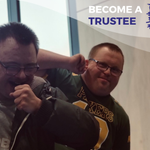
ALT Two performers are pictured appearing happy and smiling. One has their hand tugging their ear as the look into the camera lens. The Proud and Loud Arts logo is in the right hand corner alongside graphic text in white and blue that reads: 'Become a Trustee'.


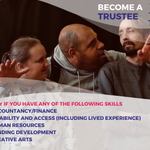
ALT An image of three performers looking at each other fondly. Overlayed in graphic text in White, Blue, and Pink with a mid-transparent white background reads: Become a Trustee. Apply if you have any of the following skills: Accountancy/Finance, Disability and Access (including lived-experience) Human Resources, Funding Development, Creative Arts'. The Proud and Loud Arts logo is in the right hand corner.


ALT White text on a bright green background reads: '"CAN'T RECOMMEND THIS OPPORTUNITY ENOUGH!!! I recently stepped down from the board at Proud and Loud Arts after eight remarkable years. New trustees will be joining at an incredibly exciting time for the organisation; part-way through the first year as an Arts Council England NPO, that has seen the company receive core funding for the first time in its 23-year history. There are also some really interesting plans afoot." It continues. - Jenni Willows, Proud and Loud Arts Trustee 2015-2023.' The text is bordered by a thin black lined box.
ALT White text on a bright green background reads: '"CAN'T RECOMMEND THIS OPPORTUNITY ENOUGH!!! I recently stepped down from the board at Proud and Loud Arts after eight remarkable years. New trustees will be joining at an incredibly exciting time for the organisation; part-way through the first year as an Arts Council England NPO, that has seen the company receive core funding for the first time in its 23-year history. There are also some really interesting plans afoot." It continues. - Jenni Willows, Proud and Loud Arts Trustee 2015-2023.' The text is bordered by a thin black lined box.