Pinned Tweet
A thread for innovations from the Igbo area, focusing on indigenous social structure as it relates to technology, arts and architecture.
"[…] The dances are not all uniform; usually the displays of one town differ in character and movement from those of its neighbours."
G. T. Basden (1921). "Among the Ibos of Nigeria". p. 132. Full book: archive.org/details/amongibo…
"[…] The precision with which this is done, and the execution of the many intricate figures, are marvellous.
The professional dancers are very well paid for their services, and when fulfilling an engagement are liberally entertained. […]"
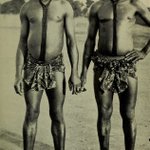
"[…] Every movement is clean, sure and decided, showing absolute control of the muscles. For some of the dances the performers wear clusters of shells around one or both ankles, and these are shaken simultaneously by all the members of the party. […]"
"[…] The practice of such dancing leads to a wonderful development of the back and abdominal muscles. Moreover the movements are free, there is nothing rigid about them, and they produce no sign of “ physical exerciser ” stiffness. […]"
"[…] The body movements are extremely difficult and would probably kill a European. The whole anatomy of the performer appears to be in serious danger, and it is a marvel that his internal machinery is not completely thrown out of gear. […]"
"GUINEA-FOWL DANCERS"
"These are professional dancers. Round their ankles are clusters of shells."
"[…] For these set dances, e.g. those executed by the “ Guinea-fowl dancers,” the physical strength required is tremendous. […]" Internet Archive.
Ụkpụrụ̄ retweeted
Igbo and English. Dmitri van den Bersselaar "Creating 'Union Ibo': Missionaries and the Igbo Language".
These costumes are worn especially in areas where Ekpe was government and court, among different cultural groups. They are usually made by expert men from specific lineages known for the skill. These come in different colours and styles.
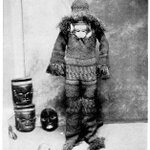
"[…] One of the white masks is seen worn by the boy in the initiation dress." H.P. Fitz-Gerald Marriott (1900). "A West African Tribe and its Secret Societies." The English Illustrated Magazine, Vol. XXII, No. 198. pp. 570-571.
"[…] The wooden masks that these initiates wear are either white or coloured, but not pure black all over; the latter are only worn by the full Egbo members. […]"
"[…] Together with its hood, it is all made in one piece, and you slip into it though a hole at the chest. The hands and feet are hidden in a thick fringe of grass, and falling over the shoulders and mask is a mane of the same herb. […]"
"[…] This belonged to the Egbo of the Ibibio tribe; it is composed of twisted fibre of the Raffia palm closely knitted together, a pattern being produced by some of the threads being dyed red and others black. […]"
"[…] Here the lads are kept for a period varying [...] from several weeks to a year. Whenever they leave the sacred bush with the rest of the procession they are disguised in their initiation dresses , such as the one in our Illustration. […]"
"[…] They are placed in the charge of those leaders of the tribe who direct the initiation ceremonies of the secret society[.] […] The boys are kept in a portion of the forest sacred to the society where none dare go but the members[.] [...]"
"In most West African districts, you will find that the boys of the better classes are taken away at a certain age--between ten or fourteen--to prepare them for the responsibilities of manhood. […]"
Photo and quote via the RAAI.
Ụkpụrụ̄ retweeted
Double edged sword with a fluted blade from Arochukwu, c. 1932 or earlier. Pitt Rivers Museum.