

UCP Radar is an AI-powered product feed optimization platform that helps your products become more visible across Google Shopping, Performance Max, and AI-power
Joined July 2026
- Tweets54
- Following3
- Followers11
- Likes8





How to use UCP Radar, step by step:
Connect Google Merchant Center, optimize your feed, review every rewrite, and add it back as a supplemental feed.
Brand protection: it does not invent information that is not in your data.
#ProductFeed #GoogleMerchantCenter #AIShopping
A shopper asks an AI agent for a product. The answer draws on the product data the agent can reach.
Google's own advice goes beyond the basics: specific titles, descriptions with the most relevant features, highlights and details.
#ProductFeed #GoogleMerchantCenter #Ecommerce
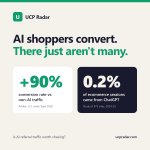
AI shoppers now convert 90% better than non-AI traffic (Adobe, U.S. retail).
They're also about 0.2% of ecommerce sessions.
On 100 AI sessions, that's 2 extra orders. Track revenue per AI session, not sessions.
ucpradar.com/blog/ai-referra…
#Ecommerce #AISearch #ConversionRate #GoogleShopping #ProductFeed

Most "optimize for AI shopping agents" advice starts with content.
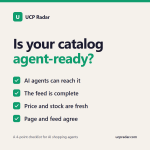
Start one step earlier: can an agent reach your product, read it, and believe it?
Four checks. One afternoon.
1. Access
Open robots.txt, then your CDN and security bot settings. Training crawlers and search crawlers are different agents. OpenAI says GPTBot relates to training, while OAI-SearchBot is what surfaces sites in ChatGPT search. A blanket bot block can quietly take you out of AI search.
2. Feed
Titles that lead with brand and product type. Color, size, material, gender and age group filled in wherever you have the data. Real GTINs only. Never invent one.
3. Freshness
Do sale prices and out-of-stock changes reach the feed the same day? If not, that is your slowest link.
Pick ten products. Compare page against feed: price, availability, title, key spec. Fix every mismatch at the source.
One extra: view the page source. If price and stock only appear after a script runs, some fetchers may see an empty page.
None of this guarantees a recommendation. Nobody can promise that. It removes the reasons a product gets skipped, and it carries over to Google Shopping and Performance Max, which read the same fields.
Which of the four would fail first in your store?
#AgenticCommerce #Ecommerce #ProductFeed #GoogleMerchantCenter #AISearch

Full checklist, including the crawler table:
ucpradar.com/blog/agentic-co…
1
17
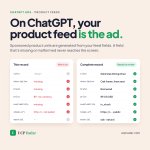
ChatGPT ads don't have a headline field. OpenAI builds them straight from your product feed.
Price with no currency code? Image URL that isn't public HTTPS? That product won't run, whatever you bid.
ucpradar.com/blog/chatgpt-pr…

Google's product data specification never mentions HTML. Not on the description attribute page, not in the feed format guides. Tags, markup, escaped entities: absent.
The tooling around it disagrees.
Google for WooCommerce runs the description through wp_kses with every tag's attribute list emptied. The tags survive, every attribute is deleted. That is why the links in your feed have no href and the images have no src.
It then cuts at 5,000 characters with a blind substring, which can sever a tag halfway. For variations it prepends the parent product's description first. All of that sits in WCProductAdapter.php and has been stable across releases.
There is a discussion on the plugin's own repository from a merchant reporting descriptions full of HTML, CSS and comments. January 2024, no maintainer has replied.
Google does name it, just not where you would look. The Manufacturer Center description spec says to avoid all caps, symbols, HTML tags and promotional text.
Shopify documents none of this, which is most of why merchants never find out.
#GoogleMerchantCenter #ProductFeed #GoogleShopping #MerchantCenter

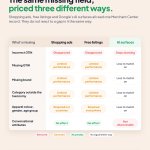
Missing a GTIN gets you a warning. Google calls it limited performance: the product still serves, with fewer impressions and clicks.
Leaving conversational attributes empty gets you nothing at all. No warning, no effect on approval.
Those are the fields built for AI answers.
Colour, gender and age group are required for free listings on every Apparel & Accessories product, in every country.
For Shopping ads, only when you target six specific markets.
A catalogue can be clean for ads and short for free listings at the same time.

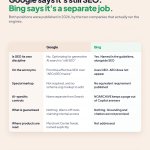
Two engines gave their position on optimizing for AI answers in 2026.
Google: optimizing for generative AI search is "still SEO". Bing: names GEO as its own practice, next to SEO.
Neither guarantees anything. For products, Google points at Merchant Center feeds, not markup.
#AIShopping #SEO

Google approved your feed. That is not the same as an AI being able to read it.
We cut a 48-second walkthrough of what UCP Radar does between the two: connect GMC, score every product, complete the gaps, ship a supplemental feed.
Your store stays untouched.
Score your feed free at ucpradar.com
#agenticcommerce #googleshopping #merchantcenter #universalcommerceprotocol #ucp #acp #pmax #productfeed
Your product data leaves through two doors: Merchant Center, and the retail API and MCP endpoints assistants read directly.
It lands on AI Mode, ChatGPT and Shopping ads, and each answers before anyone loads your site.
A page can be persuasive. A feed can only be complete.
#AgenticCommerce #ProductFeedOptimization #MerchantCenter #GoogleShopping #GoogleAds

Five steps from a question to a completed order:
1- Discover, the agent reads the feed
2- Match, it filters on attributes
3- Cart, via the protocol not your UI
4- Delegated payment, a token not a card
5- Order, you stay Merchant of Record
3 and 5 your platform carries. 1 and 2 are yours.
#AgenticCommerce #AICommerce #FeedOptimization #GoogleShopping #MerchantCenter #UniversalCommerceProtocol #UCP

Search rewarded the best page. Assistants reward the best-described product.
A shopper fills gaps from a photo and a sizing chart. A model can't. It reads the feed, and what isn't there isn't part of the product.
Adobe, July: AI retail traffic +62% YoY, converting 60% better.
#AIShopping #AgenticCommerce #ProductFeed #ProductFeedOptimization

UCP Radar retweeted

AI Overviews are moving deeper into commercial search.
In our six-month study, their presence on commercial-intent SERPs grew 71%, while transactional-intent SERPs declined 5%.
We analyzed 600,000+ U.S. keywords across 10 industries from November 2025 to April 2026, measuring AI Overview presence by search intent, industry, CPC, and overlap with Google Ads.
📈 Finance commercial queries: +231%
💰 AI Overview + Google Ads: appearing together ~2x more often than a year ago
🔎 AI Overview SERPs: higher average CPC across most industries
AI optimization is moving deeper into the commercial journey. Brands need to identify which topics and products are triggering AI Overviews, connect those opportunities to their content strategy, and choose tools that can track visibility across the searches that matter most.
Full study: social.semrush.com/4gPkBEM.

Google's Universal Commerce Protocol, as of the April spec release:
Live: checkout, order, identity linking
Preview: cart, catalogue search
Coming: vertical extensions
You stay Merchant of Record.
Upstream of all of it: a protocol only moves data your feed already has.
#universalcommerceprotocol #ucp #googlemerchantcenter #merchantcenter #agenticcommerce

The scariest button in any feed tool: "optimize all."
Brand terms lock automatically, everything else gets enriched, and 98.2% of rewrites needed zero edits.
Sound off. It was built that way. ucpradar.com
#GoogleMerchantCenter #ProductFeed #Ecommerce #AgenticCommerce #UCP #UniversalCommerceProtocol
4/The catch: most stores maintain that data by hand. Thousands of products, a dozen fields each.
UCP Radar completes and continuously optimizes those fields from data your store already has — including every new product you add.
1
12
5/Want to know where you stand? See your AI Visibility Score, it shows which of your products AI can actually read.
Free: ucpradar.com

13