

Conspiracies for fun, science for keeps
We make the world.
Joined November 2009
- Tweets6.9K
- Following164
- Followers177
- Likes27.5K





47 retweeted

Whoops! Prime Minister Albanese has accidentally exposed Labor’s real censorship agenda.
He has now confirmed that the new social media “Digital Duty of Care” scheme is nothing more than a back-door attempt to resurrect Labor’s rejected Misinformation and Disinformation Bill, while boasting about it overseas to his elite globalist friends.
That’s despite his own Minister for Travel Expenses and Grand Final Rorts, Anika Wells, who also doubles as Labor’s Minister for Censorship, assuring Australians just two weeks ago that it “isn’t about misinformation”.
Australians are supposed to believe one story at home while Labor tells a completely different story overseas.
In his own words, Albanese admits these powers are being sold under the banner of “child safety” today, while laying the groundwork for much broader controls on speech and public debate tomorrow.
If there was ever any doubt that this legislation is a Trojan horse, the Prime Minister has just all but removed it.
Most revealing of all, Albanese has explicitly linked the need for new censorship powers to the rise of One Nation, declaring that “People are moving away from the centre and more and more to the extremes”.
In other words, Australians are abandoning Labor in growing numbers, rejecting the political establishment, and Labor's response is not to listen to them, but to seek new powers to police online debate and suppress criticism.
This is what governments do when they are losing the argument.
They stop defending their record and start looking for ways to control the conversation.
The truth is Labor cannot tolerate Australians questioning its failures on the cost of living, housing, energy prices, migration and government waste.
Instead of fixing the problems it created, it wants new powers to manage what Australians can see, hear and say online.
There appears to be no limit to how far this desperate Labor Government will go to protect its grip on power.
Albanese should scrap this censorship scheme immediately, stop grandstanding overseas, and get back home to deal with the crises Australians are living through every day.


47 retweeted

There are little girls and an infant wearing modesty garbs in this video. If you’d just take the time to ask yourself why tiny children in this culture are forced to wear clothing meant to mitigate male lust, you might just see why importing Islam is a bad idea.

47 retweeted

The fact that Tyler Robinson’s defense didn’t use ANY of Candace Owen’s “evidence,” is evidence.
Evidence that all her theories hold no water & would be completely inadmissible in court.
She’s doing this for the money.
She’s doing this for the fame.
And what she’s doing is profoundly evil.
47 retweeted

Underrated life advice: A good life is built by simply doing uncomfortable things sooner. The delayed conversation gets harder. The ignored problem gets bigger. The small repair gets more expensive. Peace is never found through avoidance. It’s found through direct early action.
47 retweeted

“I work the front desk at a small doctor’s office, and I wish people could see what happens on the other side of the phone.
Every day, older patients call us confused.
They are told to use the patient portal, upload documents, check lab results online, fill out forms before the visit, and confirm everything through a link.
Some of them do not know what a portal is.
Some do not have a smartphone.
Some have one, but they are afraid to click the wrong thing.
Last week, a man in his late 80s called about his test results.
He said, “Ma’am, I don’t mean to bother you, but the computer says I have a message and I don’t know how to open it.”
He sounded ashamed.
That broke my heart.
He should not have to feel ashamed for needing a human being.
Technology can be helpful. I understand that.
But when people who built this country are made to feel helpless because everything became a login and a password, we have gone too far.
Not everything needs to be an app.
Not every answer should be hidden behind a screen.
Sometimes people need a voice.
A patient person.
A real human who says, “Don’t worry, I can help you.”
Progress should not leave seniors behind.
Because one day, the world will move faster than us too.
And I hope someone is kind enough to slow down.
~Unknown
47 retweeted

A Japanese immunologist spent 20 years proving that the chemicals trees release into the air walk into your bloodstream, hunt down your stress hormones, and arm your immune system in ways no therapist or pharmaceutical has ever matched, and most of the data has been sitting in Japanese medical journals for two decades waiting to be translated.
His name is Qing Li.
He is a clinical professor at Nippon Medical School in Tokyo and the president of the Japanese Society of Forest Medicine. The Japanese government has been funding his research since 2004, and the body of work he has produced is the reason forest bathing is now an officially prescribed clinical therapy in Japan and Korea.
The story actually starts in 1982, when the Japanese Ministry of Agriculture, Forestry and Fisheries coined the term shinrin-yoku to describe the practice of slow, mindful walking in a forest. They did it for a practical reason.
Japan was urbanizing fast, stress-related illness was climbing, and the country had thousands of square kilometers of forest sitting unused. The idea was to give people a reason to walk into the trees... They had no idea what was actually happening to the human body during those walks until Qing Li ran the first proper experiment in 2005.
He took twelve healthy adult men on a three-day, two-night trip to a forest park. They walked for a few hours each day. Nothing strenuous. No prescribed routes or breathing exercises. They simply walked slowly through the trees, breathing the air, looking at the forest.
Li drew blood and urine samples before the trip, on the second day, on the third day, on day seven after returning home, and again on day thirty.
The numbers that came back from the lab were not what anyone expected.
The activity of a specific type of immune cell called the natural killer cell, which is the cell your body uses to hunt down cancer cells and virus-infected cells before they can spread, had jumped by roughly 50 percent during the forest trip. The actual number of natural killer cells circulating in the bloodstream had increased significantly.
Three different anti-cancer proteins that those cells produce, called perforin, granzymes, and granulysin, had all risen sharply. And the effect did not disappear when the men went home. The immune boost was still measurable on day seven and was still partially present on day thirty.
Two hours a day in a forest had upgraded the immune system for a full month.
Li ran the same experiment with women a year later and found nearly identical results. Then he ran it with a control group who took a three-day trip through an urban area with the same amount of walking, the same hotel quality, and the same diet.
The urban group showed no measurable change in natural killer cell activity at all. The forest was doing the work, not the vacation.
The mechanism turned out to be a class of airborne molecules called phytoncides. Trees produce these compounds to defend themselves against insects, bacteria, and fungi. Pine, cedar, oak, and cypress trees release them in particularly large amounts, especially in warmer weather and after rainfall.
When you walk through a forest, you are inhaling those molecules into your lungs and absorbing them through your skin, and once inside your body they appear to directly stimulate the production and activity of the very immune cells Li was measuring in his lab.
Roughly 50 percent of the health benefit of a forest walk, according to Li's data, comes from the chemistry of the air itself. The other half comes from what the forest is doing to your nervous system.
This is where it stops being only about the immune system and starts being about stress.
A separate Japanese research team measured cortisol, the body's main stress hormone, in 84 participants across 35 different forest sites. They drew samples before and after a 30-minute walk in each forest and compared them to control walks in matched urban environments. The cortisol levels of the people who walked in the forest were lower than the cortisol levels of the people who walked in the city by a significant margin. Their heart rates were lower. Their blood pressure was lower.
The activity of their parasympathetic nervous system, which is the part responsible for rest and recovery, had gone up. The activity of their sympathetic nervous system, which is the part that drives fight or flight, had gone down.
Then a researcher at the University of Michigan named MaryCarol Hunter ran the cleanest version of this experiment ever done. She recruited participants from a city and told them to take a nature pill three times a week for eight weeks.
They were free to choose the time, the place, and the duration of the nature experience, as long as it was outside, in daylight, and free of phones, conversations, and aerobic exercise. They sent her saliva samples before and after each session so she could measure cortisol changes accurately and rule out the normal daily drop in stress hormones that happens to everyone.
The result was that participants experienced a 21.3 percent drop in cortisol per hour spent in nature, with the biggest payoff happening between minutes 20 and 30 of the walk.
After that, the cortisol kept dropping, but more slowly. The threshold dose for measurable stress relief was just 20 minutes outside in something that looked and felt like nature.
What none of this means is that nature is a substitute for therapy or for medication when someone genuinely needs them. Therapy treats different things than a walk does, and Li himself has been careful in interviews to call forest bathing a complementary intervention rather than a replacement for clinical care.
But what the research has settled is that the human body has a physiological response to being among trees that operates on the same biological systems modern medicine is trying to reach with drugs and clinical protocols, and that response is fast, measurable, and free.
The strangest part of Li's work is the implication he keeps repeating in interviews. The average person now spends more than 90 percent of their life indoors. Their cortisol stays elevated. Their natural killer cells stay sluggish.
Their parasympathetic nervous system rarely gets a chance to take over. The system that was tuned by millions of years of life under a canopy of trees is being asked to run permanently inside a box made of drywall and screens.
Your body has not forgotten what it is supposed to do in a forest. It is waiting for you to walk into one.

47 retweeted

You cannot claim that you’re aborting your Down syndrome child because you don’t want him to “suffer.” First of all, killing a child so they don’t suffer is psychopath serial killer logic. You’re on the same moral plane as Andrea Yates. Second, children with Down syndrome are famously some of the happiest people you’ll ever meet in your life. They are not in fact living in a state of perpetual torment. So what’s really happening is that you’re killing your child so that YOU won’t suffer the inconvenience of caring for him. This is about freeing yourself of your own perceived suffering. If you’re going to be a child killing sociopath, at least be honest about it.


47 retweeted


ALT [from Richard Linklater's Boyhood] Mason: Dad, there’s no real magic in the world, right? Dad: What do you mean? Mason: You know, like elves and stuff. People just made that up. Dad: Oh, I don’t know. I mean, what makes you think that elves are any more magical than something like a whale? You know what I mean? What if I told you a story about how underneath the ocean, there was this giant sea mammal that used sonar and sang songs and it was so big that its heart was the size of a car and you could crawl through the arteries? I mean, you'd think that was pretty magical, right?

47 retweeted

The gay bashing scandal has saved Labor from the ISIS bride scandal, which saved them from the CFMEU drugs and strippers scandal, which saved them from the Bondi massacre scandal, that saved them from the withholding evidence in Linda Reynolds court case scandal.
And that’s just in the last three months. December 2025 to now.


47 retweeted

Most people see this and think “dogs are good for you.”
The actual mechanism is more interesting.
Three minutes of petting your dog triggers oxytocin release in both you and the animal. Your cortisol drops. Your heart rate decreases within an hour. This happens every single day you own a dog. Twice a day, three times a day.
The loop: physical touch → oxytocin release → HPA axis downregulation → lower cortisol → reduced neuroinflammation → preserved brain volume.
The study everyone’s referencing had only 95 participants, which is small. But it replicates. A longitudinal European study tracking adults 50+ over 18 years found pet ownership associated with slower decline in executive function and episodic memory. Baltimore Longitudinal Study data showed the same pattern across multiple cognitive tests.
Why dogs specifically? Cats showed similar effects. Fish and birds didn’t. The difference is tactile interaction frequency. Dogs demand contact. They interrupt your doom scrolling. They force you outside. Dog owners in the research showed higher physical activity levels, lower BMI, and lower incidence of hypertension.
The brain age gap in this chart isn’t about dogs being magical. It’s about dogs being a delivery mechanism for consistent nervous system regulation that most people fail to achieve on their own.
Human connection does the same thing. Most people just don’t have a human who wants to cuddle them twice a day and force them on walks.


It’s not okay what he did but are the police really wasting time on this when they’ve got gang wars and machete weilding maniacs running around?

Police are hunting a Melbourne jogger wanted over a homophobic outburst against three strangers in Kensington. One of the victims is leading efforts to track the culprit down and bring him to justice. @LauraTurner_7

47 retweeted
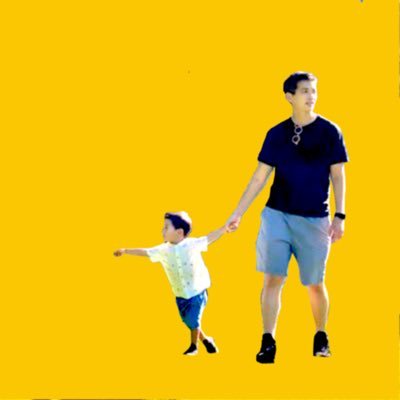
can't believe that episode of "The Office" when Jim Halpert choreographed this entire Venezuela situation
47 retweeted

People are finally putting words to a feeling that’s been quietly growing for a long time.
And the Minnesota daycare fraud just ripped the mask off it.
This isn’t just about stolen money anymore.
It’s about the slow realization that playing by the rules might actually make you the sucker.
You work hard.
You pay your taxes.
You follow the law.
You provide for your family.
And then you watch millions get siphoned off through empty buildings and fake services in Minnesota, while nobody seems to stop it.
That’s when people start feeling stupid.
Not angry at first — stupid.
You see the memes:
“Me on my way to work, realizing I should’ve just opened a daycare in Minnesota.”
We laugh… but there’s something dark underneath it.
Because the next thought is dangerous:
Why am I even doing this?
That question doesn’t just stay in your head.
It shapes culture.
In Brazil, there’s a phrase called “the Brazilian way.”
It means there’s always a shortcut, a loophole, a way around the rules.
People think it’s just cultural.
It’s not.
It comes from years of watching honest people get robbed while thieves walk free.
Eventually, survival starts to mean cheating the system before it cheats you.
That’s the real cost of corruption.
When a society teaches people that honesty makes you a loser, you don’t just lose money.
You lose trust.
You lose dignity.
You lose the glue that holds everything together.
And once that’s gone?
Getting it back is harder than anyone wants to admit.
47 retweeted

People always say, “Don't burn bridges you might need those people someday.” But honestly, I hope you never find yourself relying on anyone who has tried to hurt you, belittle you, or tear you down. I pray that God gives you a life full of peace, purpose and abundance so much so that you'll never have to walk back across those bridges again.