
Essays and commentary about the final frontier
Joined October 2007
- Tweets3.7K
- Following0
- Followers4.6K
- Likes0



The National Museum of the United States Air Force opened a military space gallery a decade ago, raising hopes that the museum will pay more attention to space. Those hopes may be fading. thespacereview.com/article/5…

Space has long been associated with the cutting edge, and technologies developed for engineering purposes find their way into the designs of consumer products. thespacereview.com/article/5…

Concerns about the growth of orbital debris have led to the development of best practices to mitigate that growth. Those approaches alone are insufficient when considering orbital sustainability. thespacereview.com/article/5…

The International Space Station is heading towards a retirement as soon as the end of the decade. What are the effects of ending a decades-long experiment in international space cooperation? thespacereview.com/article/5…

As SpaceX’s Starship begins orbital launches, the space industry debates the impact the vehicle will have. That will depend in part on how effectively the industry can use it. thespacereview.com/article/5…

The US military’s announcement last month that it has deployed space control weapons has raised new concerns about conflicts that could litter orbits with debris, prompting reassessments of how to deal with the problem. thespacereview.com/article/5…

Reports in the late 1950s claimed that the Soviet Union was developing a nuclear-powered bomber. The bomber wasn’t nuclear powered, but it was a rare design whose whereabouts were closely tracked by spy satellites. thespacereview.com/article/5…

Russian companies have claimed to be operating radar-imaging satellites to fill gaps in limited Russian government systems. An examination of the links between these companies and China’s commercial space industry. thespacereview.com/article/5…

Australia is considering whether to pay for a flight of an astronaut to the International Space Station. One issue is the value such a flight should provide to the country to make it worth the expense. thespacereview.com/article/5…

Several Chinese spacecraft and rocket bodies have shed debris in orbit in recent months. Are these isolated incidents or part of a strategy? thespacereview.com/article/5…

The Space Force recently revealed earlier this month that it has “space control” weapons in orbit, with implications on efforts to prevent an arms race in outer space. thespacereview.com/article/5…

A devastating flood in the Himalayas was monitored by satellites, but those images could not provide timely warnings to people affected by it. The ability of turning watching into warning from space is critical for natural disasters and missile defense. thespacereview.com/article/5…

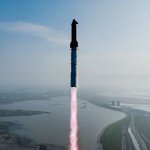
On its 14th test flight, SpaceX’s Starship reached orbit for the first time Monday, deploying a set of Starlink satellites. A report on the long-awaited milestone and the push now to demonstrate the vehicle’s rapid reusability. thespacereview.com/article/5…
In the aftermath of World War II, it seemed obvious to many that the future of warfare would involve rockets in orbit designed to deliver nuclear weapons. One study explored a concept for “Satellite Bombs” that didn’t get very far. thespacereview.com/article/5…

An archive of letters and manuscripts belonging to Konstantin Tsiolkovsky was digitized years ago, but not easily searchable. A new project has created a machine readable version of the archive. thespacereview.com/article/5…

The conflict in the Persian Gulf has caused some countries there to take steps to improve access to satellite imagery. But those measures could fall short of what is needed for true satellite imagery independence. thespacereview.com/article/5…

A Falcon 9 upper stage hit the Moon last month, creating a small crater. The bigger impact of the incident nay be thinking about how to prevent similar incidents in the future as activity on the Moon increases. thespacereview.com/article/5…

Strategists have tried to apply concepts from the theories of air power and sea power to space. However, spacepower requires rethinking concepts like territory in a regime where everything is in motion. thespacereview.com/article/5…

In the early 1960s, the US Air Force launched nearly a dozen Samos satellites with varying designations. But what happened to one class of satellite, Samos E-3, that never launched? thespacereview.com/article/5…

The Falcon 9 has been one the most successful launch vehicles in the history of the Space Age, but it won’t fly forever. The space industry is coming to grips with the looming end of that rocket for commercial missions. thespacereview.com/article/5…
