

Investor & trader. 10+ yrs in crypto. Deep research mindset. Bullish on SUI & early ecosystem plays. Holding with conviction, trading with precision.
SouthEast Florida
Joined October 2016
- Tweets167
- Following64
- Followers33
- Likes131




Pinned Tweet
🏁 Solana Mechanics Shop 2.0 — #SUI pulls into the garage
Version 2.0.2 · October 14, 2026
Same cockpit. Second engine.
The sign over the door still says Solana. The garage just got a second bay.
Since day one, the Mechanics Shop has done one thing: put an AI-driven perpetuals trader inside a race-car cockpit you can read at a glance. Ten gauges. One big trip dial. Two pedals. No spreadsheets. Version 2.0 leaves the cockpit exactly where you left it and bolts on a second engine: full SUI perpetuals support — the same AI brain, the same safety ladder, the same gauges, now reading Sui's tape.
What's new
Bay 2: SUI, fully wired
- Trade SUI perps, long or short, from the same cockpit.
Same conviction-based leverage tiers, same "stop attaches first, always" rule, same tighten-only stop management. If it protected your SOL trips, it protects your SUI trips.
- The brain speaks Sui. The entry analyst and the position manager now read Sui's funding, open interest, long/short crowd, basis, liquidations, spot-versus-perp buying, order-book lean and volume profile. The ten side gauges light up for SUI exactly as they do for SOL.
- One cockpit, two lanes. A chain selector now sits beside the lens control. Flip it and the whole dashboard — dial, gauges, engine, Trip History, AI Analytics — re-tunes to the chain you picked. Or run both bays at once: two independent trips, two sets of stops, one screen.
- The fuel gauge reads your Sui wallet. E to F is your money at work, red band from 60%, the pump icon shows what's free — USDC collateral and SUI for gas, right next to your Solana tank.
Trip History goes multi-chain
- Every trip carries its chain badge. Filter by SOL, SUI or all.
- Stops hit, targets hit, AI closes and manual closes are now first-class rows, with the price they fired at. (Yes, we heard you.)
- A 24h / 3d / 7d window switch, so a good trip doesn't vanish overnight.
- The Rulebook watches SUI too
The shadow analyst — the frozen, never-hand-traded rulebook that scores itself against the AI — now grades SUI calls on the same scoreboard. Same rule as always: it's a scoreboard, not a signal.
Under the hood (both chains)
- Trips are planned from where the car is. The analyst no longer parks entries at pullback levels the price never revisits. It plans from the current price by default and only rests an order when the retest is the bet.
- Stop first. Target second. Never bundled. Carried over unchanged from 1.x — plus a target watchdog that re-adds a lost target and flags an orphaned one instead of stacking a second.
- Adoption guard. The bot never treats a position it didn't open as its own. If size, leverage or entry don't match its order, it raises the alarm and touches nothing.
- Alerts. Text or email the moment a stop is missing, a target is lost, a position is adopted, or the supervisor trips its breaker.
- Cockpit polish. The trip dial's outer ring moved outward so day-low / day-high never touch it. The WHY block in AI Analytics finally shows the AI's reasoning. Gauges refresh every 15 seconds with a visible countdown.
By the numbers
- 2 chains · 10 gauges · 3 engine dials · 2 pedals · 1 fuel gauge — per bay.
- 15-second gauge refresh · 30-minute entry scans · 1-minute fill checks on resting orders.
- 200+ automated checks run before a release leaves the shop.
What's next on the lift
- The close pedal — one held press to close an open trip, with the same confirmation friction as the brake.
- A melt-up alarm, the mirror image of the falling-knife detector.
- More bays. You know which chains you want. Tell us.
Upgrading from 1.x
Your Solana bay, settings, Trip History and control token carry over untouched. SUI stays off until you connect a Sui wallet and flip the chain selector. Your first trips on a new chain run in shadow mode — the brain calls them, nothing is placed — until you flip it live.
Perpetual futures are leveraged products. You can lose more than you expect, faster than you expect. The Mechanics Shop manages risk; it does not remove it. Never trade money you can't afford to lose.
1
237
$cetus will hit 0.10 and everyone will miss out as usual. If we see sui:native hit all-time highs like Solana did in the past, What do you think $Cetus will be? It’s also gonna be at its all-time high. It’s gonna be in the $.40 range. And if this agentic economy comes to fruition where agents are paying agents, they’re not gonna be using a CEX, trust me nobody’s gonna be creating API calls to go to Coinbase to make agent to agent transfers, they’re gonna use a DEX and hit up liquidity Pools. Research it.
3
97
sui:native is positioning itself as the operating system for autonomous agents. Agents trade 24/7. They need a DEX. That DEX is $CETUS right now. If SUI becomes the agentic economy's backbone, CETUS becomes non-negotiable infrastructure. This isn't speculation—it's infrastructure thesis. Stack accordingly.
99
What 5% bond yields mean for crypto:
Now: a headwind. When safe bonds pay 5%, some money leaves the casino. BTC slid from ~$87K to ~$83K this week.
Big picture: the AI agent-payments idea runs on stablecoins, and the companies behind them earn MORE when rates are high.
1
36
The AI agent-payments idea (bots paying bots for data, compute, API calls) runs mostly on stablecoins (digital dollars).
Twist: stablecoin companies park the backing dollars in Treasury bills and keep the interest. Higher rates = fatter profits for the plumbing.
2/3
1
16
The flip side: the economy and company profits are strong, which is why stocks have only dipped so far, not crashed. The Nasdaq hit a record high just Tuesday.
The thing to watch: if yields keep climbing, the pressure on stocks grows.
Not financial advice.
4/4
12
Is this a risk for stocks? Yes, a real one.
Think of it like a savings account suddenly paying a guaranteed 5%. Why gamble on stocks unless you expect a lot more?
Higher rates also make borrowing pricier for companies and homebuyers. Mortgages are now around 7%.
3/4
8
Why it's happening:
- Oil is above $100 on U.S.-Iran tensions, which pushes prices up
- The economy is running hot
- The Fed raised rates last week, and traders are betting on another hike in October
- Heavy government borrowing means a flood of bonds for sale
2/4
22
🧵 The 10-year Treasury yield (the interest rate the U.S. pays to borrow money for 10 years) is sitting around 5.15% today. That's the highest since 2007.
The 30-year is even higher, near 5.45%, a level last seen in 2004.
1/4
15
The 10-year Treasury yield hit ~5.15% today, its highest since 2007.
Why it matters: if your bank paid a guaranteed 5%, you'd think twice before gambling on stocks. That's the squeeze. Stocks slipped yesterday and are shaky today. Real risk, but not a crash signal yet.
1
12
DEXs will likely handle most trading between agents, while CEXs remain the front door where people's dollars go in and out. The two are also starting to merge.
Why agents lean toward DEXs
A CEX works like a bank's currency-exchange counter: you need an account and ID, and it holds your money. A DEX works like a vending machine. Anyone, including software, can use it 24/7 without signing up, and the money stays in your own wallet until the trade happens. Agents can't show a driver's license, so the vending machine is the natural fit.
The shift is already visible:
•Agents are a growing share of DEX trading. On Solana, AI-run wallets made up 34% of daily memecoin (joke-token) DEX trading in June, up from 8% in March. They also transact about 11 times a day, versus about twice for human wallets.
•DEXs are catching up to CEXs. DEX spot trading hit a record 24% of CEX volume in July, up from 17% a year earlier. Solana led DEX trading over 30 days with about $50 billion, more than BNB Chain, Ethereum and Base combined.
•Even futures are moving on-chain. Hyperliquid, a DEX, reached a record 7.5% of global futures-style trading in June. It runs on its own purpose-built Layer 1.
Two caveats. That record came as much from CEX volume shrinking as from DEX strength. And a lot of agent DEX activity is joke-token churn rather than useful commerce.
Why CEXs aren't going away
•They're still better for size. They have deeper liquidity, regular-currency services and customer support, and they still dominate trades above $10 million.
•They're racing to host agents. Kraken launched an agent tool in March. Coinbase for Agents arrived in June and lets agents trade and pay within user-set limits, and OKX added an agent toolkit. Binance's Agent OS, launched Aug 20, gives each agent a sub-account with set permissions and an emergency stop.
•The catch: Coinbase for Agents needs an ID-verified Coinbase account. The agent is borrowing a human's account rather than acting on its own.
Safety is a concern on both sides. Binance says it can't see an agent's reasoning, and it puts no dollar caps on agent spot or futures trading. In January, attackers drained about $40 million from a Solana trading protocol using hijacked agent memory and shared access keys.
The line is blurring
OKX's agent kit covers both CEX and DEX trading across 60+ blockchains and 500+ DEXs. Coinbase's on-chain agent tools need no exchange account at all. With "intents," an agent just states the outcome it wants and others compete to find the best route. The agent may never know which venue filled the order.
The biggest signal came on Sept 17. The SEC granted a five-year exemption letting approved venues trade tokenized U.S. stocks through DEX-style pools without registering as exchanges. The plumbing is DEX-style, but only approved participants get in, with securities-market controls on top. Think of a vending machine inside a store with a manager who checks ID at the door. Grayscale's research head expects this to boost activity on Ethereum and on DEXs like Uniswap, Aerodrome and Raydium.
Where each is likely to win
Activity
Likely venue
Agent paying agent, swapping into the right digital dollar
DEX
Agent trading 24/7 from its own wallet
DEX
Your agent trading your existing account
CEX
Turning regular dollars into crypto and back
CEX
Very large trades ($10M+)
CEX or private brokered deals
Tokenized stocks and funds
Approved DEX-style venues
Bottom line
DEXs become the main trading ground for agent-to-agent deals. CEXs stay the front door for dollars and the host for agents acting on a person's account. I'd expect DEX share to keep climbing as agents multiply. CEXs that connect their customers' agents to DEX trading, as OKX already does, will keep much of that business rather than lose it.
Don’t sleep on $cetus
108
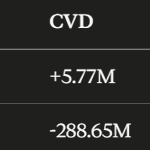
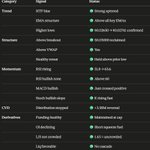
For you Solana traders: Solana Mechanics Shop said TA structure is cleanly bullish across all three intraday frames: price 106.5 sits above EMA50/EMA200 on 4H, 1H and 5m with bullish stacks, 1H ADX 33.9 with +DI 29 vs -DI 18, RSI 60-63 (strong but not extreme), and bb_pct_b 0.77 — a controlled grind toward the 107.4 swing high after a 4.7% week and a clean higher-low sequence off 101.5. Derivatives are NEUTRAL with no vetoes: 4H/1H OI-vs-price shows NEW LONGS adding fuel and spot CVD accumulating (supportive), but perp CVD is diverging bearishly (distribution) and Hyperliquid funding sits at the 96th percentile — crowded longs are the real hazard, not a directional bear signal, and the 5m read is bullish absorption which explicitly vetoes shorts. Volume profile has price above value (POC 103.81 / VAH 104.44), so acceptance above 104.4 is what keeps this a trend rather than a failed auction; the regime feed is quiet (state none for 89m), so no flush dynamics distort entry location. I take the continuation from the current print with a stop under the 104.8/104.9 1H swing lows and just under VAH — reduced size because positioning is crowded and the perp CVD divergence is a genuine same-timeframe caveat.
1
26

if you're going to pick up $DEEP, the window is before oct 7.
sui basecamp is built entirely around agentic finance — and DeepBook is the venue layer of that stack. margin live since Q1, predict mainnet slated for this year, cofounder teasing reveals on stage.
buy the setup, not the headline. nfa.
very bullish on $DEEP.
AMMs were built for humans. order books were built for machines.
AI agents won't trade against bonding curves — they'll post limit orders. price-time priority is their native language.
DeepBook is where the machines will trade.
3
556
Where #Deepbook fits: the market layer
The tweet says agents will "trade and allocate capital" — DeepBook is where that happens. A central limit order book is natively machine infrastructure: limit orders, price-time priority, maker/taker mechanics. That's how algorithms trade. AMM curves were a workaround for chains too slow to run order books; agents don't need the workaround. And the primitive stack is expanding on schedule: Spot is Sui's native CLOB doing $15M+ daily volume across 20+ apps; Margin launched Q1 2026 directly on top of the order book with borrow/lend infrastructure; and Predict adds binary options and prediction markets, with composable calls, puts, and spreads next and mainnet later this year. So an agent gets spot execution, leverage, and probability markets (how a machine prices beliefs and hedges outcomes) on shared liquidity, all composable inside a single PTB. There are already AI chat agents running swaps, limit orders, arbitrage, and margin trading through DeepBook from one conversation. SuiDeepBook
Where #Walrus fits: the memory and provenance layer
Agents need more than payments — they generate context, reasoning traces, logs, and need model weights and datasets. That can't live in base-layer state. Walrus handles high-volume data like model artifacts, agent logs, datasets, and long-form memory, letting agents anchor references to stored data on-chain while the underlying data lives in decentralized storage — preserving auditability and provenance, and functioning as a shared memory substrate for multi-agent systems. This is already productized: Walrus Memory launched in June 2026 as a portable memory layer for agents, encrypted by default with programmable access permissions and built-in verifiability, and elizaOS made Walrus its default memory layer for agents, with Seal and Nautilus support enabling encrypted access control and confidential off-chain computation. The forensics angle you know from your Cetus work applies here too: when agents execute financial transactions autonomously, you need to verify what data they used to make decisions and where it came from — Walrus is the tamper-evident audit trail. Turnkey + 3
The full-stack read, and the trader's caveat
Notice the tweet never names DeepBook or Walrus. That's deliberate — keep the thread at thesis level so it travels beyond the Sui bubble; the stack reveal is saved for Basecamp. But the strategy is unmistakably vertical integration: Sui is the settlement and rules layer, DeepBook is the market layer, Walrus is the memory layer, Seal/Nautilus are the trust layer. One thesis, three tokens (SUI, DEEP, WAL) all monetizing different layers of the same story. If agentic finance materializes, Mysten captures every layer. That's the real "why."
The honest caveats, since you trade this stuff: the inevitability chain has soft links. Agents demonstrably can transact on traditional rails — AP2 works over cards, Stripe has agent toolkits, and the liability question ("who's responsible when an agent loses money?") isn't solved by blockchains. The 6M TPS number came from a controlled demo using off-chain tunnels, not organic demand. Gasless stablecoin transfers are great for adoption but muddy the SUI value-accrual story. And distribution may matter more than architecture — Coinbase has x402 wired into the biggest US exchange, and whoever OpenAI, Anthropic, and Google actually integrate with wins regardless of whose TPS is higher. The tech-narrative fit here is genuinely better than most L1 pivots, but this tweet is equal parts engineering thesis and pre-conference marketing during a 60-cent drawdown. Both things are true at once.
xitter.cf/EmanAbio/status/209039…

AI is making intelligence abundant and inexpensive
that intelligence is already moving from answering questions to completing tasks. we call these systems AI agents
agents can reason, plan, use tools and act on decisions. as their capabilities improve, people and businesses will delegate more decisions and more responsibility to them
agents will coordinate with services, markets and other agents. they will increasingly perform real economic work
once these agents begin performing economic work, they will also need the ability to receive money, hold assets, make payments, trade and allocate capital
today’s financial system was never designed for autonomous systems like these
it depends on bank accounts, borders, business hours, manual approvals and human identity
this is where blockchains change the equation. blockchains turn money and markets into internet-native infrastructure that is global, programmable and always on
this is why i am fully convinced that the agent economy will naturally run on crypto rails
but that is only the beginning
the important thing to understand is that these agents will operate continuously, 24/7. they will transact more frequently than humans and generate economic activity at machine speed and internet scale
and those txns must be fast and inexpensive enough to make even the smallest actions viable
most financial infrastructure, including most blockchains, was not designed for this level of autonomous activity
and this is where sui’s original design choices become especially important
sui can process independent transactions in parallel and scale horizontally with demand. it allows agents to combine multiple actions into a single atomic txn
sui gives agents a composable financial environment where they can move between assets, markets and applications
but agentic finance will also create an entirely new class of security problems. the way sui was designed gives us a major advantage in solving them
i will give you a much clearer idea of what this means at sui basecamp next month
the larger point is that we are not building sui simply to bring today’s financial system onchain
we believe AI will create billions of autonomous economic actors and that they will need a financial system built specifically for how they operate
we are building sui to be that system
@SuiNetwork will become THE infrastructure for agentic finance
1
427
One of the co-founders behind @SuiNetwork is teasing something with a deliberate edge to it: a rebuilt BitMEX, the legendary high-leverage crypto exchange, except fully on-chain and impossible to shut down. The choice of BitMEX isn't random. That exchange got taken apart by US regulators in 2020 and its founders faced criminal charges. It's the poster child for what happens when a centralized exchange crosses the government. So teasing an unstoppable version of it is basically a dare.
The insight underneath the tweet is about where the weak point has always been. Smart contracts on a blockchain are genuinely hard to kill, but the website people use to reach them isn't. Almost every "decentralized" exchange still runs its front end on normal hosting like AWS, and often keeps its order book and history on company servers. Those are things regulators can seize, subpoena, or quietly pressure offline. The contracts survive, the storefront dies, and for everyday users the app is effectively dead anyway.
That's the gap Walrus fills. @WalrusProtocol a decentralized storage network built by the same team behind Sui, and it can host entire websites, not just files. The exchange's front end, its charts, its historical data all get broken into fragments and scattered across hundreds of independent nodes around the world, with the network able to rebuild everything even if a big chunk of those nodes disappear. There's no server rack to raid, no hosting account to cancel, no single company that owns the site. The storefront becomes as unkillable as the vending machine behind it.
Walrus also solves a quieter problem: exchanges generate mountains of data, and blockchains are a terrible, expensive place to store it. Walrus acts like a decentralized version of Amazon S3 sitting next to the chain, so the live trading logic runs on Sui while the bulk history lives cheaply on Walrus. And because every piece of stored data comes with an on-chain proof, the exchange's full trade history is publicly auditable instead of being rows in a private database you just have to trust, which is exactly what burned people with FTX.
The honest caveats: "cannot shut down" is partly bravado, since price oracles, fiat on-ramps, and the gateway portals people use to reach Walrus sites are still pressure points. And there's no named product yet, so "eta soon" from a founder means anywhere between next week and never. But the architecture he's describing is real, and it closes the one door regulators have always been able to knock on.
xitter.cf/EmanAbio/status/209023…

92