

Trading liquid leaders by low risk entry tactics. Not Financial Advice.
🇨🇦 🇨🇳
Joined October 2023
- Tweets1.3K
- Following44
- Followers5.9K
- Likes3.5K





Pinned Tweet
Top Performers in US Stock Market since 2000
I want to share a self-hosted stock research tool that identifies and visualizes the most powerful price moves in US equity market from 2000 to current date. It processes raw daily OHLCV data for over 12,000 US tickers — including delisted stocks — and surfaces the top 7% performers each year for in-depth chart study.
Github link: github.com/willhjw/big_mover…
The project is inspired by the trading methodology of Kristjan Kullamägi (Qullamaggie), which focuses on learning from stocks that made exceptional gains in a short period of time. By studying these historical moves in detail — their price structure, volume behavior, and timing — traders can develop a sharper eye for recognizing similar setups as they form in real time.
This is also a use case for my open-source charting platform. github.com/willhjw/ib_chart
If you find this project helpful, welcome to buy me a coffee. buymeacoffee.com/willhu
Disclaimer
Stock data and any statistics or charts derived from it are not guaranteed to be 100% accurate or complete. You are responsible for independently verifying the accuracy and suitability of the data before using it for any purpose.


Thanks to AI coding, a complex learning process is now much simpler. I filtered the top 7% YTD stocks from 2000–2026 (including delisted ones), get 1400+ stocks, and visualized them with TradingView Lightweight Charts, featuring auto-marked highs/lows and direct period displays. Browse by year or symbol, even delisted stocks from the last decade like $LVGO and $TWTR are fully accessible.
Once I refine the charting and annotation features, I will open-source this learning project.
Will Hu retweeted

One of my biggest regrets in my 27 years of trading wasn't losing money.
It was the up and downs.
It was being physically with someone I loved, but mentally I was somewhere else.
I want to share something else about my past, because after reading all your comments on my previous post, I realized how many people have experienced similar things.
For many years, being in a relationship with me wasn't easy. And I can admit that today.
I had two big passions in my life. Bodybuilding and trading.
Bodybuilding was already demanding enough. Cardio in the morning, training, preparing my meals, eating at certain times, following my routine every single day.
Even when we went out for dinner, most of the time I had my chicken and rice with me.
Imagine being with someone who organizes almost everything around his training and meals.
And then add trading to that.
I was constantly watching the markets. Checking positions on my phone, looking at charts, sometimes even bringing a tablet to dinner.
I can understand today how annoying and frustrating that must have been.
But you know what?
The biggest problem wasn't any of that. It was me. How I felt inside.
Sometimes I would finish a terrible trading day. Maybe I had lost a lot of money. Maybe I was frustrated, disappointed, or simply exhausted.
Then I would go home, or go out with my partner, and pretend everything was normal.
But it wasn't.
I could be quiet, distant, irritated. Sometimes I didn't want to talk. Sometimes even a simple question could annoy me.
And the person next to me didn't understand why.
Because I wasn't sharing what was happening inside me.
Maybe it was pride. Maybe I didn't want to admit I had lost money. Maybe I just wanted to forget about the day.
But I couldn't.
I was still thinking about my positions, what I did wrong, what I could have done differently.
I had left the trading desk, but the trading desk hadn't left me.
And something I learned later is that this isn't only psychological.
There is a physical side to it.
When you experience extreme financial stress, your body releases adrenaline and noradrenaline. Cortisol is also involved in the stress response.
Your heart rate can increase, your nervous system becomes more alert, and your body prepares to deal with a threat.
Studies on professional traders have actually measured how cortisol changes with market volatility and trading uncertainty.
And this is what I find interesting.
You can close your computer in one second. But you cannot necessarily switch off what is happening inside your body in one second.
When that stress continues day after day, it can affect your sleep, your patience, your mood, and the way you treat other people.
I experienced it.
And looking back, I realize that sometimes I was a piece of shit to the people who loved me.
Not because I didn't love them.
But because I was so absorbed in my own world
Today I still love trading. I still love bodybuilding. I still have my routines, my discipline, my ambitions.
That's part of who I am, and it will probably never change.
But what has changed is how I look at life, at money, and especially at the people around me.
I don't want to spend my life making money and then realize I wasn't really living it.
And if you're a trader reading this, especially if you're young and extremely ambitious like I was, think about it.
Sometimes we become so obsessed with building the life we want that we forget the people who are supposed to share that life with us.
Money can be made again. A losing trade can be recovered.
BUt time and people around us won't be there forever.
That's it, hope you can do and be better then me

Will Hu retweeted

Oct 13, 2026
This type of dispersed and fragmented market in volatile momentum names requires even more caution and mindfulness in what you are doing.
The last thing you want is forcing trades, over-trading, and revenge trading. You will either end up on tilt and losing capital, or mentally exhausted from a thousand cuts or simply over managing your positions.
Knowing yourself, your timeframe and the strengths and weaknesses of your process is key.
If you have no edge, stay away. If your process says do nothing, then mindfully do nothing.
Not every candle requires your action. The market is likely still open in 3-6 month time and likely still a bull market if you have the patience for it.
Be consistent and discipline, don’t mix up your timeframe, and each trader is different.
Less is more, slow is smooth, smooth is fast.

Will Hu retweeted

And I don't know who needs to hear this, but tune out the noise. Reading posts of someone 200% long when you're having a rough time is of no benefit.
1) It's just ego feeding.
2) One strategy is likely in vogue while another isn't. There is nothing wrong with that.
3) If you're making money in this environment, great! Keep going!
If not, take this time to really reflect and refine edge. There's no shame and not a reflection of you as a person if you're struggling.
Like life, there will be ups and downs in trading - embrace it! Importantly, be kind and stay humble because the market will always humble you when you least expect it. 😆

Will Hu retweeted

Very difficult environment. I am trading extremely small now having drawn down for the last few months.
Mega cap tech (Mag 7+AMD SPCX MU AVGO) the trillion $ club are rallying the QQQ higher.
In my experience, during periods like this in my trading, I just need to keep cutting size and reduce monthly max losses more and more to prevent excessive drawdown. The good times will return again, you just have to wait!
Will Hu retweeted

Keep going, stay resilient, learn from every loss, adapt to changing market conditions, and keep refining your process.
Clement and Martin both said flipping charts is very important and a lot of people underestimate it.
"Flipping charts is the most important learning method and a lot of people underestimate it. After learning other people's stuffs and absorbing the new knowledge, you have to reapply it. The easiest way would be going through the charts and see what works or not." @martinlukkt
I won't say there isn't anything particularly 'underrated' or special! But if I would have to point one out, its flipping through charts routinely + watchlist management.
Having a daily and weekly routine where you become a 'chart junkie' and flip through hundreds upon hundreds of charts is where you will develop that feel for the market. You won't feel it in one day, but doing it over time for many days and many market cycles: you will develop a feel for the market that is irreplaceable.
That I believe is the discretionary edge in trading that many are looking for!
This is gold!
This is a tough one, and a great question! Honestly something I still struggle with (though much better compared to earlier years).
The difficulty isn't because you can't sit out of a choppy environment, its exponentially increased because the market eggs you enough to keep you engaged enough just to rug you, toiling on your mental capital until the real turn comes and you're too exhausted to engage again.
My solution thus far:
(1) Think very deep about your trading system:
When are you allowed to be aggressive and chase for opening range entries? When are you not allowed to and should only engage 30-minutes after the market open?
Which type of entry styles (breakouts or pullbacks) favor a choppy market environment? Within each entry style, what is the entry tactic? (5-min 6/20 MACD turns, or 30-min pullback pivots, etc...)
What type of profit taking rules should you have in a chop market? (say take half position off at 3R instead of 1/3 in trending environments).
How many new trades are you allowed per day? Max risk per session?
Importantly: What is your A+ setup? What filtering criteria do you have that differentiates this setup vs the rest? (In choppy markets, you won't find that many A+ setups).
Having this clarity allows you to engage a chop market without doing too much damage to the account.
(2) The next part of this is situational awareness: How do market cycles start? You will have conduct deep dives to find the answer to this. This article may help!
xitter.cf/Clement_Ang17/status/2…
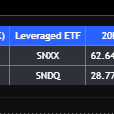
Just added one column to show 20d avg vol and dollar volume to check if the leveraged ETFs are liquid or not.

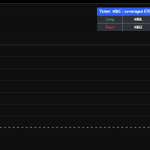
Track Leveraged ETFs directly on your chart
Automatically detects the ticker on your chart and displays its corresponding Long & Short Leveraged ETFs (1.5x–3x) in a clean panel.
70+ Core Tickers / 200+ Leveraged ETFs
Supports Mega-cap Stocks, Indices (SPY/QQQ), Sectors (SMH/XBI), Commodities (GLD/USO), Crypto (IBIT/MSOS) and Countries(EEM/FXI)
tradingview.com/script/PyHBm…
Will Hu retweeted

The market has had every excuse possible to sell down with rates at a 19 year high and oil prices over $100 a barrel, yet even during the worst seasonal period of the year it has broken out of its trading range. Very good news for last week's technical buys.
Will Hu retweeted

@Clement_Ang17 Shares his trading story as a guest on our CMR Interviews series. It was a pleasure getting to know Clement. A very humble trader with a bright future!
How Clement Went from 0% to 247% & Took 3rd as a US Investing Champion U... youtu.be/l_WezSM19Iw?si=xTmk…

Common misconception: Single-stock leveraged ETFs are just for gamblers.
Reality: They are capital efficiency tools. The goal is to minimize capital commitment while maintaining the desired exposure.
Key rules when trading them: Liquidity First
Stick to liquid tickers with tight bid-ask spreads. Slippage will eat your compound returns.
Here’s a curated lookup table of liquid stocks & their leveraged (Long/Short) counterpart ETFs.

xitter.cf/traderwillhu/status/20…
This dashboard refreshes automatically after every trading day at 4:30 PM ET. Since it's open source, you can easily swap in whatever tickers you want to track.

Anyone here using the LSEG Workspace Add-in for Microsoft Excel?
How’s the quality of the stock data, and what does the Add-in offer beyond the existing Refinitiv/LSEG stock data already available in Excel?
PS: Refinitiv's stockdata on Excel has not return new data since Sept 4th. @LSEGplc
Will Hu retweeted
Tough markets like this is what will define you as a trader. It will expose the worst parts of you and show you where your holes are in your process.
The question now is whether you treat this as a launchpad for exploring/refining edge or where you choose to give up completely.
Regardless of how good performance the past couple years have been, I always want to put my head down and continue working on myself - you can do it too!
09 Sept 2026: Stock Pickers Market ⛏️
Market Commentary:
Yet another chop day as markets continue to lack to momentum factor. The QQQ remains the only index ETF of the 4 trading above the 10/20-EMA, though location wise is technically weaker (being lower in the pattern whilst the SPY traded into new highs).
Looking at the dollar, more of the same with price trading below the lows of structure and below all key moving averages.
Precious metals in relation continue to consolidate its August move, with Gold in no mans land below the 10/20-EMA while Silver holds above its 20-EMA. Notably, Copper attempted a breakout of its 6 week holding pattern but faded somewhat by the close, perhaps more sideways is needed to build energy higher.
In cryptoland, the flag consolidations seen in the majors continue to be constructive - though eventual directional resolution remains to be seen.
Strong rotations out of one sector every few days while indices remain sideways make for a tough market environment - stay nimble.
Notes:
> Out with the software and in with selective hardware, the rotation trade remains in full force.
> This market remains in mindless chop which is expected, net high and net lows moving back and forth between positive - negative is not helping the cause.
> Markets for the most part has lacked momentum and it remains to be seen how long more it will stay this way (can be very long). That said, individual stock setups have worked - just trade what you see and be nimble.
HAG1!

Will Hu retweeted
My Top 5 Free APIs and Libraries for Stock Screening & Trading Dashboards
Many people have been asking about the specific APIs and libraries I use to build my stock screening tools and trading dashboards. After extensive testing, I’ve narrowed it down to a few reliable tools. Here is a breakdown of my current tech stack based on my personal experience.
1. TradingView Screener (Unofficial Library)
For my Pre-market Gappers scan, I rely on a TradingView screener library. While this isn't an official API, it provides scanning results and criteria identical to the TradingView desktop software.
GitHub: github.com/shner-elmo/Tradin…
Pros: Highly accurate; matches TradingView’s powerful UI filters.
Cons: There is a 15-minute data delay. Unless you require sub-second real-time scanning, this is usually negligible for swing trading or early-day prep.
2. Finviz Finance Library
I primarily use this to scrape news and market sentiment. It’s excellent for aggregating headlines and URLs directly from Finviz.
GitHub: github.com/lit26/finvizfinan…
Use Case: Automatically fetching the latest news for specific tickers to understand the "catalyst" behind a price move.
3. TradingView Lightweight Charts & Tradingview Widgets
This is my go-to for technical analysis visualization.
GitHub: github.com/tradingview/light…
Chart Widgets: tradingview.com/widget-docs/…
The Difference:
Lightweight Charts: Best for building custom tools. It’s high-performance and allows you to program any custom indicator you can imagine.
Chart Widget: If you want a "plug-and-play" experience, this is easier but comes with a 15-minute delay and limits you to native indicators (no custom Pine Script/logic integration).
4. Brokerage APIs: Charles Schwab vs. IBKR
I have integrated both, and here is how they compare:
Charles Schwab API: Completely free. The only "catch" is that you need to manually refresh your tokens weekly.
IBKR API: While the API is free, real-time data usually costs $1–$2/month. It also requires you to have TWS (Trader Workstation) or IB Gateway running in the background.
My Verdict: I prefer Schwab for daily use. It’s more "lightweight" as long as you remember to update your tokens over the weekend.
5. Apache ECharts
ECharts is the "all-rounder" of data visualization. I use it to complement TradingView’s charts.
Official Website: echarts.apache.org/
Use Case: While TradingView is more professional for price action, ECharts is superior for Post-Trade Analysis in my trading journal. The interactivity and ability to visualize complex equity curves or win-rate distributions are top-tier.
------
Of course, there are plenty of superior paid resources out there. However, if you’re a trader just getting started with vibe coding, these free tools are perfect for getting your hands dirty and sharpening your skills first.
Feel free to share more in the comments!

Key Lessons Learned from Kristjan Qullamaggie By Martin Luk
1. Beyond Patterns & Technical Setups
"I think lots of people, many people are focusing a lot on the setups and the technical side or pattern side of Christian's trading. I think it's not necessarily true or not the perfect way of learning from him."
2. Risk Management: Defining & Tightening Stops
"I think the biggest influence from Christian to me is defining your stop and tightening your stop. In the early stage, I used a pretty wide stop, maybe 5% to 8%. I came across Christian and he always set his stop at the low of day, mostly around 3% generally, and he always sticks to that."
"Whenever he enters a stock, he's just going to put his stop at the low of day. So he's really clear where he should exit a stock... determine the stop before you enter."
3. Stock Selection & Themes
"Another huge influence is stock selection. Christian always prefers liquid names, fast-moving names, and orderly-moving names. He won't trade the ones that keep chopping around or moving 1% to 2% each day. He loves to find a stock with the right theme, with volume, and clean to trade."
"Talking about theme, theme is also one of the major things that I learned from him. Before that, I really focused a lot on the pattern itself, forgetting that stocks move as a group and a certain group would outperform the whole market drastically and give you superior returns."
4. Simple & Effective Exit Rules
"Exit rules: you have a lot of trailing rules with the 9 or 21 EMA. Christian uses the 10 and 20 EMA, but I think it's the same thing. I really found it powerful and simple."
5. Mindset & Thinking in Percentages (Account Scaling)
"There's a lot on the mental side of trading. For example, I learned to always think in percentage of your accounts instead of absolute numbers. Christian brought this out and emphasized it a lot. He said what really separates a good trader from a great trader is the ability to scale up his account."
"The reason why those traders cannot scale up their accounts is they focus too much on the absolute numbers—like making $100K or $1 million—but that's not important at all. You should always think in percentages, and I really think it elevated my trading by a lot."
"My answer is just focus only on the percentage of your account, or the number of risk multiples—how many R's you earned in this trade instead of how much money you earned."
6. Synthesizing Knowledge & Building Your Own Style
"Another really good point from Christian is that he just took one or two things from this trader, learned one or two from that guy, but not completely copying them 100%. I really agree and resonate with his points."
"A lot of people are just trying to copy a certain trader, setup, rule, or stock-picking technique completely, but you need to form your own style."