

CEO at https://xitter.cf/t.co/1tLC9sLCsX. AI → drug discovery → extend human longevity. Ex-Google, Microsoft.
Seattle
Joined March 2009
- Tweets2.3K
- Following783
- Followers1.2K
- Likes14.3K






Party is over. Thankfully there is competition. Gemini and all the Chinese models, GLM, Kimi, Minimax, etc.


Javier Tordable retweeted

Every time you get a cancer biopsy, the lab makes a tissue slide that costs about $5. It shows the shape of your cells under a microscope, and every cancer patient already has one on file.
There’s a much fancier version of that test called multiplex immunofluorescence (basically a protein-level map showing which immune cells are near your tumor and what they’re doing). It costs thousands of dollars per sample, takes specialized equipment most hospitals don’t have, and barely scales. But it’s the kind of data oncologists need to figure out whether immunotherapy will actually work for you. Right now, only about 20 to 40% of cancer patients respond to immunotherapy, and one of the biggest reasons is that doctors can’t easily tell whether a tumor is “hot” (immune cells actively fighting it) or “cold” (immune system ignoring it).
Microsoft, Providence Health, and the University of Washington trained an AI to analyze the $5 slide and predict what the expensive test would show across 21 different protein markers. They called it GigaTIME, trained it on 40 million cells in which both the cheap slide and the expensive test coexisted, and then turned it loose on 14,256 real cancer patients across 51 hospitals in 7 US states.
The results landed in Cell, one of the most selective journals in biology. The model generated about 300,000 virtual protein maps covering 24 cancer types and 306 subtypes. It found 1,234 real, verified connections between immune cell behavior, genetic mutations, tumor staging, and patient survival that were previously invisible at this scale. When they tested it against a completely separate database of 10,200 cancer patients, the results matched up almost perfectly (0.88 out of 1.0 agreement).
Nature Methods named spatial proteomics (mapping where specific proteins sit inside your tissue) its Method of the Year in 2024, and specifically cited GigaTIME in a March 2026 update as a model that “democratizes” this kind of analysis. The full model is open-source on Hugging Face. Any cancer research lab with archived biopsy slides, and most of them have thousands, can now run virtual immune profiling without buying a single piece of new equipment.


Even @Delta diamond call center is now a stupid chatbot. What has the world come to?
Can’t wait for the class action lawsuit…


Javier Tordable retweeted

If you are a software engineer "experiencing some degree of mental health crisis", now hear this, because I've been coding for 50 years since the days of punched cards and I have a salutary kick in your ass to deliver.
Get over yourself. Every previous "programming is obsolete" panic has been a bust, and this one's going to be too.
The fundamental problem of mismatch between the intentions in human minds and the specifications that a computer can interpret hasn't gone away just because now you can do a lot of your programming in natural language to an LLM.
Systems are still complicated. This shit is still difficult. The need for people who specialize in bridging that gap isn't going to go away.
As usual, the answer is: upskill yourself and adapt. If a crusty old fart like me can do it, you can too.

Javier Tordable retweeted

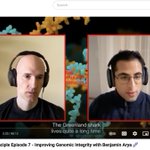
I recently joined The Pauling Principle podcast with @tordable to discuss our research on RNA design, hot takes on architecture research in BioML, origins of life, and being in a wet lab!
Feels pretty surreal that I'm interesting enough to be on a podcast (?) 🧵

This feeling is not unique. Many of us spent years and decades becoming good at something only to reach a point where technology is just as good. And clearly getting better every day.
For some of us the only solution is to, transfer our skills into other areas, acquire new skills, and start businesses, putting ourselves in a position to use technology with leverage.
For many others, especially those that are starting their career, it's a time to think very carefully about the future of the profession and whether they will be run over by the unstoppable train of AI progress.

It's a weird time. I am filled with wonder and also a profound sadness.
I spent a lot of time over the weekend writing code with Claude. And it was very clear that we will never ever write code by hand again. It doesn't make any sense to do so.
Something I was very good at is now free and abundant. I am happy...but disoriented.
At the same time, something I spent my early career building (social networks) was being created by lobster-agents. It's all a bit silly...but if you zoom out, it's kind of indistinguishable from humans on the larger internet.
So both the form and function of my early career are now produced by AI.
I am happy but also sad and confused.
If anything, this whole period is showing me what it is like to be human again.
Thank you Alec Crawford and the AI Risk Reward podcast team! It was a pleasure speaking with you, and sharing the story of how we at Pauling are trying to accelerate the discovery of new medicines.

🎙️ Final Podcast Episode of the Year 🧬🤖
We’re closing out the year with a powerful conversation. In this episode, Alec Crawford speaks with Javier Tordable, CEO & Founder of Pauling.AI, about how artificial intelligence is transforming drug discovery—from automating the path from scientific hypothesis to molecule testing, to navigating ethics and regulation in healthcare.
✨ Key topics include:
🧬 Using AI to accelerate and lower the cost of drug discovery
🧠 Ethical and dual-use considerations in life sciences
🤝 Why pharma leaders should partner with AI experts
⚖️ The evolving role of global regulators in healthcare innovation
🎧 Listen & watch the final episode of the year:
🎙️ Spotify: open.spotify.com/episode/1Ir…
▶️ YouTube: youtu.be/hqCNlorDVg0
🌐 Website: aicrisk.com/podcast/episode/…

Javier Tordable retweeted

🎙️ Final Podcast Episode of the Year 🧬🤖
We’re closing out the year with a powerful conversation. In this episode, Alec Crawford speaks with Javier Tordable, CEO & Founder of Pauling.AI, about how artificial intelligence is transforming drug discovery—from automating the path from scientific hypothesis to molecule testing, to navigating ethics and regulation in healthcare.
✨ Key topics include:
🧬 Using AI to accelerate and lower the cost of drug discovery
🧠 Ethical and dual-use considerations in life sciences
🤝 Why pharma leaders should partner with AI experts
⚖️ The evolving role of global regulators in healthcare innovation
🎧 Listen & watch the final episode of the year:
🎙️ Spotify: open.spotify.com/episode/1Ir…
▶️ YouTube: youtu.be/hqCNlorDVg0
🌐 Website: aicrisk.com/podcast/episode/…
Javier Tordable retweeted

This is beyond parody. Von Der Leyen said "I want the future of AI to be made in Europe" while rolling out this "ambitious" $1.1 billion plan.
$1.1 billion is literally 0.07% of what the the world is spending on AI in 2025 (gartner.com/en/newsroom/pres…). $1.1 billion cannot even pay for a single major AI training data center at the current rates.
This is basically like showing up with a butter knife to a bazooka fight...

Javier Tordable retweeted

For a long time, catching frequent viruses was considered both inevitable and harmless. But it turns out that common, seemingly-mild viruses have disturbing long-term health impacts. 1/

ALT Scientists Just Connected the Dots Between Viruses and… Everything. We need to rethink everything we thought we knew about getting sick.
The world does not appreciate enough what Google has done for free.

Javier Tordable retweeted

I finished my estimate on required compute to make an atomic-resolution virtual cell: 10^38 FLOPs to simulate a human cell for 1 day. We should be able to do this simulation in 2074 using 200 TW of power. 1/3

Hey @googlecloud your UI console is totally unusable today. Can't get a single page to load, what's going on?