

Barely Educated | Night Owl | Pro-faith Secularist De Omnibus Dubitandum
Joined May 2009
- Tweets5.8K
- Following5.4K
- Followers4.8K
- Likes14.6K




Remi retweeted
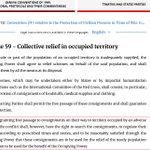
You are selectively quoting Article 59 of the Geneva Convention. Conveniently, you left out the section that outlines the right of the Power granting free passage to relief materials.
Under these terms, the FG was well within its rights to insist on inspecting and supervising the transport of any relief material to its destination and offered to permit daylight relief flights into Biafra, provided the flights were inspected and followed agreed routes. Ojukwu refused, because he knew that this would obviate the need for night-time relief flights, which provided cover for the arms flights.

This is patently false. E.M.L. Endeley and P.M. Kale began advocating for a separate regional status for Southern Cameroons as far back as 1940 through the Cameroon Youth League. At that point, Obafemi Awolowo was not even a national politician - he was dividing time in Ibadan and Lagos as a produce buyer, transport union secretary, and editor, with politics limited to the Nigerian Youth Movement (NYM). The Action Group did not exist.
The real catalyst was the 1953 Eastern Regional Crisis. The NCNC’s treatment of Prof. Eyo Ita, alongside what Anthony Ndi termed "Igbo excesses" in Southern Cameroons, radicalized politicians like Robert Dibongue, John Ngu Foncha, and Endeley, prompting them to petition the British colonial authorities that remaining tied to Eastern Nigeria would subject Cameroonians to external political instability, neglect, and domination.
The British conceded to these demands in January 1954 under the Lyttelton Constitution, formally detaching Southern Cameroons from the Eastern Region, establishing it as a quasi-federal territory with its own legislature in Buea.
The KNC–AG alliance was only negotiated in mid-1954, months after Southern Cameroons had already secured its detachment. The AG did not instigate Southern Cameroonian autonomy. Rather, it was an indigenous movement framed from the start as liberation from internal domination.


Remi retweeted

How civilization is destroyed without firing a shot.
“Yoruba buts” and Yoruba liberals should watch this video.
Yoruba land will be great 💯🔥
Remi retweeted
Cultural Vampirism and Gele
If you have not listened to the attached interview, please do. The discussion is not about Gele, but the speaker offers a spot-on analysis of “living space” that bears directly to the current debate.
The idea of Lebensraum, or “living space,” was taken by the Nazis to its most extreme and murderous conclusion. But what makes the concept historically significant is not territorial expansion alone. It is the mentality that can accompany expansion: the assumption that another people’s space, symbols, history, and cultural markers may be absorbed, renamed, or displaced with little regard for their ownership, continuity, or meaning.
Nazi cultural policy expressed that logic with ruthless clarity. It did not simply encounter other cultures and borrow from them in admiration. It appropriated selectively while simultaneously subordinating, suppressing, or attempting to erase the peoples from whom it borrowed. Its relationship with other cultures was not one of exchange and appreciation, but of coercion and predation. And examples abound. The swastika, an ancient symbol found in Hindu, Buddhist, Jain, and other traditions, was appropriated and transformed into a racial-political emblem. “Aryan,” derived from Sanskrit ārya, was wrenched from its historical context and converted into a racial category.
That distinction matters in the current debate over Gele and Ichafu.
While it is seductive to dismiss the argument as a quarrel over trivialities, the underlying issue is more consequential. Gele is merely the latest in a longer pattern of contesting ownership of Yoruba cultural elements. Before it, there was Agbada. Then Owanbe. Foods have been disputed. Even the origin histories of Yoruba towns have been challenged, sometimes through elaborate historical narratives constructed to sustain those claims.
And this is not random. The claims have appeared in newspapers, been amplified through coordinated social-media campaigns, chronicled in books, repeated by the same network of voices, and, in some cases, pursued far enough to produce legal disputes. Different subjects, same method. Different cultural markers, same direction of travel.
Silly arguments have been advanced, and sillier positions defended.
One of the most cowardly is the claim that because Yoruba and Igbo people now share a political space called Nigeria, Gele and Ichafu must somehow be treated as culturally interchangeable. That argument is anachronistic, historically weak, and an attempt to dress intellectual spinelessness in the language of sophistication. Modern Nigeria did not create these cultures, and contemporary political coexistence does not retrospectively erase their separate historical development. Yoruba and Igbo sartorial traditions emerged within different social and cultural worlds. Historical descriptions of Yoruba dress identify Gele and related forms as part of Yoruba female attire. To pretend that two peoples with distinct dress traditions, conventions of bodily covering, and ceremonial forms therefore possess interchangeable sartorial histories is not intellectualism. It is erasure.
Perhaps the most egregious argument, however, is that Gele is merely a Sahelian invention fashioned from European materials. Another demented mental gymnastics traces it instead to the Vietnamese Khăn vấn. Let us even assume, purely for the sake of argument, that these claims (which are obviously false) are true. They still would not erase the fact that gele became a distinct Yoruba cultural form. It bears a Yoruba name. It has recognizable styles and conventions of tying and presentation. It carries social meanings embedded in weddings, chieftaincy, funerals, celebrations, and ceremonial status. Earlier influence does not cancel later cultural ownership.
Cultures do not emerge from a vacuum. They borrow, adapt, transform, localize, and create new meanings. If remote ancestry or material provenance were sufficient to invalidate cultural ownership, almost no people on earth could claim anything as their own. Nearly every cultural form has antecedents.
That is why the relevant question is not merely whether something may have older influences. The more important question is what a people subsequently made of it: how they transformed it, named it, embedded it in their social world, and transmitted it across generations.
Cultural exchange is normal. Borrowing is normal. Adaptation is normal. Every culture does it. What becomes problematic is appropriation accompanied by denial: taking a cultural form, stripping it of its acknowledged provenance, renaming it, and then insisting that the people who developed and transmitted it have no particular claim to its history.
Provenance does not mean monopoly. It means honesty. Acknowledging the Yoruba provenance of gele does not forbid anyone else from wearing it, adapting it, or incorporating it into their own cultural practice. It simply refuses the fiction that Yoruba people are incidental to something they named, developed, socialized, and transmitted across generations.
So when gele is adopted while its Yoruba provenance is denied, and Ichafu is presented as though the two terms and traditions are historically interchangeable, the objection is not to cultural participation. It is to cultural erasure. There is a profound difference between sharing in another people’s culture and consuming its symbols while denying recognition to the people who produced, developed, or preserved them. The first is cultural exchange while the second is cultural vampirism.
And that is what makes the metaphor useful. The vampire does not merely coexist with its victim. It feeds on what gives the victim life. Language, names, histories, symbols, dress, and collective memory are among the things that give a culture continuity. To appropriate them while simultaneously denying their provenance is not cosmopolitanism. It is consumption disguised as openness. And no amount of fashionable talk about sophistication should delude a people into cooperating in their own cultural erasure.


Remi retweeted

Tout le monde est fatigué des peuls guinéens ils sont le cancer de l’Afrique de l’Ouest ils ont été éduqué dans la haine, la division et l’ethnocentrisme récemment c’était les mêmes qui avaient lancé la propagande comme quoi au Mali 🇲🇱 et au Burkina ils tuaient des peuls
Remi retweeted
You’re always in the front row when confused people host Spaces to divide and denigrate the Yoruba.
But for your own people, it’s “Pullo Ko Pullo”: Fulani is Fulani. That was your response to someone distinguishing between Guinean and Senegalese Fulani. Your people are indivisible; ours are fair game.
For that, well done. You clearly understand the solidarity you ridicule in others.
And to those who offer you a front-row seat to denigrate their own people, carry on. We know you’ll parade your indulgence of this blatant hypocrisy as proof of your sophistication.
May we never become so “cosmopolitan” that we sell our people for a pot of pottage and call it enlightenment.
Remi retweeted

NAFDAC Seizes Counterfeit Alcoholic Beverage Packaging Materials Worth Over ₦200 Million in Aba
Today, NAFDAC, acting on credible intelligence, raided five shops at Old Court Road Market, Aba, Abia State, suspected of producing and supplying counterfeit packaging materials for popular alcoholic beverages and other products.
The operation uncovered counterfeit labels, corks, packs and outer packaging materials bearing the names of several brands, including Jameson, Glenfiddich, Four Cousins, Lord’s Dry Gin, Imperial Blue, Goya Oil, Chelsea, Squadron and Seaman’s Aromatic Schnapps. The packaging materials seized were estimated to be worth over ₦200 million.
During the operation, NAFDAC’s Investigation & Enforcement operatives encountered threats and resistance from traders, making the evacuation of the seized materials challenging. The owners of the five shops were absent, and the premises were placed on hold to prevent interference with the items remaining inside.
NAFDAC issued an invitation to the Market Union Chairman, who pledged to ensure the security of the sealed premises and assist the Agency in identifying and presenting the shop owners.
Remi retweeted

Gèlè is Gèlè. Names are how a culture keeps credit for what it made. Lose the name, and in one generation nobody remembers where it came from. #GeleIsGele
Remi retweeted
#HappeningNow NAFDAC has uncovered a suspected counterfeit production facility at Zamfara Plaza, BBA Trade Fair Complex, Lagos State.
Two suspects were arrested at the scene while allegedly revalidating energy drinks and popular wine and whisky brands.
More details to follow shortly.
Remi retweeted
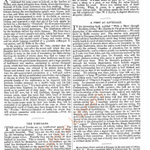
"The natives of Yoruba are an intellectual people. The men are handsome; and the women, many of them, are really beautiful. They have not the flat nose, the thick lip, the retreating forehead"
DAVID, W. J. "THE YORUBANS." Pictorial Missionary News, vol. XIX, no. 6, 1 June 1885, p. 91.

"The natives of Yoruba are an intellectual people. The men are handsome; and the women, many of them, are really beautiful. They have not the flat nose, the thick lip, the retreating forehead"
DAVID, W. J. "THE YORUBANS." Pictorial Missionary News, vol. XIX, no. 6, 1 June 1885, p. 91.
Remi retweeted

A broken clock is right twice a day.
I’m sorry, but Yorùbá people should resist every attempt to establish political dynasties in Yorùbáland.
Especially ones that are liberal and self-serving.

Today, I watched a “Seyi Tinubu Colloquium” being livestreamed on major television stations, and I couldn’t help wondering how deeply the culture of sycophancy has eaten into Nigerian society.
I remember the days of President Umaru Musa Yar’Adua, when Aso Rock became the venue for the wedding of one of his daughters to a sitting governor. Another governor also married into the presidential family. Those relationships attracted enormous political attention, but after Yar’Adua’s death, the political spectacle surrounding them faded so also did these marriages.
Today, we are witnessing another manifestation of this culture of power worship.
What exactly has @STinubu contributed to Nigerian society to warrant this elaborate colloquium, attended by so many “prominent personalities” and broadcast across major television stations? What extraordinary public service, intellectual contribution, or national achievement is being celebrated?
Is this about merit, or simply about being the son of a sitting president?
At a time when millions of Nigerians are struggling with hunger, unemployment, insecurity, and economic hardship brought about by his father, @officialABAT we should be having national shaming of the Tinubu regime. Sad day!
Remi retweeted
I know ypu’ve all been working hard to pin something on me, and some of you are joining in not knowing you are being used by people who want to be the ones controlling narratives on here. I will not be bullied, especially when I harbor no hate for anyone.

Remi retweeted

Heavily armed security forces arrested a Coptic Christian man at his home in Alexandria, Egypt, two days ago for the crime of "contempt of Islam." Apparently he shared social media posts deemed offensive to Muslim sensibilities.
Coptic Solidarity has more:
copticsolidarity.org/2026/10…


Remi retweeted

One of the most harrowing videos from October 7th.
I just want to make sure you are aware of the facts.
The man lying there is not Jewish; he is a Thai national who came to work in Israel.
The man trying with all his might to behead him is not a Hamas operative; he is a Gazan civilian.
Now, read that again.