

PhD Japanese literature 早大文学博士 源氏古注専門 Research Scientist @SakanaAILabs Prev: @GoogleDeepMind Google Brain @rois_codh #miwoapp creator https://xitter.cf/t.co/HRCcdxiBSM
Tokyo-to, Japan
Joined August 2017
- Tweets30.7K
- Following1.2K
- Followers38.1K
- Likes77K







tkasasagi 🐻 retweeted

東京でのSchmidhuber教授のイベントはおかげさまで満席となりましたが、京都大学での講演会の開催が決まりました。ぜひご参加ください。
Our Tokyo event with Prof. Schmidhuber is now full, but he will also be giving a public lecture at Kyoto University.
- Date:Thu, Nov 5, 2026, 13:30–15:00 JST (onsite only)
- Venue:HORIBA Symposium Hall, Kyoto University
- Host:京都大学 情報学研究科 附属次世代情報・AI教育研究センター(CIAIER)
ciaier.i.kyoto-u.ac.jp/news/…
参加無料・事前申込不要 / Free admission, no registration required

tkasasagi 🐻 retweeted

[MASTER FOUND]
Meet Miss Ladybird, one of The Lost Fairies from Miss Rinna’s Enchanterie. She has found her master, who wears the same glasses as hers.
ミス・りんなのエンチャンテリーの迷い子の使い魔『The Lost Fairies』から、てんとう虫ちゃんをご紹介します。おそろいのメガネのご主人様が見つかりました。
—-
Miss Ladybird てんとう虫ちゃん
“Good fortune followeth wherever I alight. Let me alight upon thee.”
“わらわが止まるところに、幸運は訪れる。そなたに止まらせておくれ。”
—-
The lost fairies slipped into my dreams, and now they set out to find their masters.
ミス・りんなのエンチャンテリー Miss Rinna’s Enchanterie ♥︎ 夢に迷い込んできた使い魔たちが、主を探してます。
📍 Nekochikura ネコチクラ, Hakata, Fukuoka @nekochikura
🗓 10月15日〜25日 木〜日 11:00–18:00
15–25 Oct, Thu–Sun 11:00–18:00
She is at the gallery until 25 Oct. If you are in town, come and see her before she flies off.
25日まではギャラリーにいます。飛び立つ前に、会いに来てくれませんか?
International online shop opens 30 Oct.
海外向けオンラインショップは10月30日オープン。


tkasasagi 🐻 retweeted
My solo exhibition : Enchanted - The lost Fairies is opened from 15-25 October 2026 at Nekochikura gallery Fukuoka.
My artworks included interactive dioramas and dolls you can play with✨
—-
魔法使いであるそなたは、わらわの主になってくれぬか?
Enchanted one, wilt thou become my master?
りんなのふしぎな魔法屋 Miss Rinna’s Enchanterie ♥︎
夢に迷い込んできた使い魔たちが、主を探しに福岡へ。
The lost fairies slipped into my dreams, and now they set out to find their masters.
📍 Nekochikura ネコチクラ, Hakata, Fukuoka
🗓 10月15日〜25日 木〜日 11:00–18:00
15–25 Oct, Thu–Sun 11:00–18:00
この子たちに会いに来てくれませんか?
If you are in town please come say hi to them in person.
海外向けオンラインショップは10月30日オープン。International online shop opens 30 Oct.


tkasasagi 🐻 retweeted
AIサイエンティストの第3フェーズ:人間と共同発見する「The Agentic Scientist」
ブログ(英語):pub.sakana.ai/agentic-scient…
GitHub:github.com/SakanaAI/AI-Scien…
論文:arxiv.org/abs/2610.18933
Sakana AIは2024年から、その時点での生成AIの能力を測る試みとして、AIだけでどこまで研究を進められるか を探求してきました。The AI Scientist(2024年8月)、v2(2025年3月)、そしてNature掲載(2026年3月)と、成果を報告してきました。今回、第3フェーズとなる「The Agentic Scientist」を公開しました。
近年、CodexやClaude Codeなどのコーディングエージェントは、長時間の開発作業を自力でこなせるようになりました。一方で、研究に必要な手順を踏まずにエージェントに任せると、スコアを少しずつ上げるだけの探索になりやすく、なぜ改善したのかが説明されないまま終わりがちです。
The Agentic Scientistは、既製のコーディングエージェントを複数組み合わせ、課題設定・仮説探索・実験・検証・論文執筆までを進めるための足場(scaffold)です。結果が満たすべき条件を実験前に定め、論文中の主張を一つずつ実験データに対応づけることで、人間がどこを確かめればよいかを明確にします。
当社の研究者がこのシステムを使って行った誤差拡散学習法(ED法)の研究は、国際会議 ALIFE 2026 の口頭発表に採択されました。この研究では、The Agentic Scientistが仮説の提案・実験・論文の取りまとめを担い、人間の研究者が問いと検証の条件を決め、途中の方向づけを行い、結果を確認し、著者として責任を負いました。そのほか、Doc-to-LoRAなど既存研究を発展させる形でも成果が得られています。
私たちは、高度なエージェントを駆使しながら人間とともに発見を目指すCo-Discovery(共同発見)を、これからの科学研究のあり方の一つとして提案します。


The Agentic Scientist: Orchestrating Coding Agents for Automated Scientific (Co-)Discovery
Blog: pub.sakana.ai/agentic-scient…
GitHub: github.com/SakanaAI/AI-Scien…
arXiv: arxiv.org/abs/2610.18933
Since 2024, we’ve used The AI Scientist as a way to test how far AI alone can take scientific research, from v1 to v2 to the paper published in Nature earlier this year. The Agentic Scientist is the next step in that line of work, built for the era of coding agents.
Coding agents such as Codex and Claude Code now carry out long software tasks on their own. Handing them a research problem, however, tends to produce a strong hyperparameter optimizer rather than a scientist: scores go up, but ideas stay narrow, and the reasons for the gain are rarely examined.
The Agentic Scientist makes the research loop explicit. It wraps off-the-shelf coding agents in a scaffold that controls what they see, what they write, how they are evaluated, and how results are handed to the next stage.
Parallel workers test hypotheses against rubrics defined before any experiment runs, share successes and failures through a common memory, and then ablate the winning program to generate evidence.
We used an early version of the system to study Error Diffusion, a biologically motivated alternative to backpropagation. Our researchers set the question and the rubric, chose directions at each stage, and verified the results, references, and claims before submission. The resulting paper was accepted as an oral presentation at ALIFE 2026. In autonomous runs, the system also raised Doc-to-LoRA retrieval accuracy from 52% to 98% on multi-needle tasks and designed a learned evolution strategy that improves over its CMA-ES reference on unseen tasks.
Alongside it we release AutoIllustrate, a pipeline for scientific figures that keeps an editable draw.io file as the source of truth, so every diagram can be corrected by hand.
Humans define the question and the standards of evidence; agents expand the experiments researchers can run. We call this Co-Discovery, and we are releasing both systems as open source for the community to build on.
tkasasagi 🐻 retweeted
【採用情報】GTMチームで新たに3つのポジションをオープンしました🐟
Partner Alliances Manager ISV:sakana.ai/careers/partner-al…
Partner Alliances Manager SI:sakana.ai/careers/partner-al…
Customer Success Manager:sakana.ai/careers/customer-s…
・ISV:パートナー製品とのAPI連携、共同販売、マーケット プレイス展開
・SI:SIer、コンサルティングファームとの協業体制づくり、パートナーのイネーブルメント・認定、共同ソリューション開発
・CS:成果に基づくサクセスプランの合意、活用定着の推進、営業と連携した更新/拡大の管理
いずれもチーム初の専任メンバーとして、仕組みをゼロから作るポジションです。日本発のAIプロダクトを世界のお客さまに届ける仕組みづくりに関心をお持ちの方、ぜひご応募ください🚀

tkasasagi 🐻 retweeted

日本最大級の大学生企業分析コンテストGyoseki Competition。東大大学院で学んだ江口航志は、第2回大会優勝チームの一員だ。
→金融ではなく、AIの最前線へ──Sakana AIリサーチエンジニア 江口航志が企業分析で得た「スタンスを取る力」
forbesjapan.com/articles/det…

tkasasagi 🐻 retweeted
The Agentic Scientist: Orchestrating Coding Agents for Automated Scientific (Co-)Discovery
Blog: pub.sakana.ai/agentic-scient…
GitHub: github.com/SakanaAI/AI-Scien…
arXiv: arxiv.org/abs/2610.18933
Since 2024, we’ve used The AI Scientist as a way to test how far AI alone can take scientific research, from v1 to v2 to the paper published in Nature earlier this year. The Agentic Scientist is the next step in that line of work, built for the era of coding agents.
Coding agents such as Codex and Claude Code now carry out long software tasks on their own. Handing them a research problem, however, tends to produce a strong hyperparameter optimizer rather than a scientist: scores go up, but ideas stay narrow, and the reasons for the gain are rarely examined.
The Agentic Scientist makes the research loop explicit. It wraps off-the-shelf coding agents in a scaffold that controls what they see, what they write, how they are evaluated, and how results are handed to the next stage.
Parallel workers test hypotheses against rubrics defined before any experiment runs, share successes and failures through a common memory, and then ablate the winning program to generate evidence.
We used an early version of the system to study Error Diffusion, a biologically motivated alternative to backpropagation. Our researchers set the question and the rubric, chose directions at each stage, and verified the results, references, and claims before submission. The resulting paper was accepted as an oral presentation at ALIFE 2026. In autonomous runs, the system also raised Doc-to-LoRA retrieval accuracy from 52% to 98% on multi-needle tasks and designed a learned evolution strategy that improves over its CMA-ES reference on unseen tasks.
Alongside it we release AutoIllustrate, a pipeline for scientific figures that keeps an editable draw.io file as the source of truth, so every diagram can be corrected by hand.
Humans define the question and the standards of evidence; agents expand the experiments researchers can run. We call this Co-Discovery, and we are releasing both systems as open source for the community to build on.
tkasasagi 🐻 retweeted
Introducing “My Fish” in Sakana Chat.
English Blog: sakana.ai/my-fish/#English
All your memories in one place, your history on a timeline, and the connections between them mapped out.
See what Sakana Chat has learned about you:
chat.sakana.ai/ 🐟

tkasasagi 🐻 retweeted
Sakana Chatに新機能を追加。会話で育ったメモリーが、見えるようになりました。
sakana.ai/my-fish/
新機能「My Fish」で、覚えていることを一覧に。履歴をタイムラインに。メモリー同士のつながりをマップに。Sakana Chatがあなたについて学んだことを、見てみてください。
Try Chat: chat.sakana.ai/ 🐟
tkasasagi 🐻 retweeted
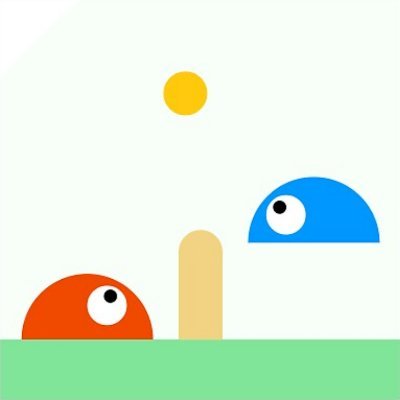
New paper from the team at Sakana AI:
Recursive Self-Improvement through Multi-Agent Self-Supervision (MASS)
How do we keep improving AI when the tasks become too complex for humans to reliably evaluate?
For open-ended research, we eventually hit a "supervision bottleneck." If we use the model itself as the solver, optimizer, and evaluator, it gets trapped in a homogeneous loop, reinforcing its own blind spots rather than correcting them.
To break this loop, we drew inspiration from Marvin Minsky’s Society of Mind. What if you prompt a single model to organize copies of itself into a structured team, then distill what the team learned back into the base model?
MASS alternates between two loops:
1/ Workflow Optimization: the model iteratively evolves its own multi-agent workflows, figuring out how subagents should communicate and route information to each other.
2/ Workflow Internalization: fine-tune the shared model on the successful multi-agent trajectories so the coordination behavior gets baked into the weights.
After two cycles with a 27B open-weights model, performance improved 1.2-1.6x per output token on tough research benchmarks (MLR-Bench, ScienceAgentBench, DSBench).
Multi-agent traces were also much better training data than single-agent ones. The model learns faster from jointly learning high-level orchestration and bounded subagent execution. The results showing that the model can bootstrap its own coordination skills by organizing copies of itself into teams feels promising as a mechanism towards self-improvement.
Blog: pub.sakana.ai/mass/
Paper: arxiv.org/abs/2610.12176
Incredible work by Hyunin Lee, Jinglue Xu, Jeffrey Seely, Yujin Tang, and our collaborators from UC Berkeley (Somayeh Sojoudi, Matei Zaharia, Donghyun Lee)!

Introducing Multi-Agent Self-Supervision (MASS): Recursive self-improvement through collective intelligence
Blog: pub.sakana.ai/mass/
As AI systems tackle increasingly open-ended research problems, human experts may struggle to assess results and guide further progress. The model itself may be the best available optimizer and evaluator. The challenge is obtaining useful self-supervision within that homogeneous loop, where a model risks reinforcing its own blind spots rather than correcting them.
We ask whether a model can learn from the collective intelligence of its own team.
We introduce Multi-Agent Self-Supervision (MASS). One shared model solves tasks through a team of virtual subagents, searches for better multi-agent workflows, then uses its own judgments to select the best ones.
Training on the best team’s executions provides self-supervision by distilling the team’s collective experience into the shared model.
We ran two cycles using a 27B open-weights model on synthetic open-ended research tasks. After the second cycle, score per output token reached 1.2-1.6x the base model's level across four research benchmarks.
Three key results:
First, MASS enables role generalization within an RSI loop: training only on task-solving data from the optimizee naturally improves the capabilities of both the optimizer and the evaluator.
Second, multi-agent trajectories are more efficient training data than single-agent trajectories for RSI.
Third, optimizer capacity, rather than evaluator capacity, can be the bottleneck in the speed of improvement.
We believe the community needs to investigate homogeneous RSI carefully to support AI safety. When a model is also its own evaluator, shared blind spots could allow mistakes to be accepted as progress and reinforced through training. For AI to improve beyond human expertise safely, we need to understand these failures and preserve effective ways to detect them and intervene.
Paper: arxiv.org/abs/2610.12176
Code: github.com/SakanaAI/mass
This work was a collaboration with researchers at UC Berkeley.


tkasasagi 🐻 retweeted
Beyond Imitation: A Framework and Benchmark for LLM-Assisted Peer Review
Peer review needs support, not substitutes. Accepted at TMLR: our new paper on using AI to help reviewers catch errors in research papers.
arxiv.org/abs/2610.11087
As research submissions grow, so does the workload for the experts who evaluate them. AI review systems are emerging as a potential solution, but much of their development and evaluation focuses on how closely they imitate human reviews.
In our work “Beyond Imitation: A Framework and Benchmark for LLM Assisted Peer Review”, we explore how AI can support the review process without losing the human touch. We focus on one demanding but essential task: catching errors in research papers.
We build an automated pipeline that deliberately introduces contradictions into papers by adding statements that conflict with information elsewhere in the manuscript. These planted errors give us clear targets for testing whether AI reviewers can spot and explain what is wrong.
Not all errors carry the same weight. Some undermine a paper’s central findings; others affect smaller details. We map the connections between each paper’s claims, methods, and evidence in a knowledge graph to estimate the severity of each contradiction and better assess what different systems can catch.
We also introduce Multi-Layered Review, an AI review system inspired by the Three-Pass Approach to reading research papers. It first outlines the main ideas, then examines the details and potential weaknesses, and finally brings its observations together into a review. The idea is simple: understand the paper before judging it.
In our evaluations, the system detected more errors than the other review systems we tested, including on papers withdrawn because of real mistakes. Its feedback emphasized different aspects of the work from human reviews, offering a complementary perspective, while its assessments of paper quality remained broadly consistent with human judgments.
Our goal is to give reviewers useful support in checking research, with human expertise and judgment at the center.
Open Review: openreview.net/forum?id=7iX2…
tkasasagi 🐻 retweeted

📣Tamagotchi Paradise新商品情報!!
今度のParadiseはたまギャラクシーでお世話⁉『Tamagotchi Paradise - Neon Planets』が11/21(土)より発売✨
新たなたまごっちを育てられる「コズミック星」からお世話がスタートし、おなじみのParadiseの子たちが育てられる「にゅーたまごっち星」、さらにこれまでの人気たまごっちたちが育てられる「たまごっち星」でもお世話が楽しめる♪
商品のご予約は11/2(月)AM11時~開始予定です!
商品の詳細はこちらから▼
tamagotchi-official.com/jp/s…
#Tamagotchi #たまごっち #Tamagotchiparadise #たまパラ

tkasasagi 🐻 retweeted

Interesting paper from Sakana AI on memory for recurrent models.
Recurrent models are good at state tracking, but they usually keep everything in one hidden vector, so short-term computation and long-term storage compete for the same space.
The Continuous Memory Machine gives the model two memory matrices. One short-term memory tracks recent neuron activity, and the other long-term memory stores information for later steps. A Transformer reads and writes both at every step.
It builds on Sakana's Continuous Thought Machine and beats LSTM, DNC, RMC, and CTM baselines on copy, associative recall, sorting, few-shot regression, and maze solving. It also generalizes to longer inputs than earlier memory-augmented networks.
The attention maps show the model uses long-term memory for algorithmic and in-context tasks and skips it when the task does not need it.
Paper: academy.dair.ai/papers/conti…

tkasasagi 🐻 retweeted
アイリス株式会社( @ShoOkiyama )の医師向けエビデンス検索ツール「Evidence Finder」に、Sakana AIの技術が採用されました。
医師の質問に対し、文献を検索して引用元を明示しながら回答。文献の比較・統合と回答生成の部分を担います。
詳細はこちら
sakana.ai/namazu-aillis/ 🐟

tkasasagi 🐻 retweeted
ニュースレター「Sakana AI Insider」、登録受付中です🐟
詳細:sakana.ai/sakana-ai-insider
・プロダクトのリリース情報
・研究開発のアップデート
・Swagプレゼントやイベントの優先案内
先日公開し、多数ご応募いただいたイベントでは購読者の皆様への先行受付を実施しました!
登録はこちら 👇
forms.gle/E4siqGLT8MQF5Fvo9 🐟

tkasasagi 🐻 retweeted

Come listen to my stories about how mad being on the Transformer paper has made my life!

「Attention Is All You Need」の共著者・Sakana AI CTOの、Llion Jones氏がDevFest Kansaiに登壇決定🐟‼️
歴史的論文の舞台裏、知られざる事実、そして激変した研究者の人生とは?
貴重なトークをお見逃しなく🚀✨
📅 10月18日(日)
📍 大阪
👇詳細・申込はこちら👇
gdgs.jp/df26xs13
「I didn't need this attention」
Llion Jones / Co-Founder & CTO, Sakana AI, a co-author of “Attension is All You Need”

tkasasagi 🐻 retweeted
【採用情報】Sakana AIで「Public Sector Specialist」を募集🐟
apply.workable.com/sakana-ai…
Sakana AIの最先端技術を官公庁の予算要求や政策立案に接続するドキュメンテーション戦略を担い、公募案件の探索・提案から採択獲得までを推進していただきます。
このようなご経験をお持ちの方を募集
・ 政府機関での予算要求・政策立案のためのドキュメンテーション経験
・ 民間企業で、政府機関が公募する研究開発・調査等の事業に提案書を作成し、採択された経験
・ 生成AI分野の最新動向への継続的な関心と理解
国内外の政府機関に最先端のAI技術を届けたい方、ぜひご応募ください🚀
