

00后至今不假思索还以为是17 打工两年仍未融入web3
Joined September 2022
- Tweets98
- Following328
- Followers30
- Likes268





tree的 retweeted

非常推荐大家去看 @YangLi_leo 写的这篇文章: The Next Scaling Problem。前段时间也受到了群里大佬的高度赞赏。
文章里几个比较重要的章节和理念值得大家一看:
1. A computer should be something the agent calls, not somewhere the agent lives
2. Write ahead of execution
3. A durable participant
4. Scaling the system around intelligence
介绍了为什么要让 agent live outside of sandbox,把cloud agents存算隔离的架构解释得非常透彻,以及提供了架构如何enable multi-agent workspace 的非常好的insight。
tetral.ai/blog/the-next-scal…


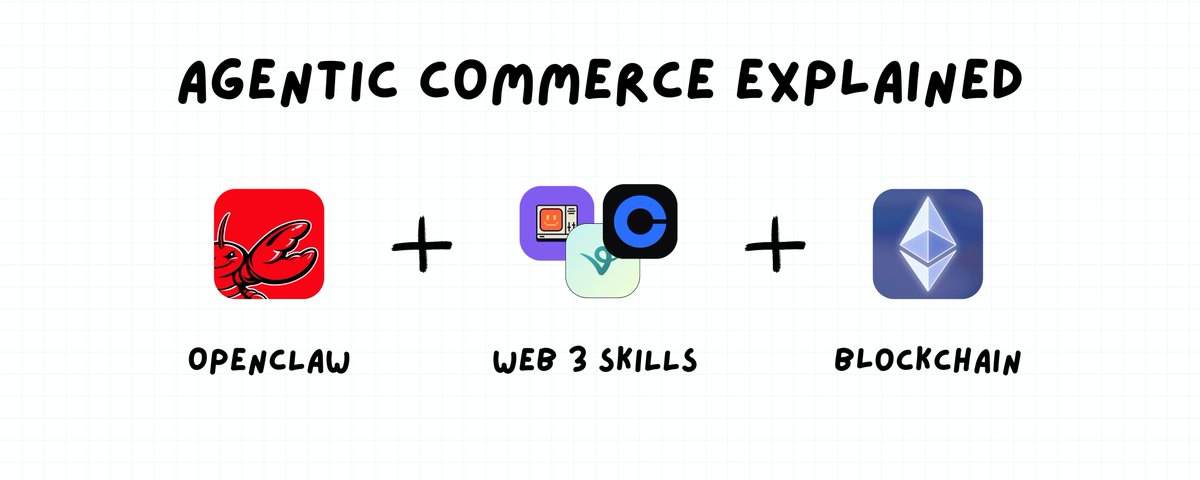
研究了两天openclaw 发现在其架构中,使用者作为普通人能改变的,或者是和别人产生区别的可控变量1.是灵魂soul.md 2是skill set
大概除了模型能力上的壁垒之外,卖铲子的人要开始大规模控制贩卖技能或者出卖灵魂了
蹲一个细分领域的ai native的skills 厂商
55











tree的 retweeted

Most people do not understand how OTC desks allow institutions to accumulate Bitcoin without moving the chart. Here is how it actually works.
OTC desks match buyers and sellers off exchange. If a fund wants 5,000 BTC, the desk starts hunting for miners, early whales, VCs, market makers, and distressed holders who want to unload size. None of that goes through the order books, so the chart never reacts.
They also tap into deep private liquidity that most retail never sees. Miners selling block rewards, VCs offloading tokens, market makers rotating inventory, even corporate treasuries rebalancing. All of this happens quietly behind closed doors.
And these large orders are never filled at once. A 5,000 BTC request might take weeks. The desk collects supply piece by piece, then matches it when enough size is found. This avoids any visible price spike.
Only when they cannot source enough Bitcoin privately do OTC desks touch the open market, and that is always the last resort. They stretch the process as long as possible to prevent price impact.
This is why you only see the sell side on the chart, not the institutional accumulation happening in the shadows.





tree的 retweeted

Arete Capital (@Crypto_McKenna) just released their 2026 $HYPE valuation outlook:
1. Revenue
- Q3’25 annualized: $1.13B
- Growth drivers: HyperCore (+$415M), Builder Codes (+$154M), Aligned Stablecoins (+$88M), HIP-3 markets (+$80M)
-> EOY ’26 annualized revenue: $1.87B (+65%)
2. Supply dynamics
- HIP-3 operators: 4–12 exchanges × 500K HYPE → 2–6M HYPE staked
- Aligned stablecoins: 1–3 issuers × 1M HYPE → 1–3M HYPE staked
- Assistance Fund: 100% of annual revenue used for buybacks (~41.6M HYPE)
- Hyperliquid Strategies Inc: $305M in cash allocated (~6.8M HYPE)
-> Ready-for-sale float projected to shrink to ~220M HYPE
3. Valuation
- FY26E Revenue: $1.87B
- Circulating Mkt Cap (@$45): $17.3B
- P/E: 9.1x (circulating) / 5.3x (ready-for-sale)
-> At $45, $HYPE trades below 10x forward earnings. A market re-rating to 15–20× implies $75–$100 range.
4. Takeaway
- As Builder Codes, HIP-3, and USDH revenues kick in, $HYPE enters its profitability era:
~$1.9B rev / <10× P/E / $23–33B mkt cap range looks entirely reasonable.
- packed with alpha. if you’re following Hyperliquid, it’s a must read.


tree的 retweeted

The controversies behind Binance listings🚨
1. The Zerebro case (October 2025)
Founder Jeffy Yu said Binance asked for $1 million in cash to list his AI token ZEREBRO on Solana.
2. Limitless CJ Hetherington’s accusation
Limitless’ CEO claimed Binance demanded 9 % of the total supply and a $2.25 million “security deposit.”
The breakdown he shared:
• 3 % for Binance airdrops
• 3 % for marketing programs
• 3 % for BNB holder rewards
Binance called these claims “false and defamatory.”
3. The Tier-1 case Simon Dedic (October 2024)
Investor Simon Dedic, CEO of Moonrock Capital, said Binance requested 15 % of the total supply from a major project that had raised about $100 million.
He valued the listing alone at $50–100 million.
4. Employee and internal scandals
Former staff member Amrita Srivastava reported a colleague for taking bribes to speed up client onboarding in Binance Link.
She was fired a month later and filed an unfair dismissal lawsuit in the UK.
5. “Girlfriend Coins” rumors
Between 2024–2025, community rumors spread about listings allegedly linked to Yi He, Binance’s co-founder.
Projects like Hooked and Sleepless AI were mentioned as “favorites.”
Yi He denied everything
6. Market-maker controversies
Wintermute was accused by Jeffy Yu of taking 10 % of $ZEREBRO’s supply for market-making
Other firms like GSR Markets and DWF Labs usually take 1-5 %, often with vesting to prevent dumps.
In 2025
Movement Labs suffered a 90 % price crash after a market maker allegedly sold 66 million tokens (10 % of supply) right after its Binance listing


tree的 retweeted

THIS chart is the CLEAREST signal of where the internet is heading.
social media time is SHRINKING for the first time in HISTORY, and young people are leading the pullback.
Brainrot is OUT.
they grew up online, saw the full cycle of social platforms, and learned early that endless scroll doesn’t make you happier or smarter.
they’re the LEADING indicator. their parents will follow in 3-5 years.
AI slop is the nail in the coffin.
every feed feels synthetic familiar faces, identical voices, recycled ideas. the “factory smell” of it all finally broke people’s curiosity.
but there’s an upside. every trend creates its anti-trend.
attention is shifting back to things that feel real, slow, and intentional.
people are paying for spaces that make them feel grounded, informed, and connected again.
the next $100M+ companies will engineer density, trust, and time well spent. they’ll build containers for meaning, then use AI to keep them organized, not optimized.
the internet’s oldest assumption that more engagement equals more value is breaking.
the white space i think is...
• "slow media" formats: weekly briefs, serialized content etc
• private groups that operate like clubs with applications and rituals
• provenance and identity layers that verify real creators and sources
• brands with offline gravity like real events, real belonging
• curated directories and vetted marketplaces
• paid memberships that deliver depth
• note: we share business ideas around this on @ideabrowser
• IRL anything - dinners, meetups, shared experiences
young people are abandoning social media faster than their parents are discovering it.
If you understand what that means, that's a big deal.
i can't stop thinking about this FT/GWI chart.
brainrot is OUT.
meaning is IN.

tree的 retweeted

昨晚贝森特的讲话非常值得关注,逻辑在于:1、作为财政部长,他已经地跨越职能边界,对美联储未来政策作出明确指引,以往他可是避免明确地对美联储的降息路径作为评论。
2、若降息150个基点,意味着利率终点是2.75%,而现在两年期美债收益率依然稳定在3.68%的位置,隐含利率预期明年年底才到3%,他的指引明显比市场预期的要激进很多。
3、贝森特提到的美国要降息、日本要加息的逻辑在于在于:高利率对美国国内经济增长、信贷、房地产和中小银行都有明显压制,当然他没有说的大美丽法案后美国财政对于大幅度降息的疯狂渴求(能很大幅度地降低债务利息支出);而对于日本他则是觉得日本开始摆脱输入性通胀的逻辑开始进入内生性通胀(工资与物价同步增长),如果不加抑制通胀一旦受控,被迫加息使得全球市场被动承担套息交易的冲击、还不如主动缓慢加息,这样平滑曲线然后减少对市场的冲击。
4、更大的意义是贝森特开始抢夺对于市场的影响力:这背后的逻辑是在通胀、财政赤字、地缘冲击和久期风险共同作用时,单一的利率信号很难再独揽定价权,本身也进入了新一轮财政扩张2.0时代、财政就需要有更大的话语权。
贝森特的插足,一方面是对当前货币政策的一种公开施压,另一方面也是一种“平行前瞻指引”——它不依赖于FOMC的点阵图,却可能对市场的实际交易行为产生同等甚至更大的影响。


晚上贝森特的讲话要点:呼吁美联储降息,甚至9月份50个基点;未来发债还是会议短债为主,当然随着利率的变化发债结构也要变;估计未来会继续做收益率曲线控制以防止收益率飙升xitter.cf/qinbafrank/status/1925…

