

Tidemark is a growth equity firm purpose-built to help companies win and scale. We give 10% of our profits to the Tidemark Foundation.
Joined June 2021
- Tweets772
- Following146
- Followers963
- Likes135






Sequoia says $6 is spent on services for every $1 spent on software. Gainsight is one of the first major SaaS companies to go after the $6.
Chuck Ganapathi became CEO of @GainsightHQ in August 2025, a little over a year after joining as president and COO. His bet is Atlas, an AI-native services line that pairs 15 years of customer success expertise with agentic AI to deliver the outcome a BPO or an overstretched long-tail team used to. Atlas doesn’t charge per seat. It gets paid on the outcome.
The first job it took on is renewals on the long tail. By Chuck’s math, a 10% lift in long-tail renewals improves overall GRR by 2 percentage points.
In September, Gainsight plugged its customer data into Salesforce Agentforce. Chuck’s framing: “Agentforce knows the revenue motion. Gainsight knows the customer.”
Chuck is on stage Thursday to unpack what it takes to build an AI services business on top of a Control Point, and what it means for vertical SaaS.
Collective Live is sold out, but the waitlist is open at vsaaslive.com. Follow us here for takeaways, quotes and moments from the 19 CEOs, founders, and operators taking the stage this year.

.@HappyRobot's agents book the load, send the rate con and commit dollars in the TMS, with no human in the loop. That’s a long way from a demo. And nine of the 10 largest freight brokers in the country are already customers.
@pablorpalafox is co-founder and CEO of HappyRobot. He and his team build agentic AI that does the operational work inside logistics companies: booking the deal, servicing the deal, handling the accounting and reconciliation. They sell those agents across the whole freight chain, to shippers, carriers and freight forwarders alike.
He’s taking the stage on Thursday to unpack how HappyRobot got here and where multi-stakeholder, multi-vertical agents go next.
VSaaS Collective Live is at capacity for 2026, but the waitlist is open at vsaaslive.com. Follow us here for the sharpest insights from the stage.

The money a vertical software platform’s customers earn, pay and move around increasingly runs through the platform itself. Three of the companies making that possible are joining us in San Francisco next week.
Thank you to our High Tide sponsors: @check_hq, @stripe and @branch!
Payroll, payments, workforce pay. The infrastructure under all of it will be in the Collective Live room. Get on the waitlist here: vsaaslive.com

Restaurant operators don’t buy promises. Their priorities are concrete: serving guests, supporting their teams and keeping their businesses running. If AI doesn’t make one of those easier, it doesn’t matter.
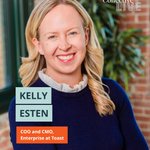
At Tidemark’s Collective Live, @ToastTab CMO & COO of Enterprise, Kelly Sennatt Esten, will share how Toast puts “proof over promise” into practice by showing operators what AI can do for their businesses. She’ll discuss how to carry one story across launches, channels and customer moments—and build a brand customers trust.
Collective Live is now at capacity. Join the waitlist for October 21–22 in San Francisco: vsaaslive.com

Vertical software platforms are becoming the operating system for their customers. From accounting and insurance to embedded websites and phone systems, the capabilities they offer keep expanding.
The companies helping power that expansion are joining us in San Francisco.
Thank you to our Rip Curl sponsors: @layer_financial, DialStack, @DudaPlatform, Viaffinity and Tight.
Grateful to have you joining us at Collective Live!

tidemark retweeted

Highly recommend attending VSaaS Collective from @tidemarkcap you are in SF Oct 21-22: vsaaslive.com/

The first thing on the Collective Live schedule is our welcome party. There's a reason it's structured that way: the 300+ founders coming in from across vertical software need time to find each other before the sessions start. The Welcome Party at Pier 70 is where that happens, and this year Tight is making it happen. Doors open at 4:30pm on Wednesday, October 21.
Tight.com offers AI-native embedded accounting for vertical SaaS platforms. Your small business customers get the power of end-to-end accounting inside your SaaS or fintech products, making their accounting easier and your platform irreplaceable. Over 1.4 million SMBs served. Grateful to have them with us this year, and ready to kick things off at Pier 70!
VSaaS Collective Live is at capacity for 2026. See the full lineup and join the waitlist here: ordnl.link/AeZsid5

Every tool a merchant leaves your platform to use is engagement you're giving away. @layer_financial brings accounting and bookkeeping inside vertical software, which turns a back-office chore into another reason merchants stay.
That's part of why we're glad to have them back as a sponsor of VSaaS Collective Live 2026. This year they're also hosting lunch, so if you're building toward embedded finance, find the Layer team at your table.
Excited to see the Layer team in San Francisco next month! vsaaslive.com

More and more vertical software platforms are getting the same question from their customers: can you handle the money too?
@unit_co_ is one of the reasons more of them can say yes, and part of why we're glad to have them back as our presenting sponsor of VSaaS Collective Live 2026. Grateful, and ready for round two in San Francisco next month!

Ronak Malde co-founded @trajectorylabs this year after training agentic coding models at Codeium and Google DeepMind, launching with $15M behind a bet on continual learning: turning every correction, retry and edit from production users into training signal for the agents they're using.
Clay, Harvey, Decagon, Mercor and Rogo are already using it.
He's bringing that work to VSaaS Collective Live 2026, unpacking how agents get better the longer they're deployed. We're now at capacity for this original event built for VSaaS founders and CEOs.
Get on the waitlist so you can be there if a spot becomes available: vsaaslive.com

Most AI can write code. Very little of it understands what that code does once it's running in production. That gap is where PlayerZero is building.
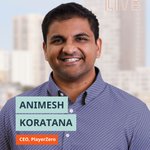
Animesh Koratana started PlayerZero after his research at Stanford's DAWN Lab. His bet: AI for software should be collaborative, working alongside engineering, support, and QA from a shared model of how software engineering systems actually behave, not just a chatbot bolted onto a codebase.
Today PlayerZero's AI production engineering platform works at companies like Zuora and Georgia-Pacific, delivering up to 80% fewer escaped defects.
Animesh is bringing what he's learned about building that shared understanding to VSaaS Collective Live 2026 in San Francisco, October 21-22.
If you're building AI-native and thinking about how agents and teams work from the same context, apply here before spots fill up: ordnl.link/9J1fdDy

VSaaS Collective Live 2026 doesn't happen without our event partners bringing it to life. A huge thank you to the companies showing up for the vertical software community this year!
Unit is our presenting sponsor. Tight is opening the event with the Kickoff Party at Pier 70 on October 21. Layer is hosting lunch. And we're joined by Check, Duda, Stripe, DialStack, Branch, Viaffinity, Forward, ADP, Happily and Gusto, all bringing tools that vertical software platforms rely on every day.
We're grateful to have them in the room with us on October 21-22 in San Francisco.
Apply to join us here: ordnl.link/PtYTAS3

Eric Rea co-founded @PodiumHQ in 2014. Over the past few years, he’s led one of the more aggressive AI-native transformations in vertical software—reorienting the company around agents and expanding Podium from a communications point solution toward an AI operating system for local businesses.
The bet: AI agents are eroding the traditional advantages of incumbent systems of record. As interfaces and features become easier to replicate, value shifts to the context, communications, payments, and infrastructure that agents run on.
Today, Podium is doing more than $100M in AI ARR.
He’s bringing that story—and what Podium learned from betting the product roadmap on agents—to VSaaS Collective Live 2026 in San Francisco on October 21–22.
Space is now extremely limited. Apply to join us: ordnl.link/zHaqN6f

Jeff Seibert took the harder path building @Digits: proprietary AI models trained in-house on $825 billion+ in business transaction data since 2018, years before the term Foundation Models became mainstream.
Digits' models handle 95%+ of client transactions automatically, flagging outliers for human review. Jeff's argument: owning your model stack and training it on your own data is the durable competitive edge in a vertical.
He's bringing that argument and a deep dive on building vertical models to VSaaS Collective Live 2026 in San Francisco on October 21-22.
Apply to join us here: vsaaslive.com/?utm_source=li…

Sam Trudo has scaled sales twice: nearly a decade at Toast, then leading revenue at EvenUp through 100%+ year-over-year growth, building the GTM engine across sales, enablement and partnerships.
She's joining our GTM track at Collective Live 2026 to unpack how the sales motion changes when you go from selling SaaS to selling AI.
Same buyer, different value story, different price. Most GTM teams haven't caught up.
October 21-22 in San Francisco. If you're building AI and still selling it like SaaS, come hear Sam's take at Collective Live: ordnl.link/RnRbzqk

Today, we're launching two new essays in our System of Action series.
Investors have declared the application layer dead — Foundation Models chewing up Control Point incumbents and Native AI challengers alike as they move up the stack. @davelyuan's answer: we don't buy it.
First up is 𝗣𝗮𝗿𝘁 𝟰: 𝗧𝗵𝗲 𝗖𝗮𝘀𝗲 𝗳𝗼𝗿 𝘁𝗵𝗲 𝗔𝗽𝗽𝗹𝗶𝗰𝗮𝘁𝗶𝗼𝗻 𝗟𝗮𝘆𝗲𝗿. In it, Dave outlines why customers need an application layer to “do the work,” why the Foundation Models won't build it in most markets, and the size of the System of Action prize.
Part 5 is the how: a framework for building the System of Action, with race plans for Control Point incumbents and Native AI challengers, and the war-gaming exercises we run with our portfolio.
We're sharing Part 4 broadly. Part 5 stays limited to portfolio companies and operators — reply "Part 5" and we'll DM you.

Catch 𝗣𝗮𝗿𝘁 𝟰: 𝗧𝗵𝗲 𝗖𝗮𝘀𝗲 𝗳𝗼𝗿 𝘁𝗵𝗲 𝗔𝗽𝗽𝗹𝗶𝗰𝗮𝘁𝗶𝗼𝗻 𝗟𝗮𝘆𝗲𝗿 here: tidemarkcap.com/vskp-chapter…

Catch System of Action — Part 4: The Case for the Application Layer here: tidemarkcap.com/vskp-chapter…
Adopting AI tools gets you 35% more throughput. The companies getting 5–10x did something else.
Tidemark Partner, Rocky Gowni, and Tidemark Forward Deployed Engineer, Jaymin West, spent six months working hands-on with software companies on their engineering, product and design transformations. The finding was consistent: the gap has almost nothing to do with which tools they picked and everything to do with how they reorganized.
A 35% gain isn't a transformation. It's a tool purchase.
In our latest essay, the two lay out the four levels of EPD transformation, from engineers directing agents to a software factory that generates its own work. Most companies are stuck on the second.
Read the full essay here: tidemarkcap.com/vskp-chapter…

Garrett Lord co-founded @JoinHandshake in 2014 to connect job seekers with employers. Today, the platform reaches over 25 million job seekers, 1,600 US universities, and 1 million employers, from Fortune 500 companies to federal agencies to small businesses.
Then the ground shifted with the era of AI. In 2025, Garrett launched Handshake AI, connecting domain experts on the Handshake network with leading AI labs to supply the human judgment frontier models need to train and improve.

That evolution is one of the clearest examples we've seen of a vertical platform turning its proprietary network into a new system of value. The growth has been steep. Annualized revenue from AI training has since scaled from roughly $5 to 10 million a year ago to approaching $1 billion today.
At Tidemark's Collective Live this October, Garrett joins us to share the Handshake story: how the company found an inflection point in the agentic age, and what it takes to act on one.
October 21-22. San Francisco. Register to join us here: ordnl.link/agYsOep