

Game designer, forever DM, RPGphile, lover of musicals, painter of minis. Senior Creative Director on @ironmangame at @MotiveStudio. Opinions my own.
Montreal, Quebec
Joined April 2009
- Tweets22.5K
- Following82
- Followers10.5K
- Likes39.1K




Pinned Tweet
Finally set up a Linktree in case folks want to follow me elsewhere: linktr.ee/tibermoon?utm_sour…

I hope I survive to 2045, when presumably Baldur’s Gate IV will reinvigorate the entire RPG genre yet again. youtu.be/z1WSOSP4Rb4?is=e_j0…
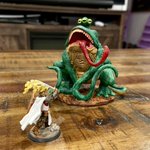
My latest bits of mini painting are both from ye olden days of D&D: the mighty Froghemoth and the classic 1E AD&D design of the Beholder!

ALT Froghemoth mini, as first introduced in Expedition to the Barrier Peaks

ALT Beholder mini based on its design from 1E AD&D
Ian S. Frazier retweeted

Majuular's 4.5-hour documentary on Ultima Online is here to devour your weekend pcgamer.com/games/rpg/drop-e…

Looks like @majuular’s incredible Ultima retrospective nears its end, having now released an episode on Ultima Online. I can’t believe how in-depth these crazy things are.
Ian S. Frazier retweeted

The Expanse is one of very very few shows to grapple with the idea that the do gooder protagonist would be tremendously annoying to everyone else the entire universe

This has been an incredibly weird season of Strange New Worlds, but I love that finale. Star Trek Mansion: Day of the Tentacle!
God I love the [redacted] in our game, especially the [redacted] one that you can only get if you complete the [redacted] in [redacted]. Just so cool.
Adam’s thoughts here largely align with my own take on the most recent “AI is going to kill us all” scare. youtu.be/pauBYSQ1K_c?si=1tZw…
Ian S. Frazier retweeted

proud to announce we have built the Autonomous Tracking Drone from the classic sci-fi horror novel “Don’t Build the Autonomous Tracking Drone”

Going through the new Mistborn books in the @bwisegames Cosmere TTRPG and cripes, the amount and quality of the art in these things is insane.
Both Jean-Luc Picard and Tony Stark have taught us an important lesson about life: traumatic damage to one’s heart just makes you more *awesome*.
That’s why fat, sugar, and salt play such a large role in my diet.
Ian S. Frazier retweeted

“Five years later, it still doesn’t feel like @GOTGTheGame has gotten its due…not enough people experienced one of the best linear comic book video games of the modern era.” But as @Kotaku also says, now you can get it via @Steam for only $8.99! kotaku.com/you-can-get-5-exc… #GOTGgame

Bought a set of bone-themed dice *just in case* I ever want to play a Necromancer. Because I am a reasonable adult who makes good financial decisions.

Ian S. Frazier retweeted

Well, that didn't go as planned. But now you know, and we've got a lot more to show you. See you when we’re ready.


Ian S. Frazier retweeted

This paper gives a fancy name to a problem you can already feel in your bones
"The Tragedy of the Cognitive Commons." Checking AI output requires deep expertise. Deep expertise comes from doing grunt work for years. And grunt work is the first thing AI eats
So we're building systems that need expert supervision while dismantling the only known process for making experts
The paper calls the shared pool of human expertise the "cognitive commons." Every profession drinks from it. Nobody's refilling it.
By eliminating junior roles, each company is acting totally rationally, and the collective result: a profession that can't catch AI's mistakes anymore because it never learned to do the work in the first place
Who checks AI's homework in 15 years?

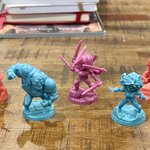
Back to mini painting after a long break, starting with Marvel United’s Strong Guy.
I feel I need to dedicate this little paint job to @NandovMovies.

Ian S. Frazier retweeted

btw anthropic's internal document on this literally said "we don't want it to be known that we are working on this.”
it was called project panama.
here's exactly what happened:
1: anthropic concluded that books were the cheapest way to build a world-class model because they gave claude curated facts, structured arguments, compelling stories, and writing “an editor would approve of.”
2: once anthropic decided it needed books at enormous scale, its first solution was piracy.
it downloaded 7m+ books from online libraries including libgen. the judge later wrote that although anthropic had legal ways to buy them, it chose piracy to avoid what dario amodei called the “legal/practice/business slog.”
3: that piracy created a massive legal risk.
so in february 2024, anthropic hired tom turvey, the former head of partnerships for google books, to find a legally safer way of obtaining “all the books in the world.”
4: turvey first contacted major publishers about licensing their catalogs.
those attempts didn’t produce agreements, so anthropic chose a route that required no publisher permission: buying millions of physical books through distributors and used-book retailers.
5: within about a year, anthropic spent tens of millions acquiring and scanning millions of books, including many rare and 1/1 titles. one vendor proposal targeted 500,000 to 2 million books in six months.
6: to scan that many books within months, the vendors physically dismantled them.
a hydraulic cutter removed each spine. the pages were trimmed to size, fed as loose sheets through high-speed industrial scanners, and converted into searchable PDFs. the paper remains were then sent for recycling.
7: these PDFs were fed into claude as training data.
the complete collection became a private, searchable anthropic library that the company planned to “store forever.” the scans aren’t available to the public and were never open-sourced.

🦔AI companies are bulk-buying rare books, scanning them through high-speed machines that cut the spines off, and shredding the originals. A service called ISBNdb facilitates orders of up to a million books and keeps buyers anonymous. Pre-2022 books are premium because they're free of AI-generated text. A federal judge ruled the practice is fair use because eliminating the original means only one copy exists at a time. Anthropic hired the former head of Google Books partnerships to obtain "all the books in the world."
My Take
This got to me. A bookseller told 404 Media that rare books with almost no surviving copies are being fed into this pipeline. Books that survived wars, fires, and centuries of handling are being shredded so an AI can learn to write a better marketing email.
ISBNdb's website literally says "'AI company destroys two million books' is not a headline that generates sympathy," and they still built an entire business around making it happen quietly. They offer NDAs as a feature. They coach clients to call it "digital preservation."
I've covered AI companies scraping the internet, torrenting libraries, and stealing music. This is worse because it's irreversible. You can re-upload a website. You can reprint a bestseller. You can't replace the last three copies of an 18th-century botanical text once someone shreds them for training data. And the judge said it's legal. So it's going to accelerate.
"We shred rare books and offer NDAs so nobody finds out" is a legitimate business model in 2026. What a timeline.
Hedgie🤗

Ian S. Frazier retweeted


'Dungeons & Dragons' Sequel Was Written but May Never Be Filmed Due to 'Financial Reasons' variety.com/2026/film/news/d…
