

Author of "Irish Tales" - a cycle of new fairy stories for adults. Out now!
Ennis, Ireland
Joined July 2011
- Tweets20K
- Following3.6K
- Followers959
- Likes7.8K






Nick Larter retweeted

GOBLIN perform 'Suspiria' from the soundtrack of Dario Argento's masterpiece. Italian TV, 1977


Nick Larter retweeted

This is a very important and relevant to today map 👇
Amid the current war, it's important to remember that Iran, like much of the Global South, endured more than a century of colonial domination, marked by devastating territorial losses, humiliating foreign interventions, and deeply unequal concessions imposed by imperialist powers.
This is indeed the broader historical backdrop to the current conflict, and why sovereignty remains such a deeply charged issue for many Iranians. The memory of national humiliation, exploitation, and foreign powers seeking to dictate Iran's fate is not easily erased.
Against this backdrop, Trump's threats and actions toward Iran have been especially striking: openly coveting its oil and territory, threatening its civilization, attacking critical civilian infrastructure, and not so covert efforts to arm ethnic minorities and destabilize the country.
These are not merely familiar instruments of coercive diplomacy. They evoke the methods and ambitions of the imperialist era.
And this is of course hardly confined to Iran. Trump's approach to Venezuela is perhaps the clearest illustration of the broader pattern, and of the kind of outcome he has appeared to seek in Iran.
It bears reminding that after Maduro's kidnapping, Washington this summer secured an extraordinary oil arrangement granting century-long concessions over 17 Venezuelan fields, an unprecedented U.S. government stake in the operator's parent company, and preferential rights to purchase its oil, including a huge amount production at cost regarding of constantly changing oil prices.
The sheer imbalance of these terms evokes the immensely unequal concessions imposed on weaker countries during the colonial era.
That such arrangements are being imposed in the 21st century is extraordinary, and their implications have received nowhere near the scrutiny they deserve.
In Iran, the methods of coercion have in fact been even more aggressive, with military force, threats against the country's very existence, and pressure on its territorial integrity. Whatever one thinks of the Islamic Republic, the historical parallels are difficult to ignore.
For Iranians who know their country's history, the specter of foreign domination is not an abstraction. It is a painful national memory, and one that Trump's conduct has brought forcefully back into the present.


Nick Larter retweeted

The world turned upside down.
Pearl-bordered Fritillary in the Wyre Forest this afternoon (17/10/26.)
@WestMbs_99 @savebutterflies @MatthewOates76

Nick Larter retweeted

Pyrenean Clouded Apollo is one of the most fascinating European butterfly stories of this year. Research has revealed that Pyrenean populations of what was hitherto thought to be simply Clouded Apollo are genetically highly distinct from it.
ibe.upf-csic.es/news/-/asset…

ALT Pyrenean Clouded Apollo (Parnassius turatii) © Jon Dunn
Nick Larter retweeted

An Iranian political painting depicting Stalin as a Persian archer shooting the ‘Red Army’ at Hitler’s heart, 1945.

Nick Larter retweeted

A film four years in the making, shot in the ancient forests of Russia’s Komi Republic, reaches cinemas today.
Much of the landscape has never known a human footprint, which may explain why it remains so beautiful.


Nick Larter retweeted

Thank you @BBCArchive - this is truly awesome.
The Master Game, originally broadcast on BBC Two, 6 August, 1975. Presented by Jeremy James, Analysis by Leonard Barden: youtube.com/watch?v=UUAJfB6t… #chess #themastergame #chessmaster #chesstv #chessshow


Nick Larter retweeted

Watercolor painting titled "Ковш" (Ladle/Bucket) from the series "Уралмашевские мотивы" (Uralmash Motifs), created by the Soviet artist Boris Alexandrovich Semenov, 1975.

Nick Larter retweeted

We’ve lost an icon. Margaret Hamilton, a computer science pioneer best known for her work at MIT leading development of the flight software for the Apollo missions to the moon, has died at 90. Read about her legacy via MIT News: news.mit.edu/2026/margaret-h…

ALT Margaret Hamilton is reclined inside a NASA spacecraft module, surrounded by control panels and switches.

Nick Larter retweeted

Various depictions of horses found on ancient Celtic coins, with their approximate geographical origins.

Nick Larter retweeted

There are two competing hypotheses about Russia's invasion of Ukraine. The first hypothesis is that the invasion was unprovoked, as Russia is another "Hitler" pursuing expansionism, and that the logical response of NATO is therefore to stop Russia and raise the costs. From this perspective, even diplomacy can be viewed as "appeasement." The second, competing hypothesis is that Russia responded to 30 years of NATO expansion, which it considers an existential threat, and thus considers itself to be fighting a defensive war. If the second hypothesis is correct, then NATO deepening its direct involvement and rejecting negotiations will only result in the destruction of Ukraine while taking further steps toward nuclear war.
George Beebe, the former Director of Russia Analysis at the CIA, argues that the second hypothesis is clearly correct: Russia sees this as a war for its survival and therefore cannot back down. One does not need to agree with the analysis of Beebe, but this should really be at the center of the debate in the West, as our survival depends on it. My great concern is that we are not even permitted to discuss or debate these two competing hypotheses, because the narrative must be protected and all dissent is smeared as repeating Russian propaganda. youtu.be/HrgVTdBvSpI

Nick Larter retweeted
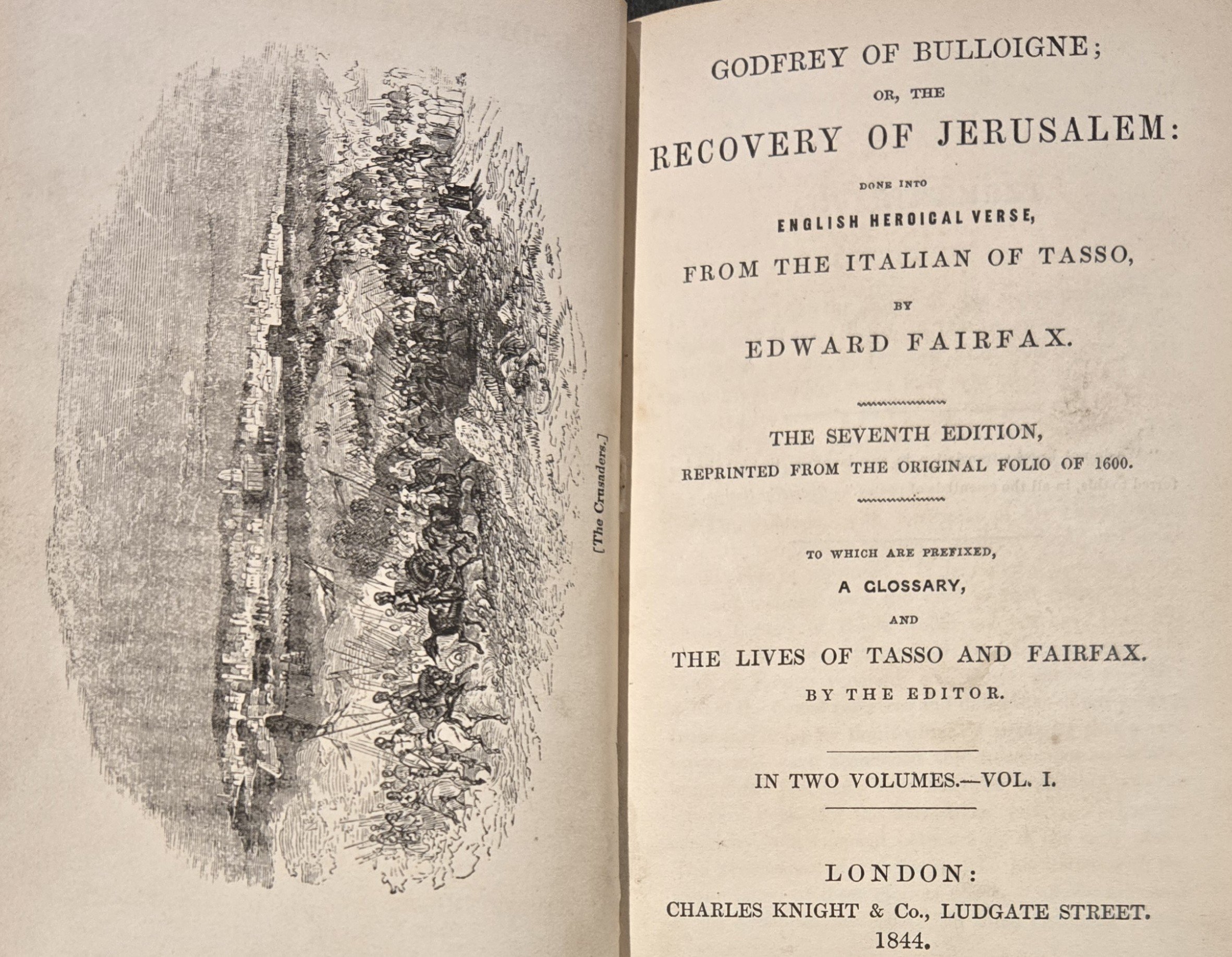
Our latest free books give-away, open to all worldwide. This time it's 8 books from the last 200 years, and 8 people will be drawn to pick their choice. Retweet this and you're in for the random draw on Sunday 11 October. Proper books these. Details to follow over next few hours!



Nick Larter retweeted

I was having dinner last night with a friend working in the chicken industry and I learned something that blew my mind.
Where do chicken farmers get their chickens? Most of us would say "from their existing chickens obviously, they breed and lay eggs."
That's what I thought too, but turns out I was dead wrong.
The reality is that the immense majority of meat chicken farmers in the world get their chickens from one of 2 companies: Cobb-Vantress, owned by Tyson Foods, or Aviagen, controlled by Germany's EW Group (the Wesjohann family).
They have a concept specific to the industry called grandparent stock: what you buy from these 2 companies is - essentially - a bunch of chickens with planned obsolescence.
The way it works is that each company keeps "pure" bloodlines on its own farms. Let's label them A, B, C and D. Those are the crown jewels - these companies' IP - and they never leave the building.
What they sell you are the "grandparents": chicks from those four lines, but each line in only one sex. You get A roosters but no A hens, B hens but no B roosters, C roosters but no C hens, D hens but no D roosters. Which means you can never breed more A, B, C or D birds yourself.
What you can do is cross them. A roosters with B hens give you the fathers, C roosters with D hens give you the mothers - these are the "parents". The parents then give you the chickens that actually end up on our plates, slaughtered at around 6 weeks.
And that's the end of the road. If you tried breeding those chickens, their chicks would be a complete genetic lottery: still chickens, sure, but without the genetic properties that make them commercially viable. They'd grow slower and less evenly, you'd have to sell them for way more than your competitors, and your business would be dead.
So you have to go back to Cobb or Aviagen for new grandparents. Forever.
Why buy grandparents at all, and raise 2 generations just to sell the third? The answer is scale. If you buy say 100 grandparents, each of them gives you around 50 parents, and each parent hen then gives you around 150 chicks: from those 100 grandparents, you have yourself some 600,000 chickens whose meat you can sell.
It makes no sense for these 2 companies to sell the final chickens directly. They'd have to hatch tens of billions of chicks a year and ship them all over the world. Much easier to simply sell the grandparents and let farmers do the multiplying and pay for the farms, the feed and the labor.
And, you knew this was coming, there is also a China angle here: as you can imagine, China isn't too pleased to be dependent on foreign companies for such a basic food item as chicken.
So China did what China does best: long-term planning. The Ministry of Agriculture and Rural Affairs launched a plan for "national broiler genetic improvement" (2021-2035), which aims for domestically bred breeds to make up at least 60% of the domestic market by 2035 (globaltimes.cn/page/202307/1…).
And, of course, they're ahead of the plan. As of 2025, homegrown breeds held more than 30% of the market: halfway to the 2035 goal in just four years (agripost.cn/2026/08/17/china…).
Can you escape all this as a consumer? Sure, you can buy organic or Label Rouge chicken, from slower-growing breeds raised for at least 81 days instead of 6 weeks, for two to three times the price.
Except, plot twist: the genetics behind most of those slow-growing birds come from a French company called Hubbard... which has belonged to Aviagen since 2018 (euromeatnews.com/aviagen-ann…)😅
And even if you could truly escape, you wouldn't want everyone to: we'd need vast new swathes of farmland, both for the chickens and their feed. Ironically, advocating for organic free-range chicken for everyone is one of the worst positions one can take for the planet's resources.
If you want to minimize your environmental footprint, the counterintuitive answer is to buy the cheapest supermarket chicken - or eat less meat, of course.
As my friend was saying last night, you may not like the way this industry works but, at the end of the day, it's what puts affordable protein on the plates of billions of people, using proportionally fewer resources than any other way of raising chicken.

Nick Larter retweeted

craigmurray.org.uk/archives/…
Rather than abandoning the plainly nuts Fairford narrative, Burnham and his government are doubling down on the claim it is an Iranian terror plot.
It remains quite possible the men were indeed fuel thieves, simply stealing fuel from farms. They
