

Expert at nothing, discusser of everything. I can be wrong.
Joined July 2017
- Tweets3K
- Following158
- Followers194
- Likes4.8K
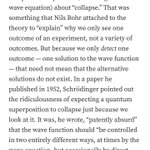
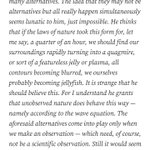




Would recommend, it is such a fun read.

We can never know whether a physical theory that we have formulated is true; all we can say is that it has so far not been found to be false.
This may seem a little unsettling, but it is an extremely interesting fact about how knowledge is created; and, as I said, it is central to the possibility of making progress, via criticism.
~Conjecture Institute Senior Scientist Chiara Marletto

Ryan retweeted

On anthropomorphizing AI. a 2024 interview of Satya Nadella still makes a lot of sense.
"I don't like anthropomorphizing. I sort of believe it's a tool.
It's got intelligence, if you want to give it that moniker, but it's not the same intelligence that I have, right?
I think one of the most unfortunate names is “artificial intelligence.”
It's different. I wish we had called it “different intelligence,” even, because I have my intelligence. I don't need any artificial intelligence.
I just want my intelligence to compose with this different intelligence so that I have more agency, quite frankly. So I think of that as the relationship I want to have with the AIs around us, where I want help. I want it to assist me in getting more agency."
----
From "Bloomberg Television" YouTube channel, (full video link in comment)

Microsoft AI chief Mustafa Suleyman says Anthropic's model-welfare training could make future Claude systems harder to control.
"Suleyman called for removing all speculation about consciousness from AI training documents, arguing such language could undermine humanity's ability to control superintelligent systems."


Everyone can make unbounded errors; hopefully, they correct them.

Ryan retweeted

This is wrong — socialism is NOT viable in (economic) theory, and it’s been known to be the case for 150 years. You are making it sound as if everybody thinks it should work, but it just inexplicably keeps failing.
No, we know precisely, in THEORY, why it fails: it has an incentive problem (WHY should people do hard/dirty work?), it has an economic calculation/knowledge aggregation problem (WHAT should people do even if you manage to force them to?), it’s based on the debunked (labor) theory of value, etc.

Don't Look Up was pessimistic and dystopian garbage; likewise, so are AI doomsday prophecies.

Tragically, when I first saw the movie “Don’t Look Up” in 2021, it struck a chord with me. I felt viscerally that humans would find ourselves in a comparable place one day - and soon.
If you haven’t seen the movie, I’d recommend it. A quick recap: Humans were explicitly warned that a comet that could destroy Earth was heading rapidly toward us. And instead of doing anything to stop it, the president, elected leaders and billionaire CEOs just spewed some bullshit about all the “jobs the comet would create.” The media treated the comet as casual entertainment. The public was split and the entire thing gets politicized. The movie ends with nearly all of human life wiped out.
Just about a year ago I had the opportunity to join a bipartisan freshman class breakfast with Sam Altman. I was shocked when he said to us, “in 18 months, I’ll trust artificial superintelligence to run my company better than I can.” I regret I didn’t engage more on this issue immediately.
Now here we are - it’s 2026 and engineers at the world’s leading AI companies are telling us that there is a >10% chance that artificial intelligence could kill all humans. They’re not mincing their words in the slightest. Not because of present day AI capabilities, but because it is evolving so exponentially that we could be in a doomsday scenario in a year. One year.
This is fucking serious. We need to halt new advanced AI development. We need guardrails, transparency and emergency powers. We need more employees at these companies to speak out publicly, loudly and fearlessly until everyone is forced to listen. We need the media to be covering this 24/7 until elected officials are forced to act. We need the Trump Administration to treat this with the urgency it deserves. We need the ability to shut an AI model off if there’s a credible threat to human life. The list goes on - and we don’t even know what the full list entails because this is all happening so fast. That’s why we need urgent, bipartisan public hearings and committees dedicated to developing and enacting solutions expeditiously.
This isn’t partisan. Let’s stop with the bullshit and come together for the sake of our shared humanity. I’m a 34-year-old Democratic Congresswoman, and I’d like to live to see my late 30s. I know my Republican colleagues want the same for themselves and their loved ones.
None of us can afford to be complacent about this any longer.
Ryan retweeted

It is crazy how a technology that has the potential to cure cancer, alzheimer's, and who knows what else is so universally hated outside of rich tech.
How did Sama and Dario so thoroughly fumble this?
How did they not see telling everybody they're going to lose their jobs every few months and now we might (👉👈) accidentally kill everyone isn't a winning strategy?
Ryan retweeted

Just a reminder that @alihkw_ has created an awesome site with transcripts of most of our podcast episodes:
alihkw.com/TheoryOfAnythingT…
Ryan retweeted

Nature’s forms are many, but only a sliver of all that are possible and beautiful, most of which rely on us to be conjectured and conjured into existence.
Meanwhile, human design spans all materials, including those which mistakenly seem the sole purview of biological evolution.

Ryan retweeted

Doctors and patients have overlapping but not identical interests. The patient values both peace of mind and longevity. The doctor doesn't value the former (for the patient) at all, and also negatively values lawsuits.
Very interesting read scentofdawn.blogspot.com/201…

I do need to point out that "language is somehow deeply related to epistemology."
Isn't really the same as "the ability to abstract depends on having language"
And you may well be right that the relationship is that language depends instead on the ability to abstract.
Having said that, there is good evidence from studies that, say, animals that can talk (ASL) are able to understand more concepts than ones that can't. Suggesting that there may well be a recursive relationship. i.e. your ability to abstract my grow very quickly once you understand language.
The life of Hellen Keller seems to also strongly support this hypothesis. Look up her description of a 'soul dawn.'
Agree with a lot here

I think this is very much on point, and actually gives us a sharper way of locating the disagreement.
I would concede your hypothetical if “theory” means what Popper means in those passages: its logical/propositional content. If T1 and T2 have exactly the same logical content, then the fact that they arose from different problems doesn’t magically turn them into different propositions. In that sense, yes: we can individuate the theory without reconstructing its problem.
But I think that reveals a distinction rather than refuting the point I was trying to make.
I’ve recently been using a three-rung distinction. At rung 1 we have propositional/logical content: what does the theory assert, imply and exclude? Popper’s criterion seems exactly right there. Different formulations can have identical logical content and therefore count as the same theory qua assertions about reality.
At rung 2 we can ask about formal representations, modal limits and the tasks they permit us to perform. Logically equivalent formulations need not be equally useful computationally, mathematically or methodologically.
But rung 3 asks a further question: do they embody the same explanatory knowledge? What problem is being solved, and what generative explanatory structure solves it?
I’m now inclined to say that Popper’s criterion gives us identity at rung 1 without necessarily settling identity at rung 3.
That seems to be exactly what makes Deutsch’s Hilbert/Einstein point possible here: xitter.cf/daviddeutschoxf/status…
Suppose, for argument’s sake, that Hilbert and Einstein end up with precisely the same equations and hence the same assertions about physical reality. Popper can perfectly consistently call that the same theory in his logical sense. Yet Deutsch can still say that “Hilbert had general relativity before Einstein” is bad history because the equations occupied different places in different problem situations and explanatory structures.
So I think your example does refute the strongest formulation I initially used: “you need the problem to individuate a theory.” I should withdraw that if “theory” means propositional content.
What I would replace it with is: logical content may be sufficient to individuate a theory qua proposition, without being sufficient to individuate the explanatory knowledge embodied by it.
In other words, Popper teaches us not to confuse syntactic difference with difference of logical content. I am suggesting that we should then take one further step and not automatically confuse identity of logical content with identity of explanatory knowledge.
That also connects to a constructor-theoretic point. Two descriptions might specify exactly the same input-output transformation while only one contains the relevant decomposition into subsidiary tasks explaining how the transformation can actually be performed. Same specified result doesn’t automatically mean same generative know-how.
So perhaps there are three separate identity questions:
Are these the same formulations?
Do they have the same logical content?
Do they embody the same problem-solving generative explanatory structure?
Popper’s quoted criterion brilliantly separates the first two. The problem-solution unit asks whether we also need to separate the second from the third.
If so, your proposed counterexample succeeds against “problems are necessary to individuate propositions”, but doesn’t yet establish that problems and generative structure are unnecessary for individuating explanatory knowledge.